Artwork
The Washerwoman
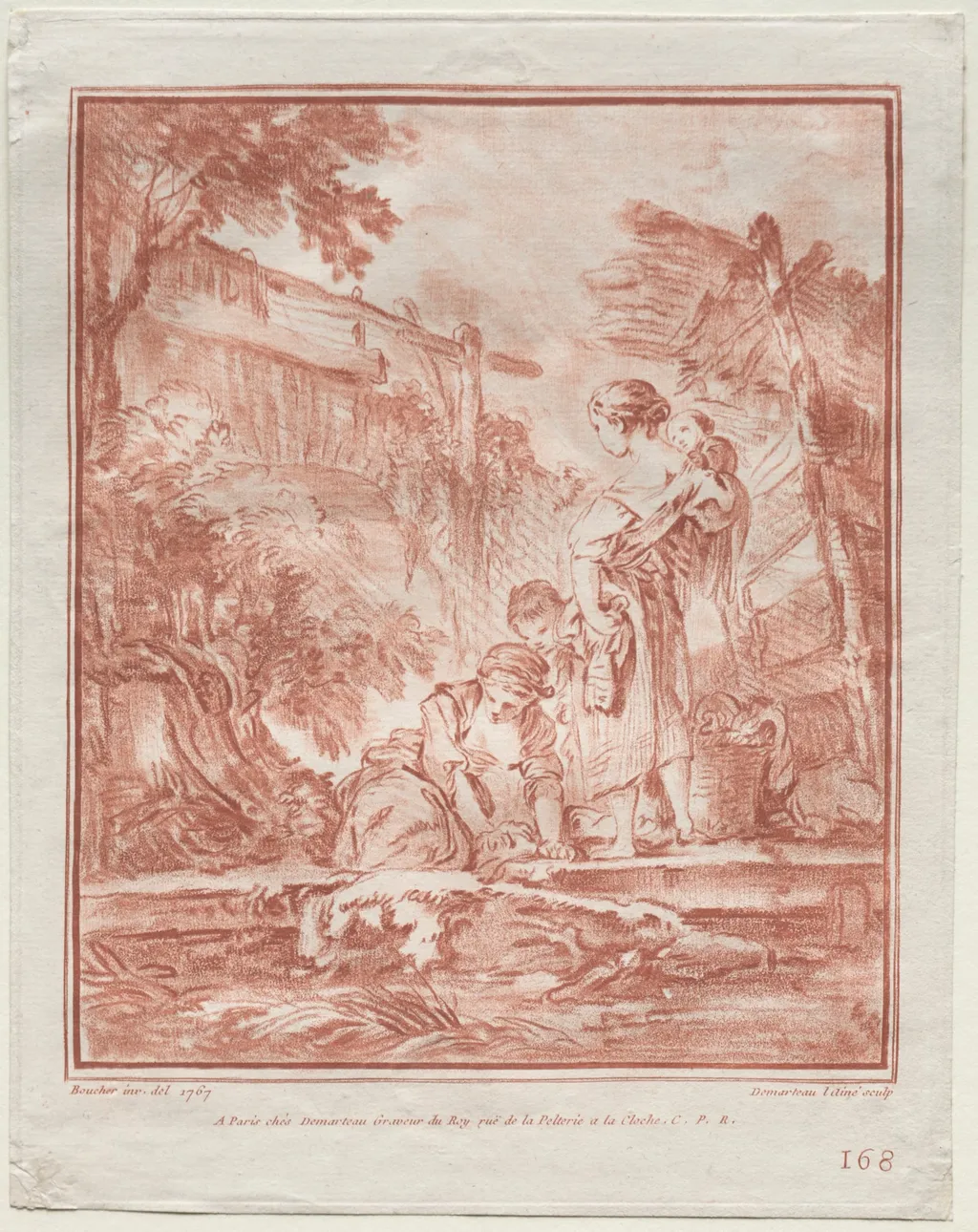
The Washerwoman is a print by the Romanticist artist Gilles Demarteau. It dates from 1767 and is held in the collection of the Cleveland Museum of Art.
About this work
Overview
Created in 1767 by Gilles Demarteau, this print depicts a rural domestic scene centered on a washerwoman and her two children.
Created in 1767 by Gilles Demarteau, this print depicts a rural domestic scene centered on a washerwoman and her two children. Executed in brown ink, the work is part of the collection at The Cleveland Museum of Art. Its quiet composition and subtle tonal modeling reflect the artist’s skill in translating everyday life into intimate graphic form, avoiding overt drama in favor of restrained observation.
Subject & Meaning
The scene portrays a mother caring for her children while performing the laborious task of laundry by a river. The older child kneels beside the water, assisting, while the infant rests in the mother’s arms. The image conveys a sense of quiet endurance and familial duty, typical of 18th-century genre scenes that honored humble labor without romanticizing it.
Technique & Style
Demarteau employed soft, linear shading to model the figures, using gradations of brown ink to suggest volume and depth. The background remains relatively flat, enhancing the three-dimensionality of the central group. This approach, akin to chiaroscuro in drawing, relies on tonal contrast rather than line to define form, giving the scene a gentle, atmospheric quality.
History & Provenance
The print was produced during Demarteau’s active period in Paris, where he was known for reproductive engravings and genre subjects. It entered The Cleveland Museum of Art’s collection through established acquisition channels, likely as part of a broader 18th-century European print collection assembled in the 20th century.
Context
In mid-18th-century France, prints of domestic labor were popular among the middle class, offering moralizing images of virtue in simplicity. Demarteau’s work aligns with this trend, reflecting Enlightenment-era interest in the dignity of ordinary life, even as it retained the decorative sensibility of Rococo-influenced printmaking.
Legacy
Though not widely reproduced in major art historical narratives, Demarteau’s washerwoman exemplifies the quiet power of genre printmaking in the 1700s. Its preservation in a major museum underscores its value as a document of social observation, capturing the rhythms of labor and family life with understated grace.
Artist & collection

Artist
Gilles Demarteau or Gilles Demarteau the Elder was an etcher, engraver and publisher who was active in Paris for his entire career.

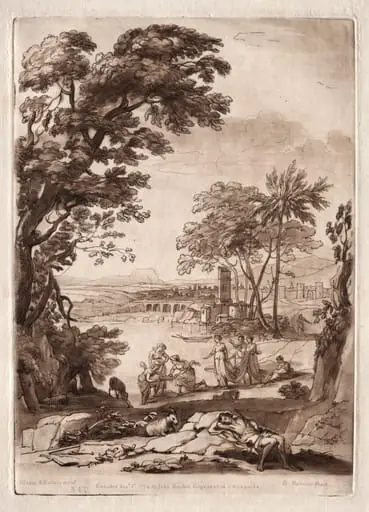 Liber Veritatis: No. 47, A River Scene with the Finding of Moses
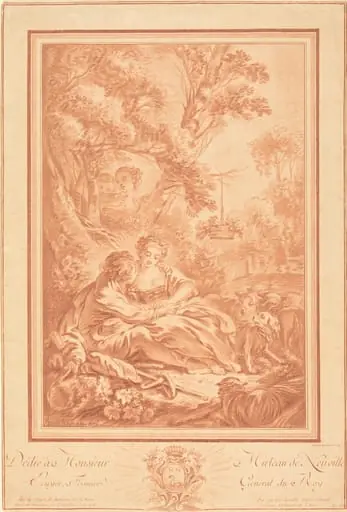 Two Lovers Seated at the Foot of a Large Tree, Surprised by Two Girls
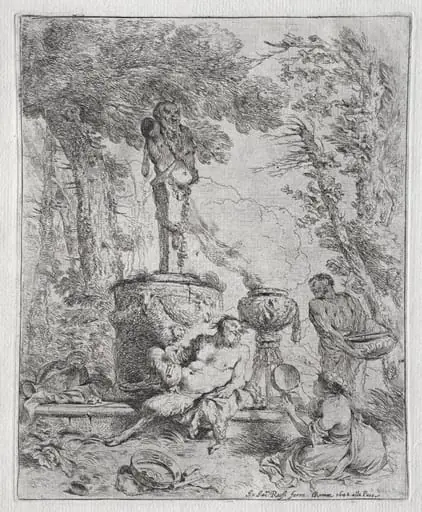 Fete of Pan
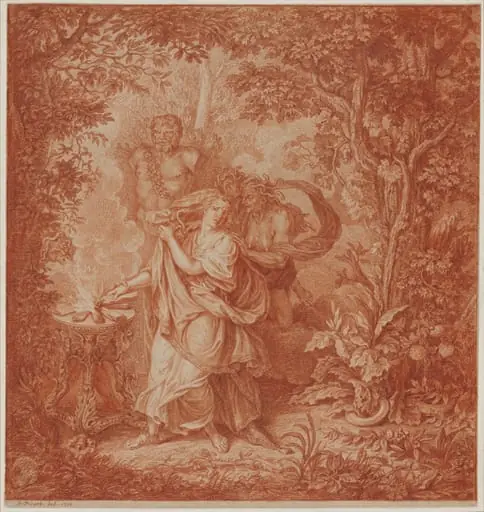 Althaea Putting the Fatal Log on the Fire
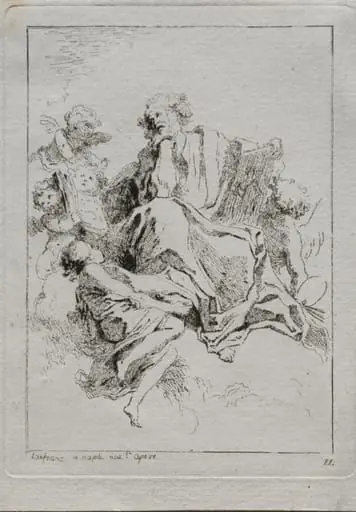 Saint Luke
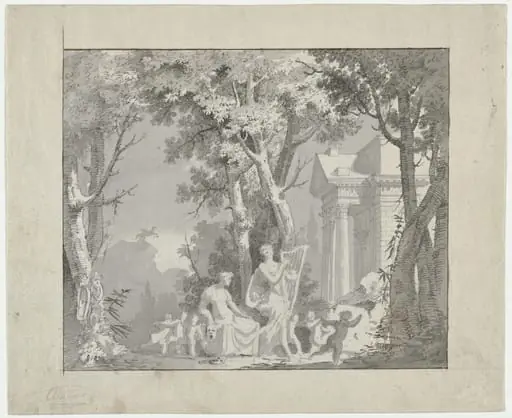 Classical Scene
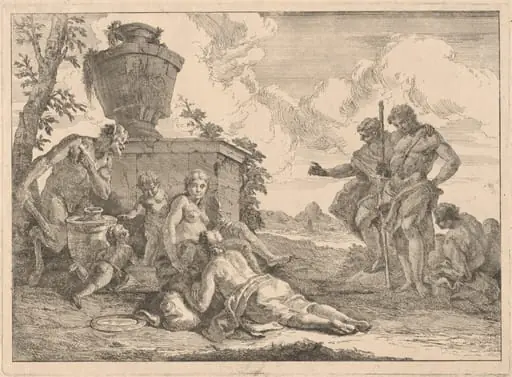 A Satyr with a Staff and Seven Other Figures
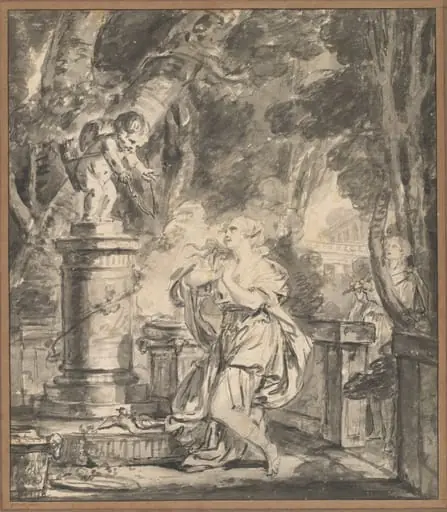 Sacrifice to Love
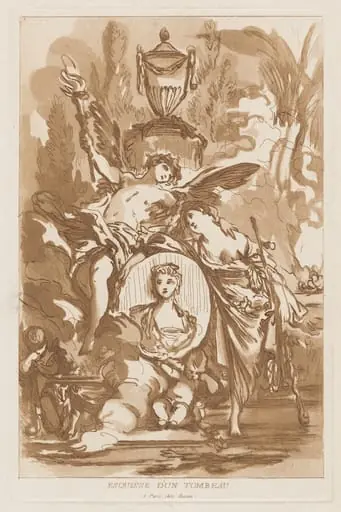 Esquisse d’un tombeau (Sketch for a Tomb)
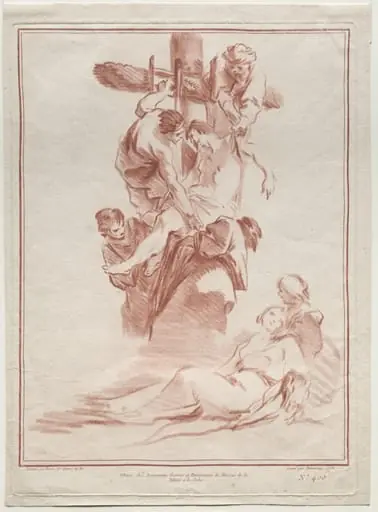 The Descent from the Cross
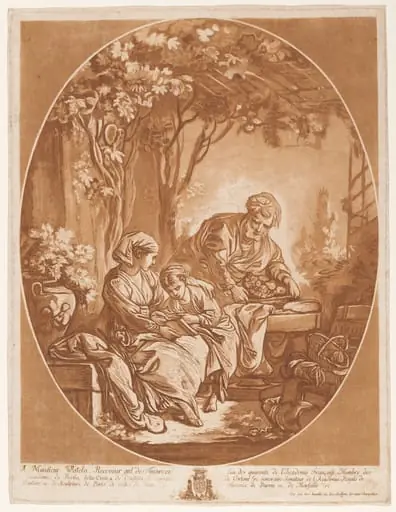 Education of the Virgin