Artwork
French Liberty and British Slavery
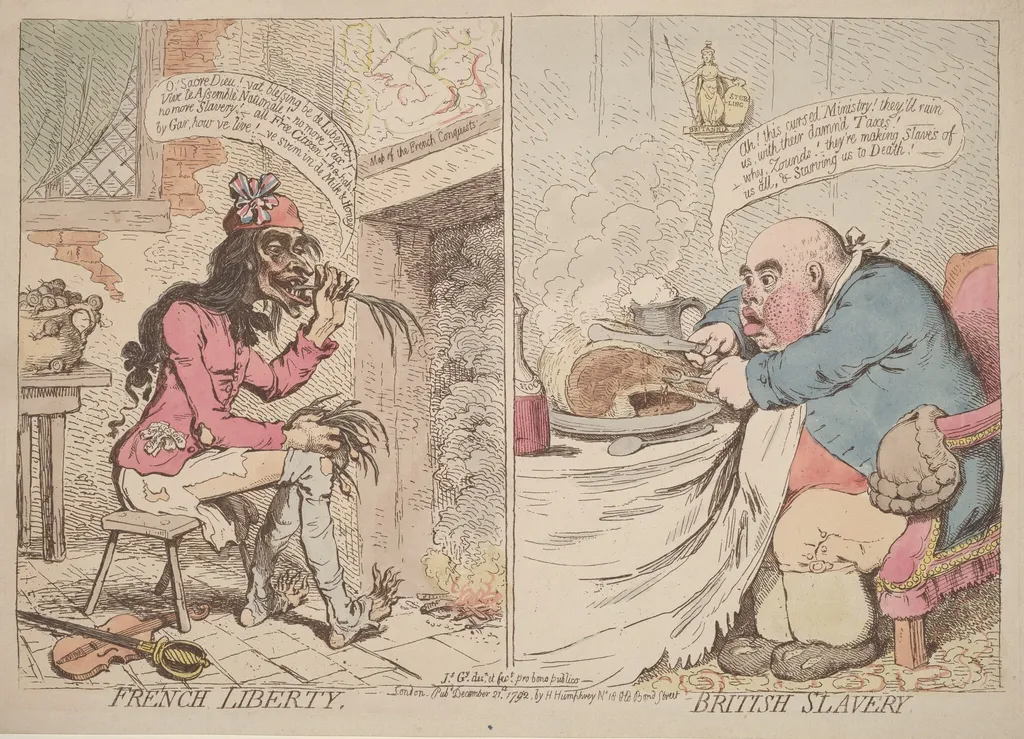
French Liberty and British Slavery is a watercolor print by the Romanticist artist James Gillray. It dates from 1792 and is held in the collection of the National Gallery of Art.
About this work
Overview
The 1792 print *French Liberty and British Slavery* is an etching by English caricaturist James Gillray, later hand‑colored with watercolor by the publisher. Executed on laid paper, the work juxtaposes two grotesquely rendered figures in a chaotic kitchen, each labeled to critique contemporary political conditions in France and Britain.
Subject & Meaning
Opposite her, a bald man in a blue coat greedily stuffs food into his mouth beside a pot and a cat.
On the left, a woman dressed in a flamboyant red hat and pink gown clutches a rooster while a burning map of France looms behind her, her expression one of alarm. Opposite her, a bald man in a blue coat greedily stuffs food into his mouth beside a pot and a cat. The captions *French Liberty* and *British Slavery* invert the ideals each nation claimed, satirizing the perceived hypocrisy of revolutionary France and the slave‑holding British establishment.
Technique & Style
Gillray employed a traditional copper‑plate etching process, then the publisher added watercolor washes to accentuate the figures and background. The hand‑coloring highlights the vivid red hat, the flames, and the chaotic kitchen details, while the line work retains Gillray’s characteristic exaggeration and energetic hatching that convey movement and disorder.
Context
Created during the early years of the French Revolution, the print reflects the intense political debate in Britain over French reforms and the nation’s own involvement in the trans‑Atlantic slave trade. Gillray’s satirical prints circulated widely, influencing public opinion and offering a visual commentary on the clash between revolutionary ideals and British economic interests.
Artist & collection
Artist
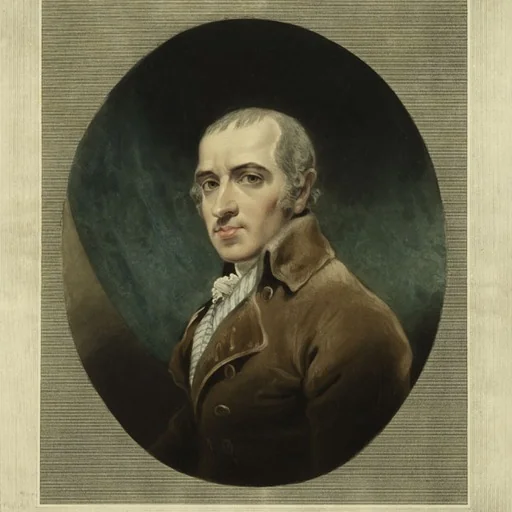
James Gillray (13 August 1756 – 1 June 1815) was an English caricaturist and printmaker famous for his etched political and social satires, mainly published between 1792 and 1810.

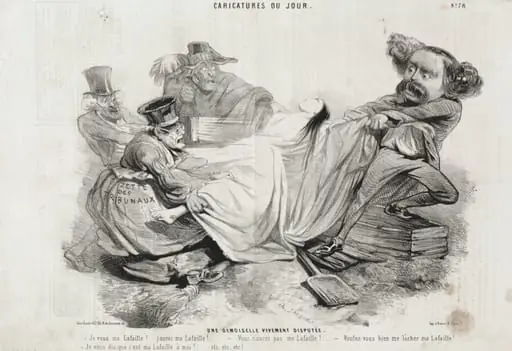 An Intensely Contested Young Woman
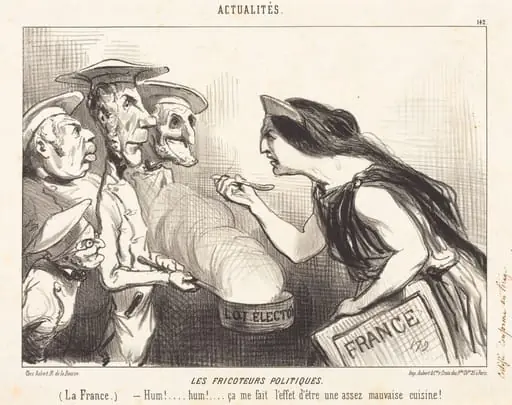 Les Fricoteurs politiques
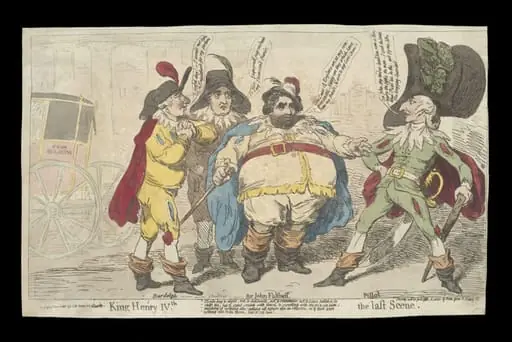 H Beard Print Collection
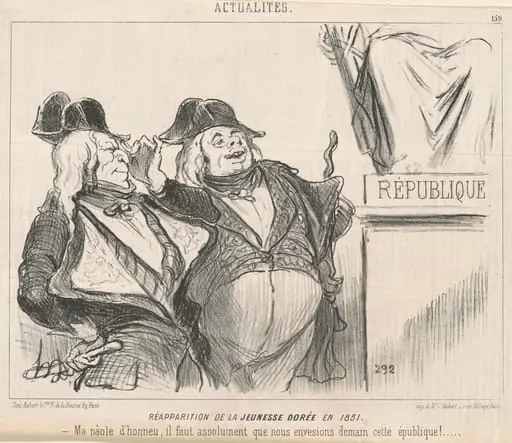 Réapparition de la jeunesse dorée en 1851
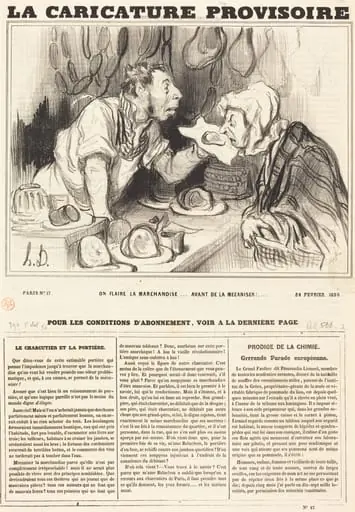 On flaire la marchandise... avant de la mécaniser!...
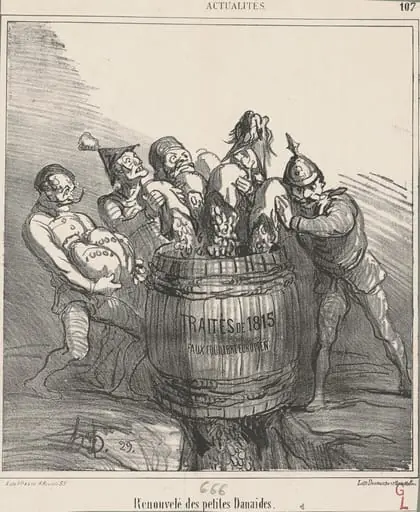 Renouvelé des petites Danaides
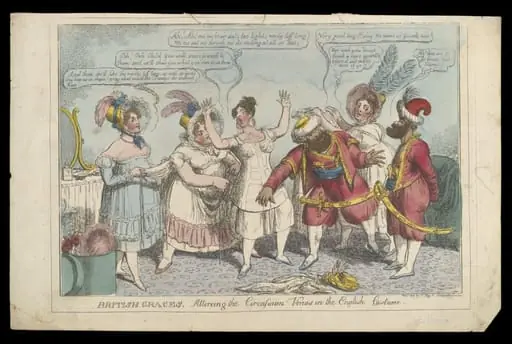 H Beard Print Collection
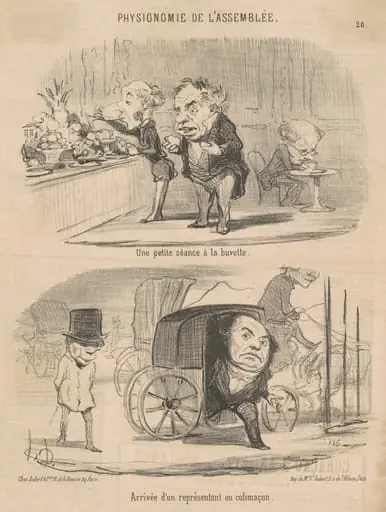 Une petite séance a la buvette
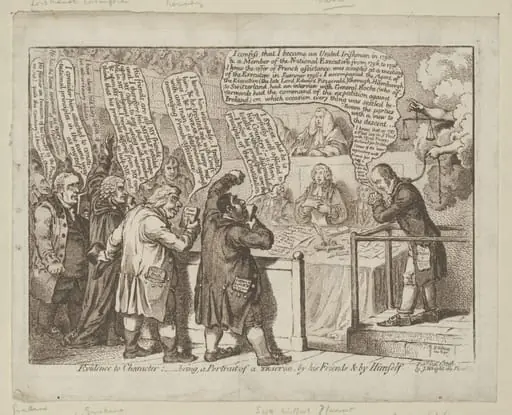 H Beard Print Collection
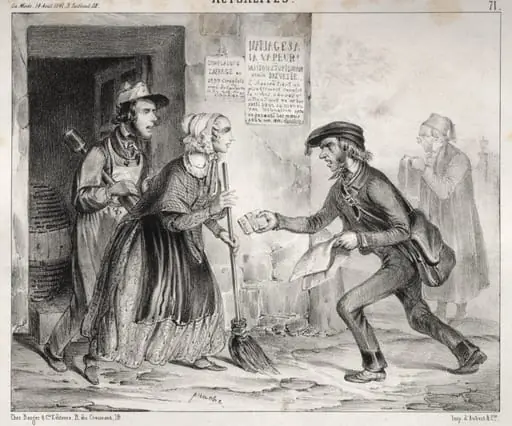 Actualités: Gare la Question d'Orient!
 H Beard Print Collection