Artwork
Jacob betrügt Esau (Kopie nach)
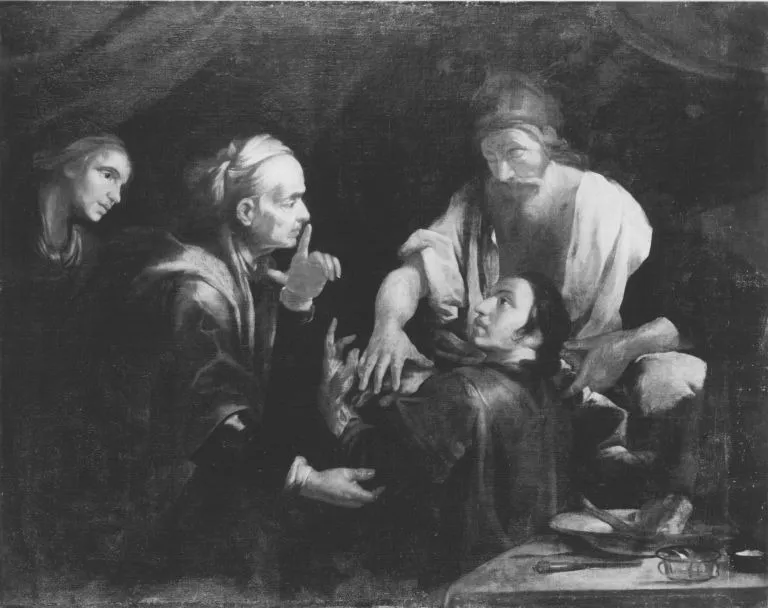
Jacob betrügt Esau (Kopie nach) is an unspecified painting by the Early Baroque Italian artist Gioacchino Assereto. It dates from 1624 and is held in the collection of the Bavarian State Painting Collections.
About this work
Overview
Created around 1624, it belongs to the religious narrative tradition and exemplifies the dramatic intensity favored in Italian painting of the period.
This painting is a 17th-century copy after a work by Gioacchino Assereto, an influential Genoese painter of the early Baroque era. Created around 1624, it belongs to the religious narrative tradition and exemplifies the dramatic intensity favored in Italian painting of the period. The piece is part of the Alte Pinakothek’s collection, where it is preserved as a representative example of Genoese Baroque practice.
Subject & Meaning
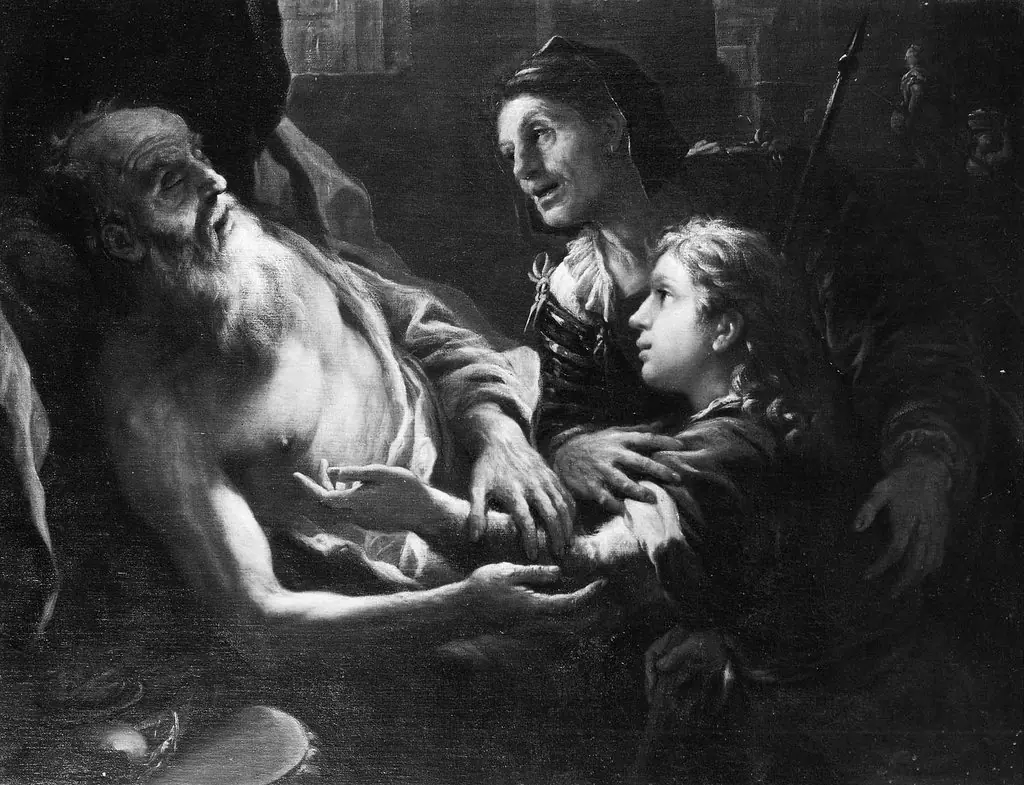
The scene illustrates the biblical moment when Jacob, disguised as his brother Esau, deceives their blind father Isaac to secure the birthright blessing. Figures cluster around Isaac, who lies recumbent, while Jacob reaches for the offering on the table. The solemn expressions and tense posture convey moral ambiguity and familial betrayal, emphasizing the weight of the act within its theological context.
Technique & Style
Assereto’s composition employs strong chiaroscuro to model the figures with sculptural solidity, enhancing their physical presence. The dark, confined interior heightens the focus on the central group, while directional lighting isolates key gestures—the hand offering food, the probing fingers of Isaac. Clothing and textures are rendered with careful detail, reinforcing the scene’s realism without overt ornamentation.
History & Provenance
Though attributed as a copy after Assereto’s original, the painting retains the compositional and tonal qualities of his early style. It entered the Alte Pinakothek’s holdings through documented acquisitions in the 19th century, likely as part of broader efforts to assemble a representative collection of Italian Baroque works. Its status as a copy reflects the period’s practice of disseminating influential compositions across Europe.
Context
In early 17th-century Genoa, religious subjects were frequently depicted with heightened emotional realism, influenced by Caravaggio’s naturalism and the Counter-Reformation’s demand for accessible sacred imagery. Assereto adapted these tendencies to local tastes, favoring intimate, psychologically charged scenes. This work aligns with broader trends in Ligurian painting that prioritized narrative clarity and emotional immediacy.
Legacy
Though not the original, this copy preserves the visual language of Assereto’s approach to biblical drama, offering insight into how his compositions were reproduced and appreciated beyond Genoa. It contributes to understanding the circulation of Baroque styles in Central Europe and the role of replication in shaping artistic reception during the 17th and 18th centuries.
Artist & collection
Artist
Gioacchino Assereto (1600 – 28 June 1649) was an Italian painter of the early Baroque period and one of the most prominent history painters active in Genoa in the first half of the 17th century.

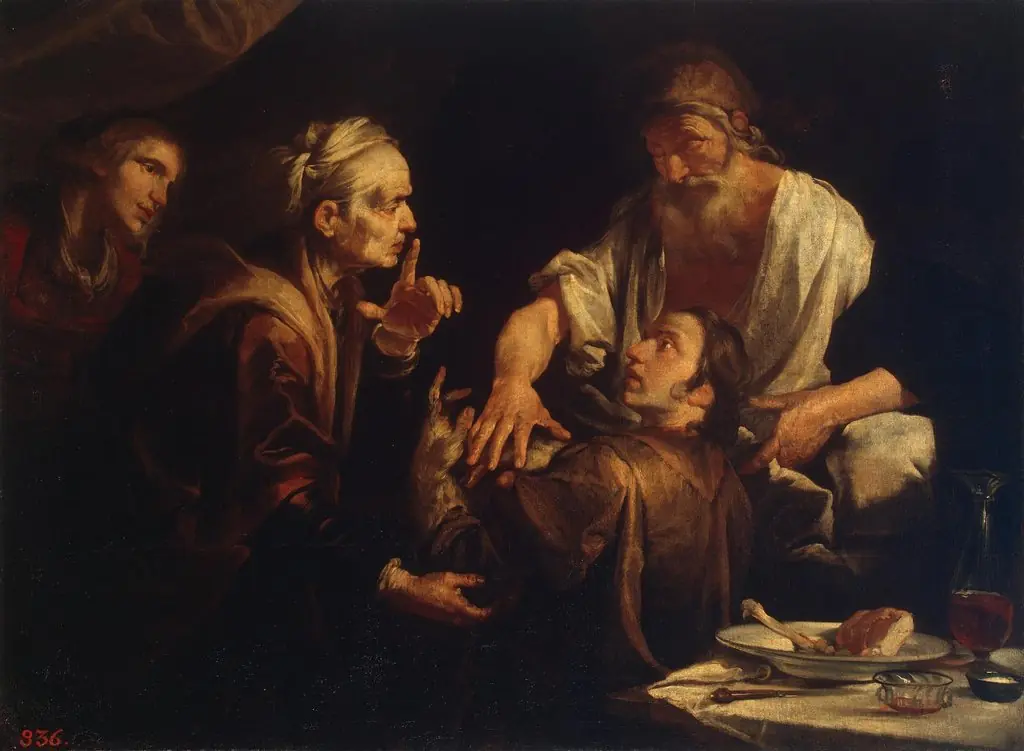
 Isaac Blessing Jacob
 Isaak segnet Jakob (Kopie nach)
 Enthauptung Johannes des Täufers
 Joseph als Traumdeuter
 Josephs Traumdeutung im Kerker (nach)
 Den vantro Thomas
 Moses schlägt Wasser aus dem Felsen
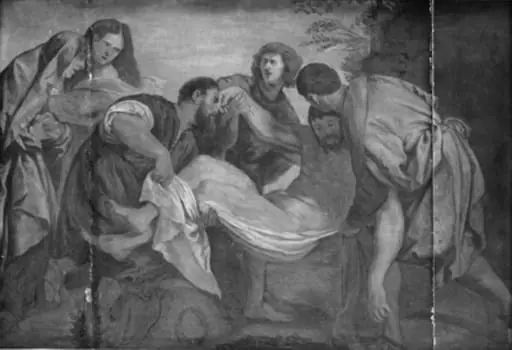 The Entombment of Christ
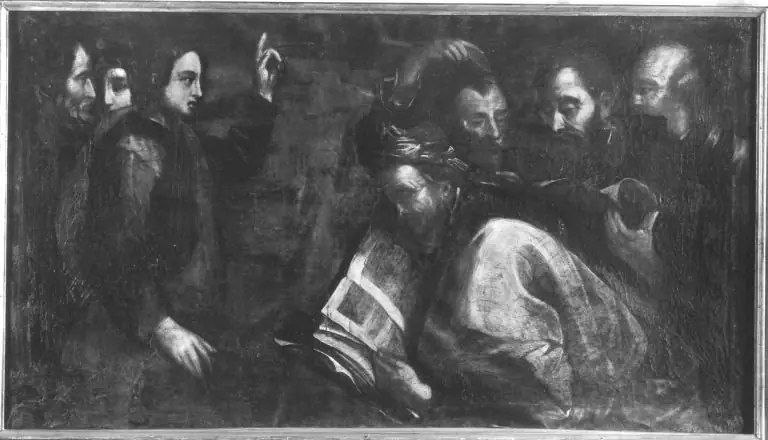 Der zwölfjährige Jesus im Tempel
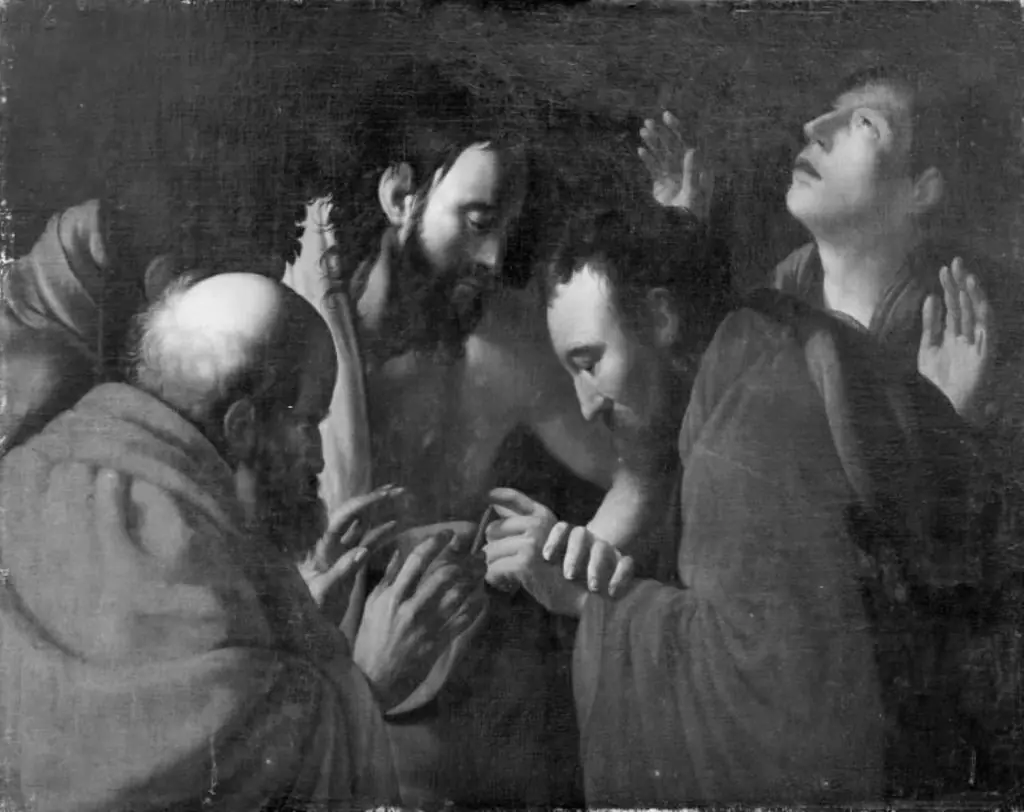 Den vantro Thomas
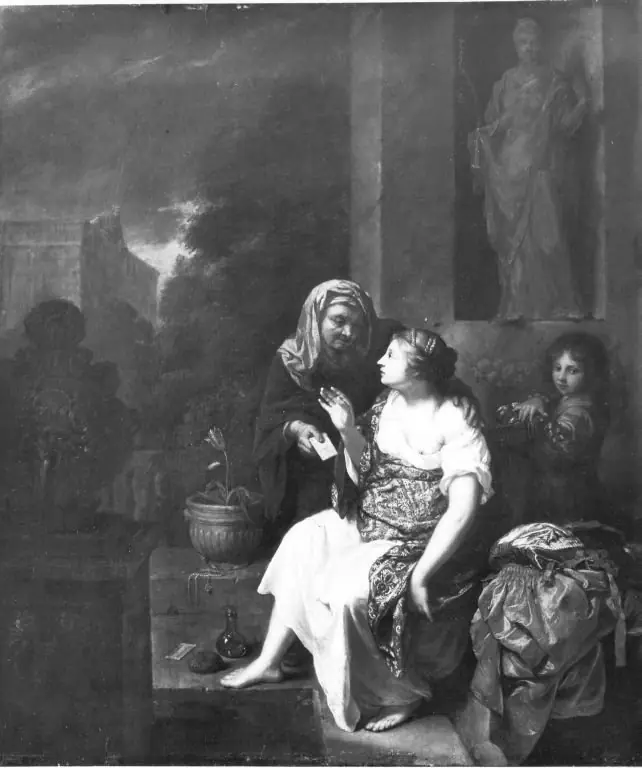 Bathseba erhält den Brief König Davids