Artwork
Moses striking the Water from the Rock
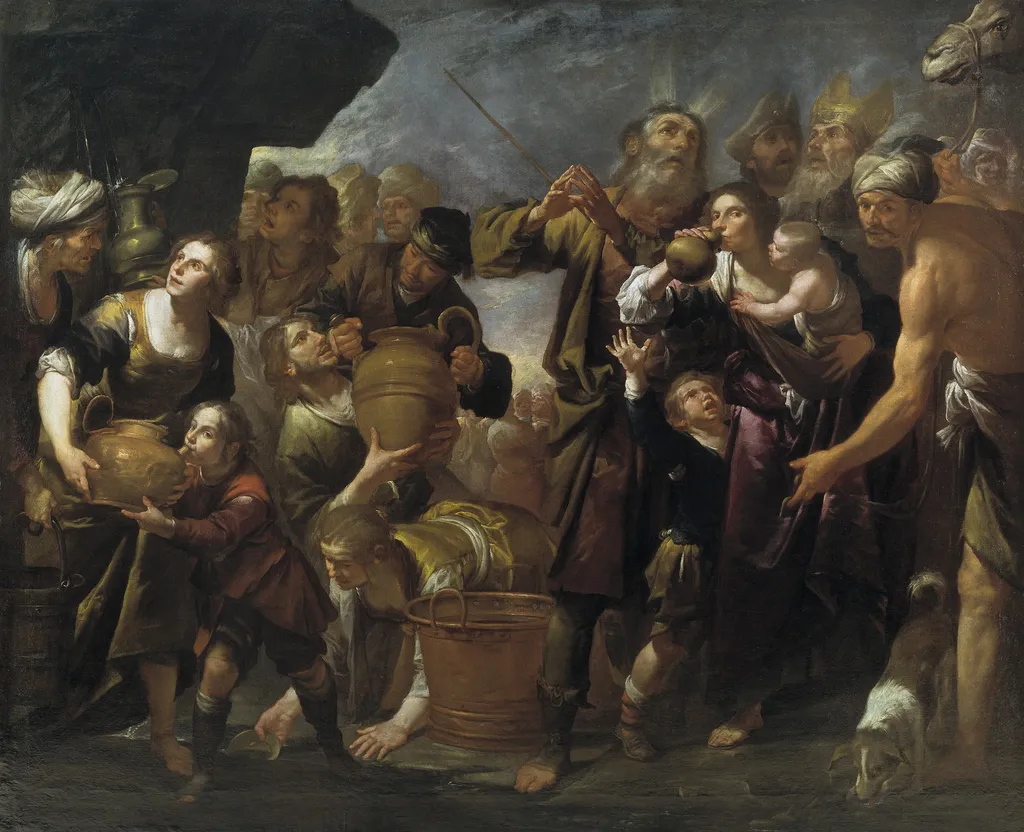
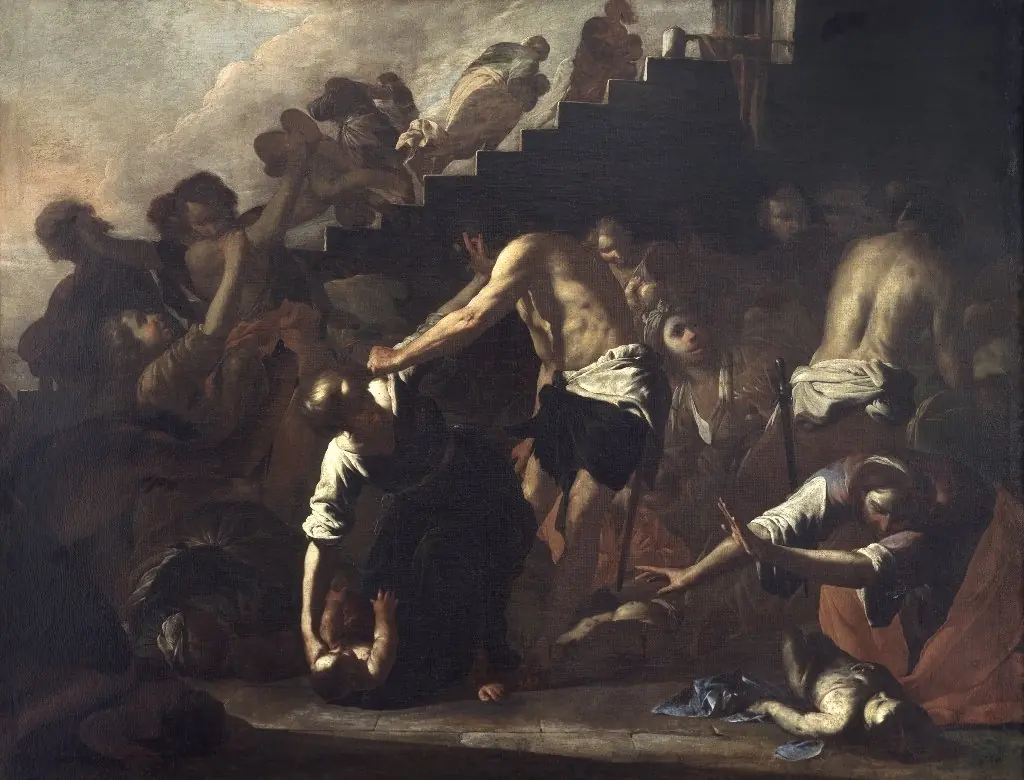
Moses striking the Water from the Rock is an oil painting by the Early Baroque Italian artist Gioacchino Assereto. It dates from 1640 and is held in the collection of the Museo del Prado.
About this work
Overview
Assereto, a prominent Genoese artist of the early Baroque era, rendered the biblical episode with narrative clarity and emotional restraint.
Painted in 1640 by Gioacchino Assereto, this oil-on-canvas work illustrates a moment from the Book of Exodus. Assereto, a prominent Genoese artist of the early Baroque era, rendered the biblical episode with narrative clarity and emotional restraint. The painting is part of the Museo del Prado’s collection, reflecting its significance within 17th-century Italian religious art. Its composition centers on a decisive action, aligning with the period’s emphasis on dramatic storytelling.
Subject & Meaning
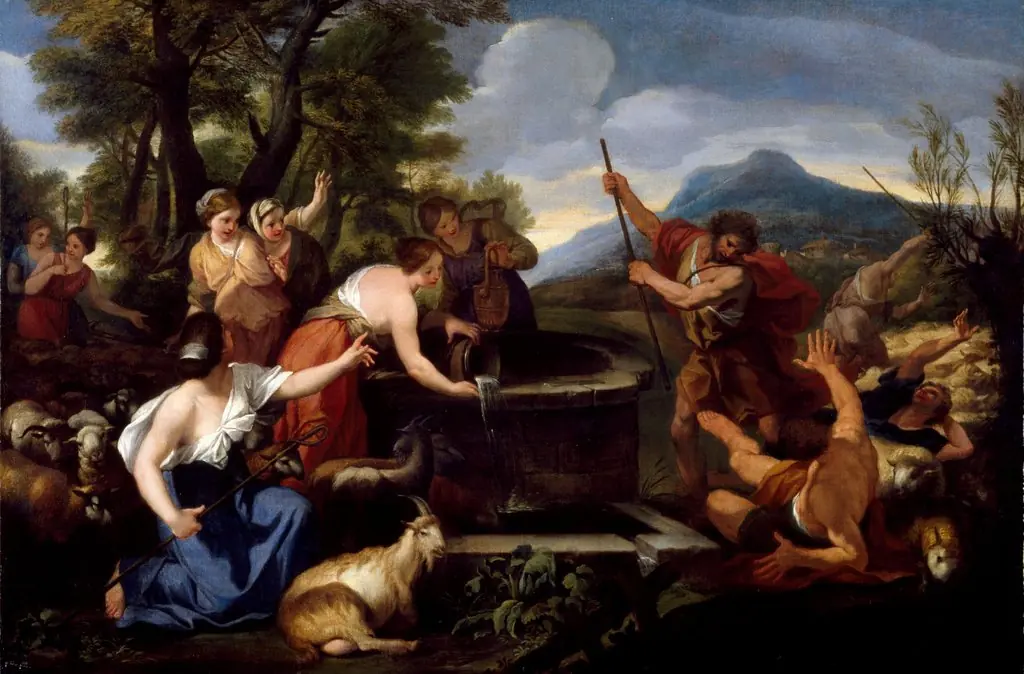
The scene captures Moses, identified by his staff and beard, striking a rock to produce water for the parched Israelites. The surrounding figures—men, women, and children—express varied reactions of anticipation, fatigue, and hope. The moment signifies divine intervention in human suffering, a theme central to Old Testament narratives. Assereto avoids overt spectacle, instead focusing on quiet collective expectation to underscore faith amid hardship.
Technique & Style
Assereto employs chiaroscuro to model forms and direct focus toward Moses and the rock, enhancing the scene’s immediacy. Brushwork is controlled yet expressive, with textures in fabric and stone rendered through subtle tonal shifts. The figures are arranged in a shallow, stage-like space, their gestures coordinated to guide the viewer’s eye. The muted palette and atmospheric background reinforce the painting’s solemn tone without theatrical excess.
History & Provenance
Commissioned during Assereto’s mature period, the painting entered the Spanish royal collection in the 17th century, likely through diplomatic or ecclesiastical channels. It was later transferred to the Museo del Prado upon its founding. Its presence in Spain reflects the broader circulation of Italian religious art among Habsburg patrons. No significant alterations or restorations are documented, preserving its original composition.
Context
In mid-17th-century Genoa, religious subjects dominated public and private commissions, often commissioned by churches or noble families. Assereto’s style, influenced by Caravaggio and Rubens, balanced naturalism with emotional gravity. This painting aligns with regional trends favoring intimate, psychologically resonant biblical scenes over grandiose altarpieces, reflecting a shift toward personal devotion in Counter-Reformation Italy.
Legacy
Though less widely known than contemporaries like Lanfranco or Ribera, Assereto’s work contributed to the development of Genoese Baroque narrative painting. *Moses Striking the Water from the Rock* remains a representative example of his ability to convey spiritual tension through restrained composition. It continues to inform scholarly understanding of how regional Italian artists interpreted biblical themes with psychological nuance.
Own this work as a print
Artist & collection
Artist
Gioacchino Assereto (1600 – 28 June 1649) was an Italian painter of the early Baroque period and one of the most prominent history painters active in Genoa in the first half of the 17th century.