Artwork
Argeș II
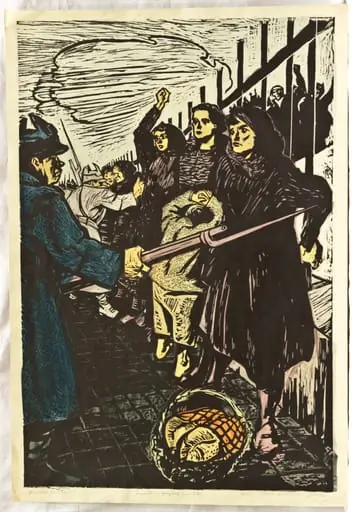
Argeș II is a drawing by Mihail Gion. It dates from 1950 and is held in the collection of the Gavrila Simion Eco-Museum Research Institute Tulcea.
About this work
Overview
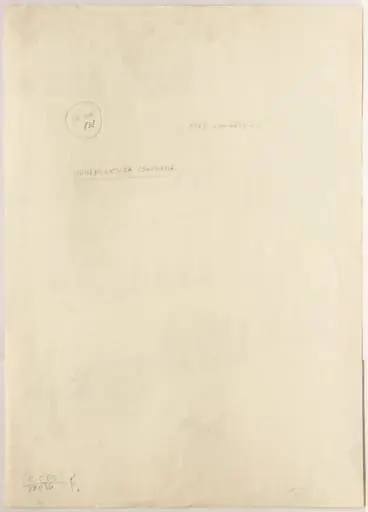
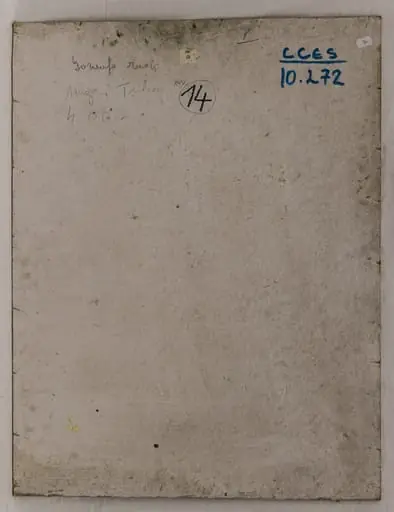
Argeș II is a modest paper study created around 1950 by Romanian artist Mihail Gion. It bears minimal pencil markings and appears unfinished, with no dominant image or composition. The work is cataloged at the Museum of Ethnography, where it is preserved as part of a broader collection of observational sketches rather than polished artworks.
Subject & Meaning
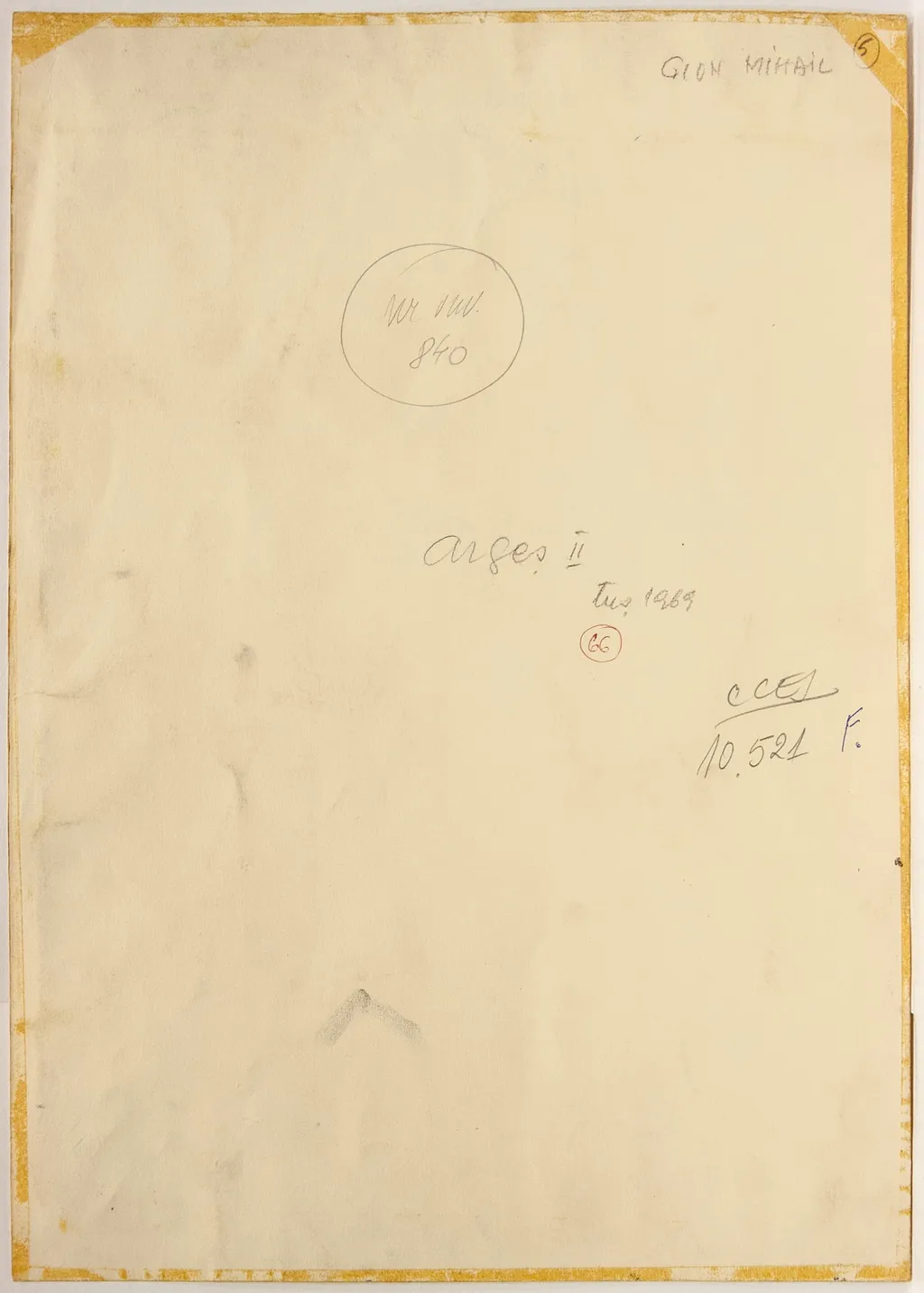
The piece centers on a faint circular form with a numerical inscription, possibly a reference to a measurement or catalog code.
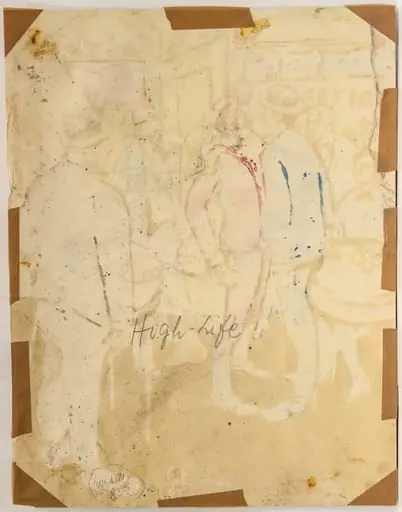
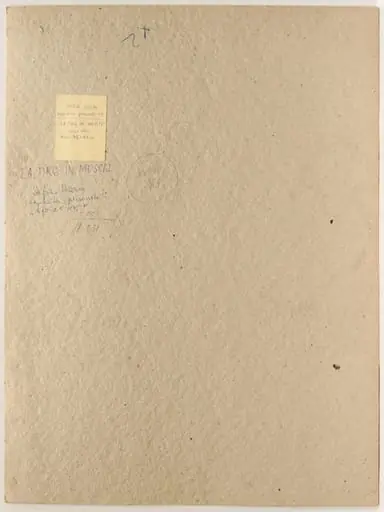
The piece centers on a faint circular form with a numerical inscription, possibly a reference to a measurement or catalog code. Handwritten annotations, including 'Argeș II' and '10.524 F,' suggest it was part of a systematic documentation process, perhaps related to regional ethnographic data. The title implies a connection to the Argeș region, indicating a link between place and recorded observation.
Technique & Style
Gion employed light, tentative pencil strokes, avoiding bold lines or shading. The marks are sparse and tentative, suggesting a preliminary stage of recording rather than artistic expression. The paper shows signs of aging—yellowing at the edges—reinforcing its function as a working document. The absence of detail aligns with the conventions of field notes rather than finished drawings.
History & Provenance
The work entered the collection of the Museum of Ethnography shortly after its creation, likely as part of Gion’s ethnographic fieldwork. Its survival as a standalone item indicates it was retained not for aesthetic value but for its evidentiary role. The artist’s signature in the corner confirms authorship, while the annotations reflect a methodical, perhaps institutional, approach to recording observations.
Context
Created in postwar Romania, Argeș II reflects a period when artists and scholars collaborated on documenting rural traditions and material culture. Gion’s practice aligned with broader efforts to catalog regional heritage through direct observation. This sketch, like others in his archive, served as a quiet record—neither decorative nor dramatic, but essential to understanding local life.
Legacy
Argeș II endures not as a celebrated artwork but as a fragment of a larger scholarly endeavor. It exemplifies how ethnographic work often relies on unassuming records—faint marks, coded numbers, and marginalia—to preserve knowledge. Its value lies in its function: a quiet witness to the process of observation, not the product of artistic intention.
Artist & collection
Artist
Mihail Gion’s output consists of drawings and paintings that sit in a modest, early‑20th‑century Romanian vein.
Museum
Gavrila Simion Eco-Museum Research Institute Tulcea
Continue through works from the same source collection.