Artwork
Saint Anthony of Padua
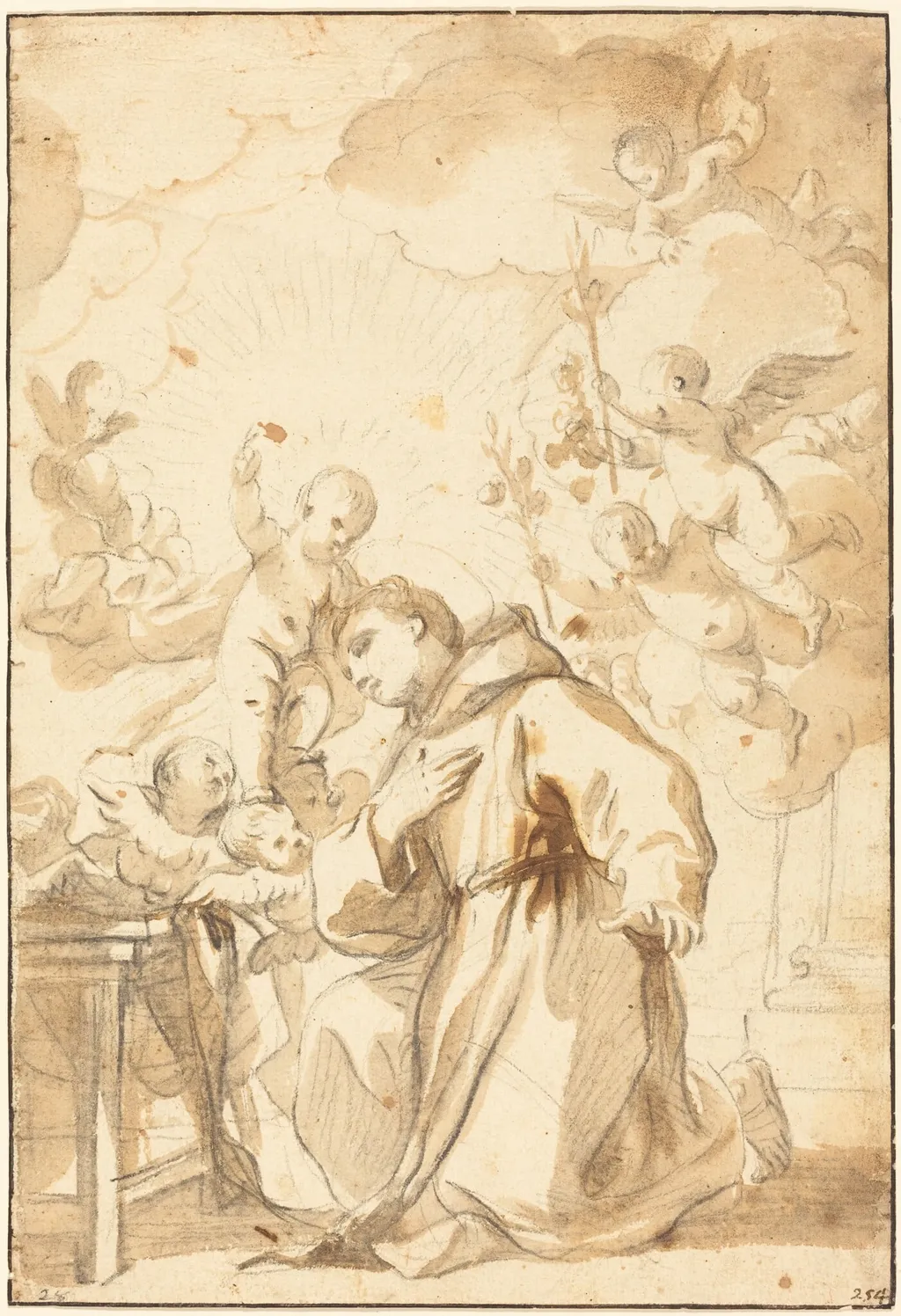
Saint Anthony of Padua is a chalk drawing by the Baroque artist Luca Giordano. It dates from 1670 and is held in the collection of the National Gallery of Art.
About this work
Overview
Saint Anthony of Padua is a drawing by Luca Giordano, created in 1670 using black chalk and brown wash on laid paper. It exemplifies Giordano's late-Baroque style, diverging from the darker Neapolitan tradition towards a brighter, more expressive approach.
Subject & Meaning
The drawing depicts Saint Anthony of Padua in a contemplative pose, dressed in a simple Franciscan robe and gesturing upward. His calm, softly lit face conveys serenity, set against a plain background that emphasizes his figure.
Technique & Style
Giordano employed loose yet deliberate black chalk marks and layered brown wash to achieve gentle, expressive shading, particularly around the saint's face and hands. This technique reflects the softer, more fluid chalk drawing conventions of the 17th century.
History & Provenance
Created in 1670, this work represents a stylistic shift in Giordano's oeuvre, influenced by Venetian and Roman artists such as Pietro da Cortona, moving away from the darker styles of Caravaggio and Jusepe de Ribera.
Context
Part of Giordano's prolific output, which spanned altarpieces, mythological scenes, and large-scale frescoes in palaces and churches, this drawing showcases his adaptability within the late-Baroque period.
Artist & collection

Artist
Luca Giordano was an Italian late-Baroque painter and printmaker in etching. Giordano was one of the most celebrated artists of the Neapolitan Baroque, whose vast output included altarpieces, mythological paintings and…

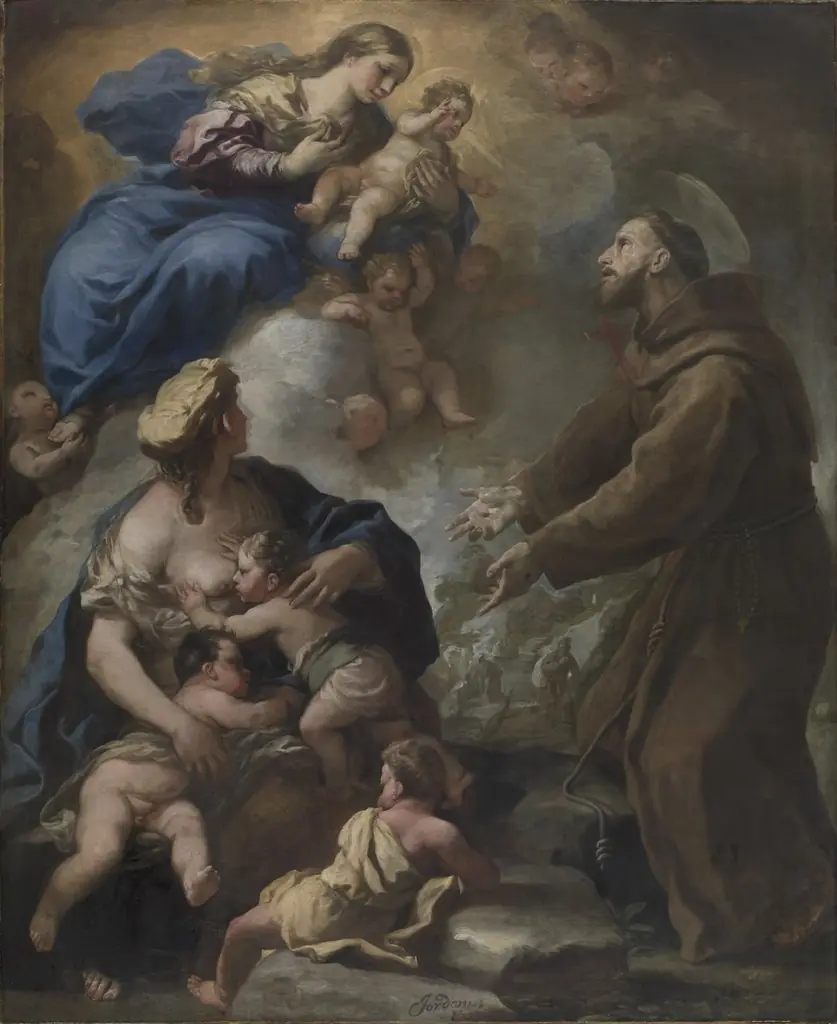
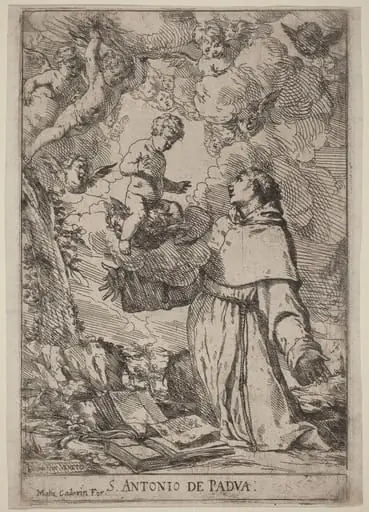 Saint Anthony of Padua
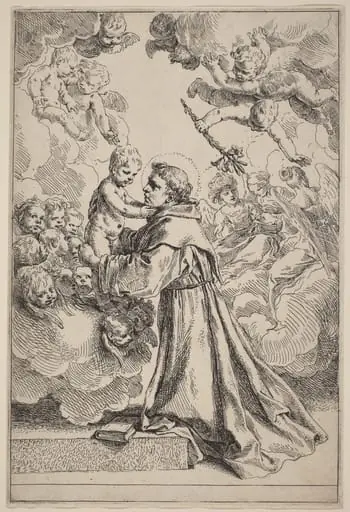 The Large Saint Anthony of Padua
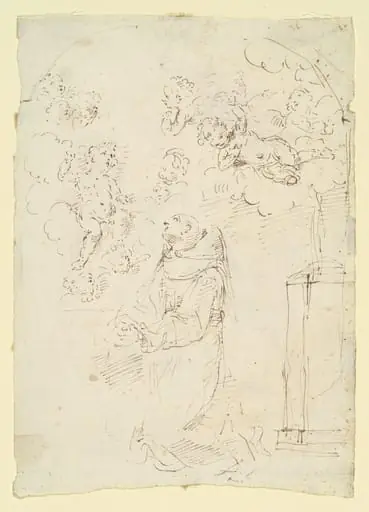 Vision of Saint Anthony of Padua
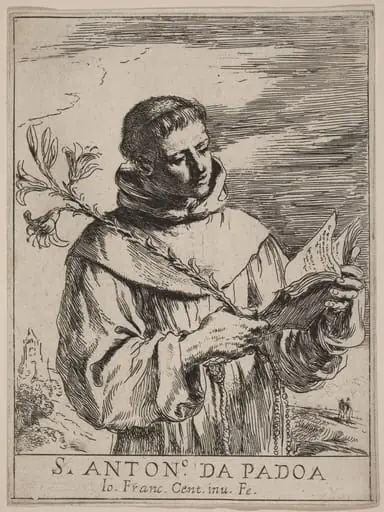 Saint Anthony of Padua
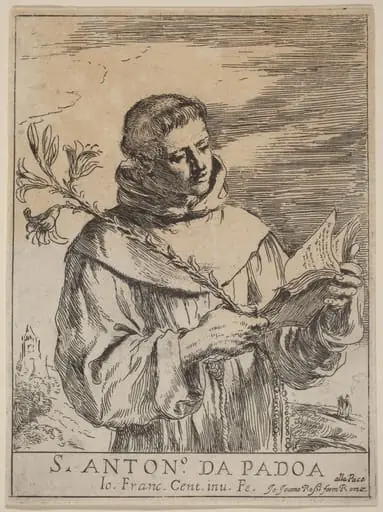 Saint Anthony of Padua
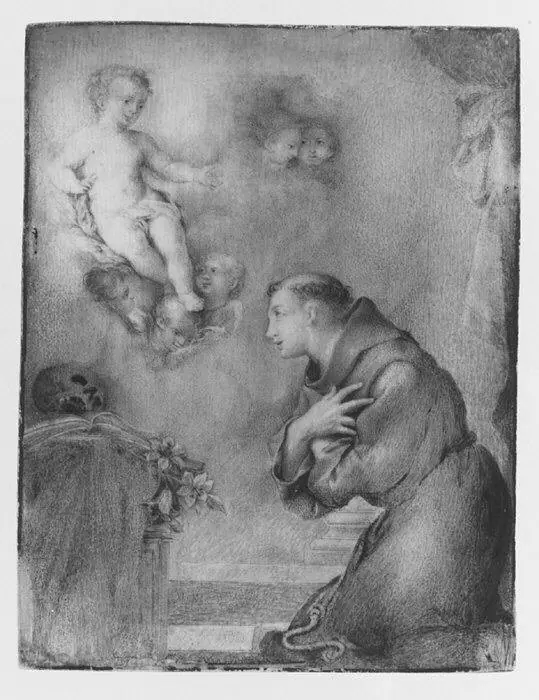 The Vision of Saint Anthony of Padua
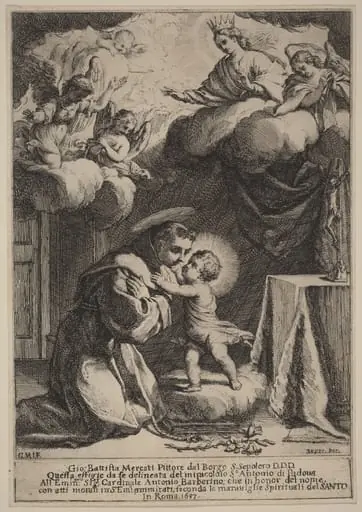 Saint Anthony of Padua
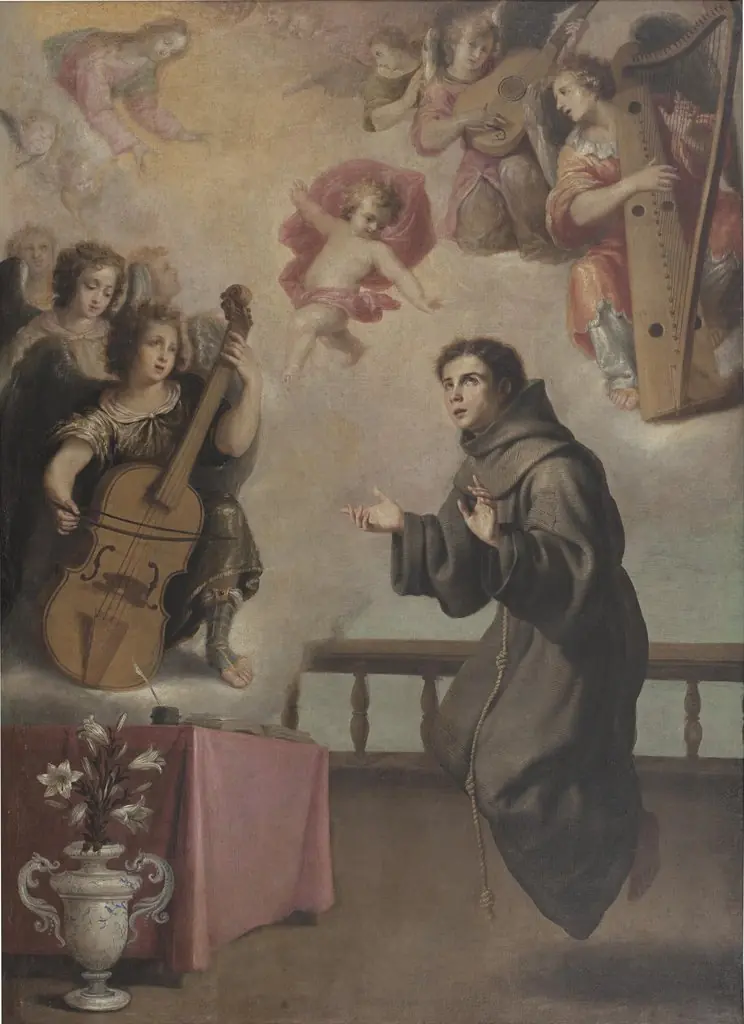 Saint Anthony of Padua
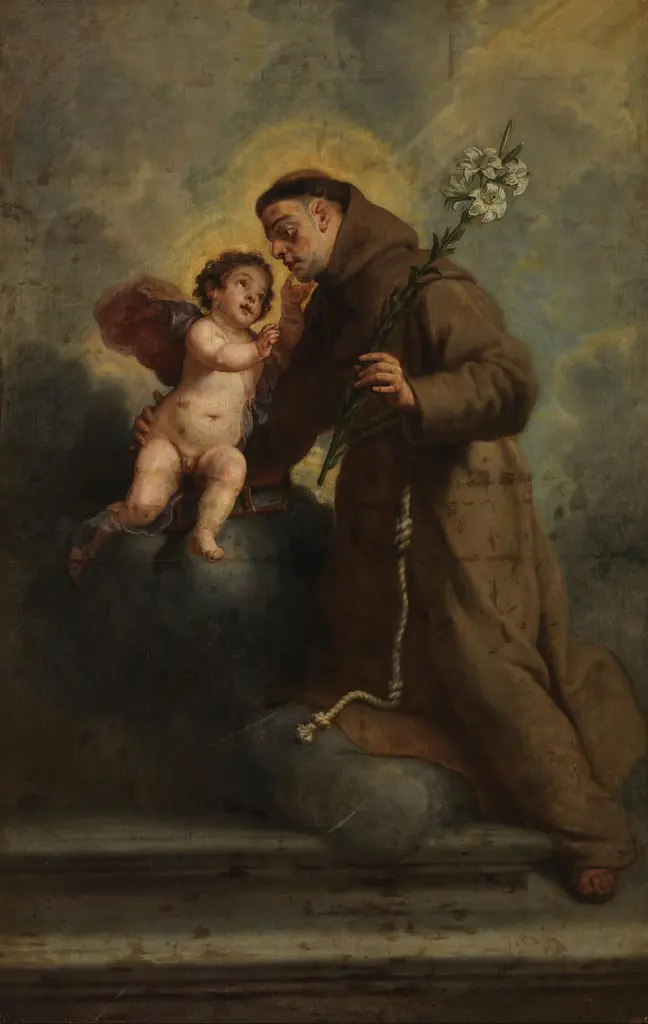 Saint Anthony of Padua with the Infant Christ
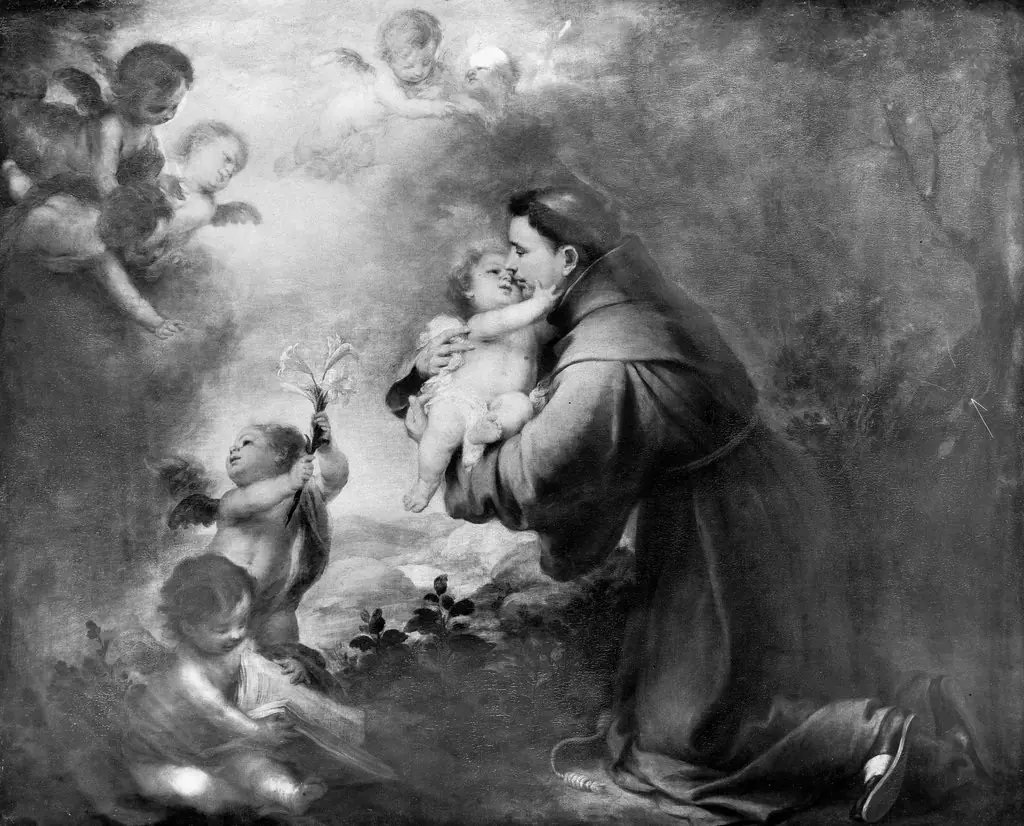 Saint Anthony of Padua with Christ as a child