Artwork
Saint Anthony of Padua
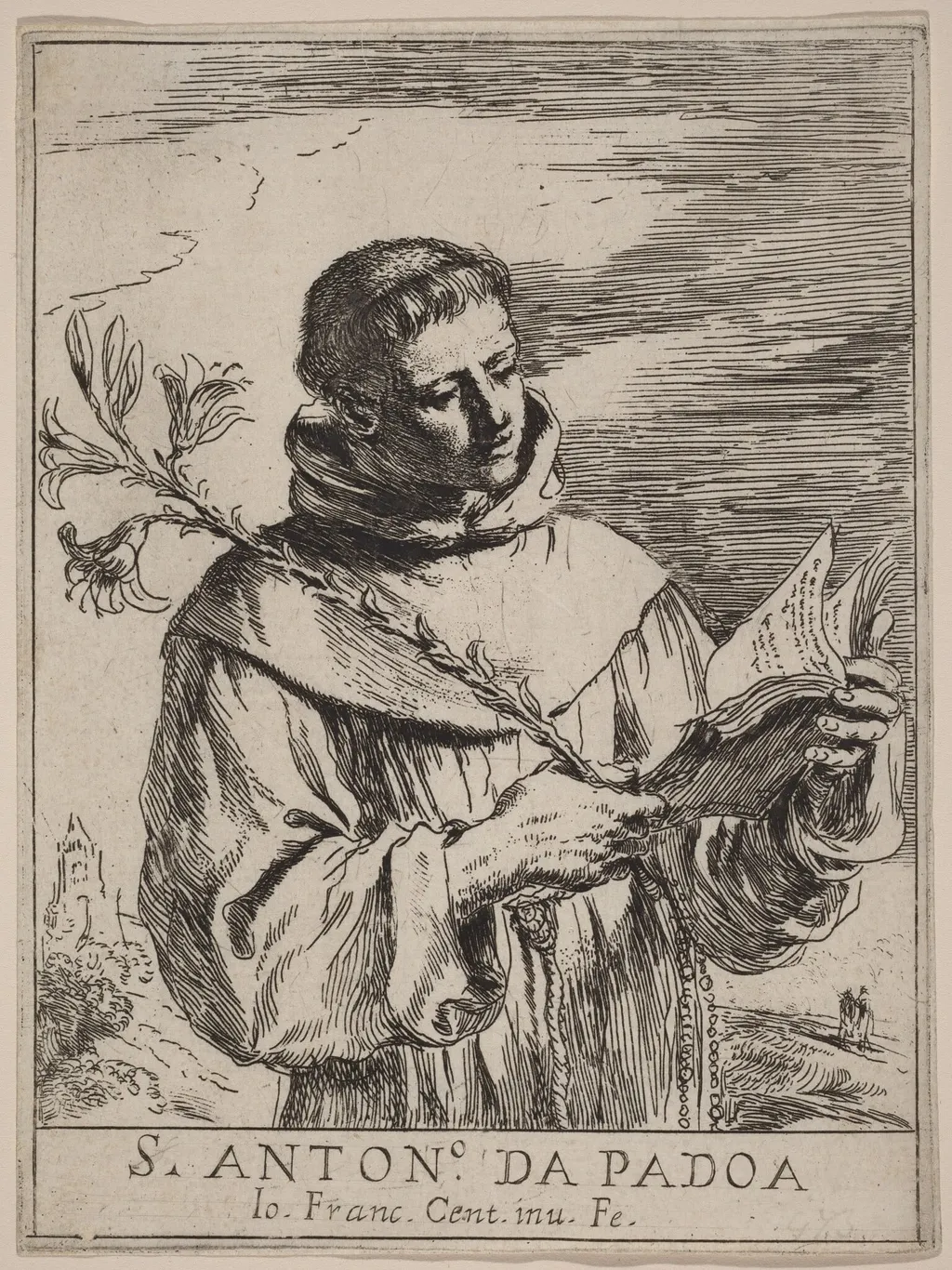
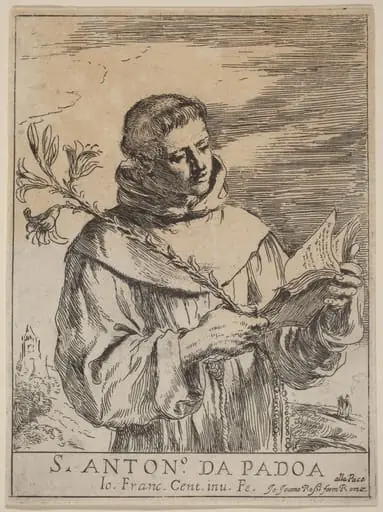
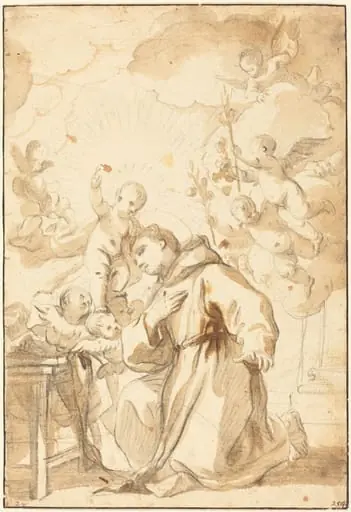
Saint Anthony of Padua is an ink print by the Baroque artist Guercino. It dates from 1634 and is held in the collection of the National Gallery of Art.
About this work
Overview
Created by Giovanni Francesco Barbieri, known as Guercino, the work exemplifies the artist’s engagement with printmaking during his mature period.
This etching on laid paper, dated circa 1634, presents Saint Anthony of Padua, a Franciscan friar revered in Christian tradition. Created by Giovanni Francesco Barbieri, known as Guercino, the work exemplifies the artist’s engagement with printmaking during his mature period. The composition balances figural clarity with atmospheric suggestion, aligning with the broader tendencies of Italian Baroque art.
Subject & Meaning
Saint Anthony is depicted holding a book—symbolizing scripture or theological learning—and a flaming staff, an attribute referencing his eloquence and divine inspiration. A sprig of foliage tucked beneath his arm may allude to his association with nature or miracles. The abbreviated inscription, *S. Anton° da Padoa*, identifies the figure, reinforcing the devotional and didactic intent of the image.
Technique & Style
Guercino’s etching demonstrates controlled linework, with dense, textured strokes evoking a stormy backdrop while finer details define the saint’s robes and attributes. The technique exploits the contrast between inked lines and the paper’s surface, a hallmark of intaglio printing. This work reflects the artist’s transition from early naturalism toward a more structured, classical approach characteristic of his later output.
History & Provenance
Produced in the 1630s, the print originates from Guercino’s active period in Rome and Bologna. As an etching, it likely circulated among collectors or religious patrons, serving both private devotion and artistic study. The artist’s monogram confirms its attribution, though specific early ownership remains unrecorded. The work survives as part of the broader corpus of Guercino’s graphic output.
Context
The etching emerges from a period in which printmaking expanded the reach of religious imagery, allowing artists to disseminate compositions widely. Guercino’s treatment of Saint Anthony aligns with Counter-Reformation ideals, emphasizing clarity and emotional resonance. The work complements his painted and drawn oeuvre, where similar themes of piety and naturalism recur.
Legacy
Though less celebrated than Guercino’s paintings, this etching contributes to the understanding of his graphic practice. It exemplifies the technical and expressive possibilities of Baroque printmaking, influencing later artists’ approaches to religious subjects. Preserved in collections, the work offers insight into the interplay between draftsmanship and reproductive media in seventeenth-century Italy.
Artist & collection
Artist
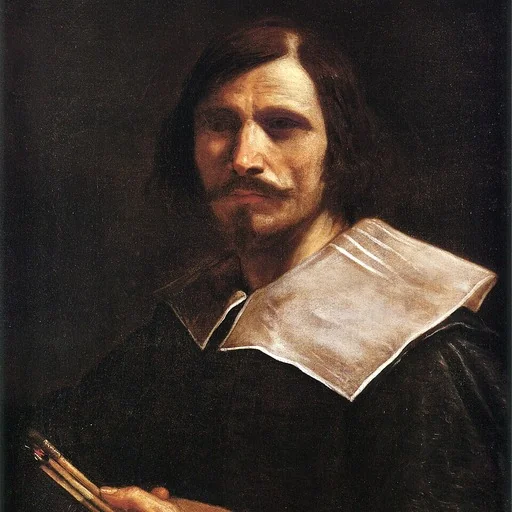
Giovanni Francesco Barbieri (8 February 1591 – 22 December 1666), better known as (il) Guercino (Italian pronunciation: ), was an Italian Baroque painter and draftsman from Cento in the Emilia region, who was active in Rome and Bologna.