Artwork
Saint Anthony of Padua
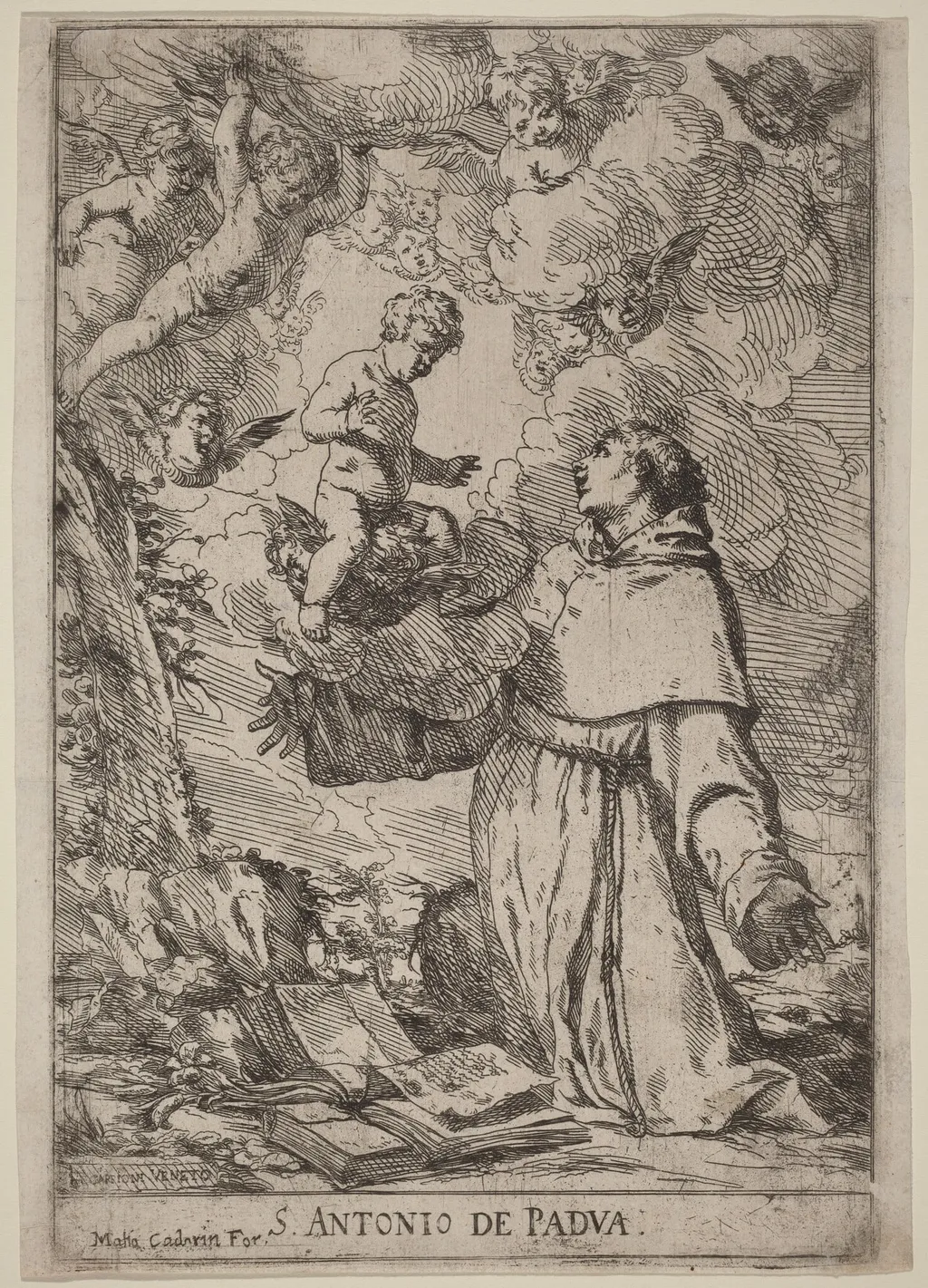
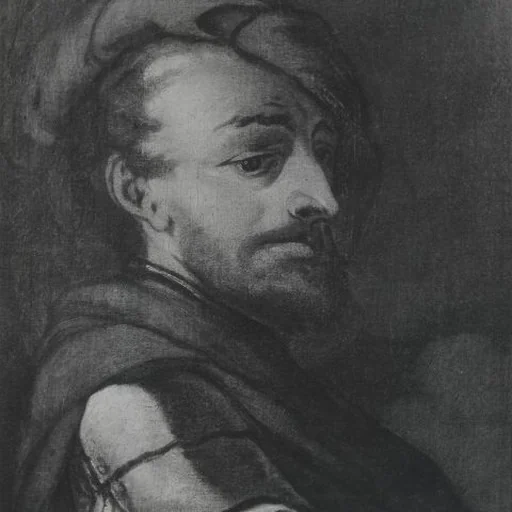
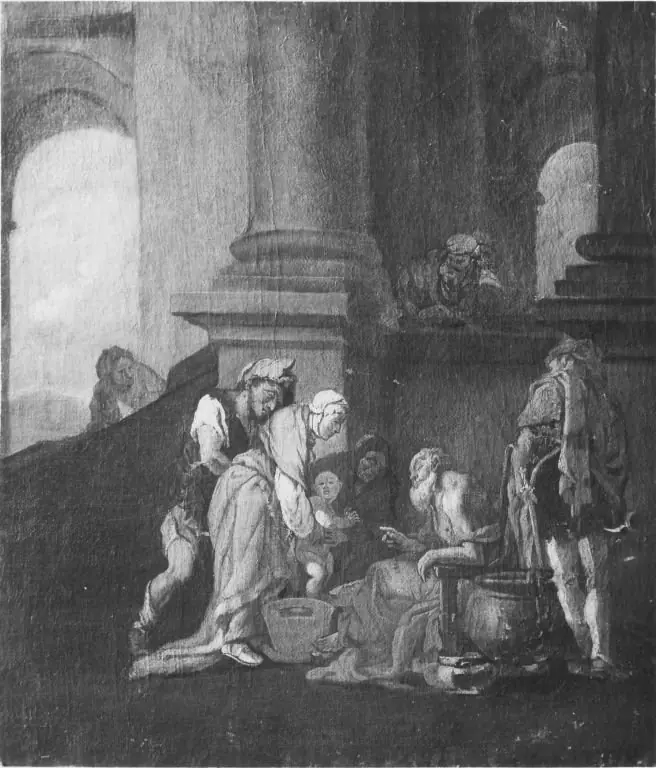
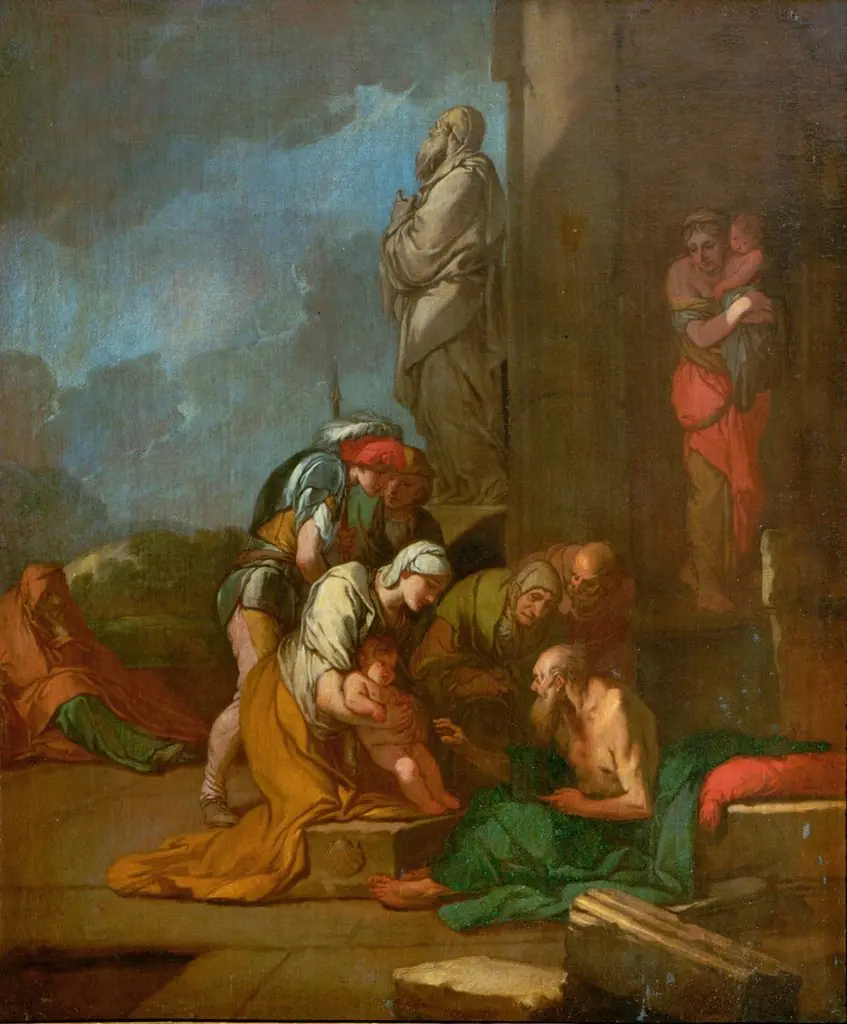
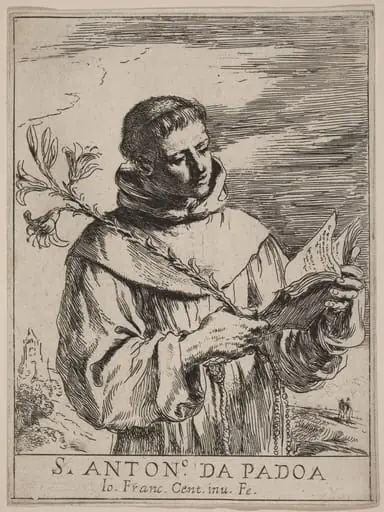
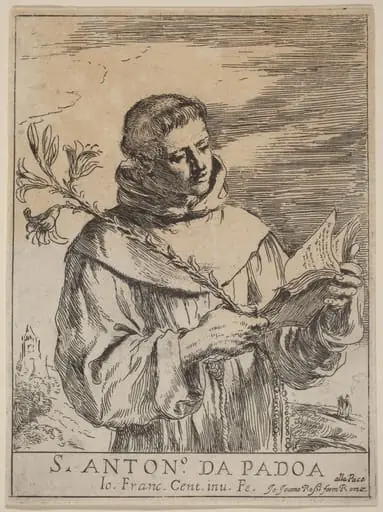
Saint Anthony of Padua is an ink print by the Baroque artist Giulio Carpioni. It dates from 1644 and is held in the collection of the National Gallery of Art.
About this work
Overview
Giulio Carpioni’s etching of Saint Anthony of Padua, executed around 1644, is a monochrome print on laid paper. The composition presents the saint standing on a craggy shoreline, his serene expression contrasting with the turbulent sea and swirling sky behind him.
Subject & Meaning
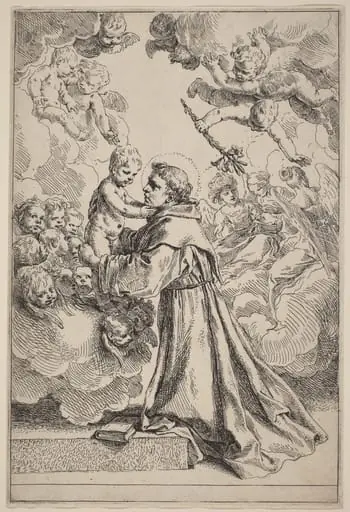
The work depicts Saint Anthony, a frequently represented figure in Christian iconography, positioned as a focal point of devotion. A multitude of figures—some kneeling, others reaching upward—surround him, suggesting a scene of prayer or miraculous intercession.
Technique & Style
Carpioni employed the etching process, incising lines into a metal plate to achieve fine, sharp contours. The print’s dramatic effect derives from vigorous line work that renders the churning water, cloud movement, and the varied gestures of the crowd.
History & Provenance
Created in the mid‑seventeenth century, the piece reflects the period’s interest in religious subjects rendered with dynamic composition. The inscription at the bottom identifies the saint, a common practice for devotional prints intended for private contemplation.
Context
During the Baroque era, artists often emphasized movement and emotional intensity. Carpioni’s treatment of Saint Anthony aligns with this aesthetic, using stark contrasts and energetic lines to convey both spiritual calm and natural turbulence.
Artist & collection