Artwork
Frieze of Children Dancing to a Bag-pipe
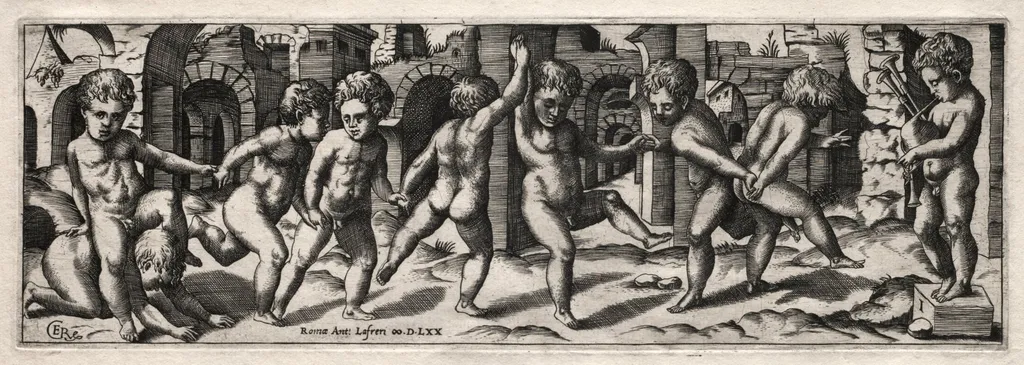
Frieze of Children Dancing to a Bag-pipe is a print by the Renaissance artist Giorgio Reverdino. It dates from 1504 and is held in the collection of the Cleveland Museum of Art.
About this work
Overview
Georges Reverdy’s 1570 engraving, Frieze of Children Dancing to a Bagpipe, presents a procession of plump youths in billowing breeches, moving in step to a lone bagpiper. The figures occupy a simple garden setting rendered in flat green washes, while the musician’s headgear resembles a stylised, carpet‑like form, lending a whimsical tone to the composition.
Subject & Meaning
The work depicts a playful yet formalized dance, the children’s solemn expressions contrasting with their youthful vigor. The exaggerated seriousness may comment on the performative aspects of courtly entertainment, while the fanciful hat on the piper introduces a note of satire, suggesting a light‑hearted critique of contemporary fashions or musical tropes.
Technique & Style
Executed as an engraving, the image relies on fine line work and cross‑hatching to model the figures and suggest texture in the clothing. The background is reduced to broad, unmodulated green fields, emphasizing the linear arrangement of the dancers. The composition’s rhythmic repetition and the exaggerated proportions echo the Mannerist taste for stylisation over naturalism.
History & Provenance
Created in 1570, the print entered the collection of Leonard C. Hanna, Jr., who donated it to the museum in 1928 (accession 1928.771). Its survival in good condition reflects the durability of copperplate prints and the continued interest in Renaissance genre scenes among early‑20th‑century collectors.
Context
Reverdy’s engraving aligns with a broader Renaissance fascination with allegorical and grotesque imagery, reminiscent of Giuseppe Arcimboldo’s composite portraits that blend human forms with objects. Both artists employ whimsical distortion to explore the boundaries between the natural and the fantastical, situating this work within a tradition of playful visual riddles.
Artist & collection

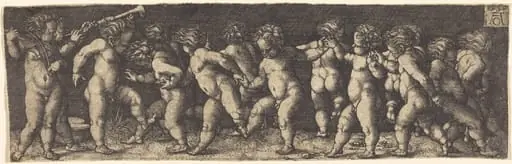 Dancing Children
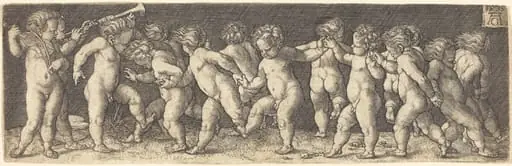 Dancing Children
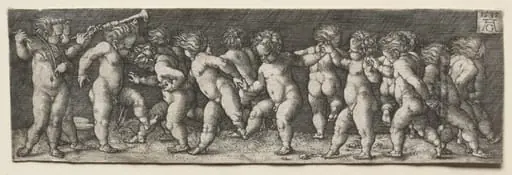 Fifteen Nude Children Dancing
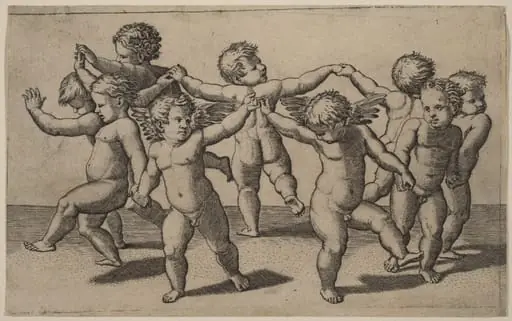 Dance of Cupids
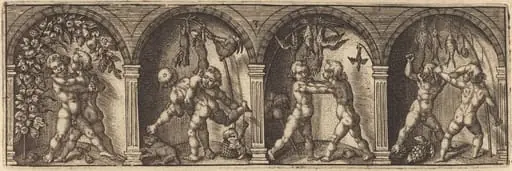 Les divers pourtraicts et figures III
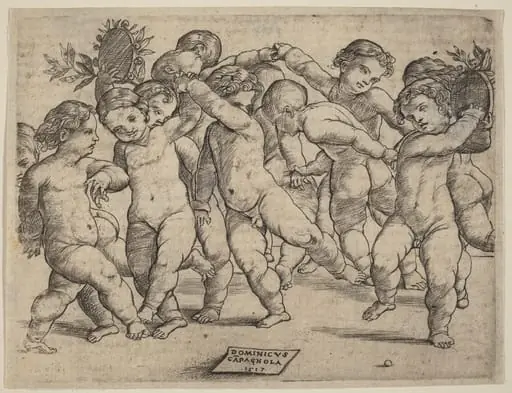 Twelve Children Dancing
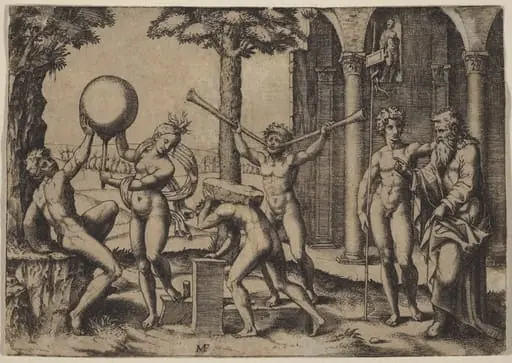 The Man with Two Trumpets
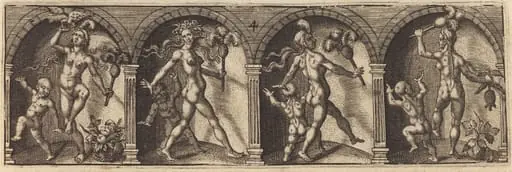 Les divers pourtraicts et figures IV
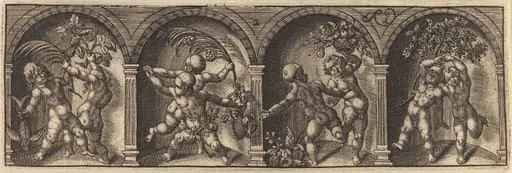 Les divers pourtraicts et figures II
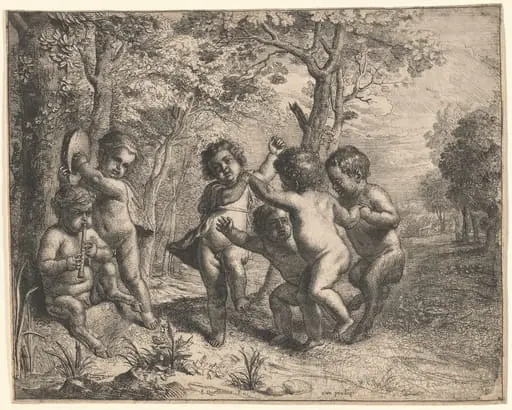 Four Dancing Children and Two Making Music
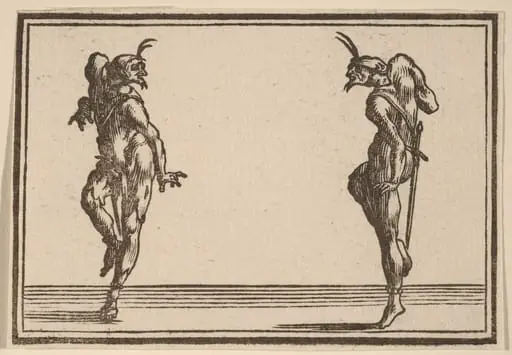 Two Pantaloons Dancing
 Two Putti...Striking Another Who Is Squeezing a Child