Artwork
The Man with Two Trumpets
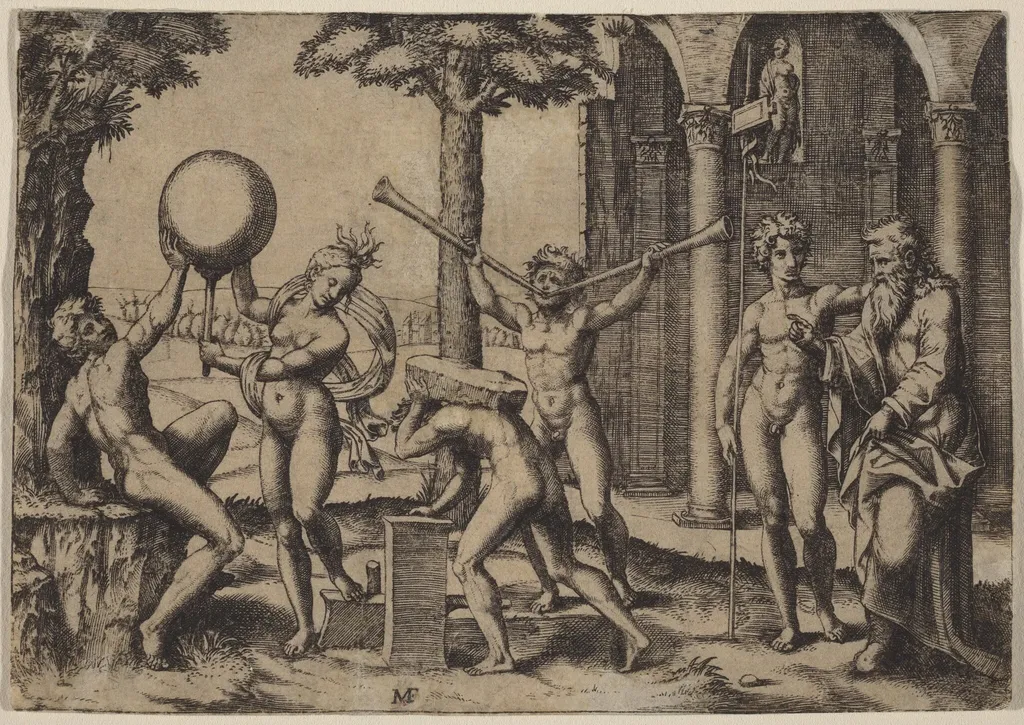
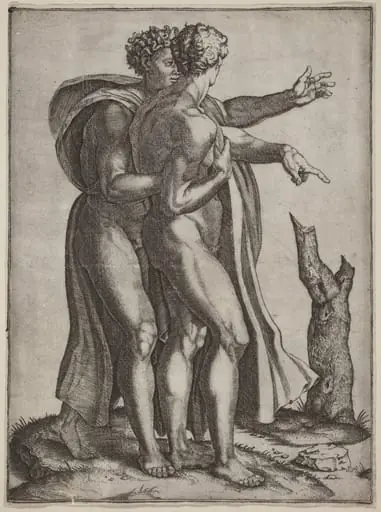
The Man with Two Trumpets is an ink print by the Renaissance artist Marcantonio Raimondi. It dates from 1518 and is held in the collection of the National Gallery of Art.
About this work
Overview
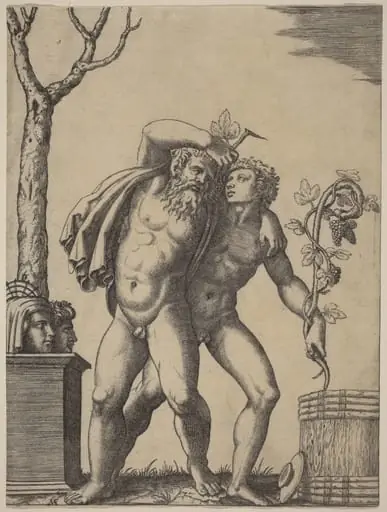
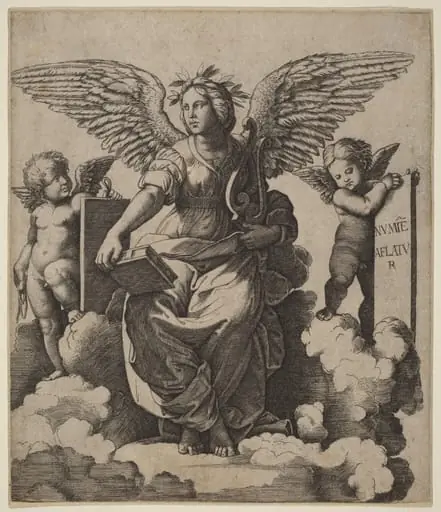
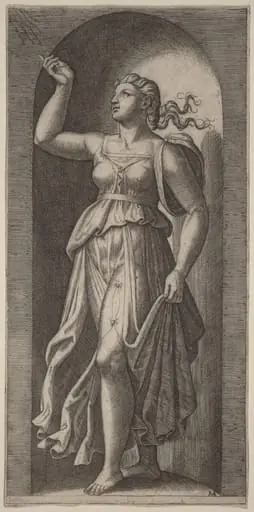
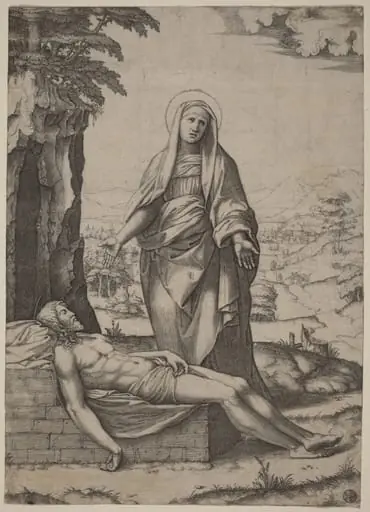
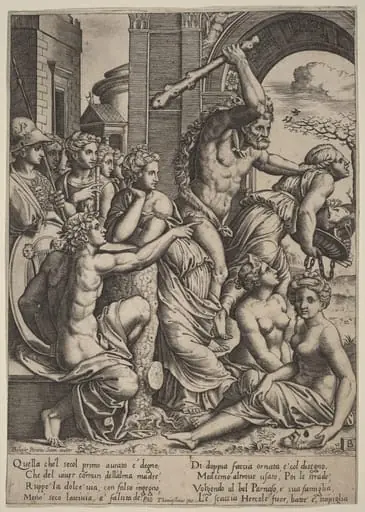
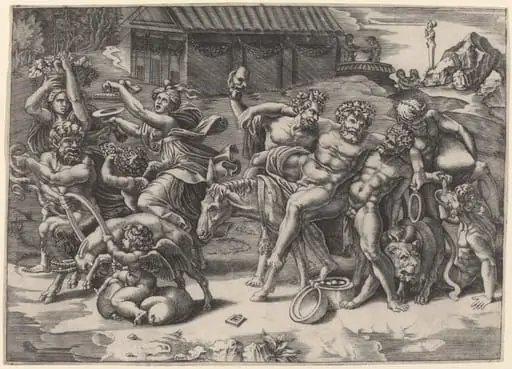
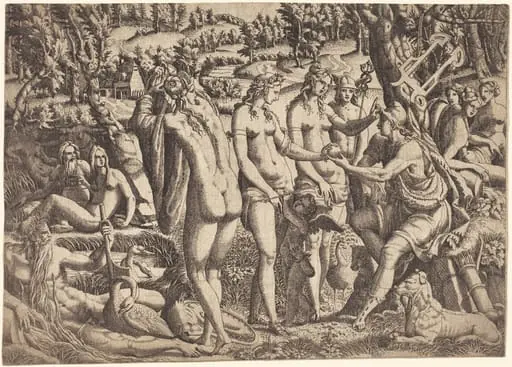
The Man with Two Trumpets is an engraving on laid paper created by Italian artist Marcantonio Raimondi around 1518. Contrary to its title, the print depicts a complex outdoor scene with five naked figures, multiple elements, and a dramatic backdrop.
Subject & Meaning
Despite the title's focus, the engraving shows a chaotic scene with varied activities: a bound man, a trumpeter, a woman with fruit, and another figure in contemplation. The inclusion of a columned building, statue, and globe in the background adds depth, though the overall narrative remains ambiguous.
Technique & Style
Raimondi employed fine lines to achieve detailed shadows and textures, evident in the figures' skin and the tree. The work exemplifies High Renaissance refinement, leveraging Raimondi's systematized technical innovations in reproductive printmaking.
History & Provenance
Created circa 1518 by Marcantonio Raimondi, a pioneer in reproductive printmaking, this engraving reflects his ability to disseminate artistic designs widely, including posthumous works of his collaborators, such as Raphael.
Context
The print was produced during the early 16th century, a time when Raimondi's innovative engraving techniques were influencing European artistic practices, particularly in the dissemination of High Renaissance styles.
Legacy
The Man with Two Trumpets contributes to Raimondi's legacy as a key figure in popularizing Renaissance art through printmaking, with his technical advancements leaving a lasting impact on European print culture.
Artist & collection

Artist
Marcantonio Raimondi, often called simply Marcantonio (c. 1470/82 – c. 1534), was an Italian engraver, known for being the first important printmaker whose body of work consists largely of prints copying paintings. He…