Artwork
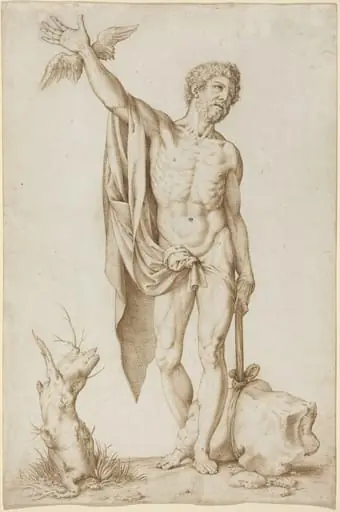
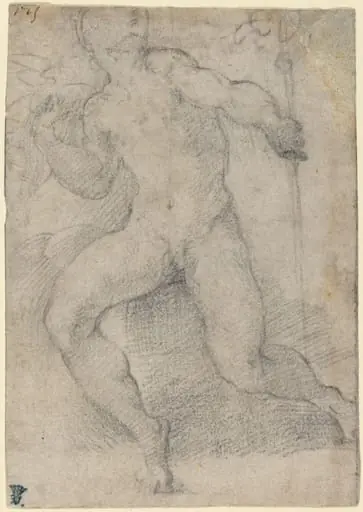
Man Seated Holding a Forked Staff
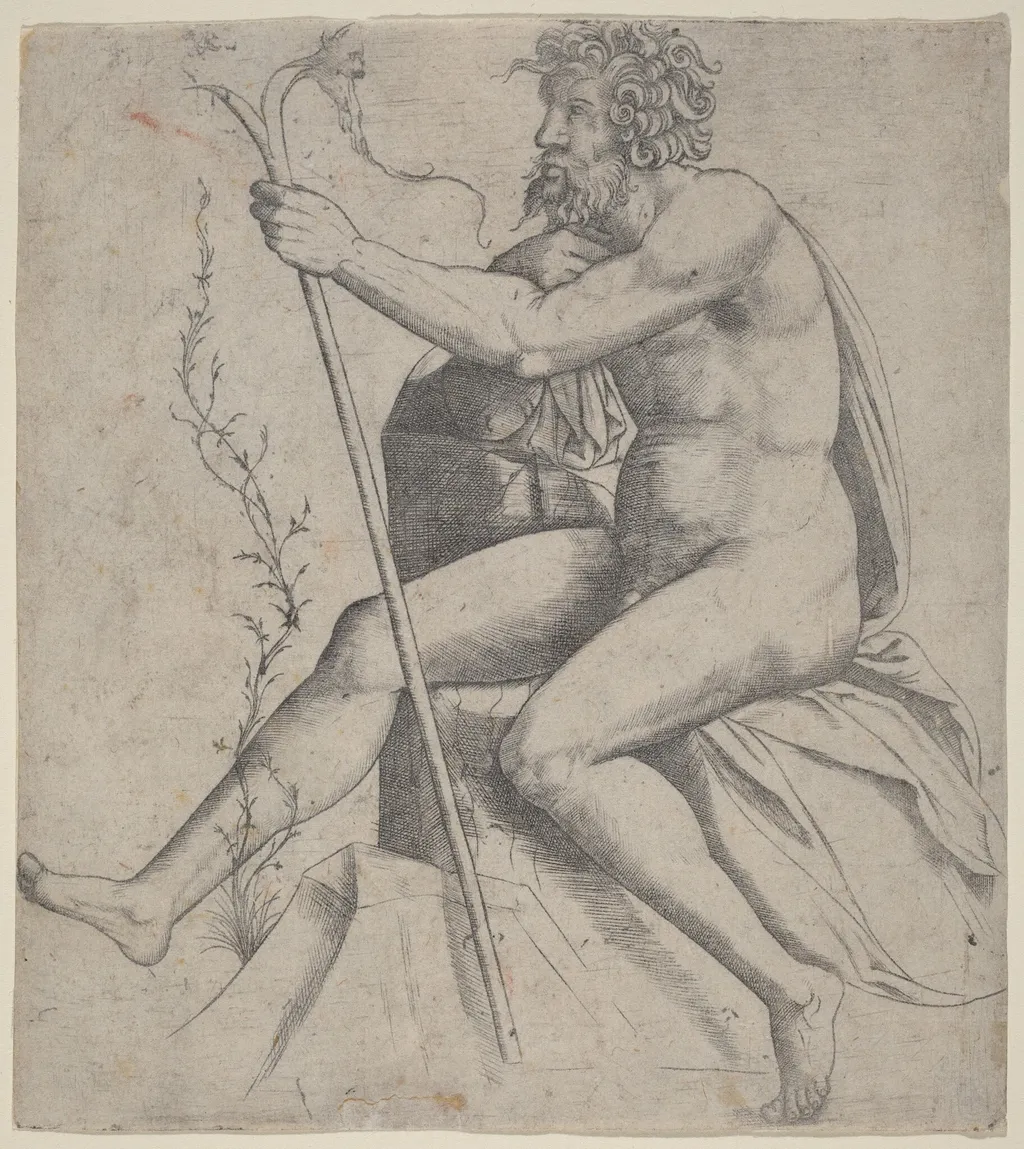
Man Seated Holding a Forked Staff is an ink print by the Renaissance artist Giovanni Antonio da Brescia. It dates from 1514 and is held in the collection of the National Gallery of Art.
About this work
Overview
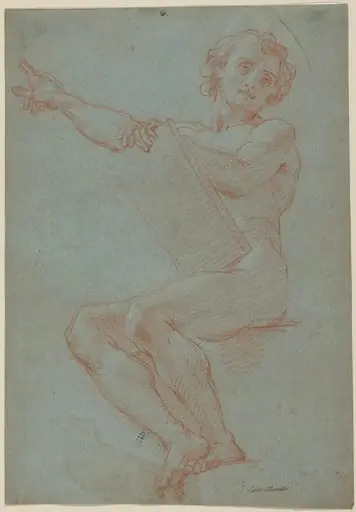
Created circa 1514, this copper engraving portrays a nude male figure seated on a rock, his left knee drawn up and his right leg stretched outward. He gazes to his right while grasping a slender, bifurcated staff in his right hand. The composition is isolated against an unadorned background, emphasizing the figure’s form and the object he holds.
Subject & Meaning
The work presents a solitary, idealized male body, rendered in a classical pose reminiscent of ancient sculpture. The forked staff, a distinctive element, may allude to mythological or allegorical themes, though the engraving offers no explicit narrative, leaving interpretation open to the viewer.
Technique & Style
Executed with fine cross‑hatching, the engraving demonstrates meticulous control of line to model flesh, hair, and the staff’s texture. The dense, parallel strokes create subtle gradations of light and shadow, evidencing the artist’s command of the medium and the Renaissance interest in anatomical precision.
History & Provenance
The piece is attributed to Giovanni Antonio da Brescia, an early‑16th‑century Italian printmaker active in northern Italy. Early in his career he signed works with the initials “Z.A.” before adopting more elaborate monograms such as “IO.AN.BX.” This engraving reflects his mature period and the broader developments in Northern Italian engraving.
Context
Produced during the Italian Renaissance, the print aligns with contemporary efforts to revive classical forms and explore human anatomy through print media. Engravings like this circulated widely, disseminating artistic ideas beyond the confines of painted or sculptural commissions.
Artist & collection

Artist
Giovanni Antonio da Brescia was an Italian engraver of northern Italy, active in the approximate period 1490–1519, during the Italian Renaissance.