Artwork
Fight between Eleven Warriors
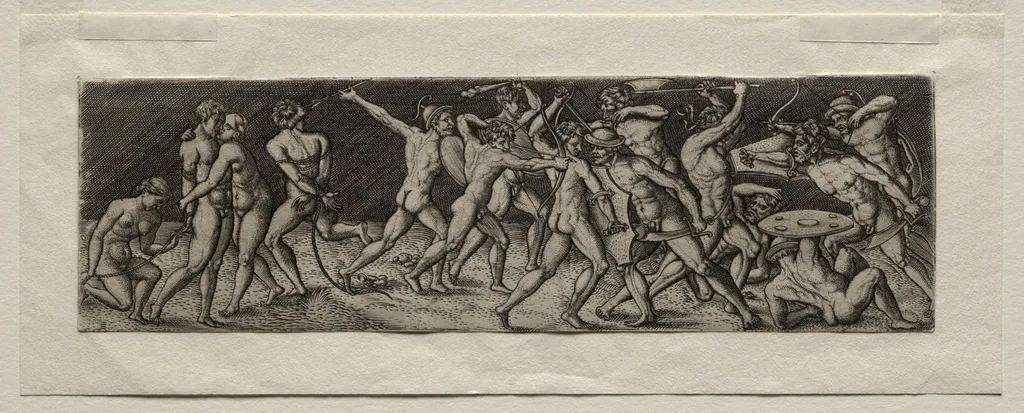
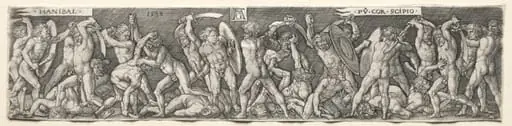
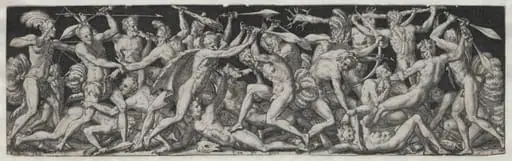
Fight between Eleven Warriors is a print by the Renaissance artist Allaert Claesz. It dates from 1525 and is held in the collection of the Cleveland Museum of Art.
About this work
Overview
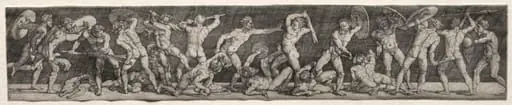
Created in 1525 by Allaert Claesz, this etching depicts a violent, unstructured melee among eleven nude male figures.
Created in 1525 by Allaert Claesz, this etching depicts a violent, unstructured melee among eleven nude male figures. The scene lacks a narrative climax or identifiable heroes, focusing instead on raw physical struggle. Executed in ink on paper, the work is part of the collection at The Cleveland Museum of Art, where it is noted for its intense composition and early Renaissance printmaking technique.
Subject & Meaning
The image presents a chaotic brawl with no clear victor or story, suggesting a symbolic or allegorical intent rather than a historical event. The absence of armor or context removes the fight from any specific time or culture, inviting interpretation as a universal representation of human conflict. The nakedness of the figures may emphasize vulnerability or primal instinct over martial identity.
Technique & Style
Claesz employed sharp, incised lines to define muscular forms and dynamic motion, creating a sense of urgency through overlapping bodies and angular poses. The use of chiaroscuro—contrasting dark and light areas—heightens the drama, with deep shadows anchoring the composition and highlighting tension in limbs and torsos. The etching’s dense detail and lack of background focus the viewer entirely on the physical struggle.
History & Provenance
The print was produced in the early 16th century, during a period when Northern European artists increasingly explored human anatomy and violent themes in print media. It entered the Cleveland Museum of Art’s collection through documented acquisition, though its earlier ownership history remains largely undocumented. Its survival in good condition reflects careful preservation over five centuries.
Context
This work emerged amid a broader interest in classical antiquity and the human form, influenced by Italian Renaissance ideals filtered through Northern European print culture. While not tied to a specific myth or biblical scene, its depiction of unarmored combat aligns with contemporary explorations of the body in motion, seen in works by artists like Dürer and later Michelangelo.
Legacy
Though not widely reproduced or studied, the print contributes to understanding how Northern artists interpreted human conflict without narrative clarity. Its raw energy and anatomical focus influenced later generations of printmakers interested in expressive figure drawing. The work remains a rare example of early 16th-century etching devoted entirely to unmediated physical struggle.
Artist & collection