Artwork
Jephthah returning from Battle is greeted by his Daughter
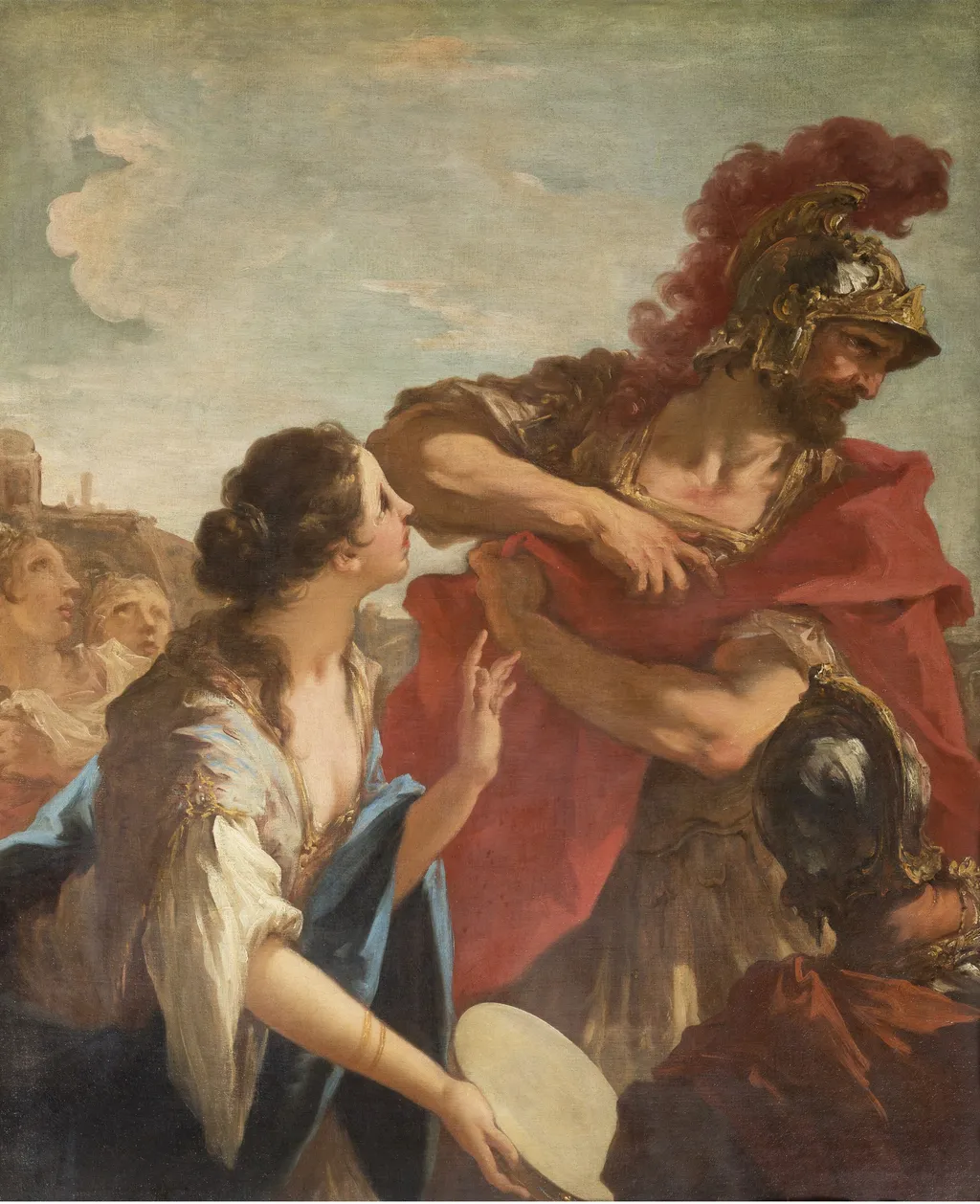
Jephthah returning from Battle is greeted by his Daughter is an oil painting by the Early Baroque Italian artist Giovanni Antonio Pellegrini. It dates from 1710 and is held in the collection of the National Galleries Scotland.
About this work
Overview
The work is part of the Scottish National Gallery’s collection and reflects the period’s interest in dramatic narrative subjects drawn from sacred texts.
Painted in 1710 by Giovanni Antonio Pellegrini, this oil on canvas depicts a moment from the biblical story of Jephthah. As a prominent Venetian history painter of the early 18th century, Pellegrini combined the grandeur of Renaissance composition with the dynamic energy of Baroque storytelling. The work is part of the Scottish National Gallery’s collection and reflects the period’s interest in dramatic narrative subjects drawn from sacred texts.
Subject & Meaning
The scene captures the moment Jephthah, a judge of Israel, returns victorious from battle, only to be met by his daughter, who joyfully greets him with a tambourine. Unaware of her father’s earlier vow to sacrifice the first person who welcomed him, the daughter’s innocent celebration foreshadows tragedy. The painting emphasizes the tension between triumph and impending loss, underscoring themes of duty, fate, and unintended consequence.
Technique & Style
Pellegrini employed rich coloration and fluid brushwork reminiscent of Veronese, while incorporating the theatrical lighting and emotional intensity characteristic of Baroque masters like Giordano. Figures are arranged in a diagonal composition to guide the eye toward the central encounter. Subtle chiaroscuro enhances the drama of the moment, particularly in the contrast between the illuminated figures and the brooding, cloud-streaked sky behind them.
History & Provenance
Commissioned during Pellegrini’s mature period, the painting was likely created for a private patron interested in biblical narratives. It entered the Scottish National Gallery’s collection in the 19th century, following the acquisition of several works from British and continental collections. Its preservation has allowed continued study of Venetian historical painting’s evolution in the early 1700s.
Context
In early 18th-century Venice, history painting remained a prestigious genre, often used to convey moral or religious lessons through classical and biblical themes. Pellegrini’s work reflects the city’s artistic traditions, where narrative clarity and emotional resonance were valued. His travels across Europe exposed him to Italian and French court styles, which subtly informed his approach to composition and figure expression.
Legacy
Though less widely known today than his contemporaries, Pellegrini’s work contributed to the transmission of Venetian Baroque aesthetics beyond Italy. This painting exemplifies how biblical subjects were rendered with psychological depth and visual drama during a period of transition between Renaissance ideals and emerging Enlightenment sensibilities. It remains a key example of Venetian narrative painting in a British public collection.
Own this work as a print
Artist & collection
Artist
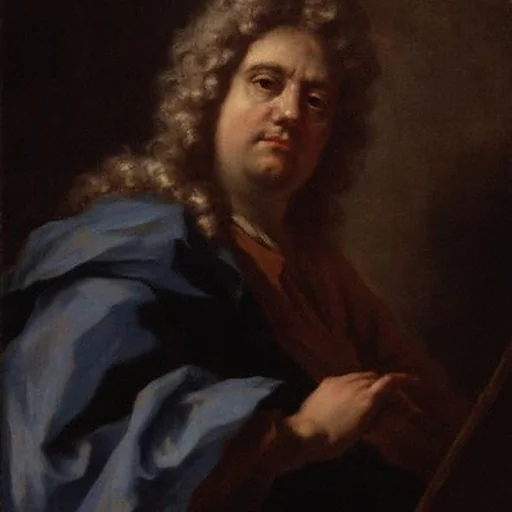
Giovanni Antonio Pellegrini (29 April 1675 – 2 or 5 November 1741) was one of the leading Venetian history painters of the early 18th century.

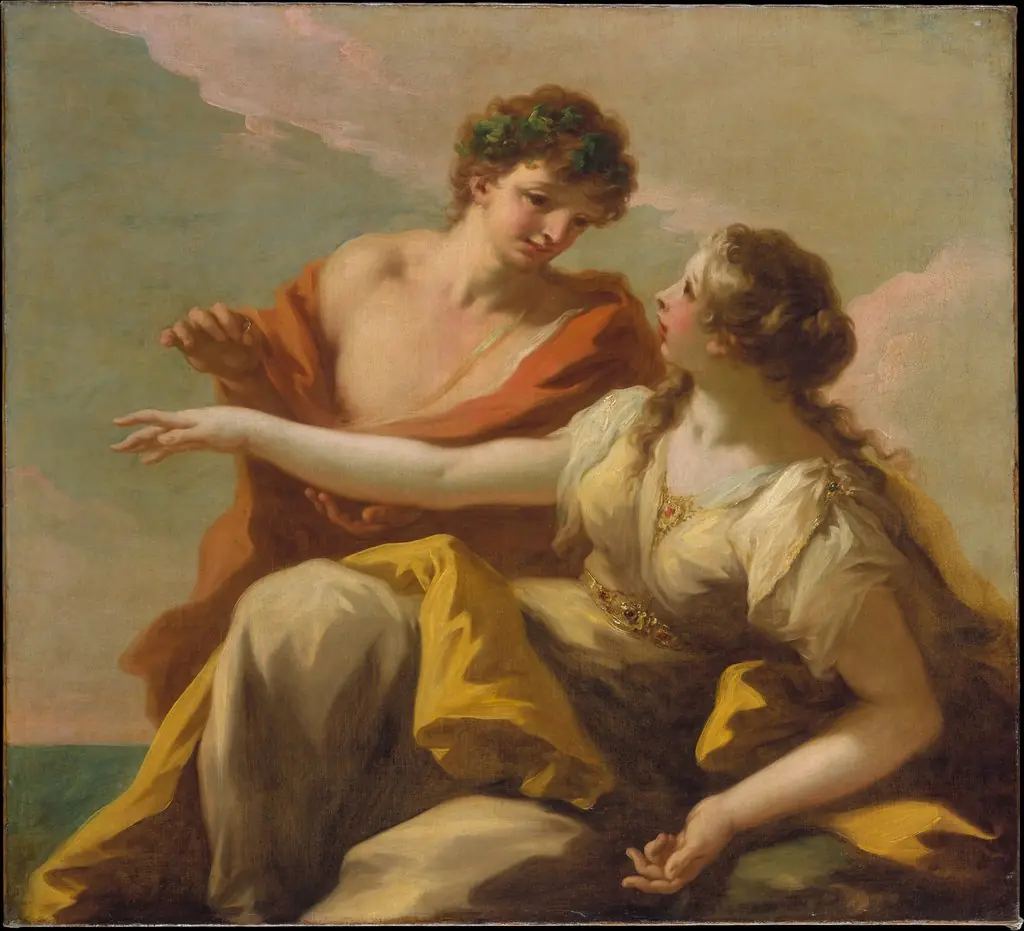 Bacchus and Ariadne
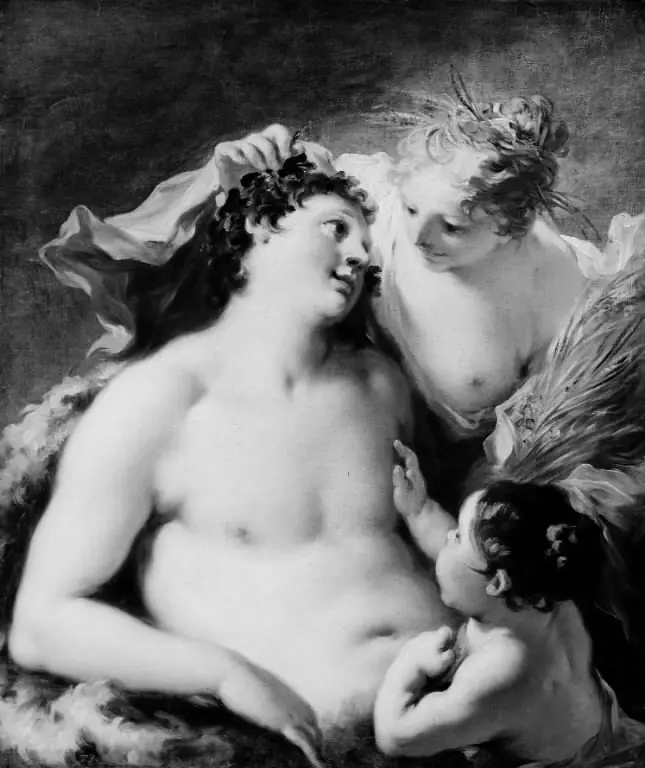 Ceres, Bacchus and Cupid
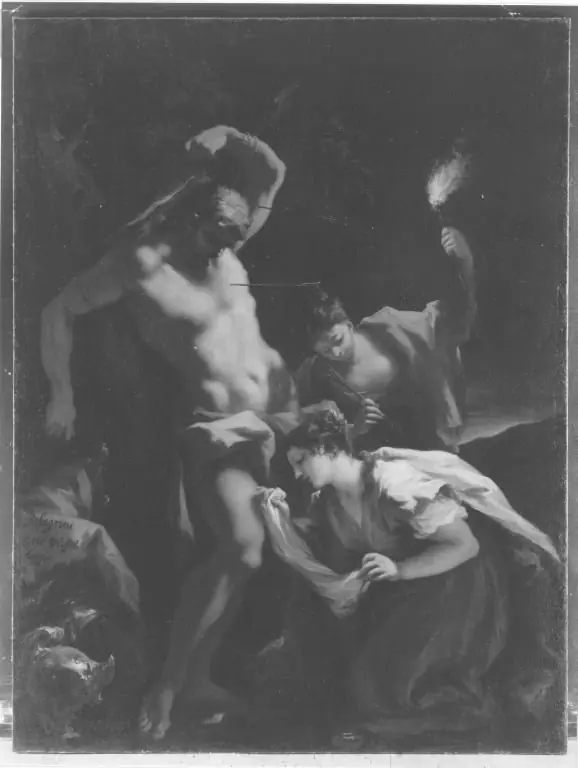 Rettung des hl. Sebastian durch Irene
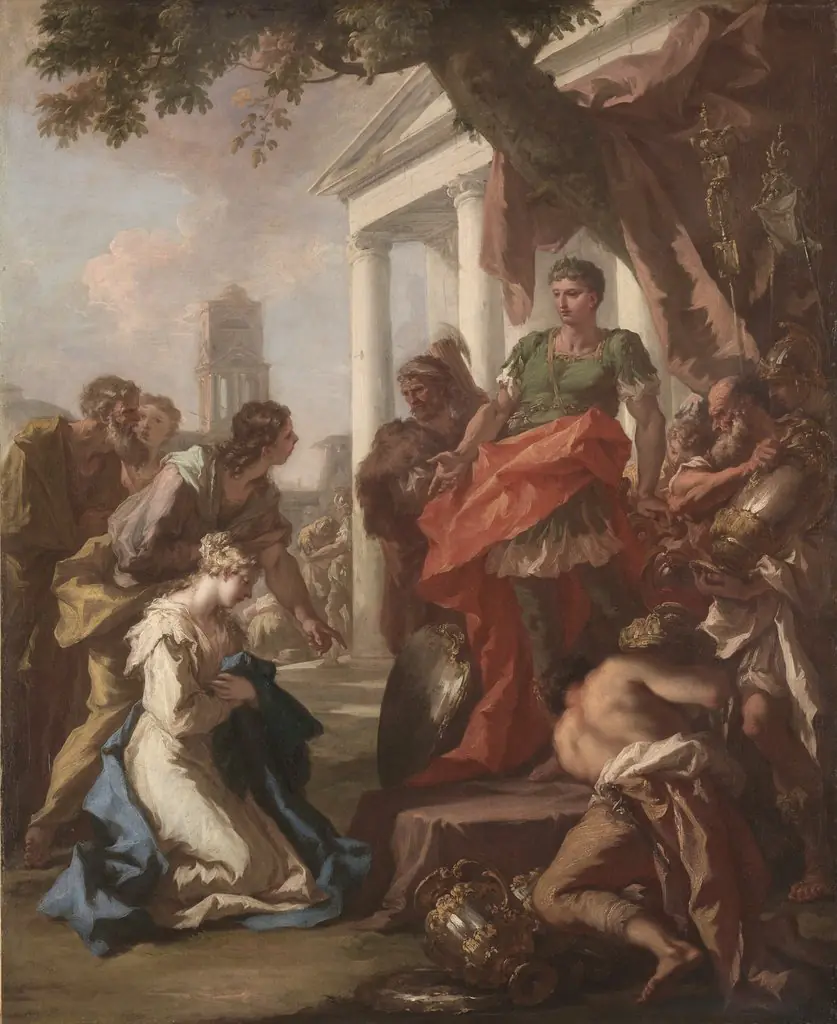 The Continence of Scipio
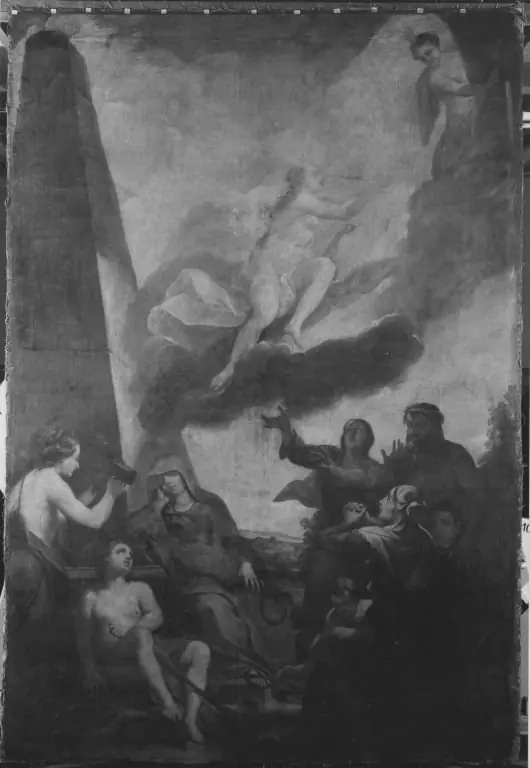 Allegorie auf den Tod einer Fürstin
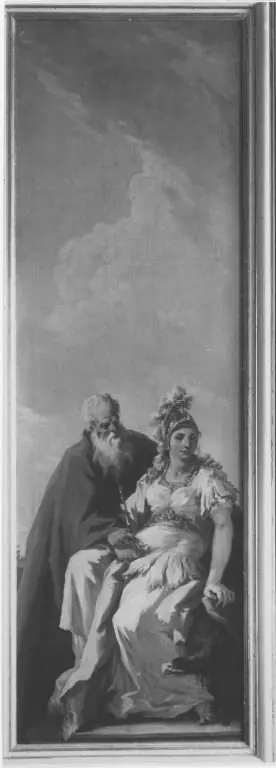 Allegorie: Ein alter Mann ergreift das Szepter
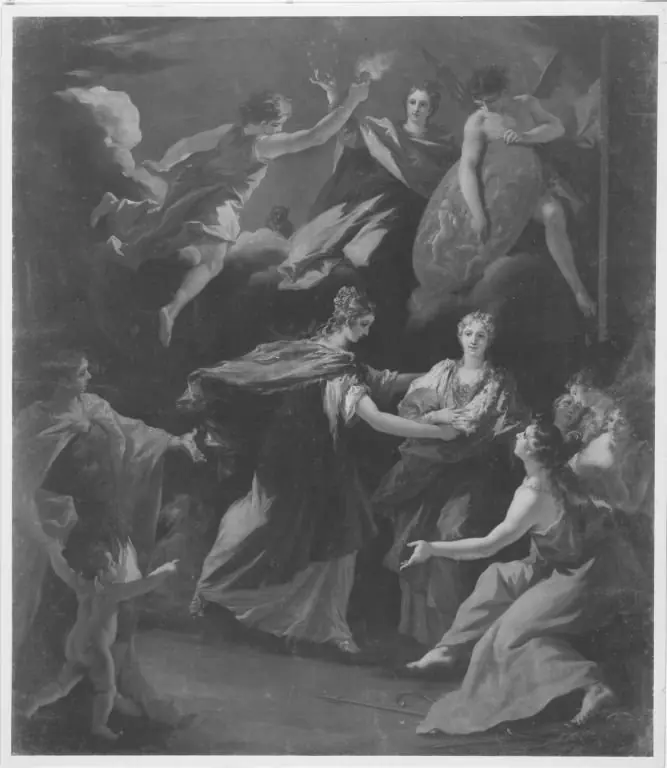 Begrüßung der Kurfürstin Maria Luisa von Toskana
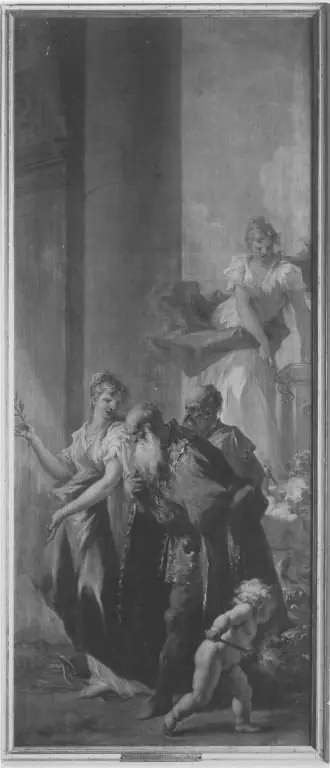 Allegorie der Befreiung vom Joch des Islam (Frieden und Glück unter Johann Wilhelm von der Pfalz)
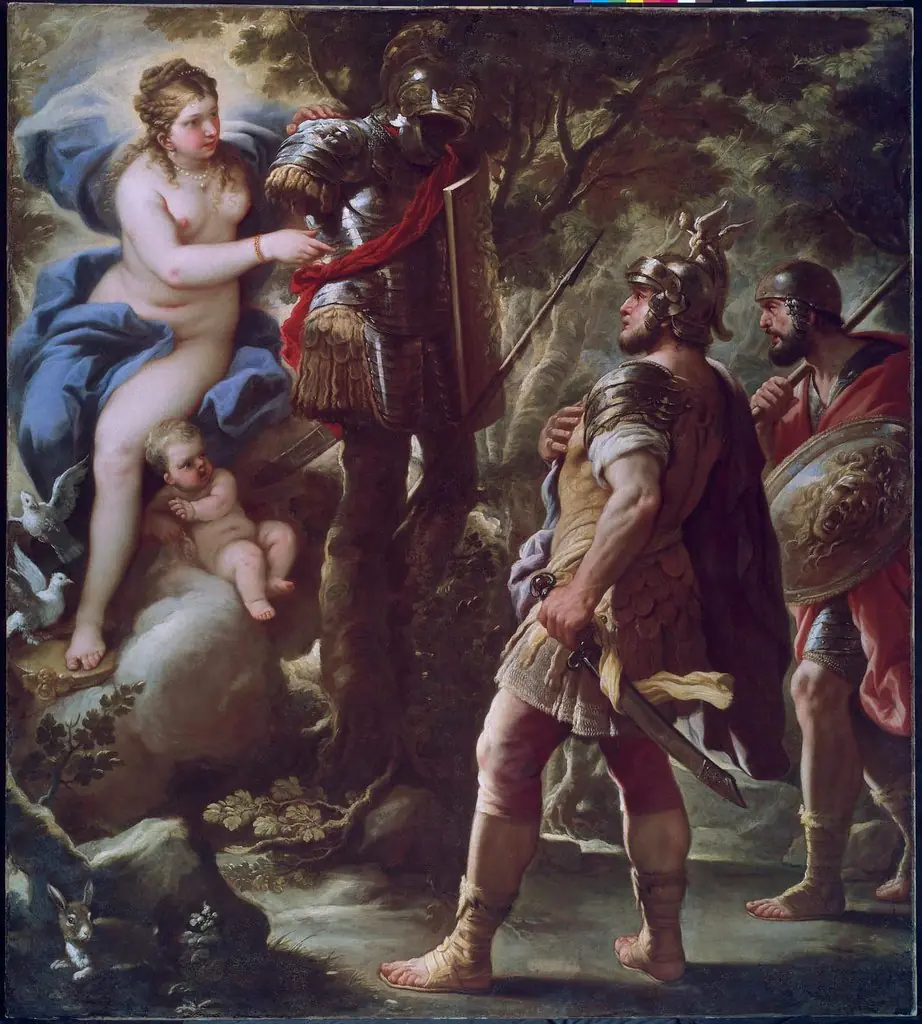 Venus Giving Arms to Aeneas
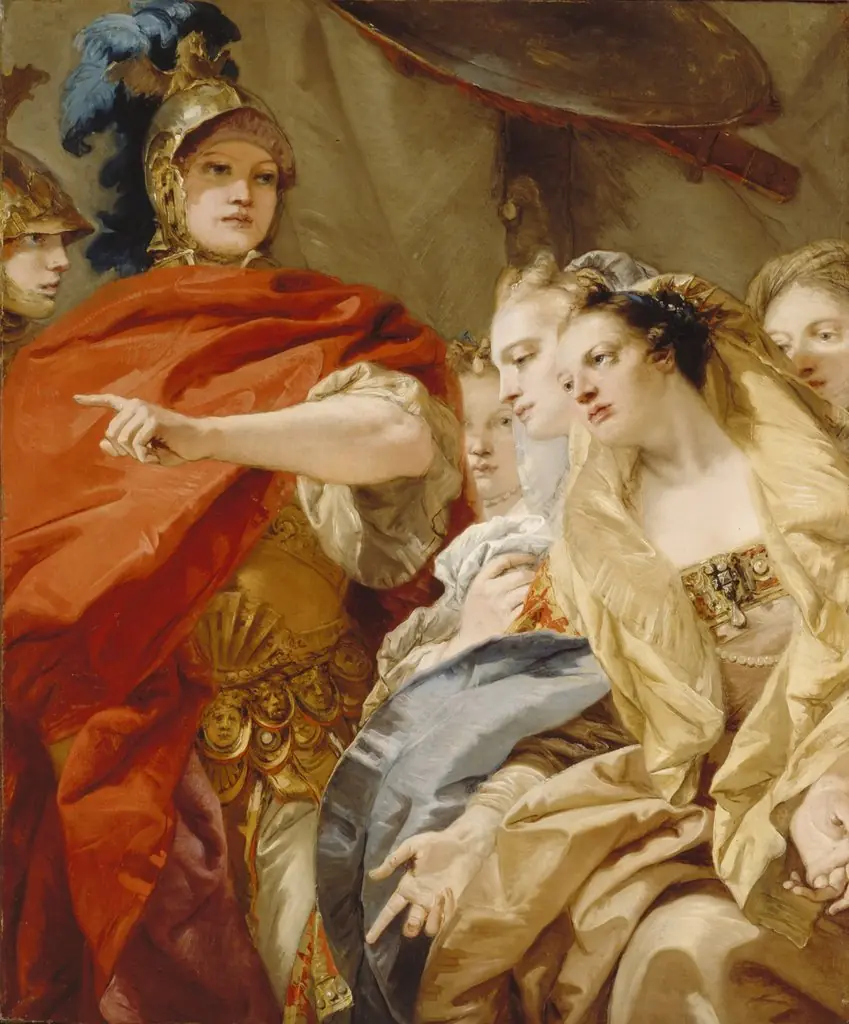 The Women of Darius Invoking the Clemency of Alexander
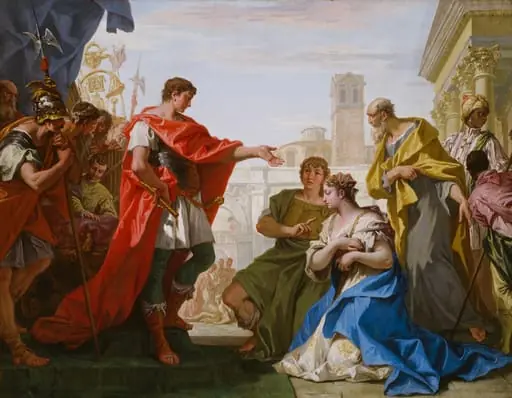 The Continence of Scipio
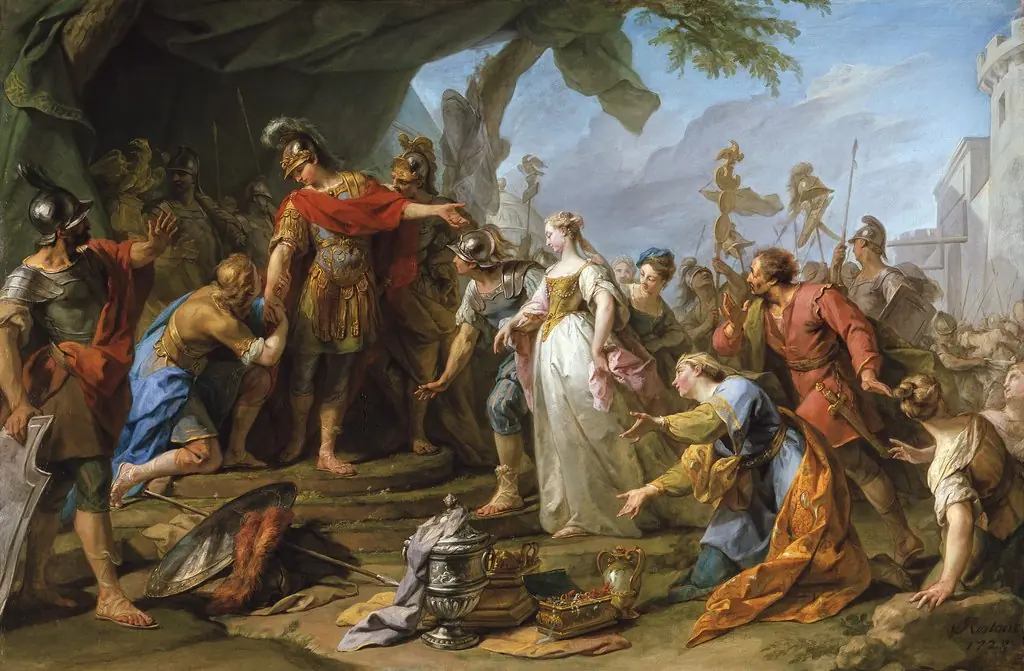 The Generosity of Scipio
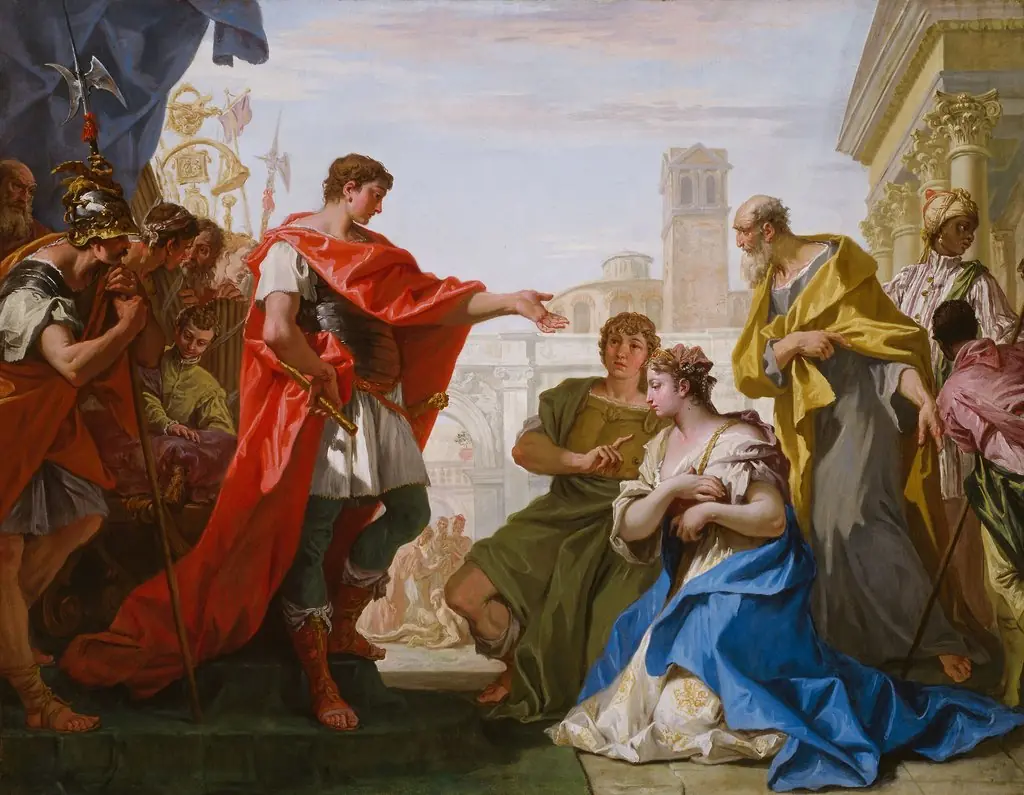 The Continence of Scipio
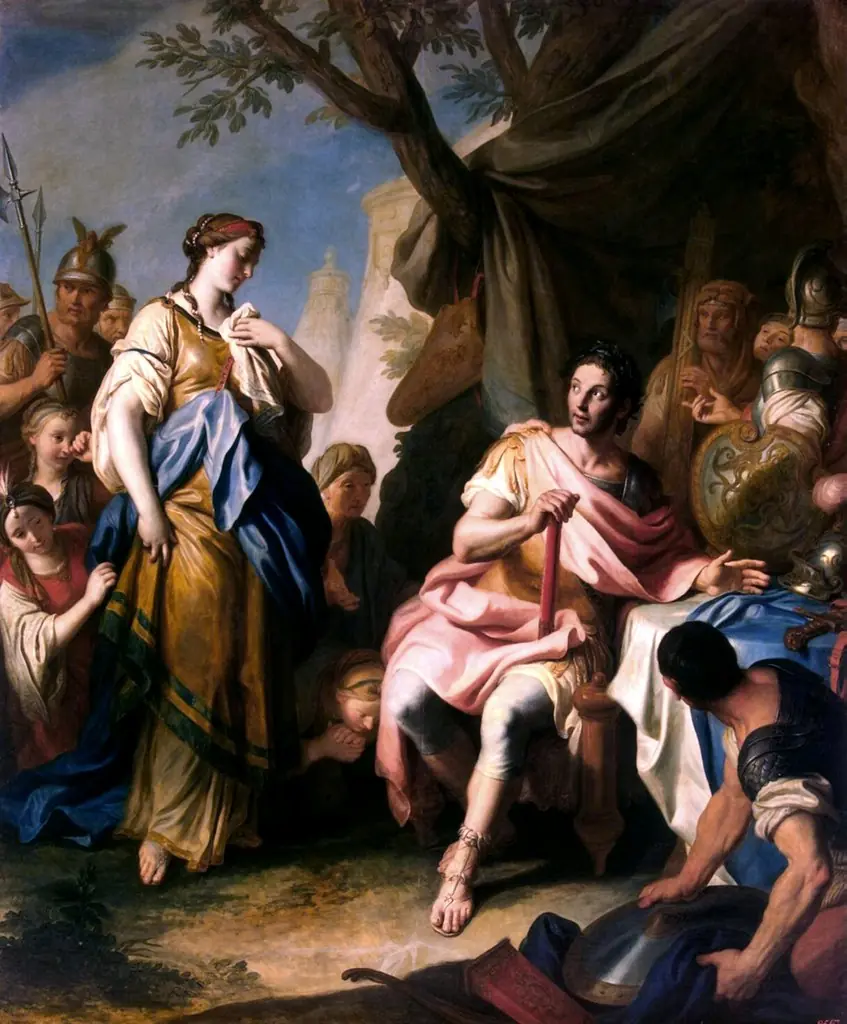 Alexander the Great and Roxana
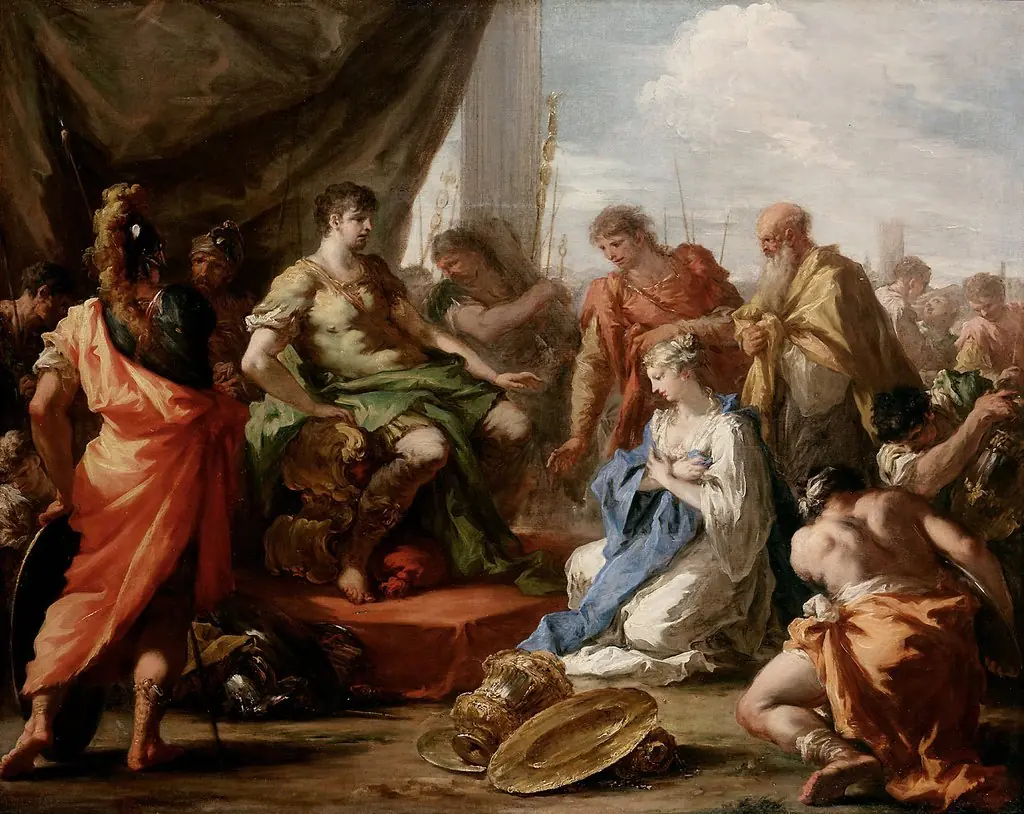 Enthaltsamkeit des Scipio
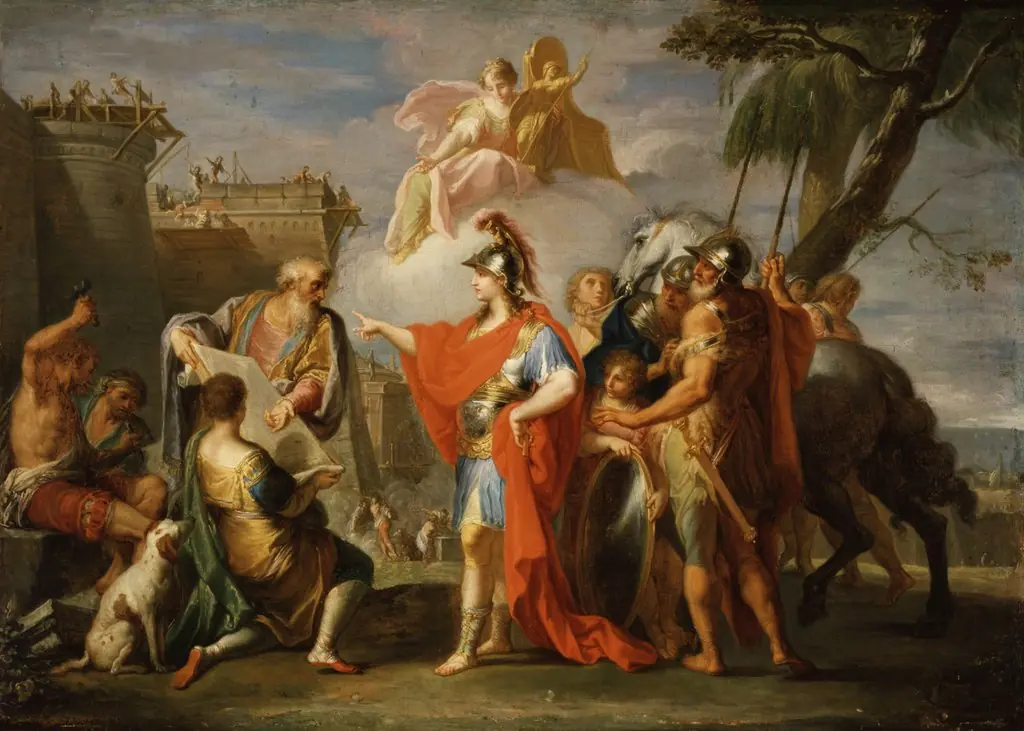 Alexander the Great Founding Alexandria
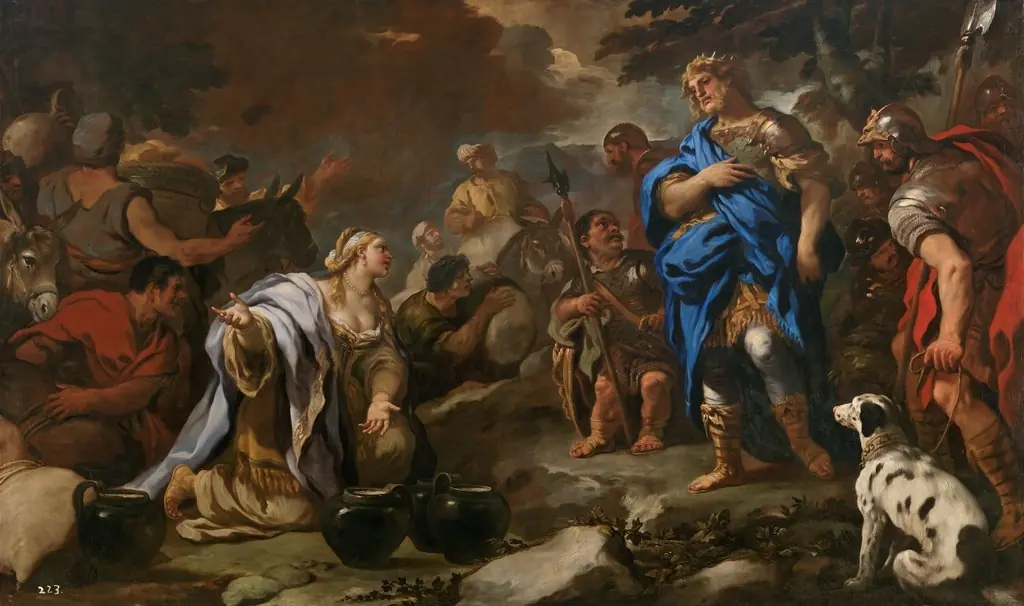 La prudente Abigail
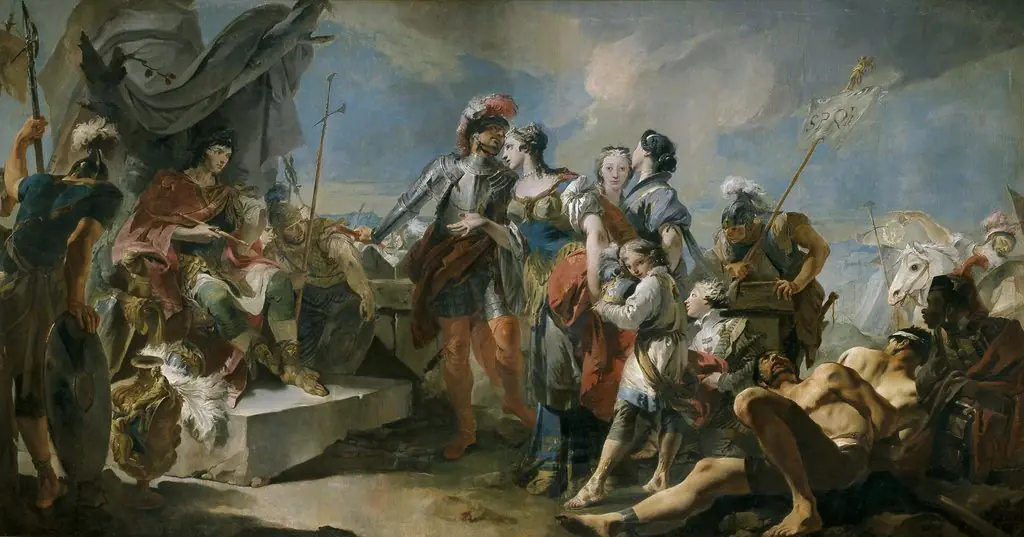 Queen Zenobia before the Emperor Aurelian
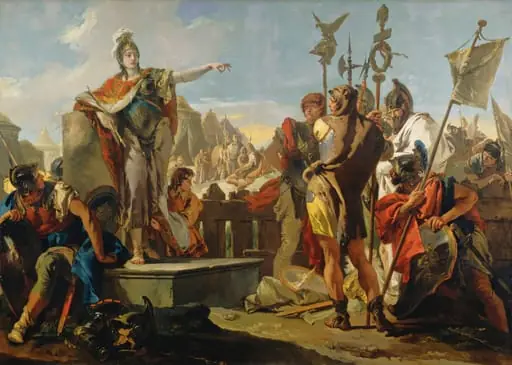 Queen Zenobia Addressing Her Soldiers
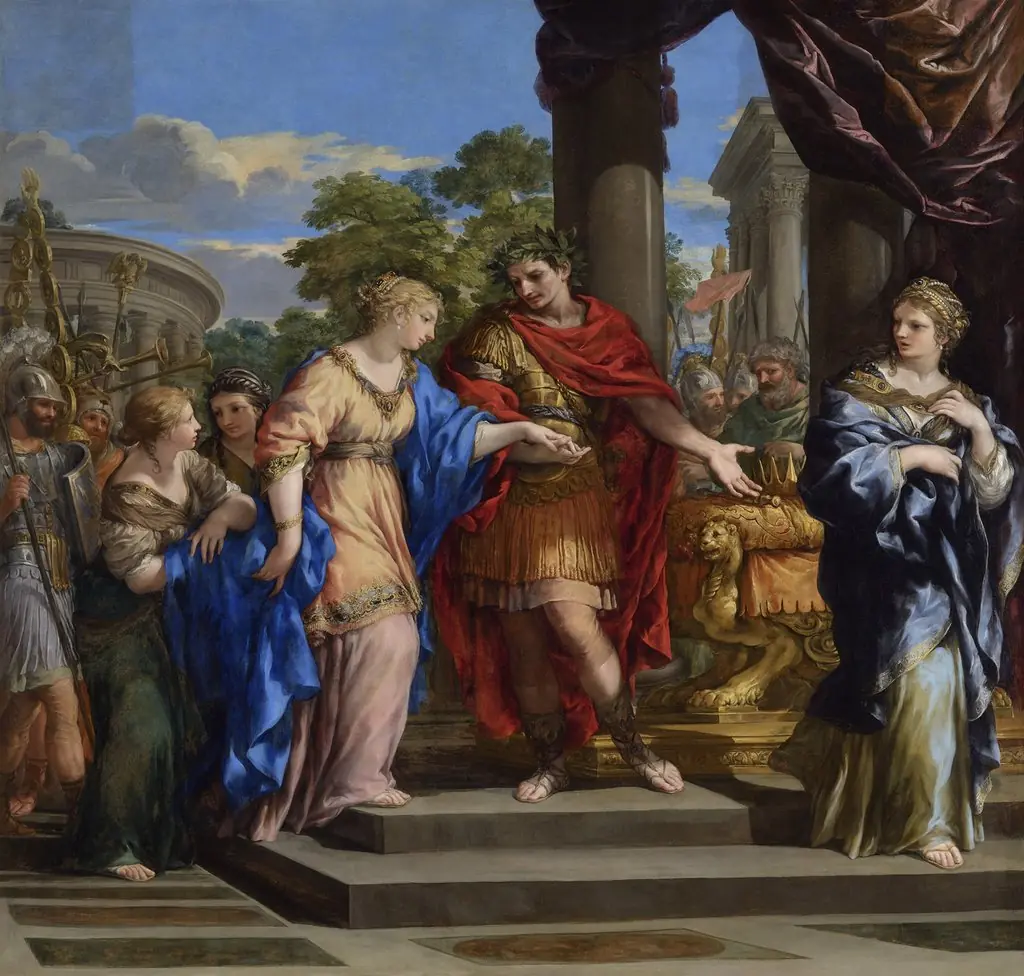 Caesar Giving Cleopatra the Throne of Egypt