Artwork
Hannibal recognises the head of his brother Hasdrubal
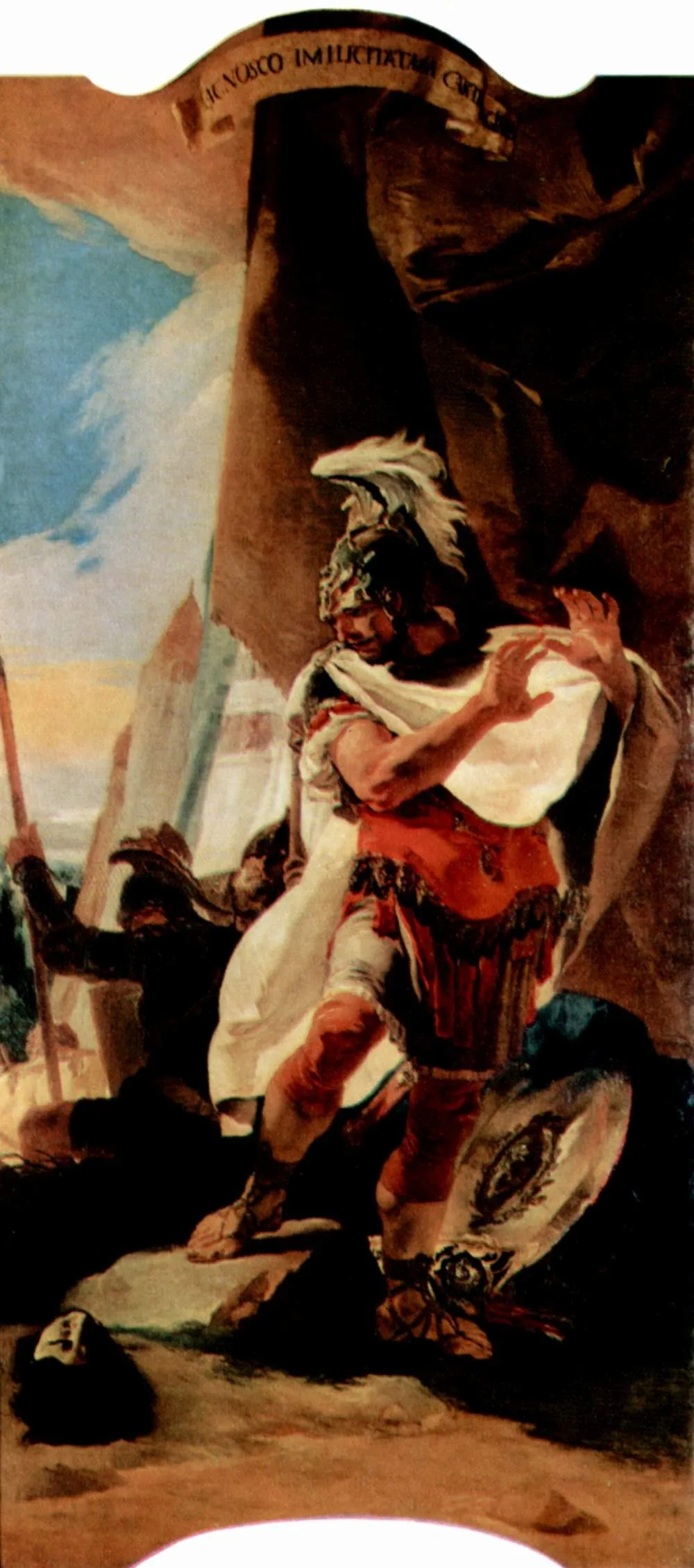
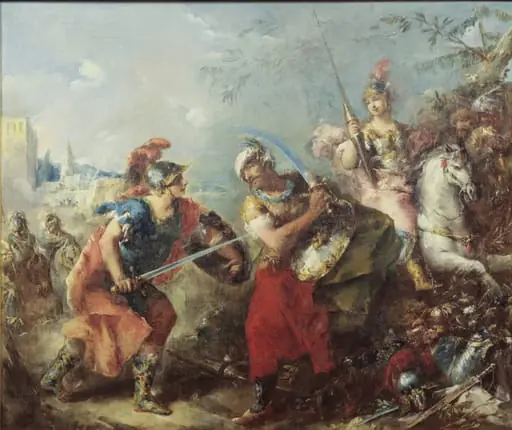
Hannibal recognises the head of his brother Hasdrubal is an oil painting by the Rococo painting artist Giovanni Battista Tiepolo. It dates from 1729 and is held in the collection of the Kunsthistorisches Museum.
About this work
Overview
Giovanni Battista Tiepolo's 1729 oil painting depicts a poignant moment from ancient history, capturing the emotional response of Hannibal upon recognizing the severed head of his brother Hasdrubal.
Subject & Meaning
The painting portrays Hannibal, clad in distinctive red and white armor, overcome with shock as he grasps the head of his slain brother, set against the backdrop of an ongoing battle. The scene conveys the personal cost of war amidst chaos.
Technique & Style
Tiepolo employed dramatic chiaroscuro, juxtaposing bold colors (notably Hannibal's red tunic) with muted landscape tones, to create a sense of raw urgency and emotional depth, heightened by the contrast between light and dark.
History & Provenance
Created in 1729, the painting is part of the collection at the Kunsthistorisches Museum.
Context
The work reflects Tiepolo's ability to interpret historical and mythological themes with emotional intensity, characteristic of Baroque painting's emphasis on dramatic narrative.
Legacy
While specific legacy details of this piece are not highlighted, it contributes to Tiepolo's reputation for capturing poignant moments in history with expressive use of light and color.
Artist & collection

Artist
Giovanni Battista Tiepolo, also known as Giambattista Tiepolo, was an Italian painter and printmaker from the Republic of Venice who painted in the Rococo style, considered an important member of the 18th-century Venetian school.

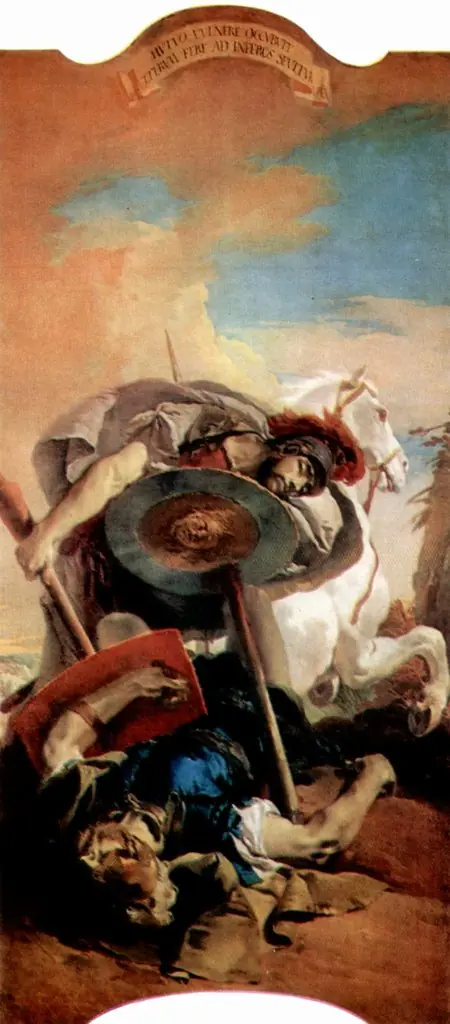 Death of Consul L. J. Brutus in a duel with Aruns
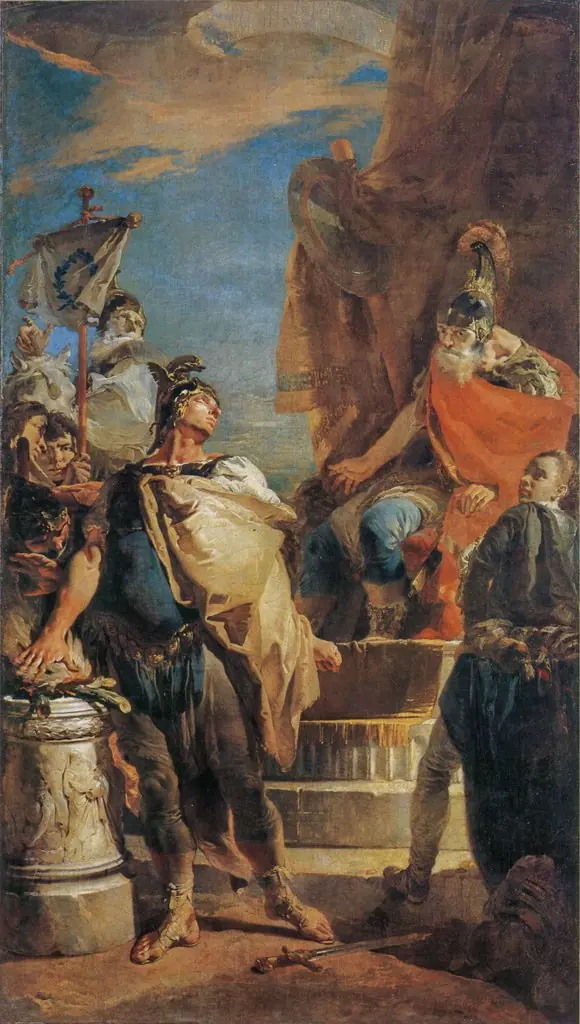 Mucius Scaevola before Porsenna
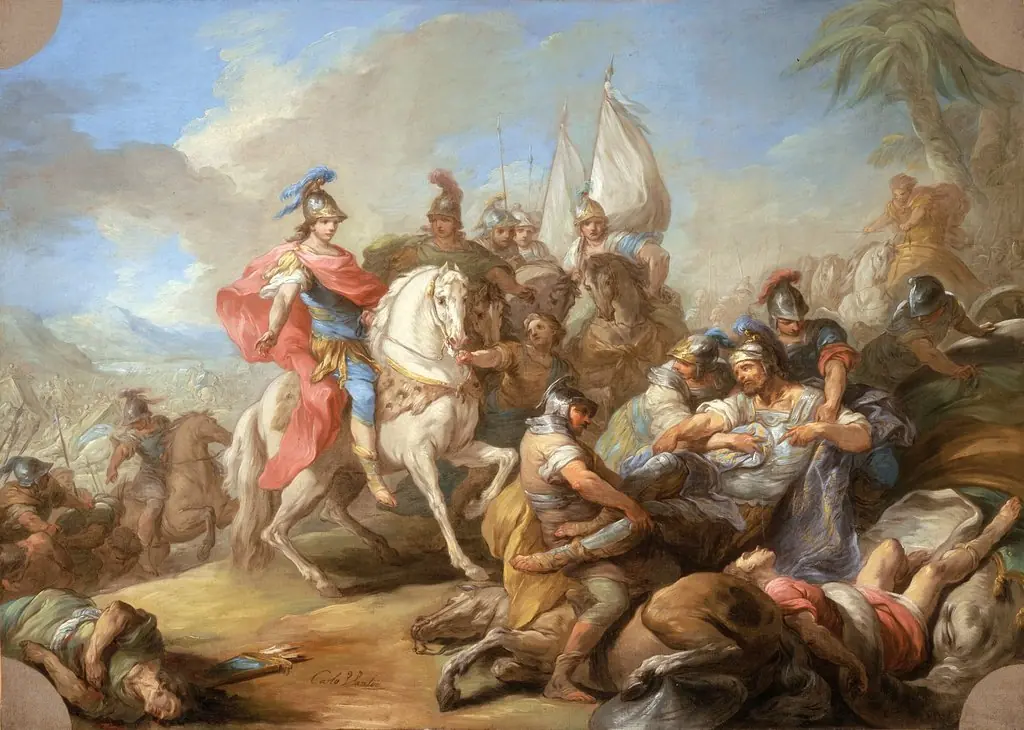 The Victory of Alexander over Porus
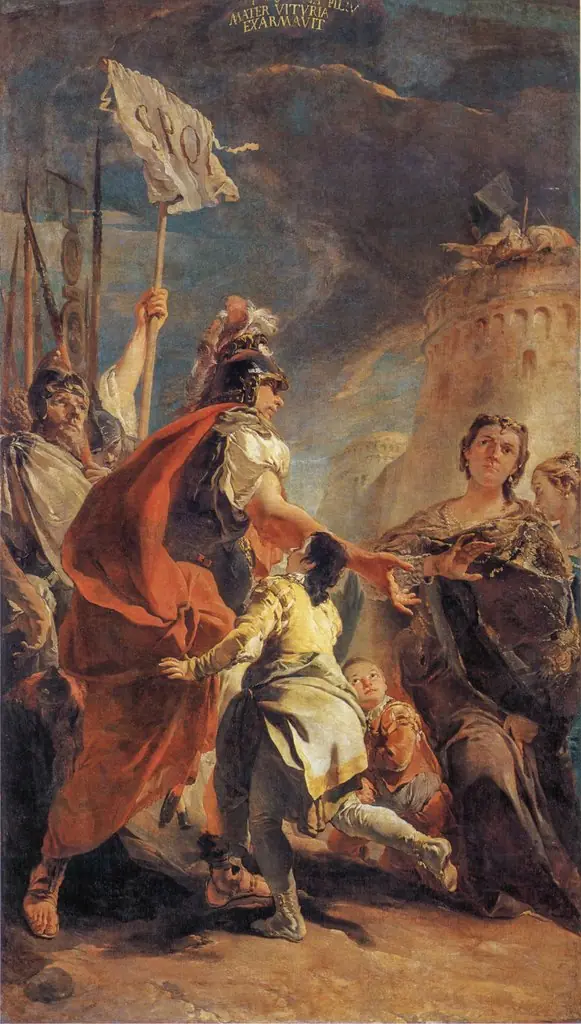 Coriolanus at the Walls of Rome
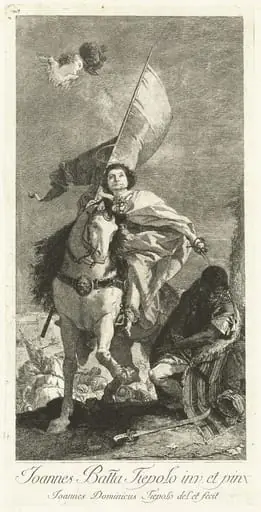 Saint James of Compostela
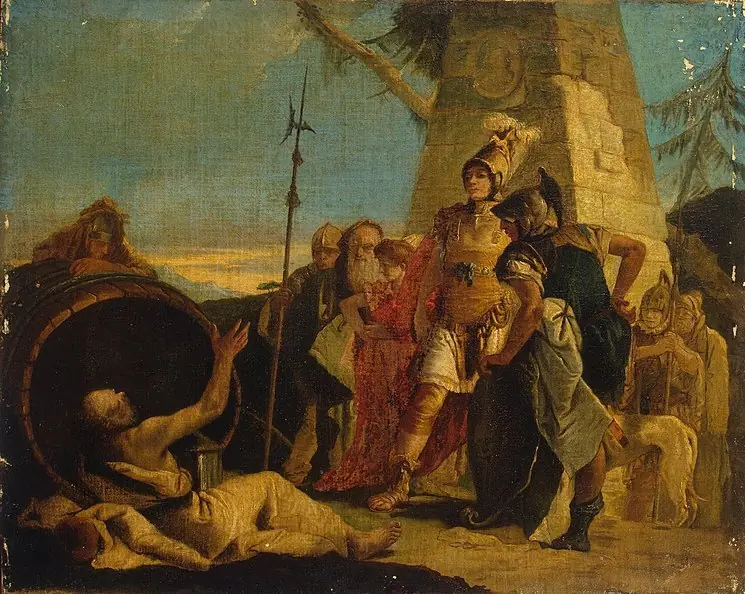 Alexander the Great and Diogenes
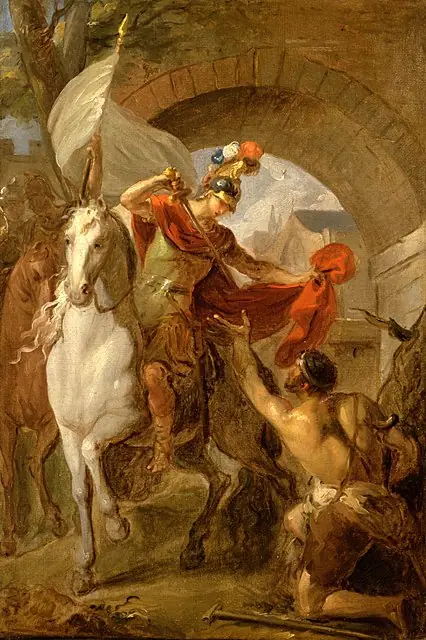 Saint Martin Sharing his Coat with a Beggar
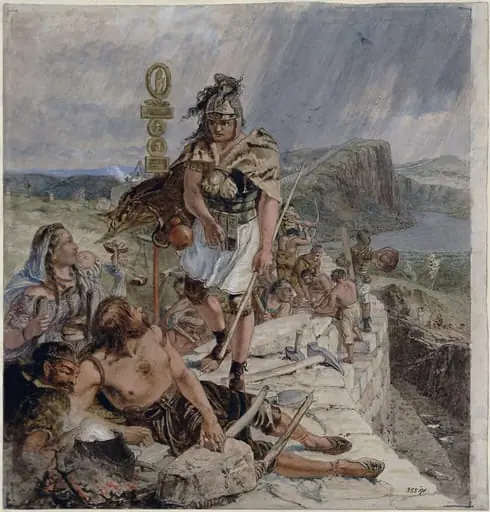 Design for the decoration of the inner court of Wallington Hall, Northumberland
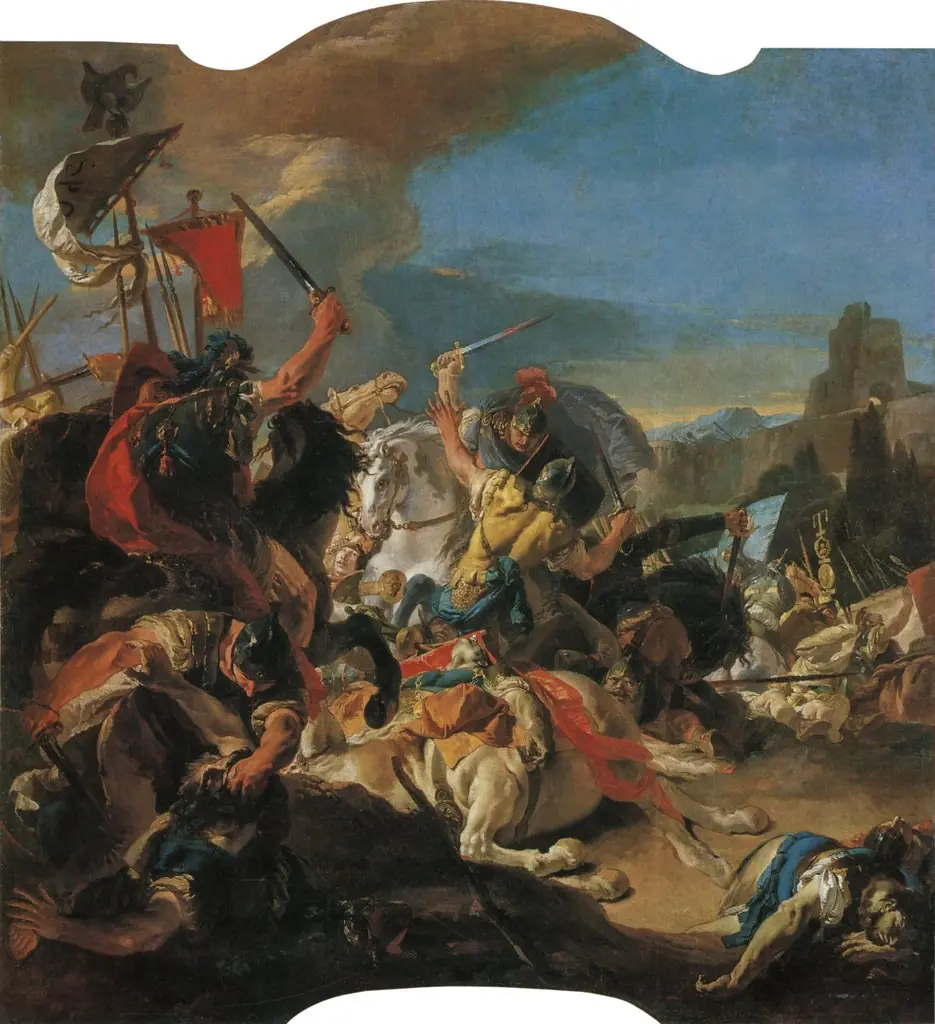 The Battle of Vercellae
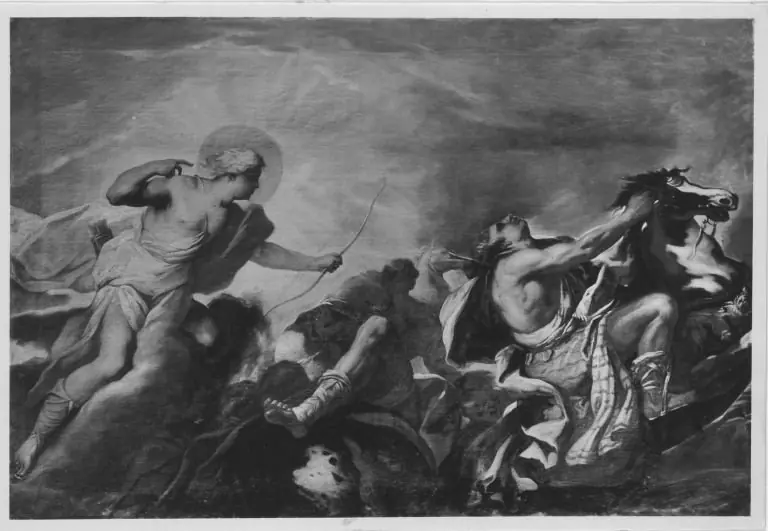 Apollo tötet die Kinder der Niobe
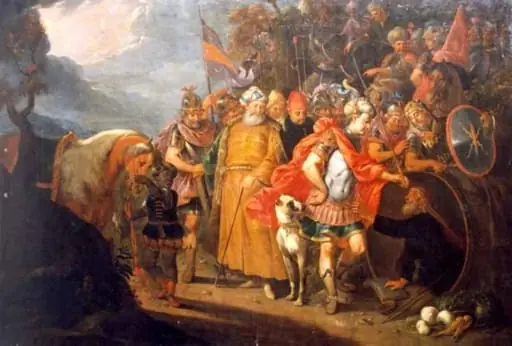 Alexandru cel Mare și Diogene
 The Fight between Tancred and Argante With Clorinda in the Background