Artwork
The Martyrdom of Saint Agatha
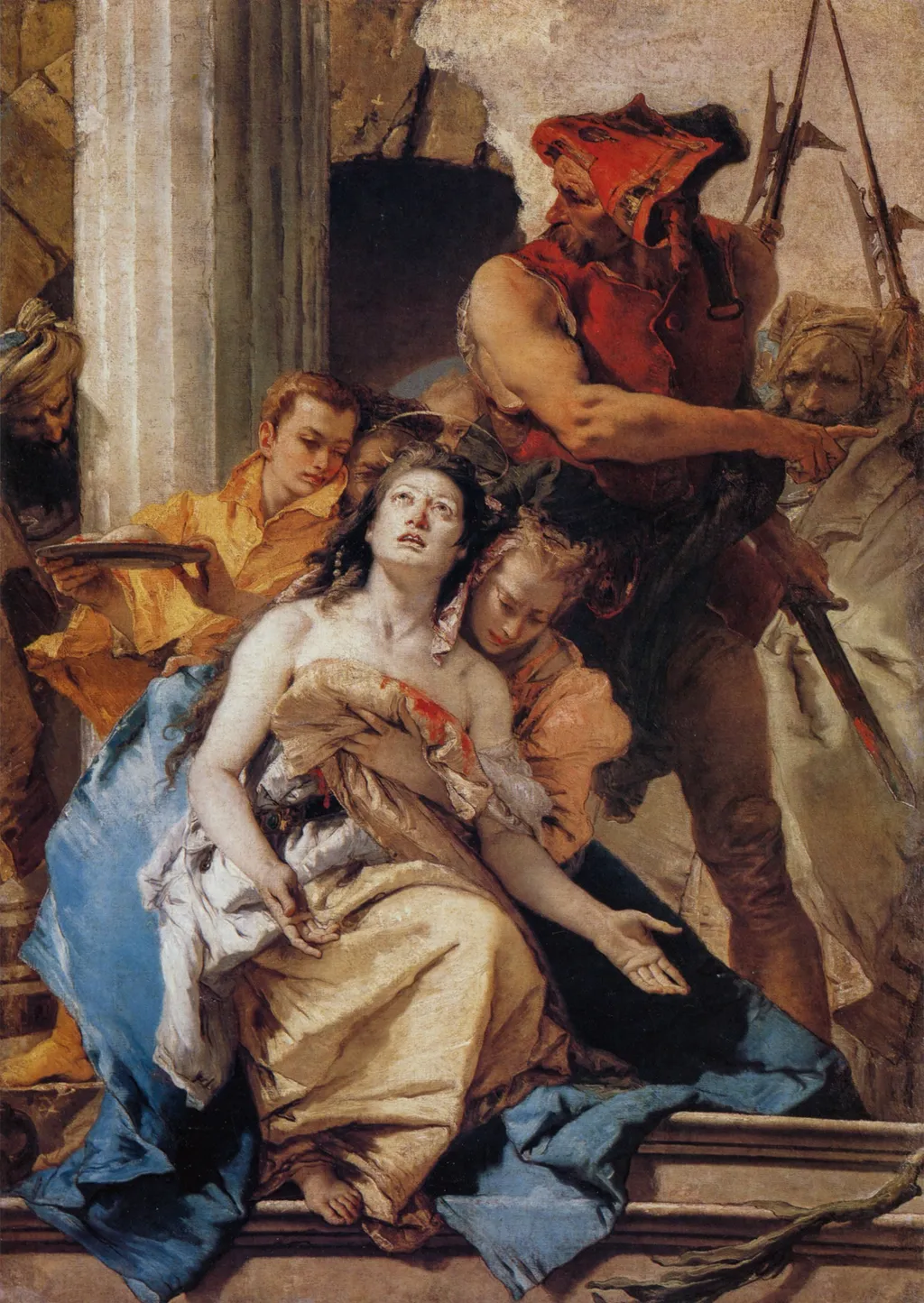
The Martyrdom of Saint Agatha is an oil painting by the Rococo painting artist Giovanni Battista Tiepolo. It dates from 1754 and is held in the collection of the Gemäldegalerie Berlin.
About this work
Overview
The Martyrdom of Saint Agatha is a 1754 oil painting by Giovanni Battista Tiepolo, depicting a pivotal moment in the legend of Agatha of Sicily. The work is characterized by dramatic lighting and intense emotional expression, hallmarks of the Rococo style.
Subject & Meaning
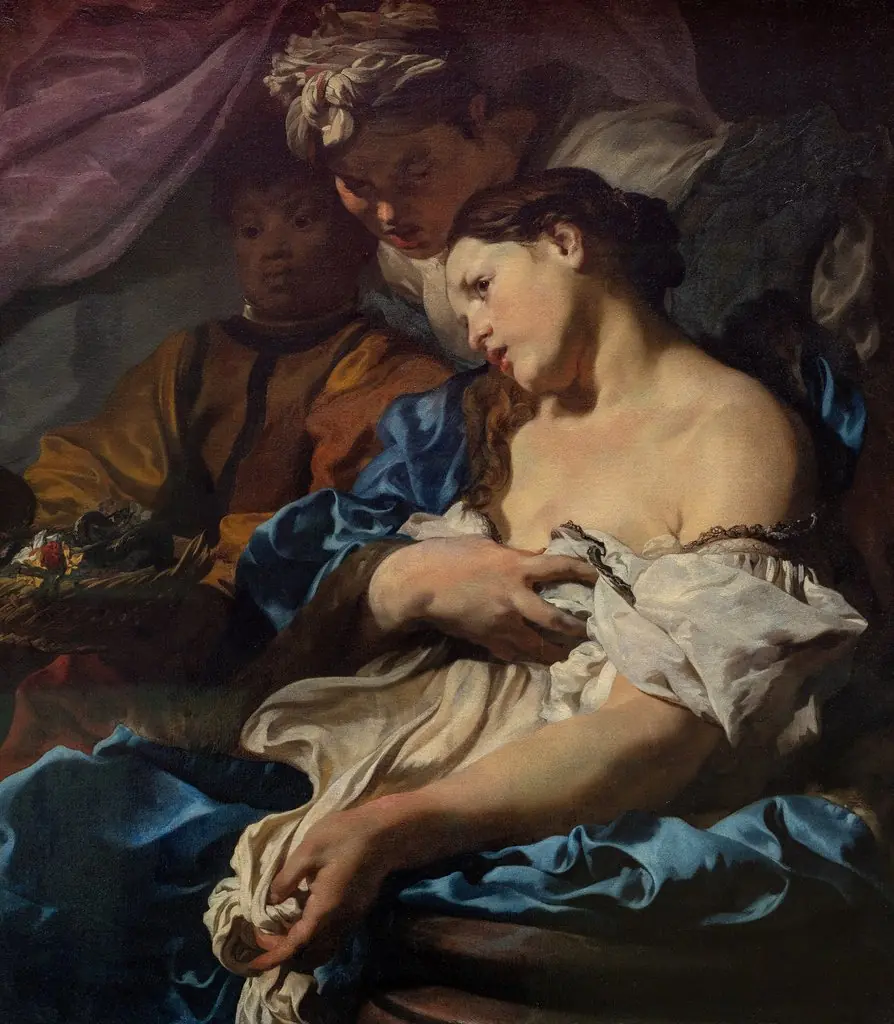
The painting portrays Saint Agatha, a 3rd-century Sicilian martyr, in the moment before her execution. The red mark on her exposed breast alludes to her torture, where her breasts were severed. This scene highlights her faith and martyrdom, symbolizing endurance under brutal persecution.
Technique & Style
Tiepolo employs chiaroscuro, with flickering light illuminating the dark, roughly textured background, emphasizing the drama. Figures are rendered in vivid, contrasting colors (red, gold, white), typical of Rococo's emphasis on emotional intensity and ornate detail.
History & Provenance
Created in 1754, the painting is now part of the collection at the Gemäldegalerie Berlin, though its exact commissioning context and earlier ownership history are not detailed here.
Context
This work reflects 18th-century Catholic revival interests in martyrdom narratives. Tiepolo's depiction balances the gruesome nature of Agatha's story with a composition that avoids graphic gore, appealing to the devotional and aesthetic sensibilities of his time.
Legacy
While not Tiepolo's most famous work, The Martyrdom of Saint Agatha contributes to the artist's reputation for capturing dramatic religious themes with sensitivity and theatrical flair, influencing later depictions of saintly martyrdom in European art.
Own this work as a print
Artist & collection

Artist
Giovanni Battista Tiepolo, also known as Giambattista Tiepolo, was an Italian painter and printmaker from the Republic of Venice who painted in the Rococo style, considered an important member of the 18th-century Venetian school.