Artwork
Lamentation over The Dead Christ
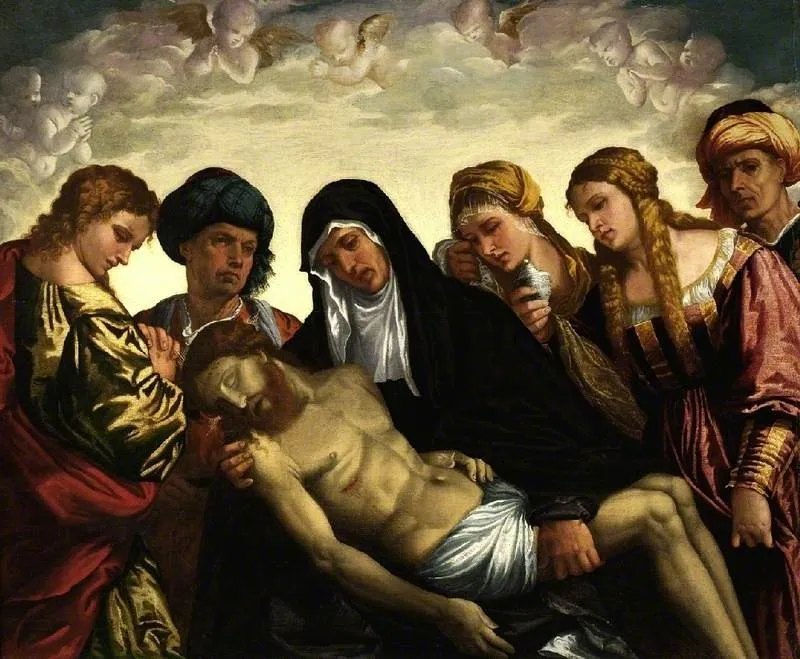
Lamentation over The Dead Christ is a tempera painting by Giovanni da Asola. It is held in the collection of the Fitzwilliam Museum.
About this work
Overview
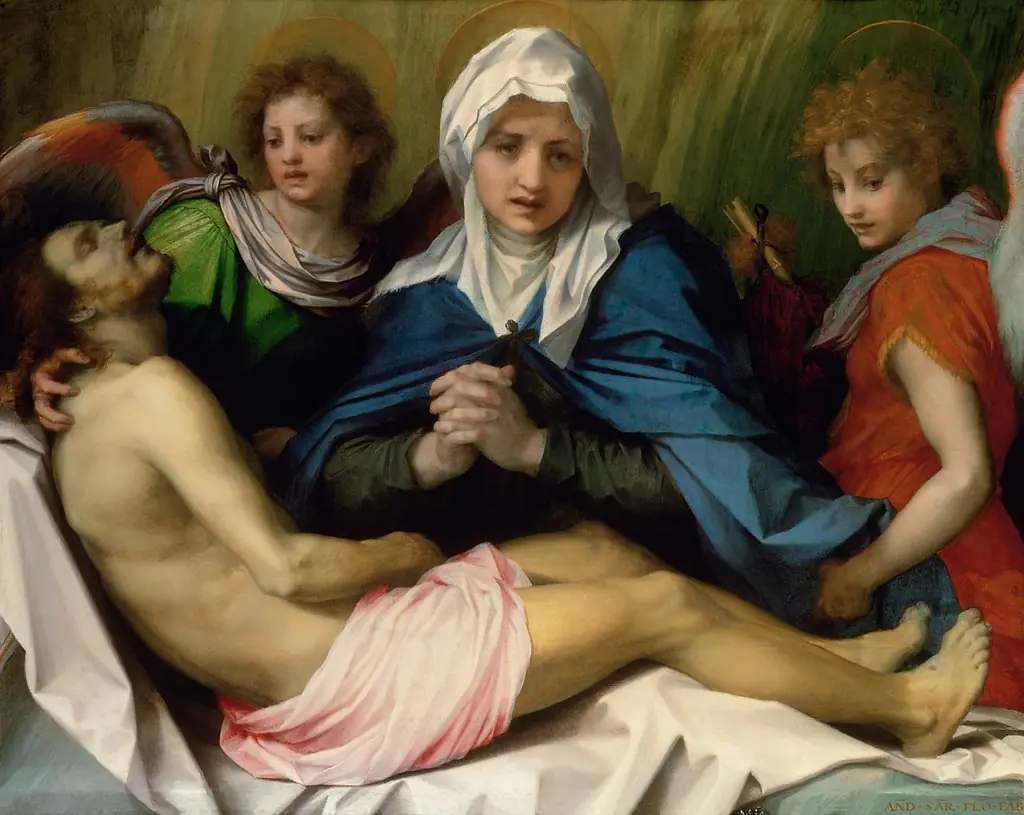
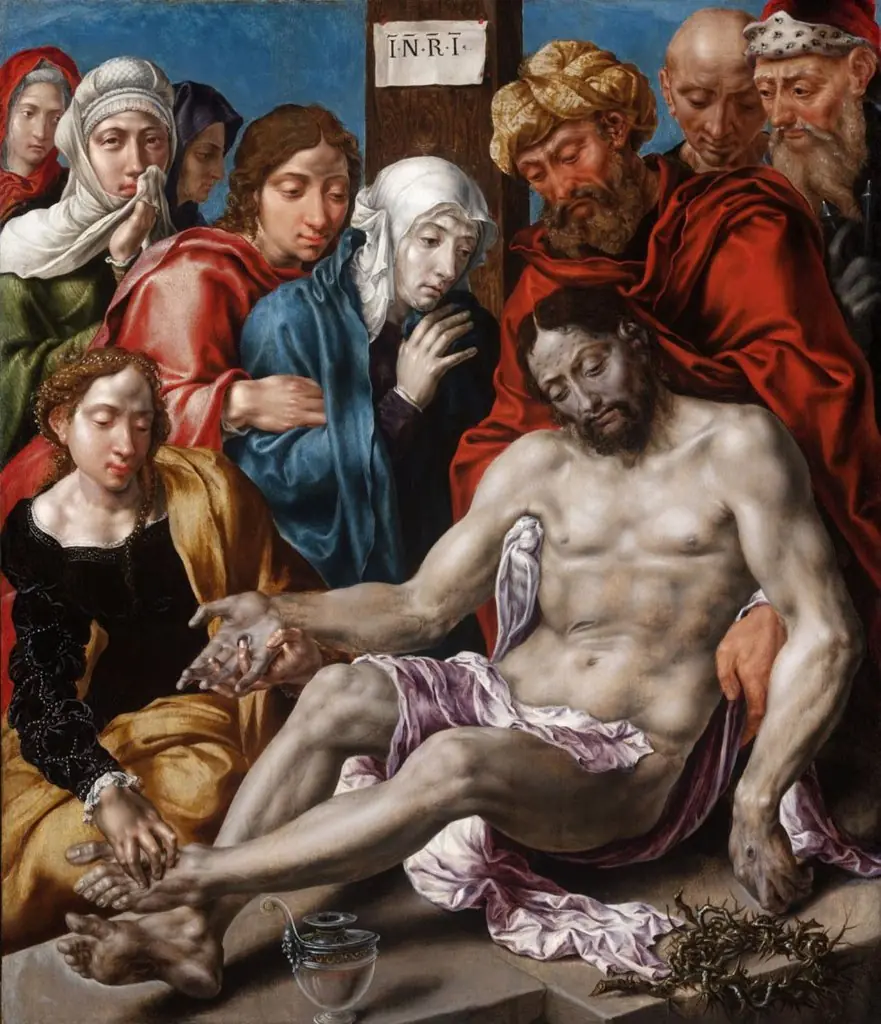
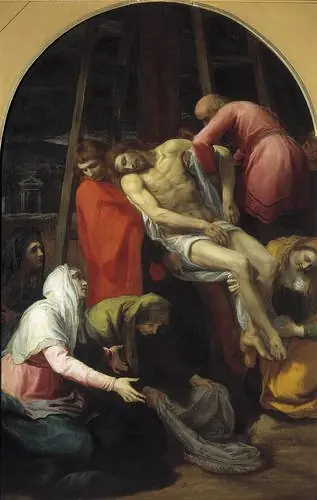
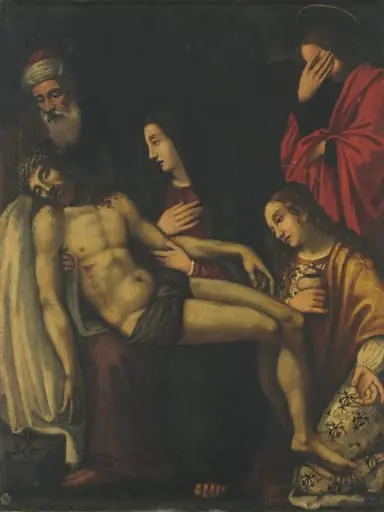
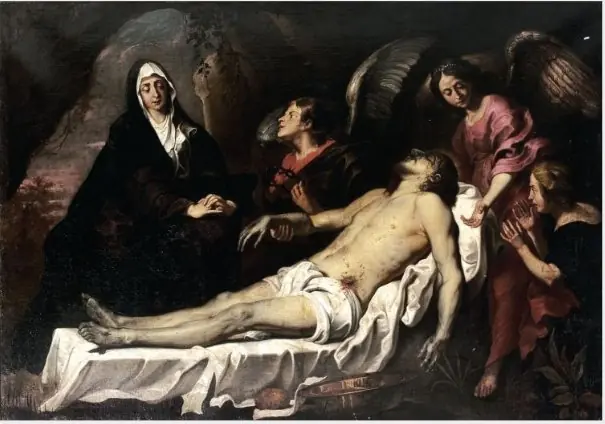
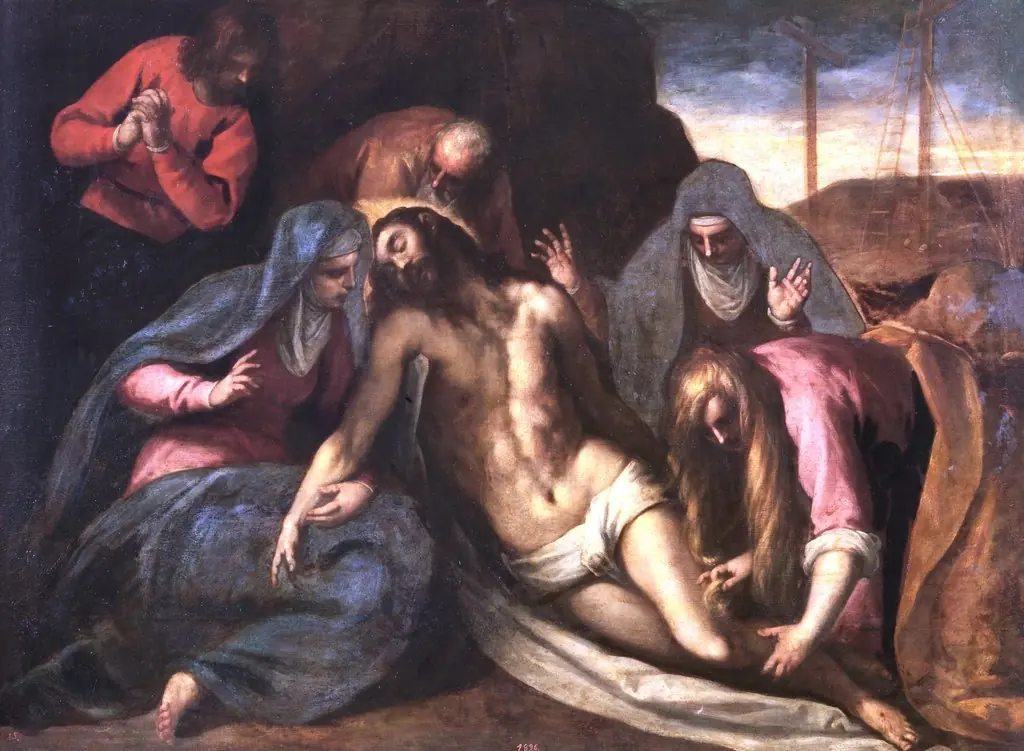
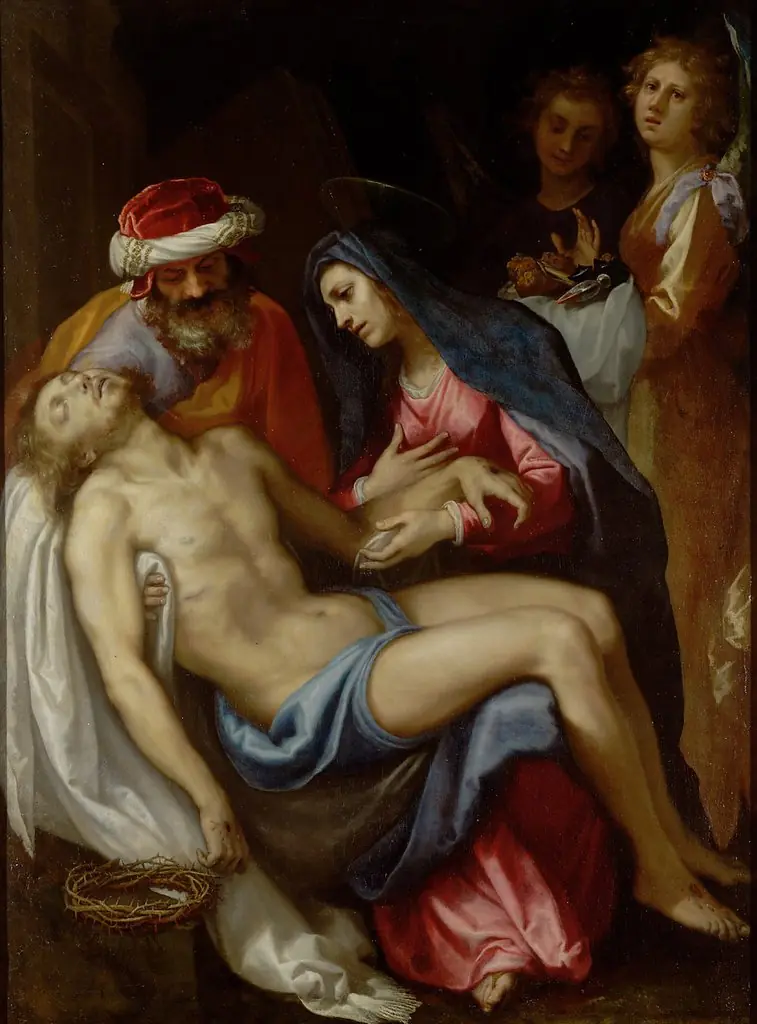
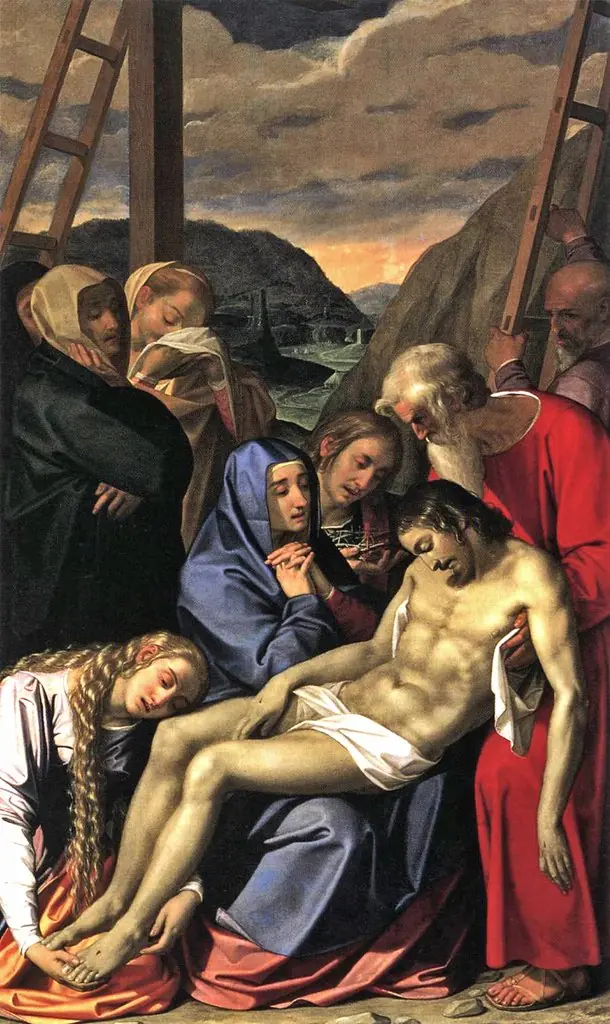
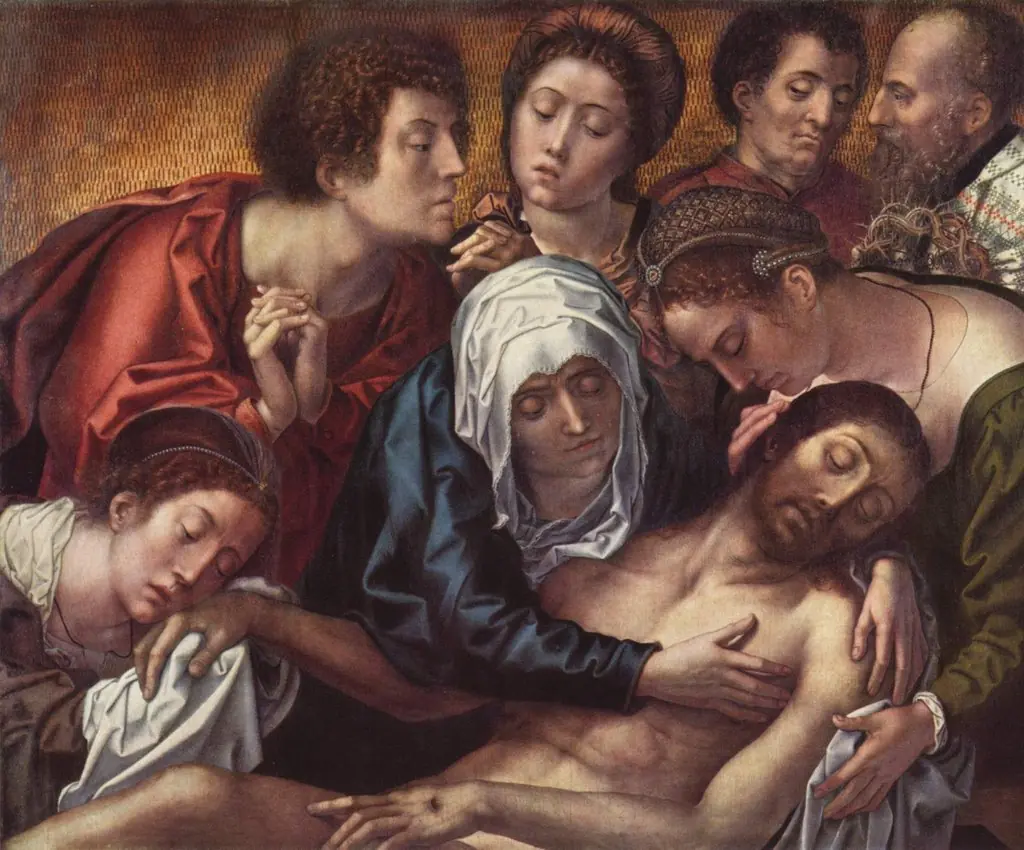
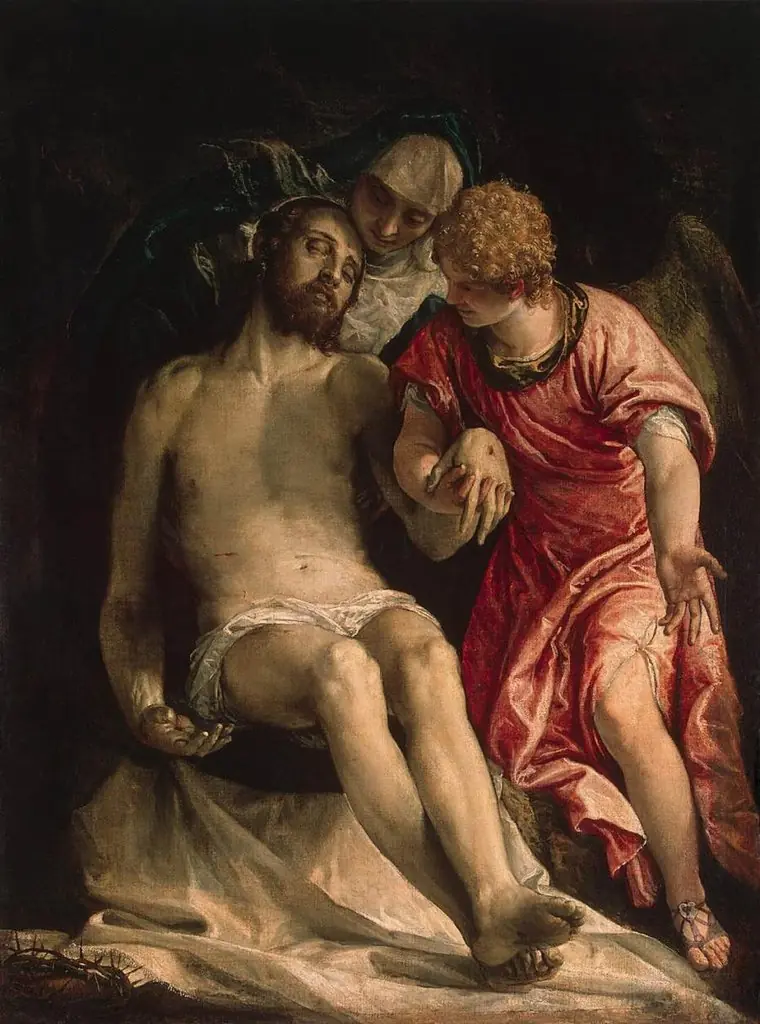
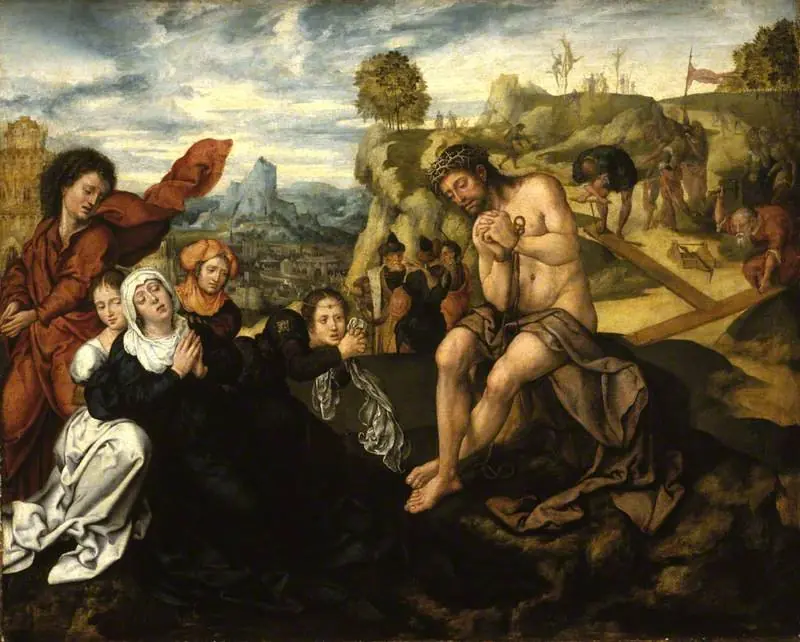
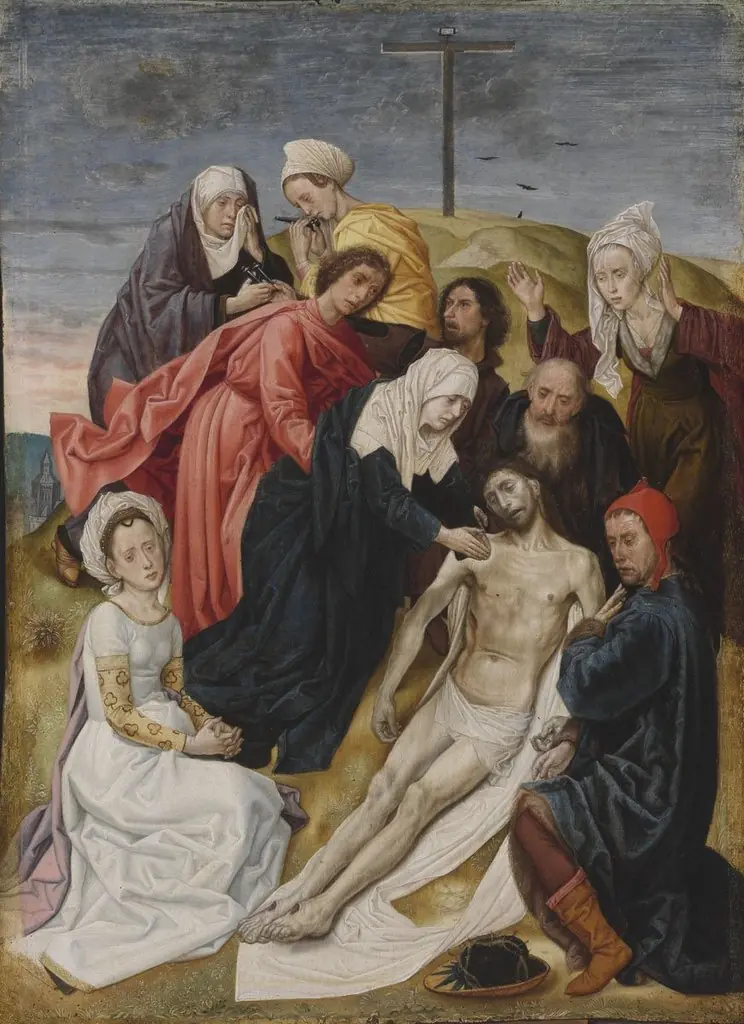
Giovanni da Asola’s tempera panel, titled *Lamentation over the Dead Christ*, dates to 1600 and is part of the Fitzwilliam Museum’s collection. The work depicts a small group of mourners gathered around a recumbent male figure, whose head is inclined backward. The composition conveys a solemn atmosphere through restrained gestures and a muted palette, emphasizing the theme of grief.
Subject & Meaning
The scene presents a traditional Christian lamentation, with figures in flowing robes surrounding the lifeless body of Christ. A woman cradles his head while another touches his chest, gestures that highlight personal sorrow and collective mourning. The arrangement invites contemplation of loss and the human response to divine sacrifice, central concerns of Counter‑Reformation devotional imagery.
Technique & Style
Executed in tempera, the painting exhibits the medium’s characteristic fine, matte surface and precise brushwork.
Executed in tempera, the painting exhibits the medium’s characteristic fine, matte surface and precise brushwork. Asola employs a limited chromatic range, favoring subdued earth tones that reinforce the work’s mournful tone. The figures are rendered with careful modeling and subtle chiaroscuro, reflecting the Venetian Renaissance’s interest in naturalistic detail within a restrained compositional framework.
History & Provenance
Giovanni da Asola, a native of Brescia who worked in early sixteenth‑century Venice, created the panel during the later phase of his career. He often collaborated with his son Bernardino and contributed works to churches such as the Duomo of Asola and San Michele in Murano. The *Lamentation* entered the Fitzwilliam Museum’s holdings through acquisition in the twentieth century, where it remains on display.
Context
The painting belongs to the broader Venetian tradition of religious panels that served both liturgical and private devotional functions. Asola’s work reflects the period’s emphasis on emotional engagement, aligning with contemporary efforts to make sacred narratives accessible to viewers through intimate, humanized portrayals of biblical events.
Artist & collection
Artist
Giovanni da Asola (active 1512 – 1530) was an Italian painter of the Renaissance, who along with his son Bernardino da Asola, were prominent in the Venice of the early 16th century.