Artwork
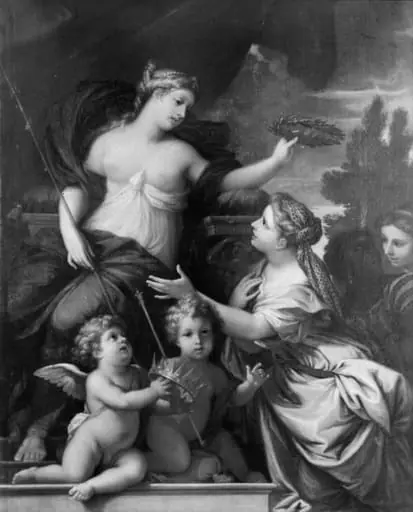
Queen Christina Crowned with Laurels by Wisdom
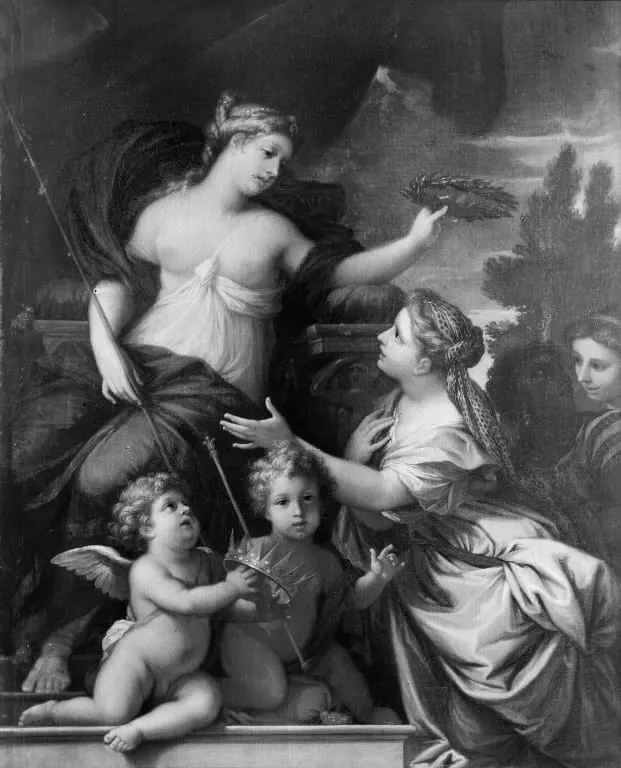
Queen Christina Crowned with Laurels by Wisdom is an oil painting by the Early Baroque Italian artist Giovanni Francesco Romanelli. It dates from 1643 and is held in the collection of the Statens Museum for Kunst.
About this work
Overview
It is part of the permanent collection at Statens Museum for Kunst in Copenhagen, where it remains a key example of Romanelli’s allegorical portraiture.
Painted in 1643 by Giovanni Francesco Romanelli, this oil-on-canvas work portrays a symbolic coronation scene featuring Queen Christina of Sweden. Executed in the early Baroque style, the painting emphasizes allegorical narrative through carefully arranged figures and dramatic lighting. It is part of the permanent collection at Statens Museum for Kunst in Copenhagen, where it remains a key example of Romanelli’s allegorical portraiture.
Subject & Meaning
The painting depicts Queen Christina being crowned with laurels by an allegorical figure of Wisdom, signifying her intellectual and moral authority. Two putti hover nearby, reinforcing the theme of divine favor and enlightenment. Rather than a literal event, the scene presents an idealized vision of rulership grounded in reason and virtue, reflecting Christina’s reputation as a learned monarch who challenged traditional gender roles.
Technique & Style
Romanelli employs chiaroscuro to heighten the emotional weight of the moment, directing light onto the figures while the background recedes into deep shadow. The white gown of the queen contrasts sharply with the dark setting, isolating her as the focal point. Delicate rendering of fabric and flesh, along with the soft modeling of the putti, reveals Romanelli’s training in the Roman Baroque tradition and his attention to tactile detail.
History & Provenance
Commissioned during Christina’s reign, the painting was likely intended to reinforce her image as a philosopher-queen. It entered the Danish national collection in the 19th century, having passed through private hands in Italy before being acquired by the Danish state. Its preservation in Denmark reflects the broader European interest in Swedish royalty during the post-Reformation era.
Context
Created in the aftermath of the Thirty Years’ War, the painting aligns with a broader trend of using classical allegory to legitimize political authority. Christina, known for her patronage of scholars and her unconventional life, became a symbol of enlightened rule. Romanelli’s depiction draws from humanist ideals, merging Renaissance symbolism with Baroque theatricality to elevate her public persona.
Legacy
Though less widely known than some contemporaries, Romanelli’s work contributed to the visual language of female sovereignty in early modern Europe. This painting endures as a quiet testament to the intellectual ambitions of Queen Christina and the role of art in shaping political myth. It remains a reference point for studies on gender, power, and allegory in Baroque portraiture.
Artist & collection
Artist
Giovanni Francesco Romanelli (Viterbo, 1610 – Viterbo, 9 November 1662) was a major Italian painter of the Baroque period, celebrated for his use of bright, vivid colors and also for his clarity of detail.




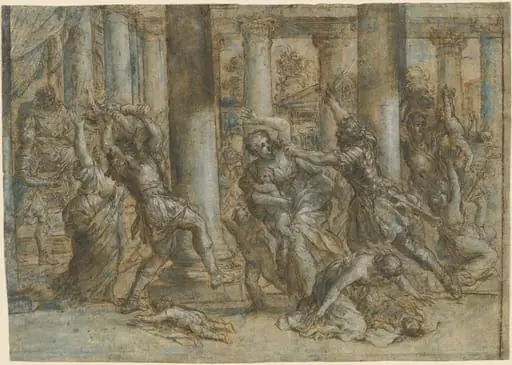
 Die Argusaugen
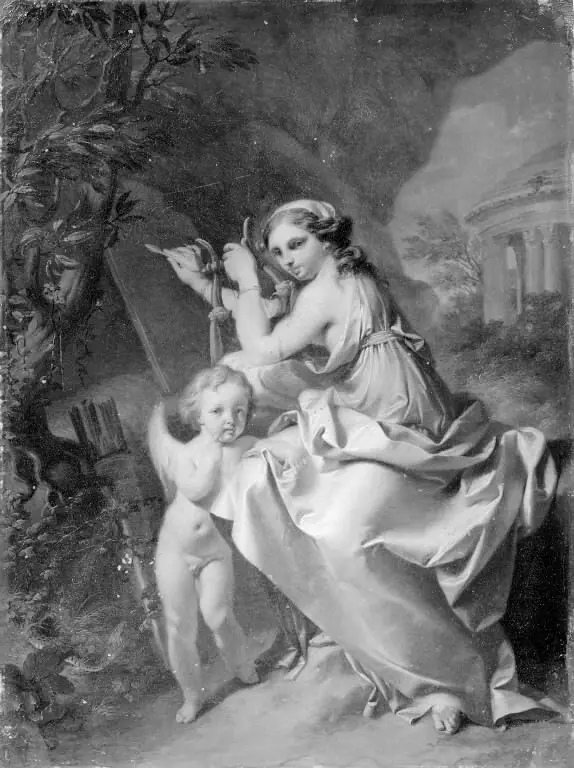 Sappho and Cupid
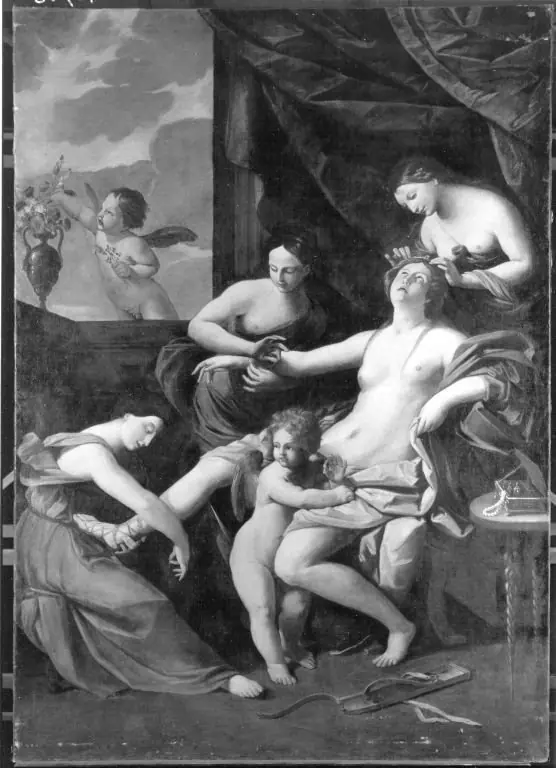 Schmückung der Venus
 Hagar und Ismael
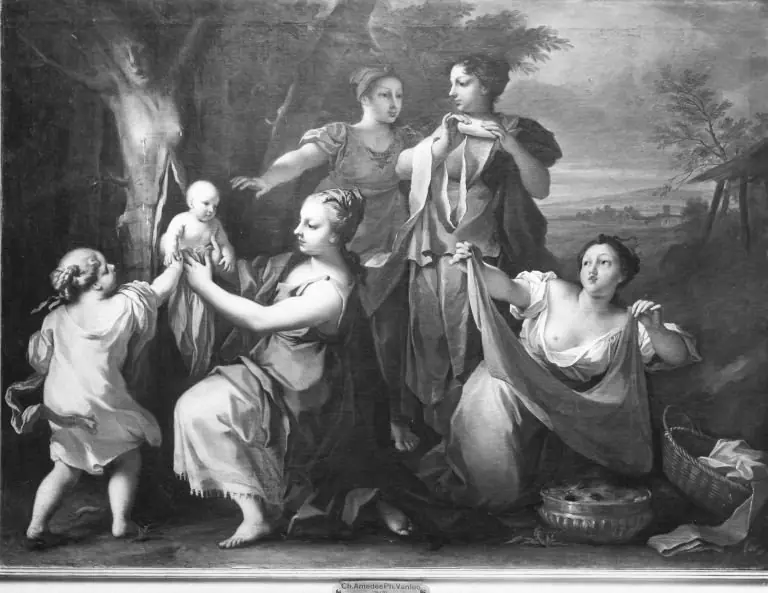 Die Geburt des Adonis
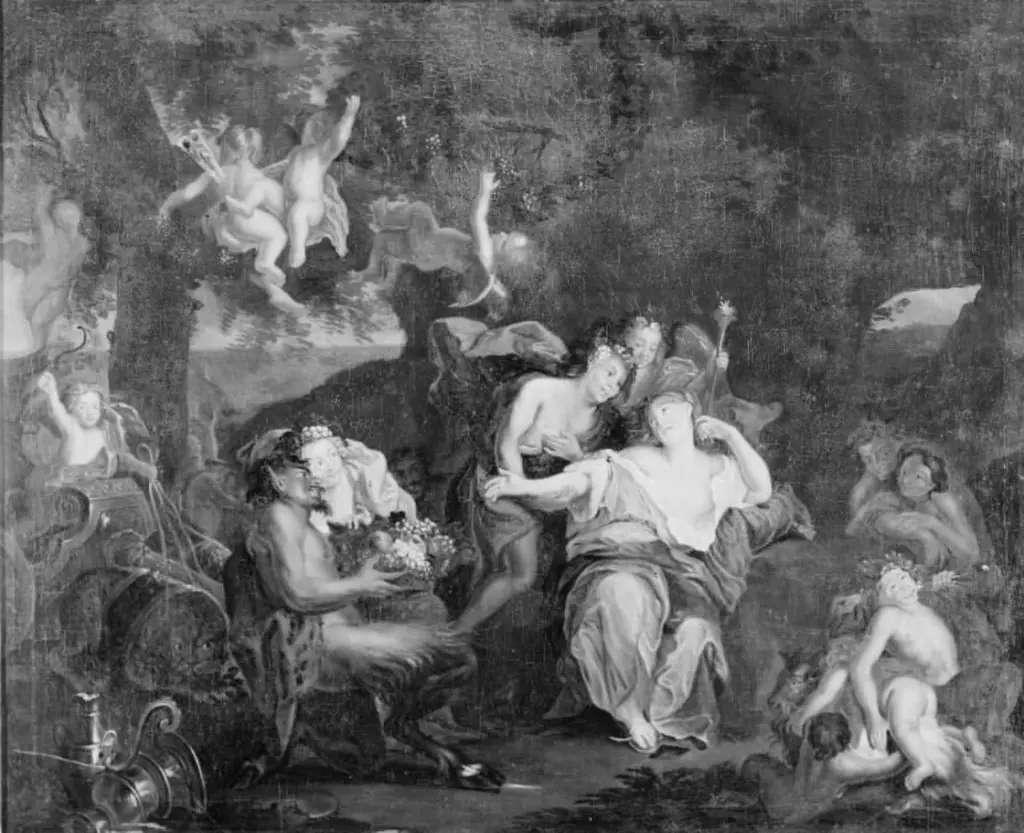 Bacchus og Ariadne sidder sammen i et landskab omgivne af amoriner, bacchantinder og satyrer
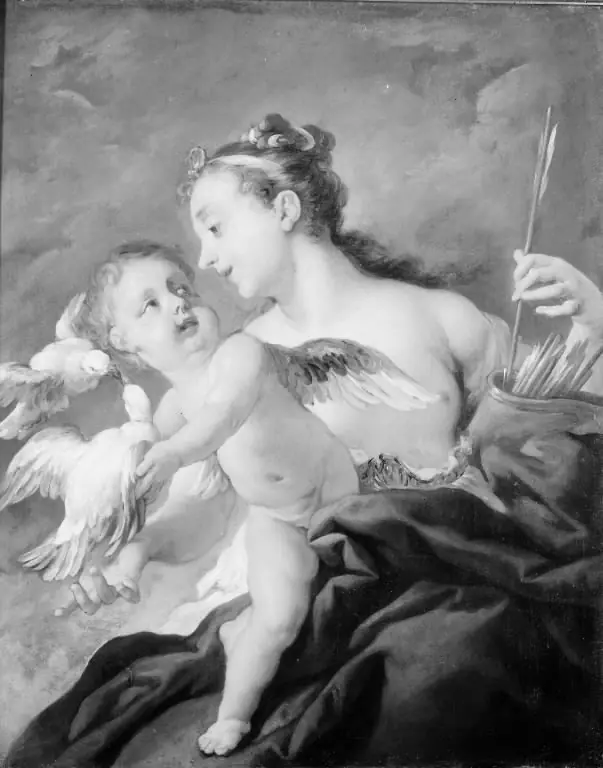 Venus and Cupid
 Bacchus og Ariadne sidder sammen i et landskab omgivne af amoriner, bacchantinder og satyrer
 Die Fünf Sinne
 Venus und Amor
 Paris' dom
 Queen Christina Crowned with Laurels by Wisdom