Artwork
St. John and St. Peter at Christ's Tomb
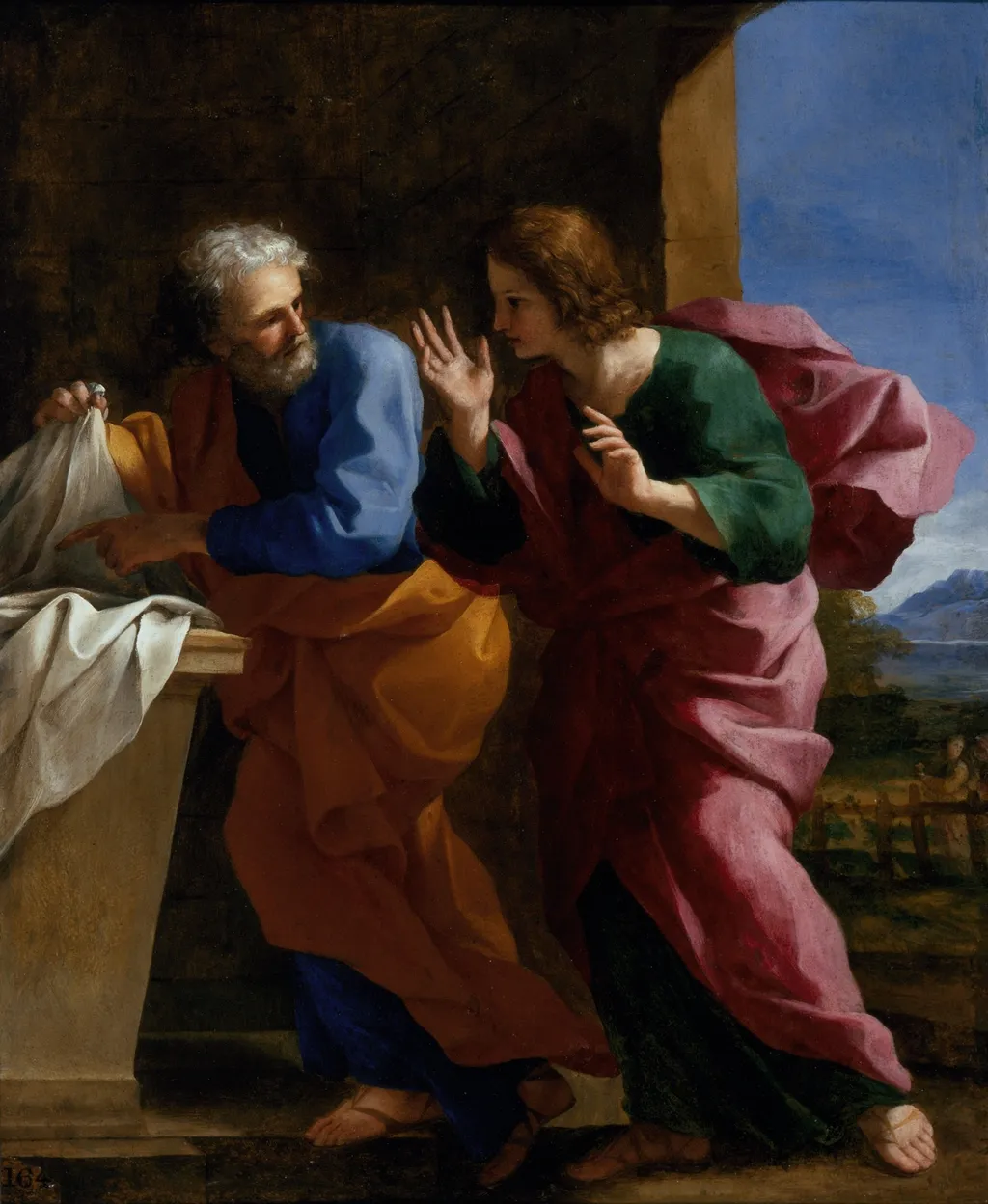
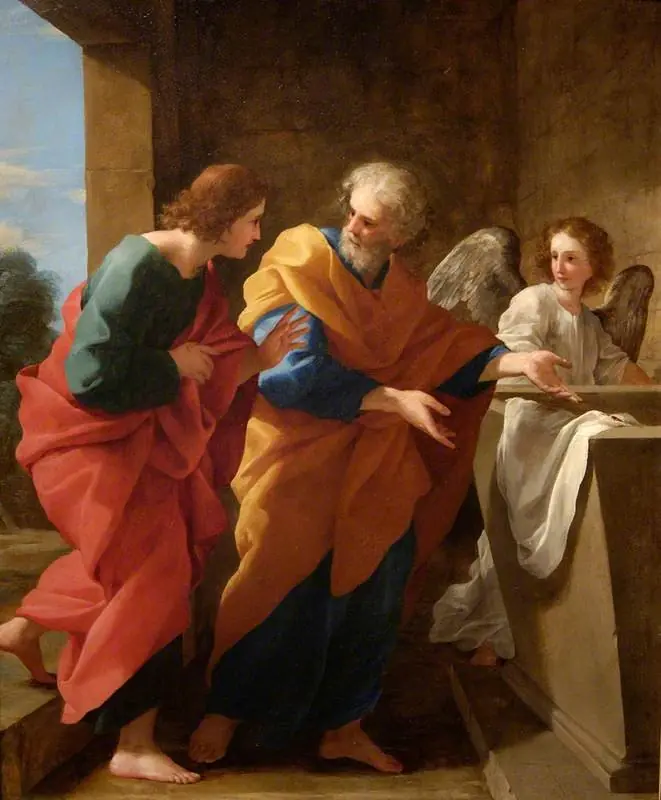
St. John and St. Peter at Christ's Tomb is an unspecified painting by the Early Baroque Italian artist Giovanni Francesco Romanelli. It dates from 1640 and is held in the collection of the Los Angeles County Museum of Art.
About this work
Overview
Giovanni Francesco Romanelli painted *St. John and St. Peter at Christ’s Tomb* in 1640. Executed during the early Italian Baroque, the canvas presents the two apostles beside the empty tomb of Jesus. The work is presently displayed in the Los Angeles County Museum of Art.
Subject & Meaning
The composition shows the elder apostle, identified by his white beard, holding a cloth bundle, while the younger figure leans forward, gesturing as if recounting the events of the resurrection. Their solemn expressions and the dramatic lighting underscore the theological significance of the moment when the disciples first encounter the empty tomb.
Technique & Style
Romanelli employs chiaroscuro to model the figures, allowing light to illuminate their faces against the deep shadows of the cave. The drapery is rendered with fluid, swirling folds in pink, green, blue and brown, demonstrating the painter’s skill in handling colour and texture typical of Baroque naturalism.
History & Provenance
Born in Viterbo in 1610, Romanelli worked for patrons across Italy and produced a number of religious works that now reside in major collections, including the Louvre. *St. John and St. Peter at Christ’s Tomb* entered the Los Angeles County Museum of Art’s holdings in the twentieth century, though the exact acquisition path is not recorded in the available sources.
Own this work as a print
Artist & collection
Artist
Giovanni Francesco Romanelli (Viterbo, 1610 – Viterbo, 9 November 1662) was a major Italian painter of the Baroque period, celebrated for his use of bright, vivid colors and also for his clarity of detail.

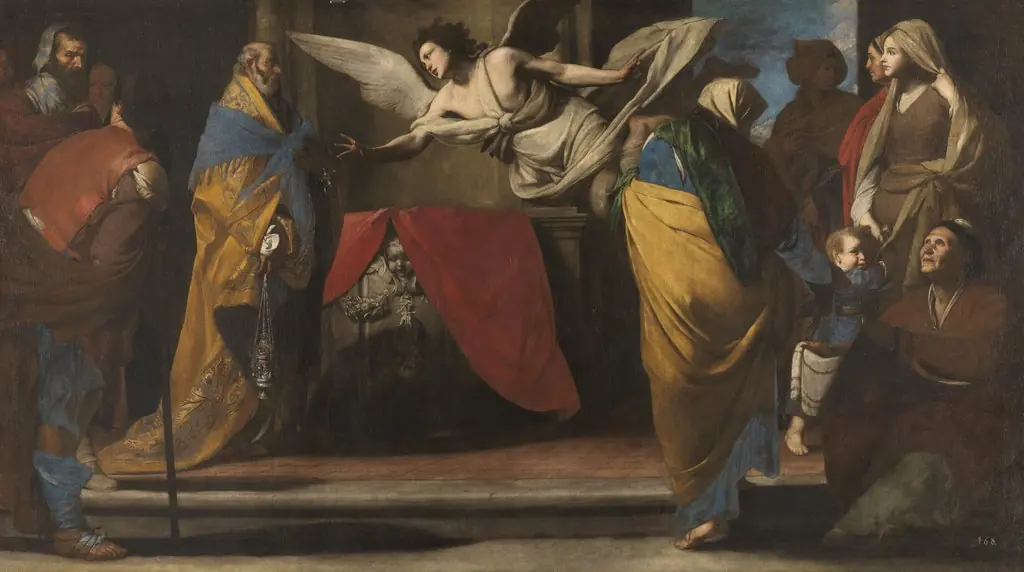 The Birth of John the Baptist announced to Zacharias
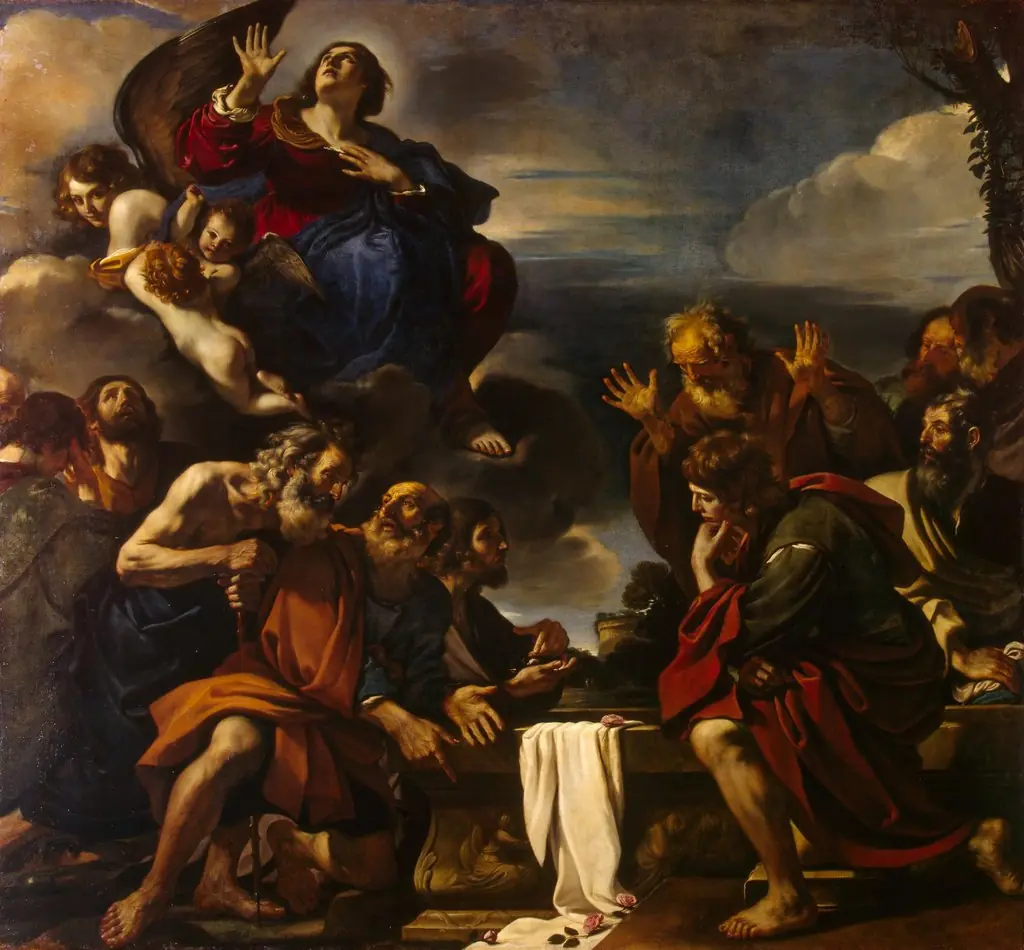 Assumption of the Virgin Mary
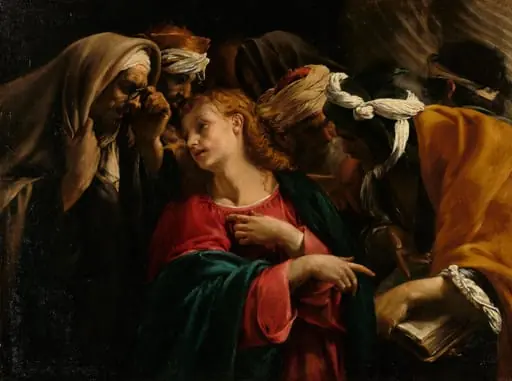 Christ among the Doctors
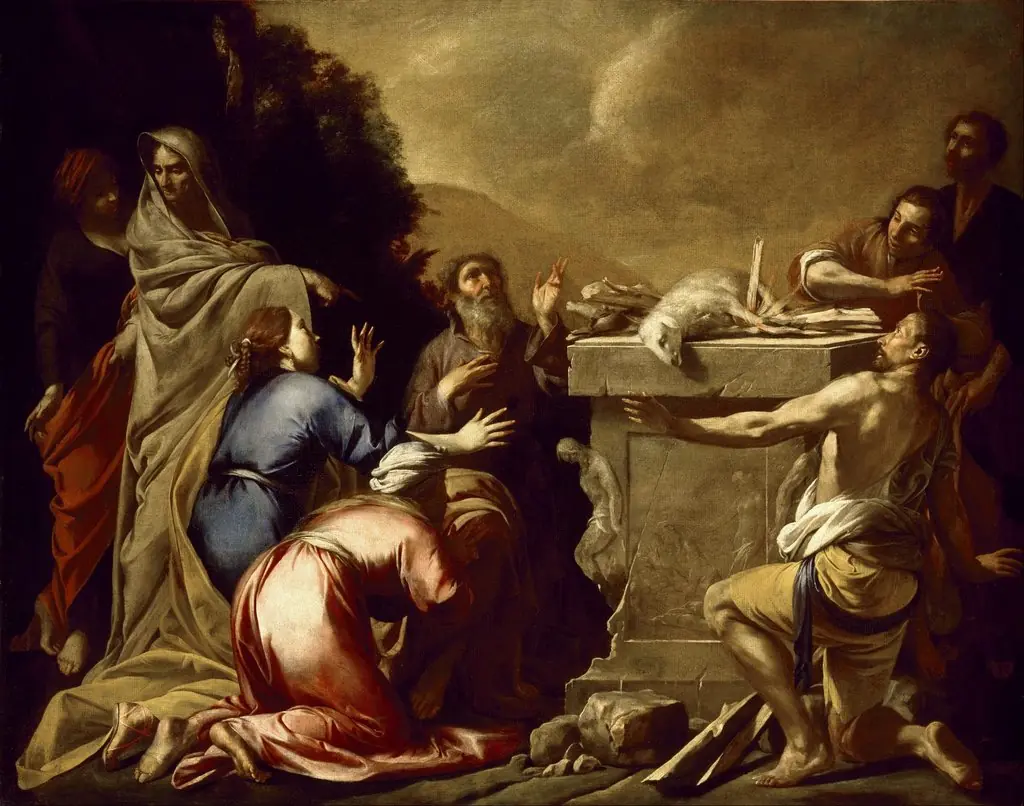 The Sacrifice of Noah
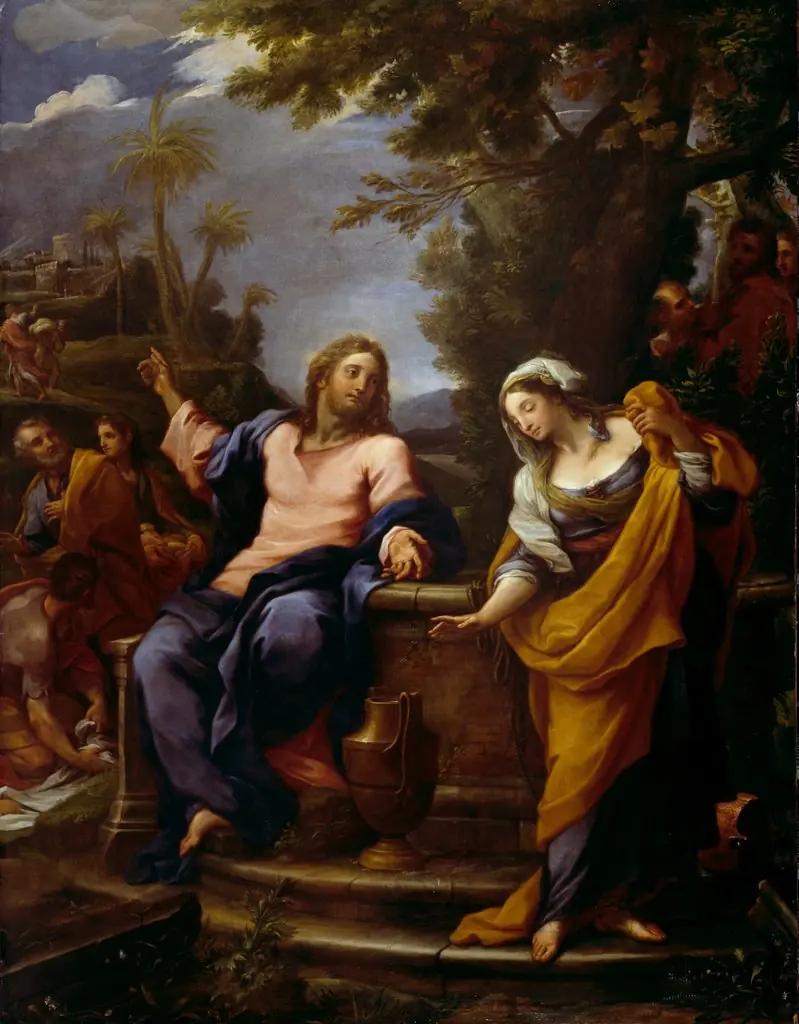 Christ and the Samaritan Woman
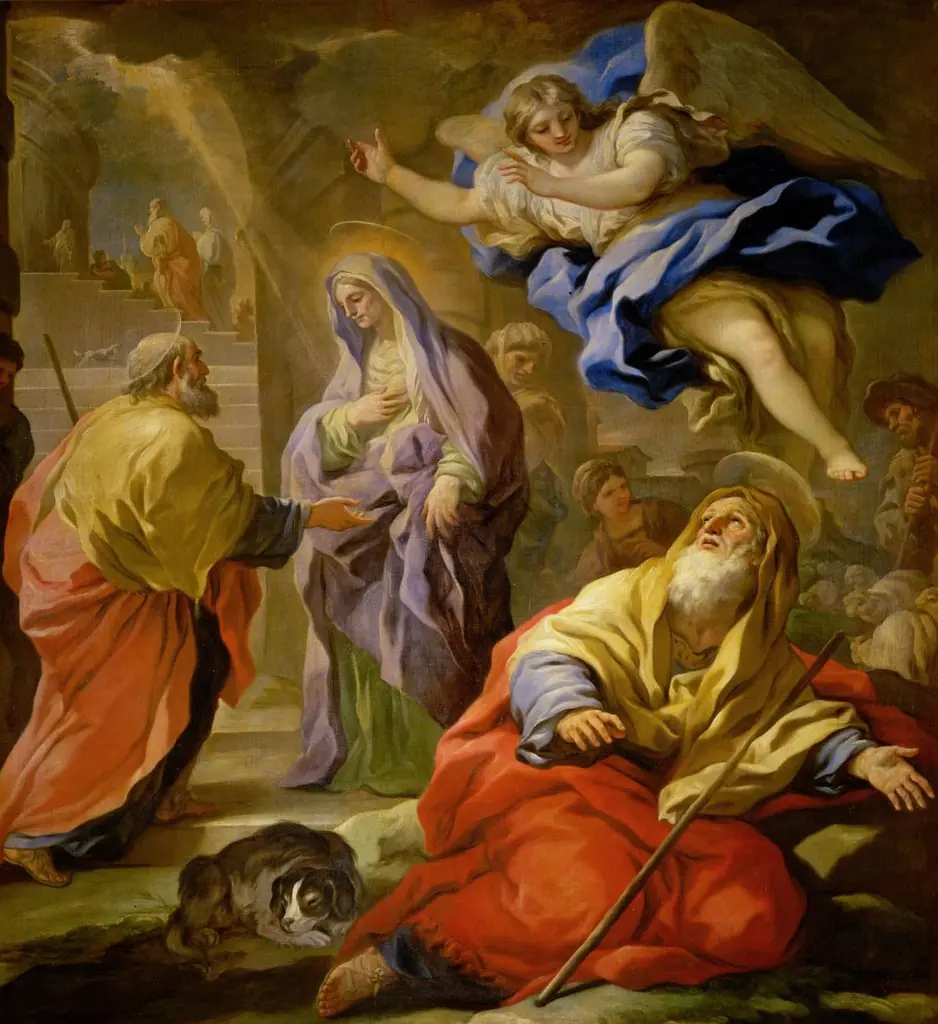 Verheißung an Joachim und Begegnung von Joachim und Anna an der Goldenen Pforte
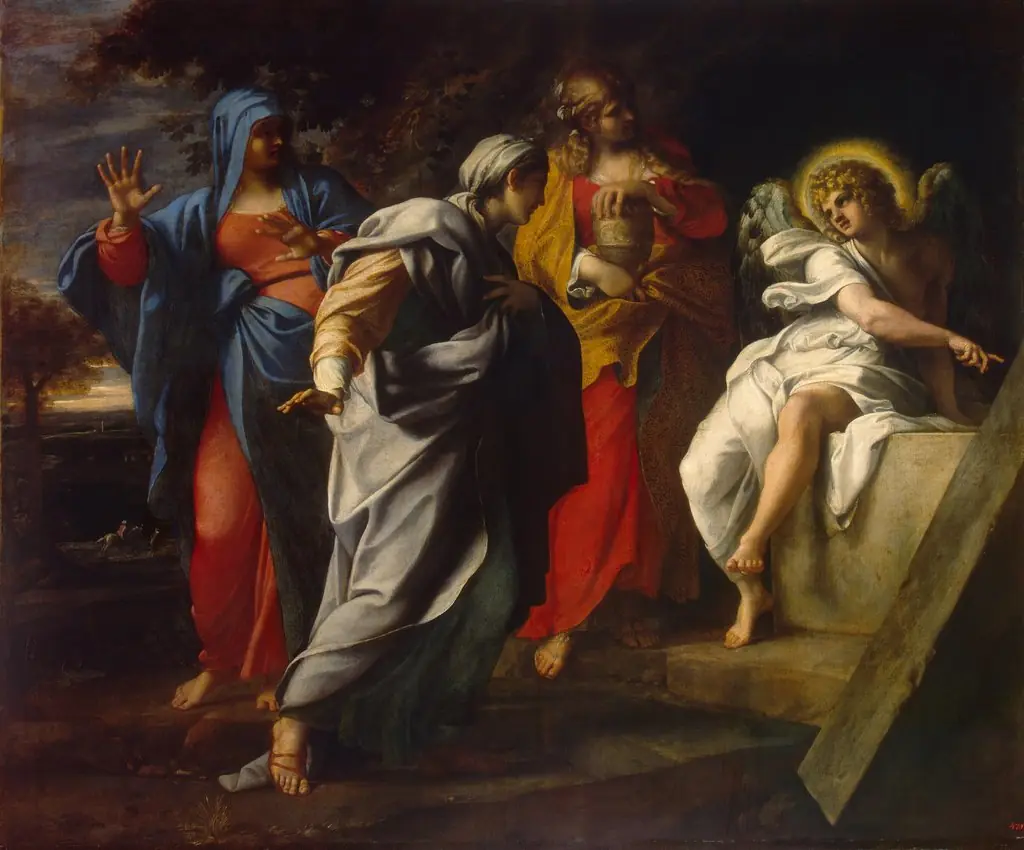 Holy Women at Christ' s Tomb
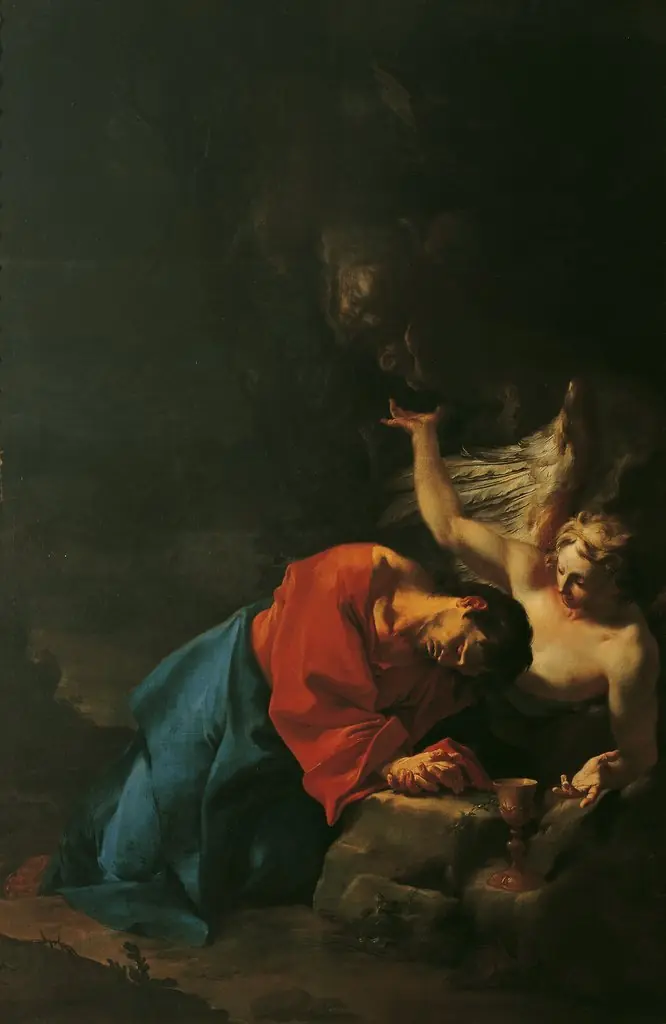 Christ on the Mount of Olives
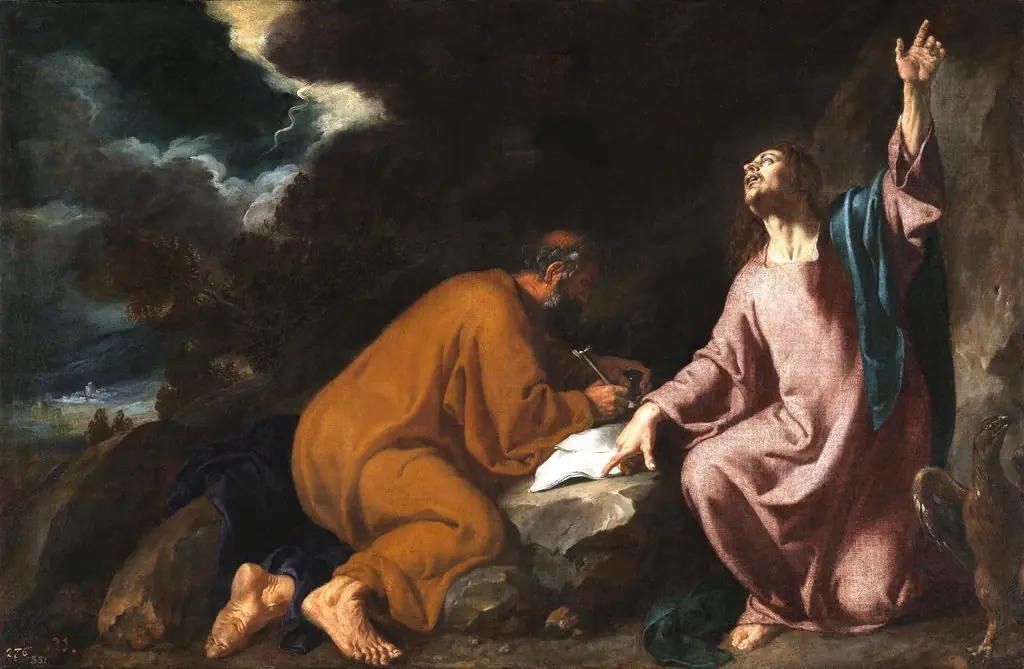 Saint Matthew and Saint John the Evangelist
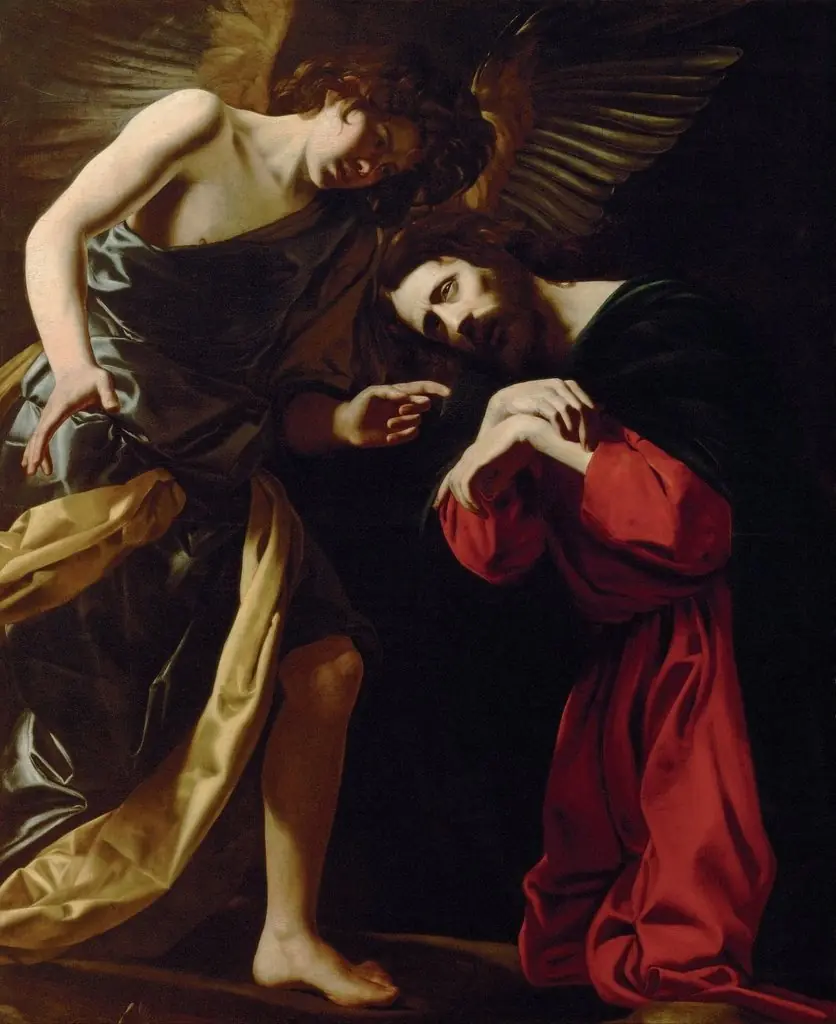 Christ on the Mount of Olives (Christ’s Fear of Death)