Artwork
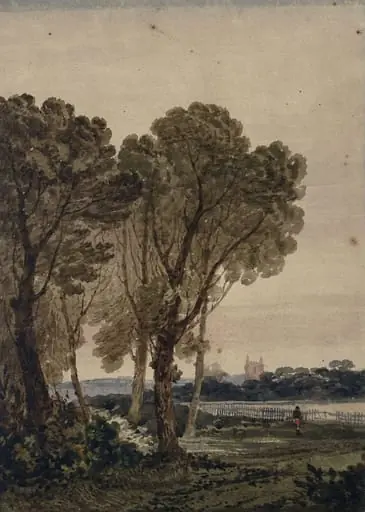
Landscape, with church beside a river
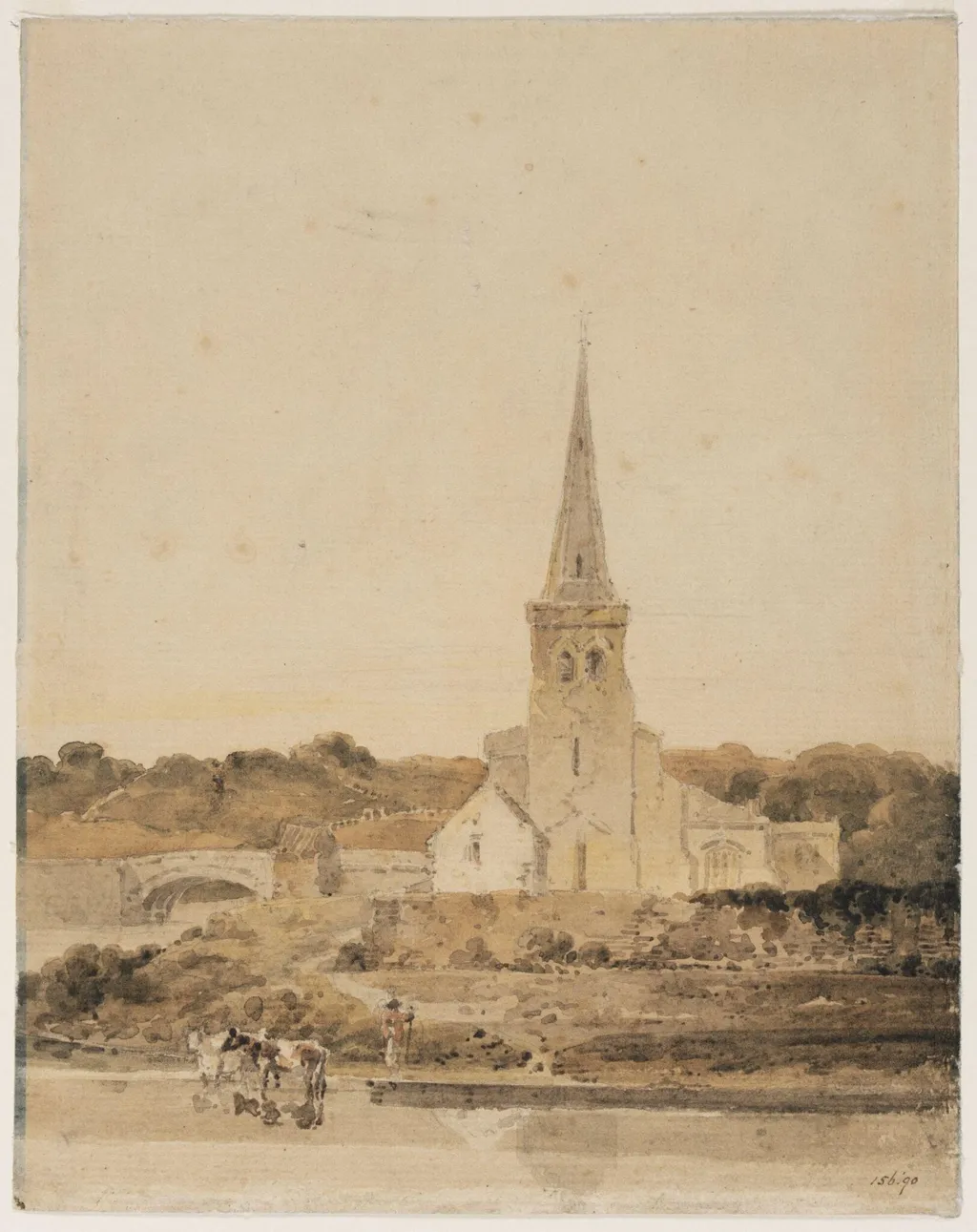
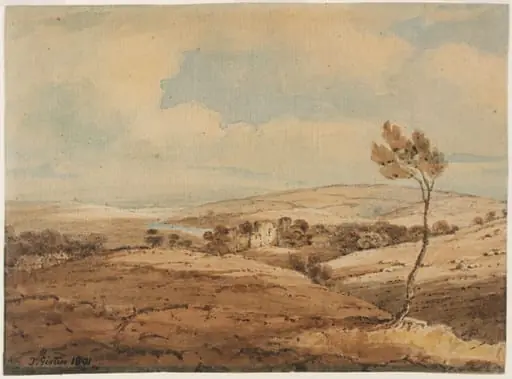
Landscape, with church beside a river is a watercolor work on paper by the Romanticist artist Girtin. It dates from 1798 and is held in the collection of the Victoria and Albert Museum.
About this work
Overview
Its modest size and immediate brushwork suggest it was made outdoors, as part of a broader effort to record landscape impressions with speed and sensitivity.
Created in 1798, this watercolour by Thomas Girtin captures a quiet rural scene along the River Coquet near Warkworth. The work is a small-scale study, executed in transparent washes, reflecting the artist’s practice of sketching directly from nature. Its modest size and immediate brushwork suggest it was made outdoors, as part of a broader effort to record landscape impressions with speed and sensitivity.
Subject & Meaning
The composition centers on a church steeple rising beyond a stone bridge, flanked by modest dwellings and a gently flowing river. A solitary figure and a cow near the bank introduce a quiet human presence without narrative. The scene evokes stillness and solitude, emphasizing the harmony between architecture and natural topography. There is no dramatic event—only the quiet rhythm of rural life.
Technique & Style
Girtin employed loose, fluid brushwork and diluted watercolour washes to suggest form and atmosphere. The palette is restrained, dominated by pale blues, soft browns, and greys, allowing light to unify the composition. The brushstrokes are rapid yet deliberate, capturing the play of light and the texture of foliage without detail. This method prioritizes mood over precision, characteristic of early Romantic landscape practice.
History & Provenance
The watercolour was likely made during Girtin’s travels in Northumberland, a region he explored extensively in the late 1790s. It remained in private hands for much of the 19th century before entering a public collection. Its survival as a working sketch—rather than a finished exhibition piece—underscores its role in Girtin’s process of observing and refining his vision of the English countryside.
Context
This work aligns with the early Romantic movement’s shift toward personal, emotional responses to nature. Unlike topographical surveys, Girtin’s sketch values atmosphere and transient light. His approach influenced contemporaries like Turner and helped redefine watercolour as a medium capable of expressive depth, moving beyond mere documentation toward poetic interpretation.
Legacy
Girtin’s rapid, atmospheric watercolours laid groundwork for the later development of British landscape painting. This sketch exemplifies his contribution to elevating watercolour from a preparatory tool to a respected artistic medium. Its emphasis on mood and light anticipated the tonal experiments of 19th-century painters, cementing his role in the evolution of modern landscape art.
Artist & collection
Artist
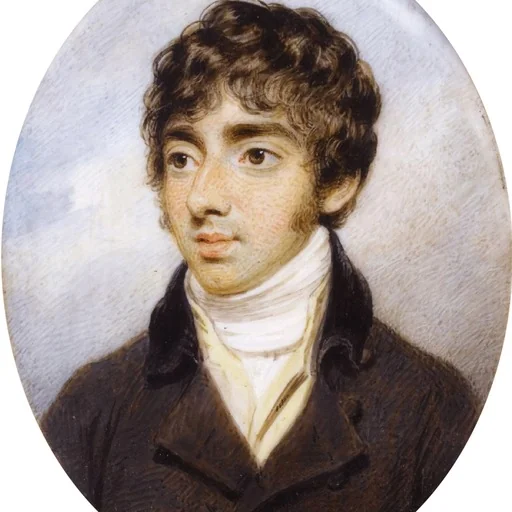
Thomas Girtin (18 February 1775 – 9 November 1802) was an English watercolourist and etcher. A friend and rival of J. M. W. Turner, Girtin played a key role in establishing watercolour as a reputable art form.

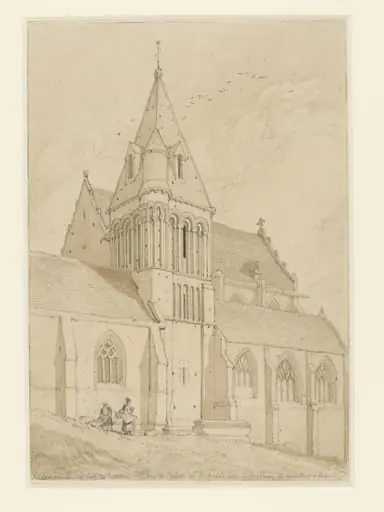 Church of St Michel, Vaucelles, near Bayeux
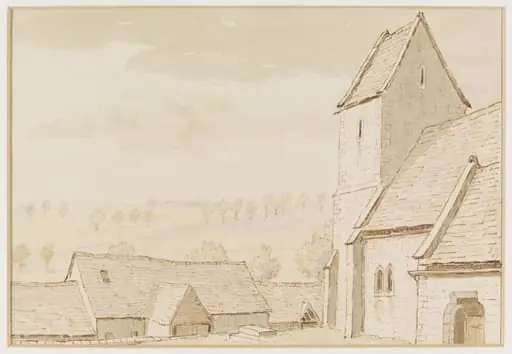 Syde Church
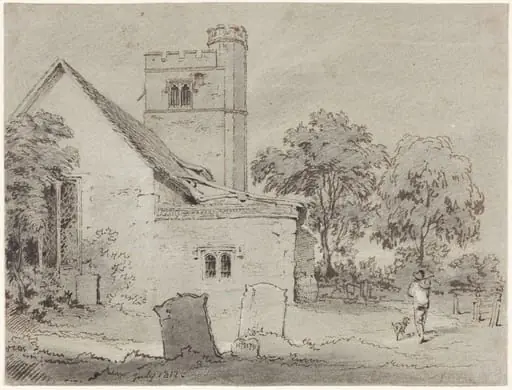 Aldenham Church, Hertfordshire
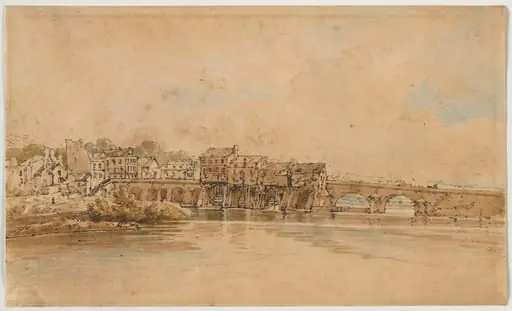 A Selection of Twenty of the Most Picturesque Views in Paris: On the Banks of the Marne below the Bridge at Charenton
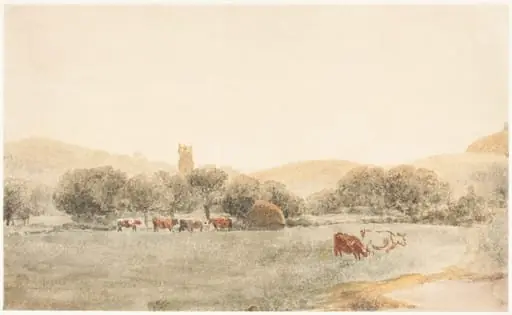 A Meadow with Cattle near Glastonbury
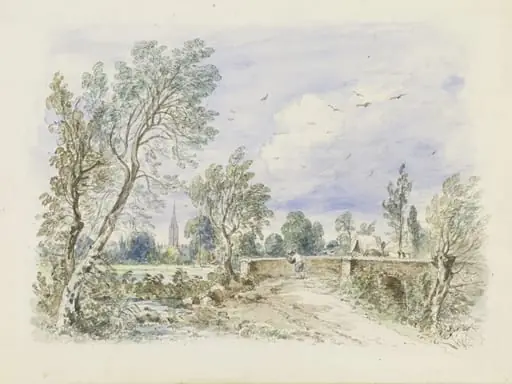 Milford Bridge, with a distant view of Salisbury
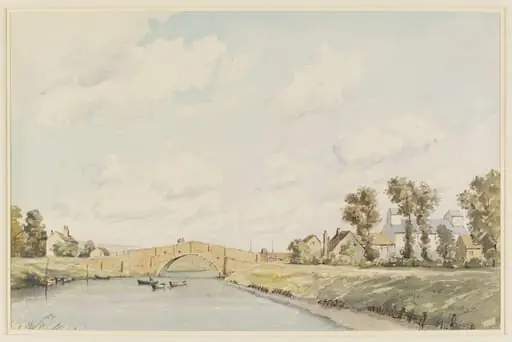 Snape Bridge
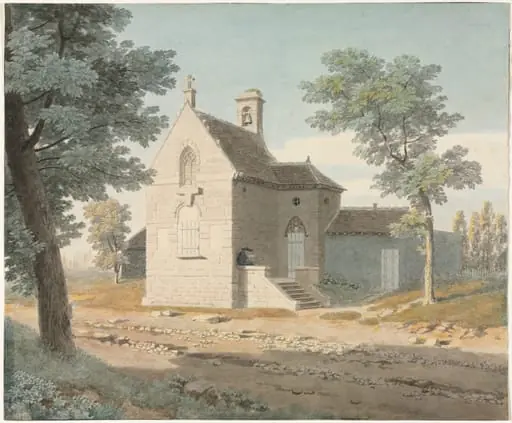 Church by a Road
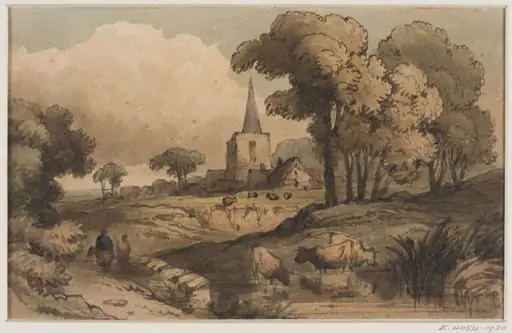 Untitled
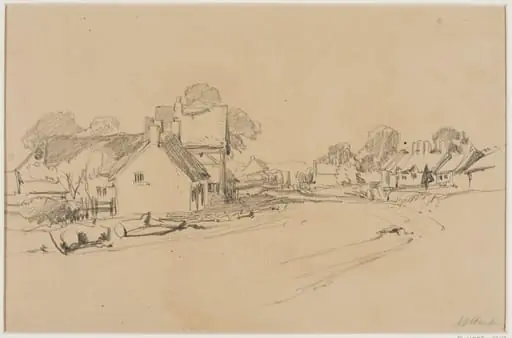 A village street
 Landscape with church
 Untitled