Artwork
The Holy Family with the Infant Saint John the Baptist
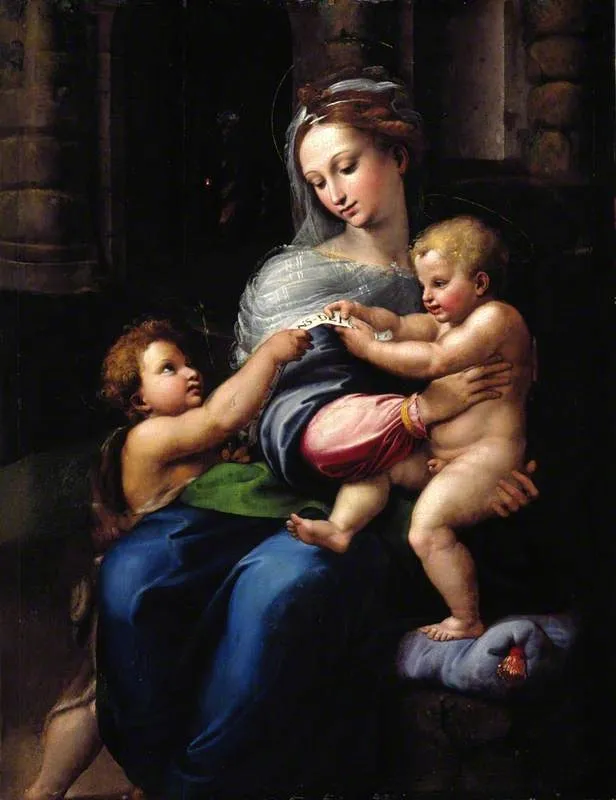
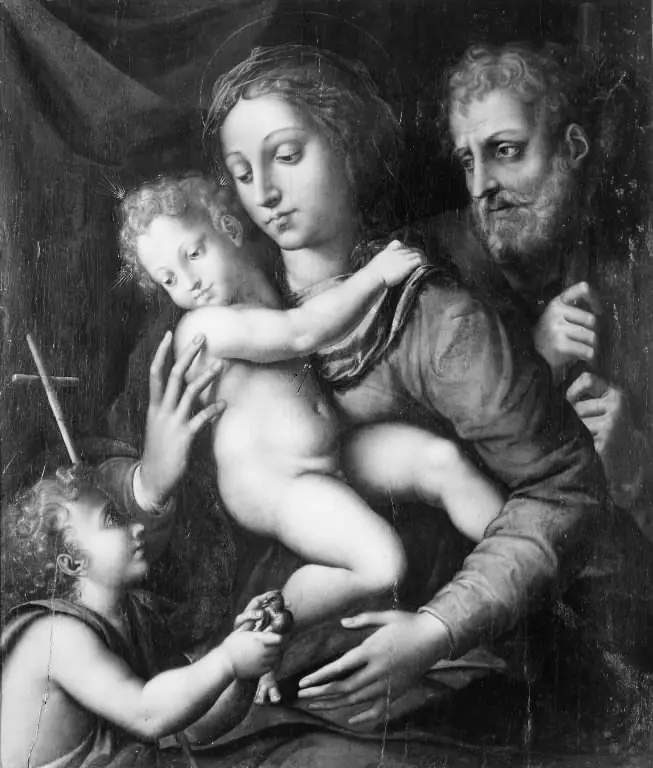
The Holy Family with the Infant Saint John the Baptist is an unspecified painting by the Mannerist artist Giulio Romano. It dates from 1520 and is held in the collection of the National Galleries Scotland.
About this work
Overview
The painting is held in the Scottish National Gallery, where it remains a key example of early 16th-century Italian painting outside Rome.
Painted circa 1520 by Giulio Romano, this work presents a quiet domestic scene of the Holy Family alongside the infant John the Baptist. Romano, once a close assistant to Raphael, here moves beyond the balanced harmony of the High Renaissance, introducing subtle distortions in posture and spatial relationships that signal the emerging Mannerist sensibility. The painting is held in the Scottish National Gallery, where it remains a key example of early 16th-century Italian painting outside Rome.
Subject & Meaning
The composition centers on the Virgin Mary, who cradles the Christ Child while Joseph stands nearby. The infant John the Baptist, dressed in green and blue, offers a scroll—symbolizing his future role as prophet and forerunner of Christ. The gesture suggests a transfer of spiritual destiny, framing the moment as both tender and theologically significant. The absence of elaborate settings directs focus to the intimate, human interaction among the figures.
Technique & Style
Romano employs a dark, unmodeled background to heighten the luminosity of the figures, emphasizing their forms through chiaroscuro. The drapery of Mary’s blue robe and white veil is rendered with soft folds, contrasting with the more angular positioning of the children. The palette is restrained yet deliberate, with red and green accents drawing attention to key gestures. The figures’ slightly elongated proportions and ambiguous spatial depth reflect Mannerist tendencies away from classical naturalism.
History & Provenance
The painting entered the Scottish National Gallery’s collection in the 19th century, though its earlier ownership remains unclear. Romano’s reputation was bolstered by the widespread circulation of his drawings, particularly through engravings by Marcantonio Raimondi, which disseminated his compositional ideas across Europe. While the painting itself was not reproduced in print, its stylistic traits influenced northern and central Italian artists seeking alternatives to Raphael’s idealism.
Context
Created during a period of artistic transition, the work reflects the waning influence of High Renaissance ideals and the rise of more expressive, emotionally charged forms. In Rome, artists like Romano began experimenting with tension, asymmetry, and psychological nuance. This painting exemplifies how even devotional subjects were being reimagined to convey complexity rather than serene perfection, aligning with broader shifts in intellectual and religious culture.
Legacy
Though less celebrated than Romano’s frescoes in Mantua, this painting illustrates his role in shaping Mannerist aesthetics beyond monumental decoration. Its intimate scale and emotional subtlety contributed to a growing trend of private devotional imagery in northern Europe. The work’s restrained palette and deliberate compositional unease became touchstones for later artists exploring psychological depth in religious scenes.
Artist & collection
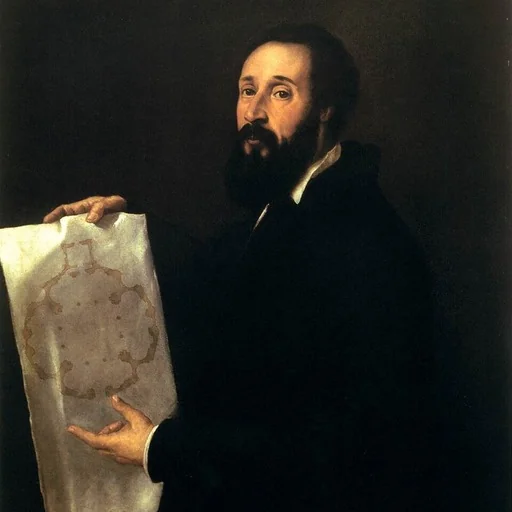
Artist
Giulio Pippi (c. 1499 – 1 November 1546), known as Giulio Romano (US: JOOL-yoh rə-MAH-noh( Italian: ) and sometimes known in French as Jules Romain, was an Italian painter and architect. He was a pupil of Raphael, and…

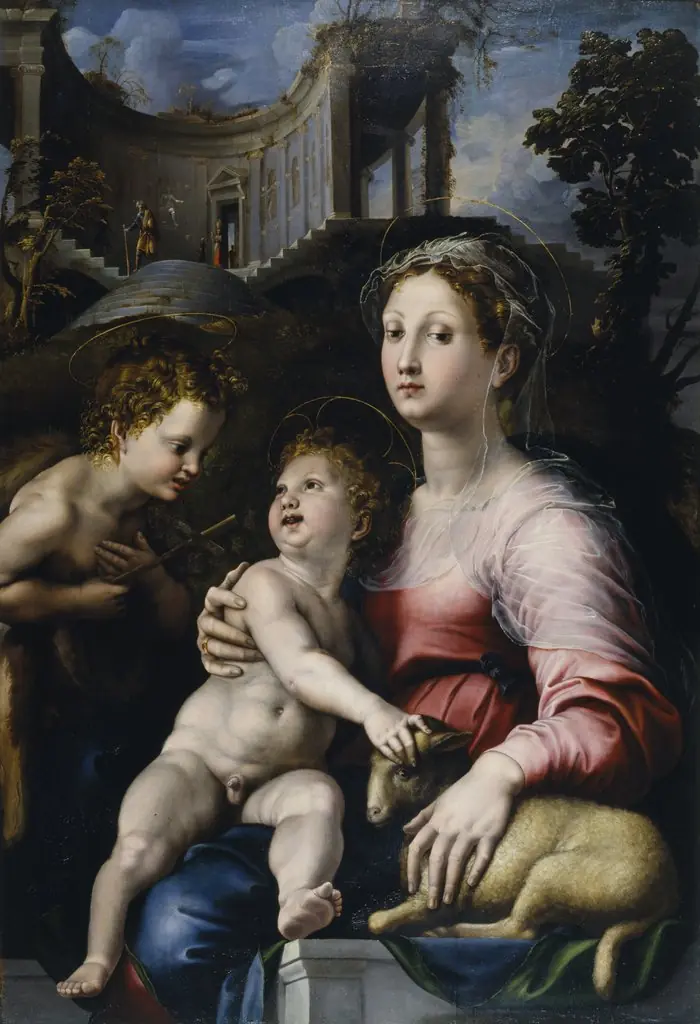
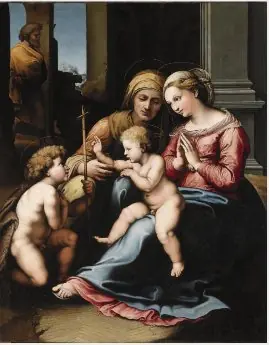
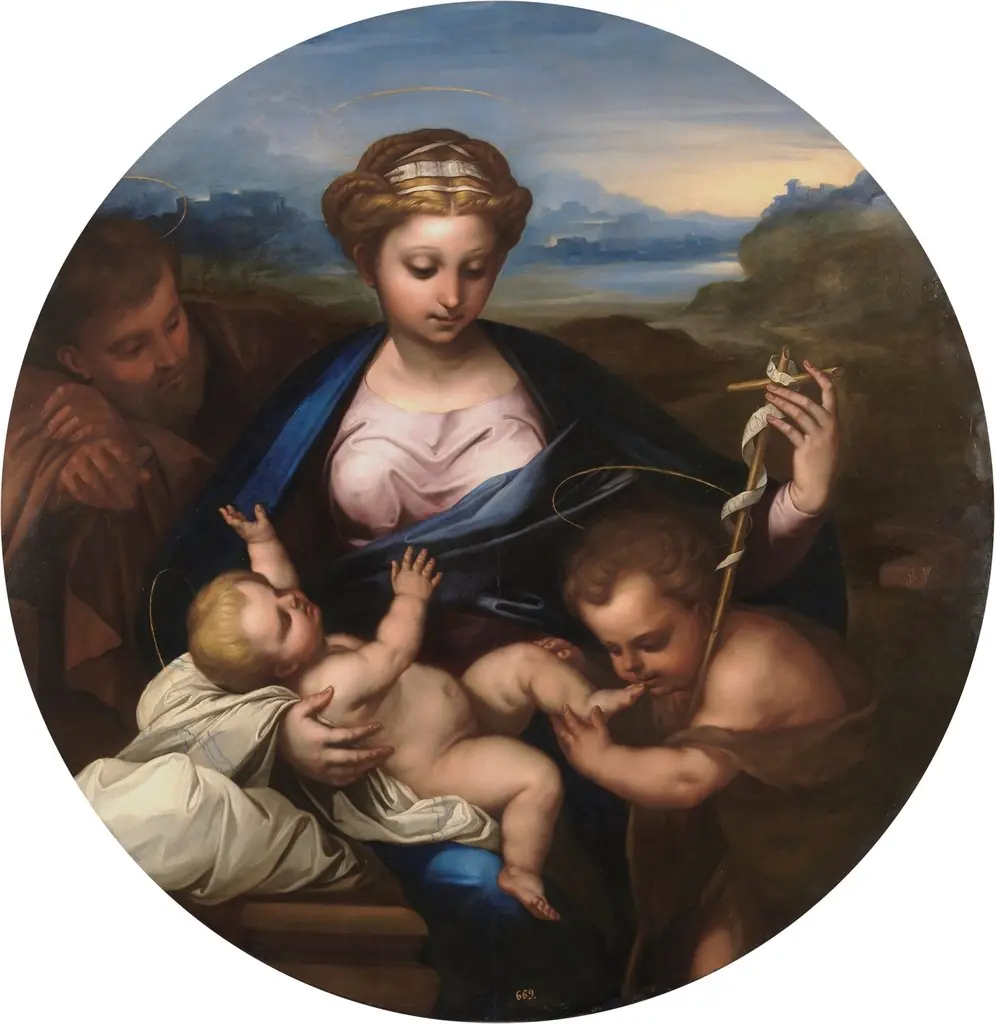 The Holy Family with Saint John
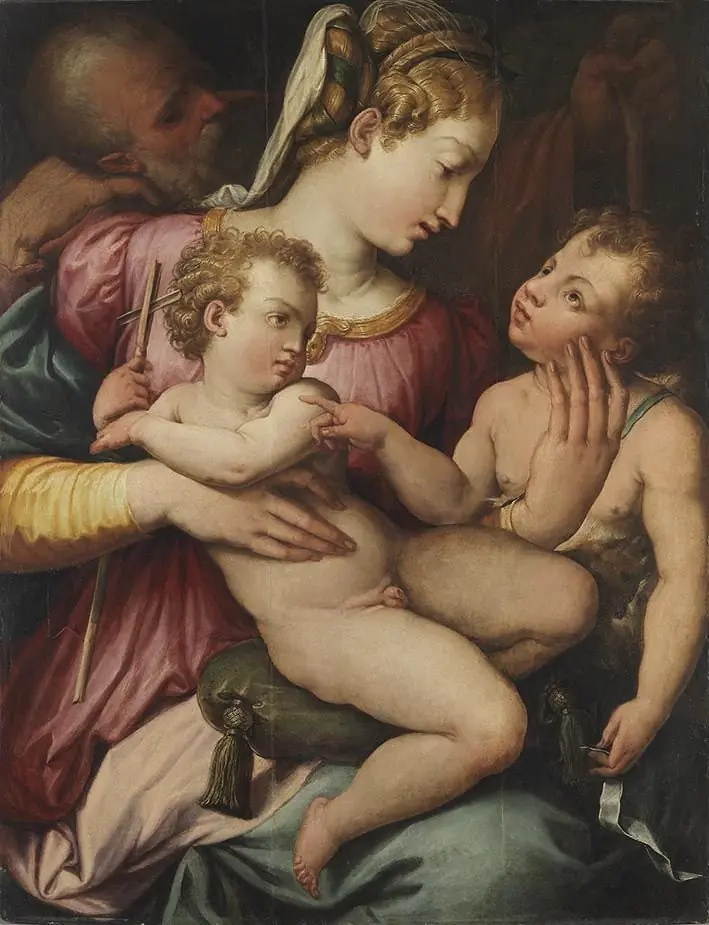 Holy family with little John the Baptist
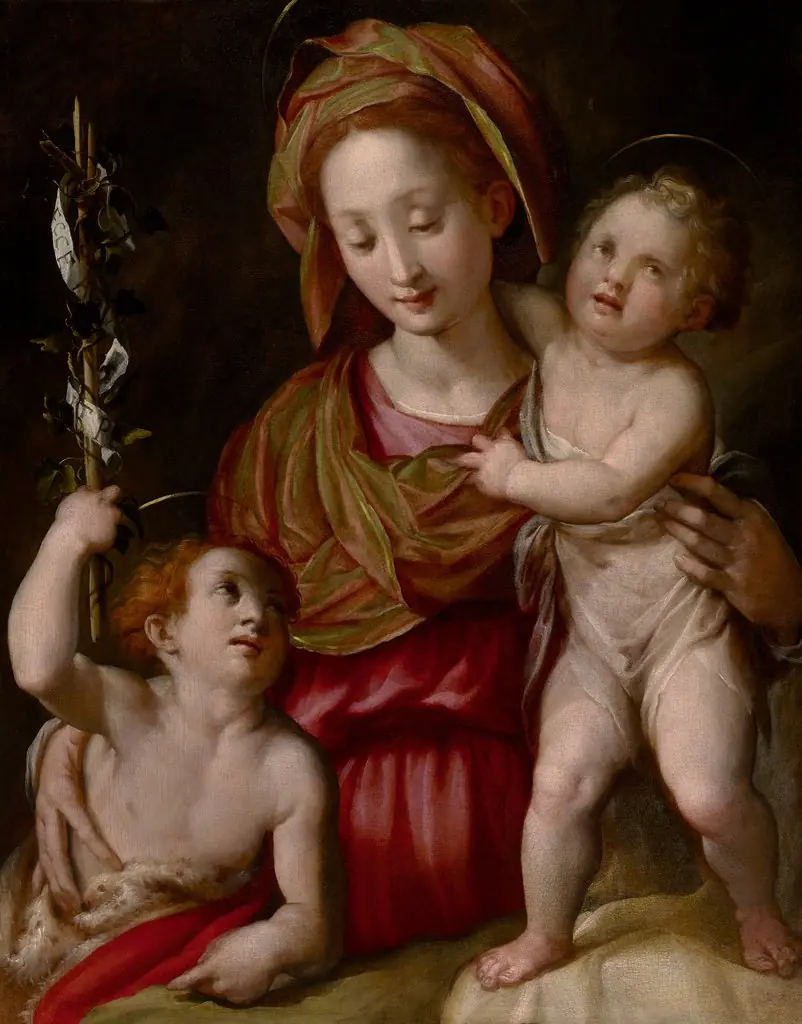 Madonna and Child with the Young St. John the Baptist
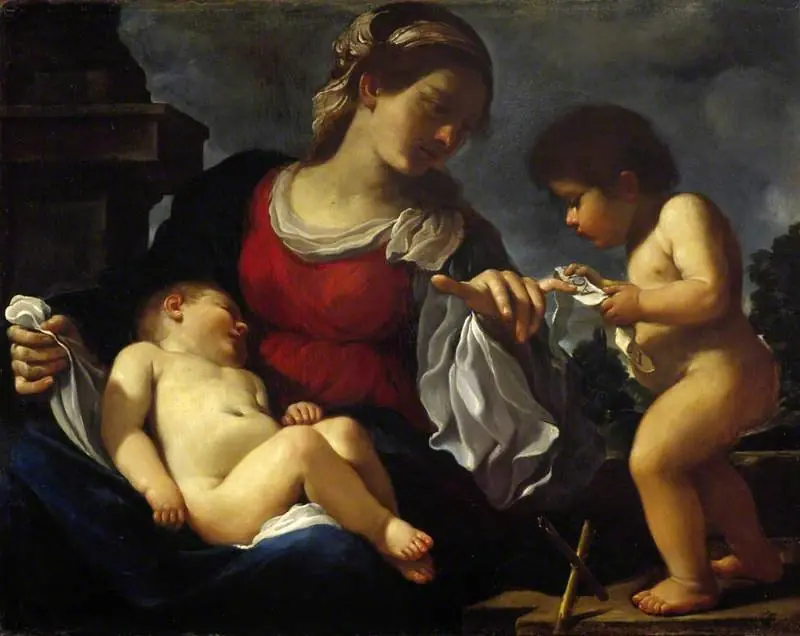 The Virgin and Child with the Infant Saint John the Baptist
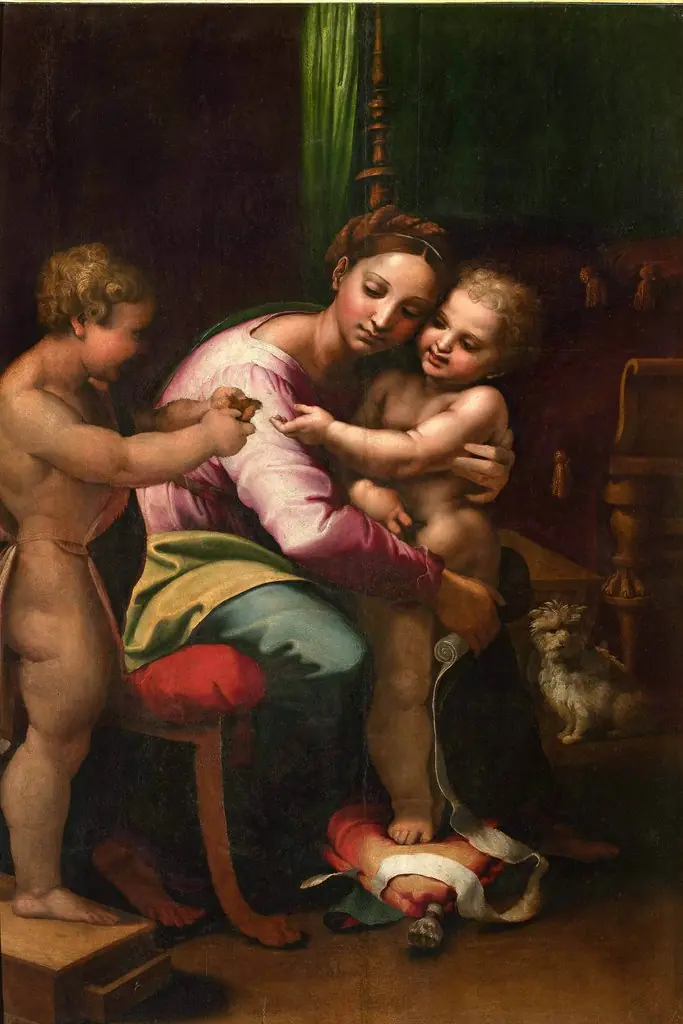 Madonna and Child with The Infant Saint John the Baptist
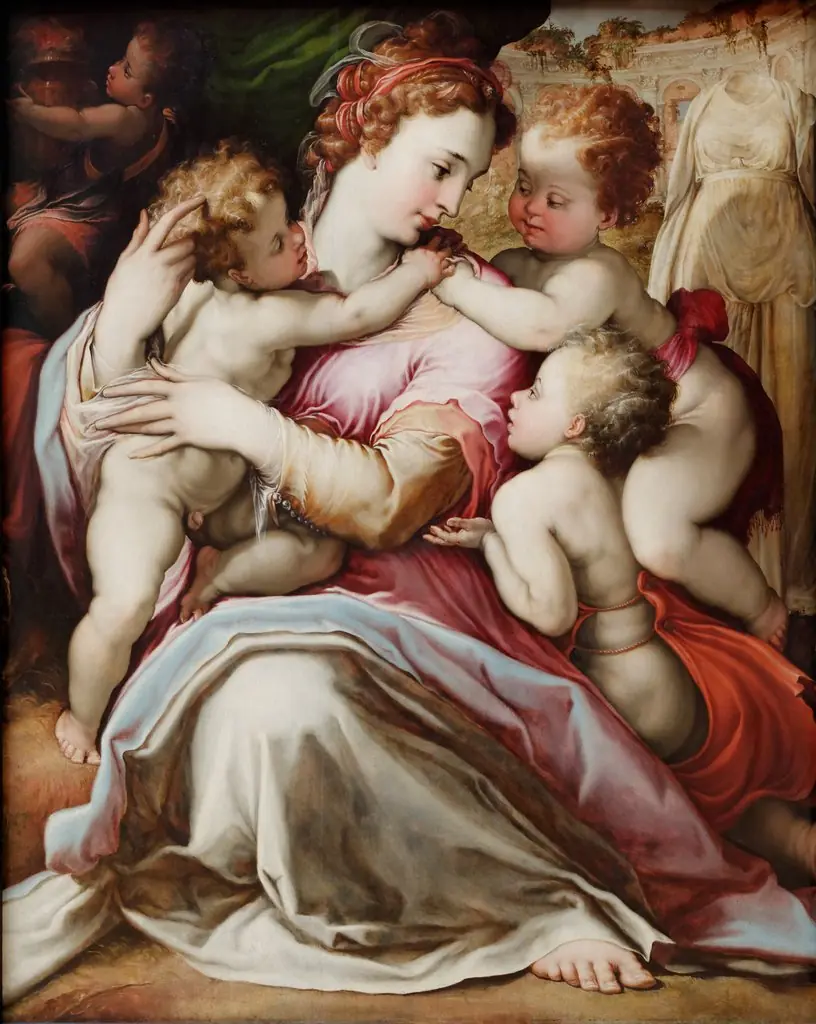 Caritas
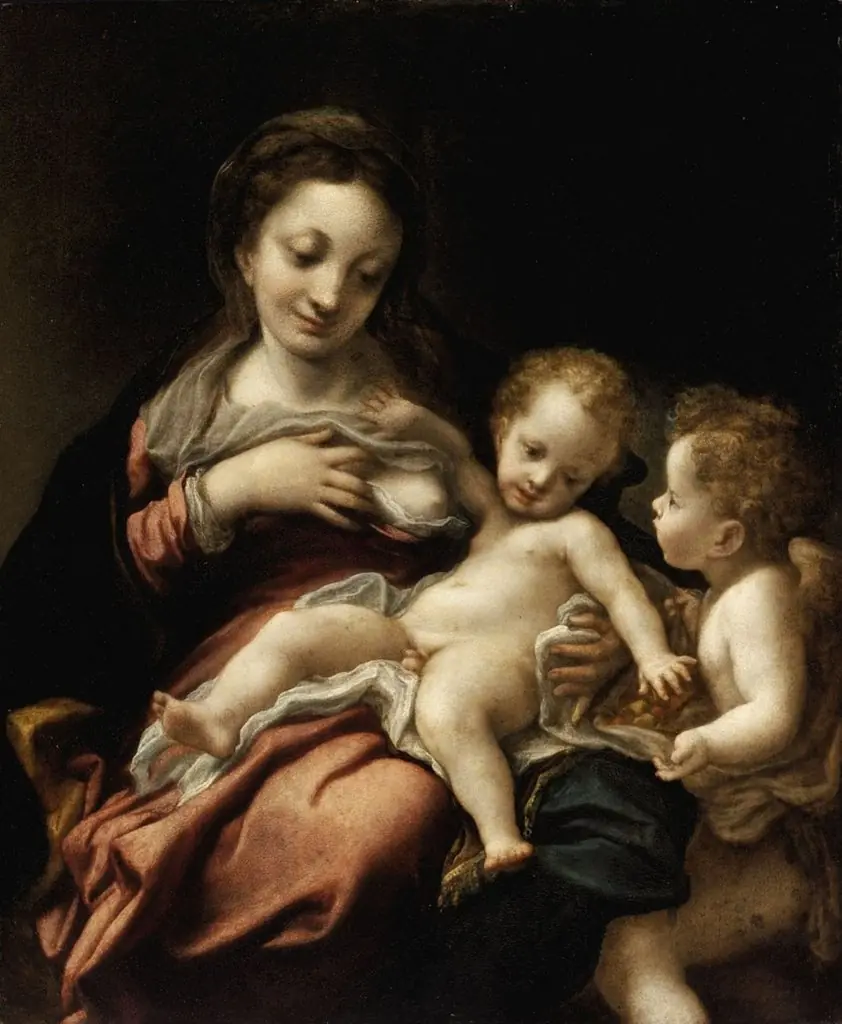 Virgin and Child with an Angel (Madonna del Latte)
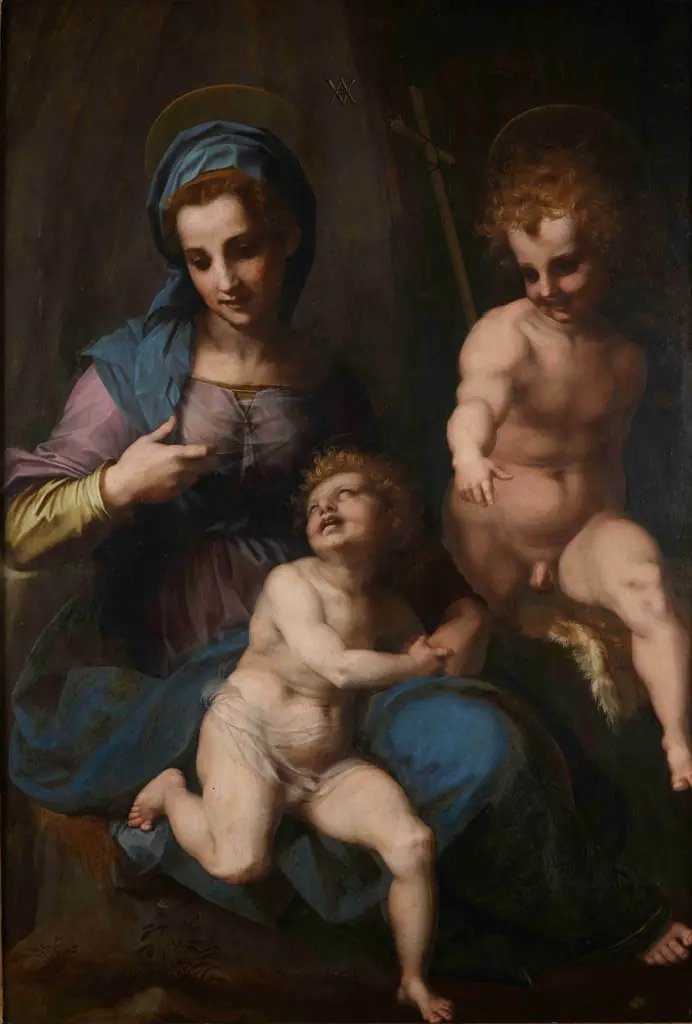 Madonna and Child with Young St John