Artwork
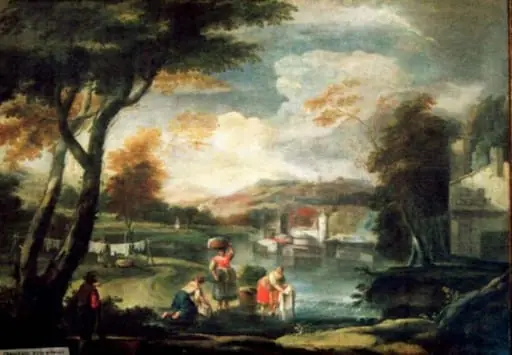
Landscape with a River
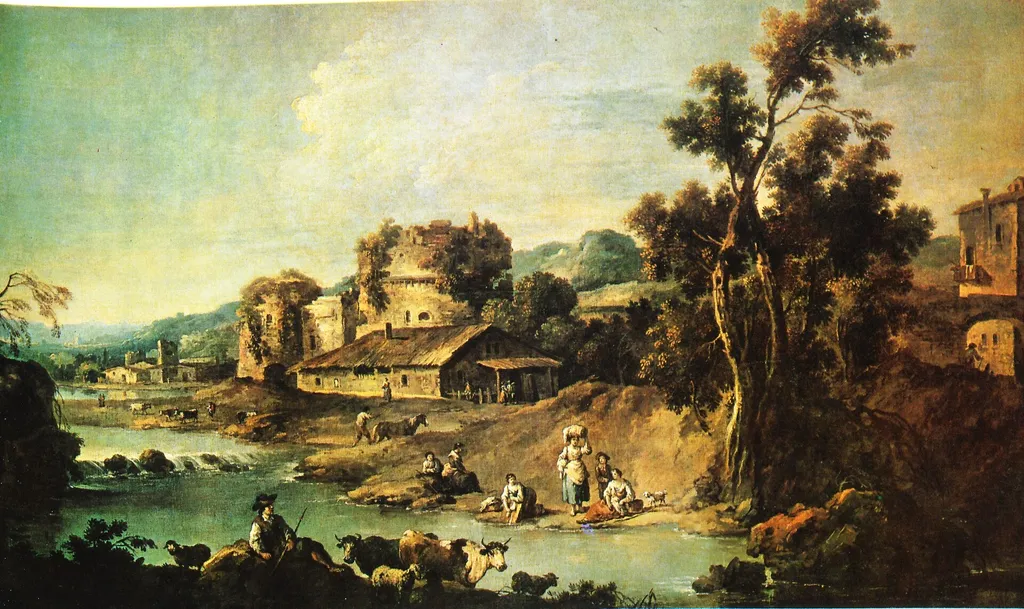
Landscape with a River is an oil painting by the Rococo painting artist Giuseppe Zais. It is held in the collection of the Museum of Fine Arts, Budapest.
About this work
Overview
The work reflects his training under Marco Ricci and Francesco Zuccarelli, and it remains part of the Museum of Fine Arts, Budapest’s collection.
Giuseppe Zais painted *Landscape with a River* in 1792 using oil on canvas, capturing a quiet rural scene in the Veneto region. A Venetian artist active in the late Baroque and early Rococo periods, Zais specialized in vedute—detailed, atmospheric landscapes that balanced naturalism with poetic composition. The work reflects his training under Marco Ricci and Francesco Zuccarelli, and it remains part of the Museum of Fine Arts, Budapest’s collection.
Subject & Meaning
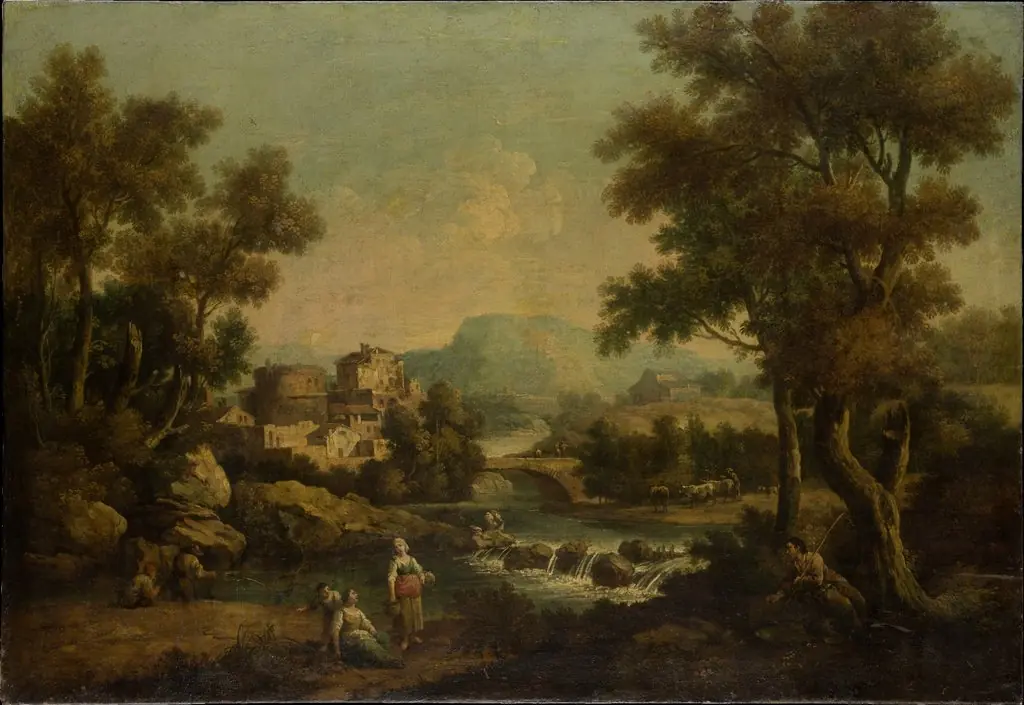
The painting depicts a tranquil riverside setting with figures engaged in everyday activities: some rest near the water, others tend livestock or work in distant fields. Buildings peek through the trees, suggesting a modest agrarian community. There is no narrative drama or symbolic allegory; instead, the scene conveys a quiet rhythm of rural life, emphasizing harmony between people and the land through understated observation.
Technique & Style
Zais employed soft, muted tones—greens, browns, and blues—to create a cohesive atmospheric tone. His brushwork is delicate, with subtle gradations of light and shadow to suggest depth and distance. The composition leads the eye along the winding river, framing the landscape with layered hills and foliage. The style merges topographical precision with a gentle, lyrical mood, characteristic of Venetian landscape traditions of the time.
History & Provenance
Zais, a member of Venice’s Academy of Painters, also contributed frescoes to Villa Pisani in Stra, though he died in relative poverty in Treviso. *Landscape with a River* was likely produced late in his career, reflecting his mature approach to landscape. The painting entered the Museum of Fine Arts, Budapest’s collection in the 19th or early 20th century, possibly through European art acquisitions, but its exact path to Hungary remains undocumented.
Context
In late 18th-century Venice, landscape painting was gaining traction as a distinct genre, moving beyond purely topographical records toward emotional resonance. Zais worked within this shift, influenced by earlier Venetian vedutisti and the growing European interest in pastoral scenes. His work contrasts with grander historical or mythological subjects, offering instead a contemplative view of the everyday countryside.
Legacy
Though Zais never achieved widespread fame, his landscapes contributed to the evolution of Venetian painting in the transition from Baroque to Neoclassicism. His focus on quiet, observed nature influenced later regional artists. Today, his works, including this river scene, are valued for their understated beauty and as records of rural life in northern Italy during a period of social and artistic change.
Artist & collection
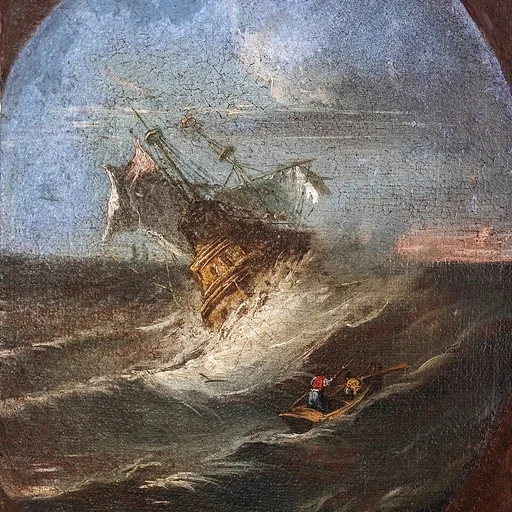
Artist
Giuseppe Zais (Italian pronunciation: ; March 22, 1709 – October 29, 1784) was an Italian painter of landscapes (vedutisti) who painted mostly in Venice.

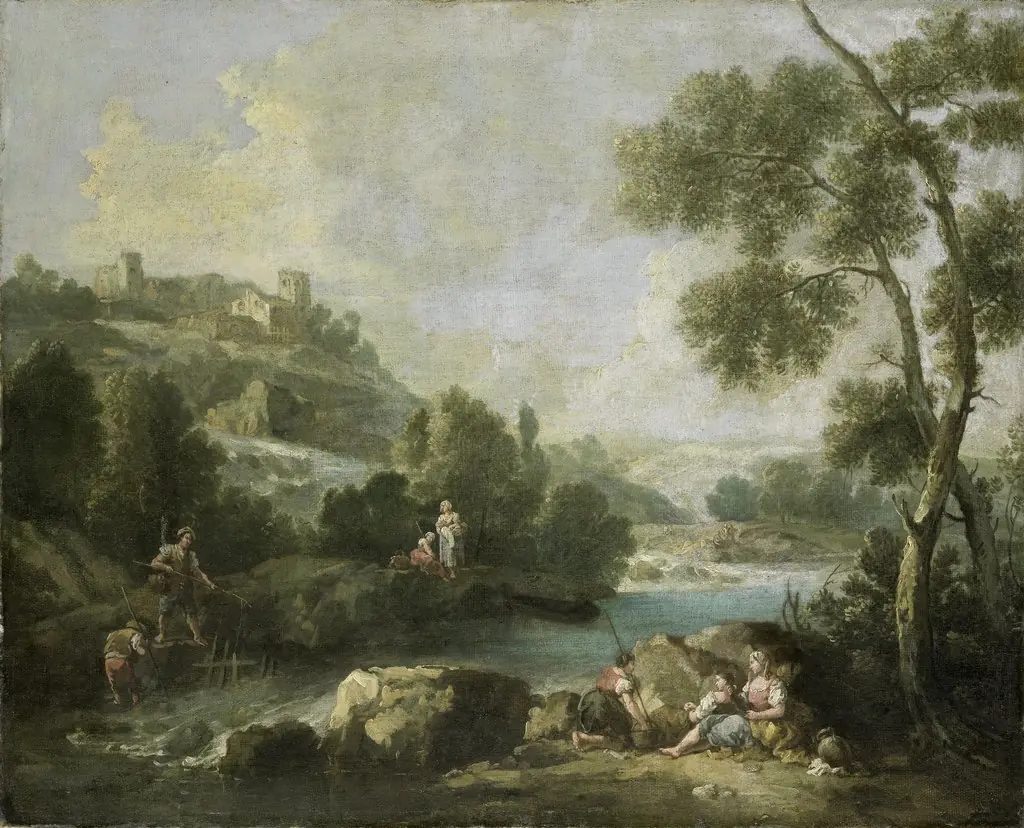
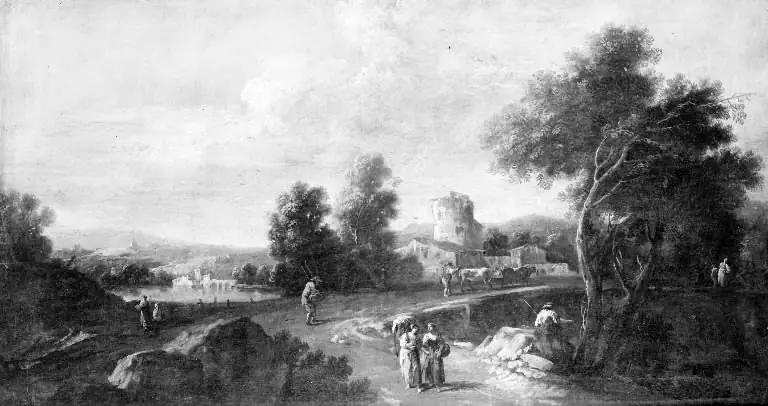
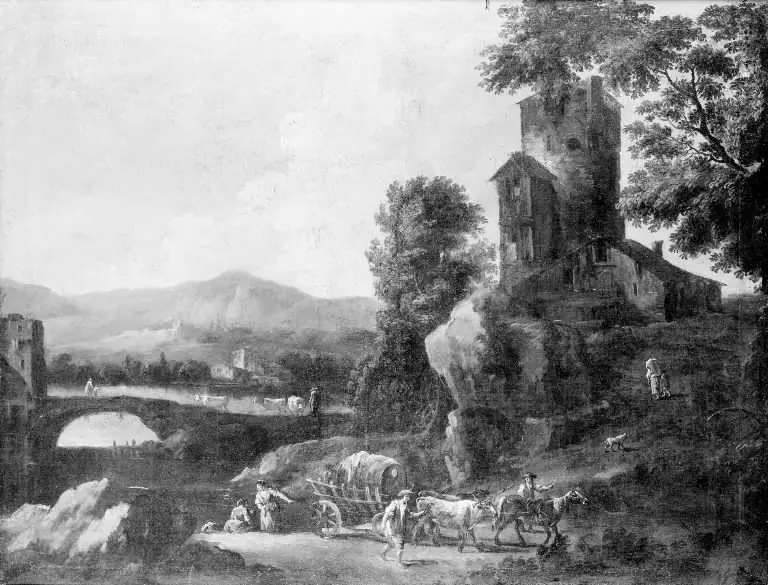
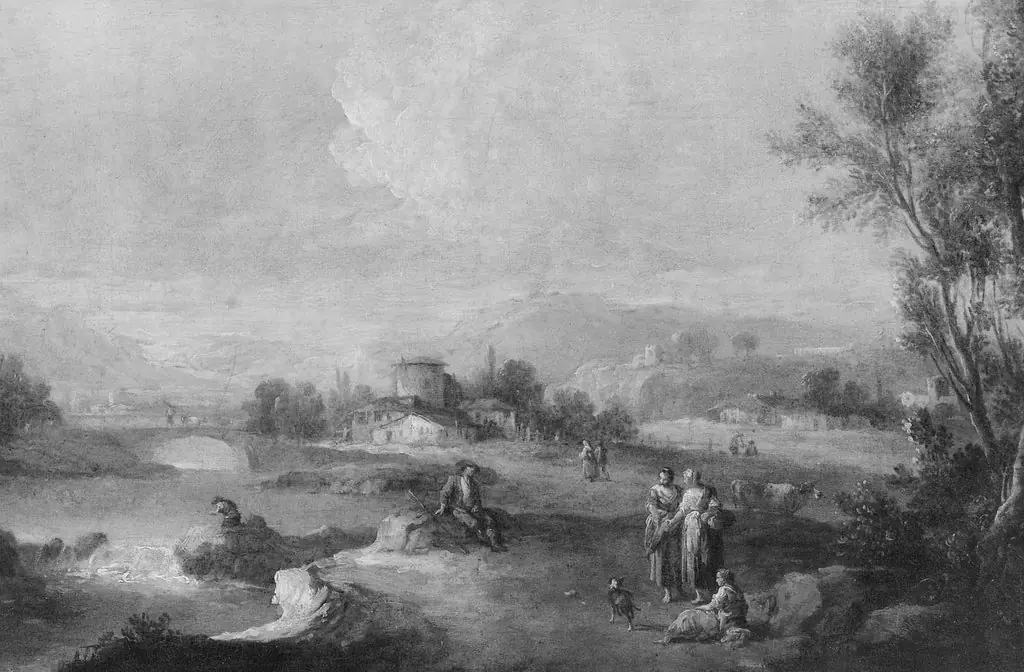
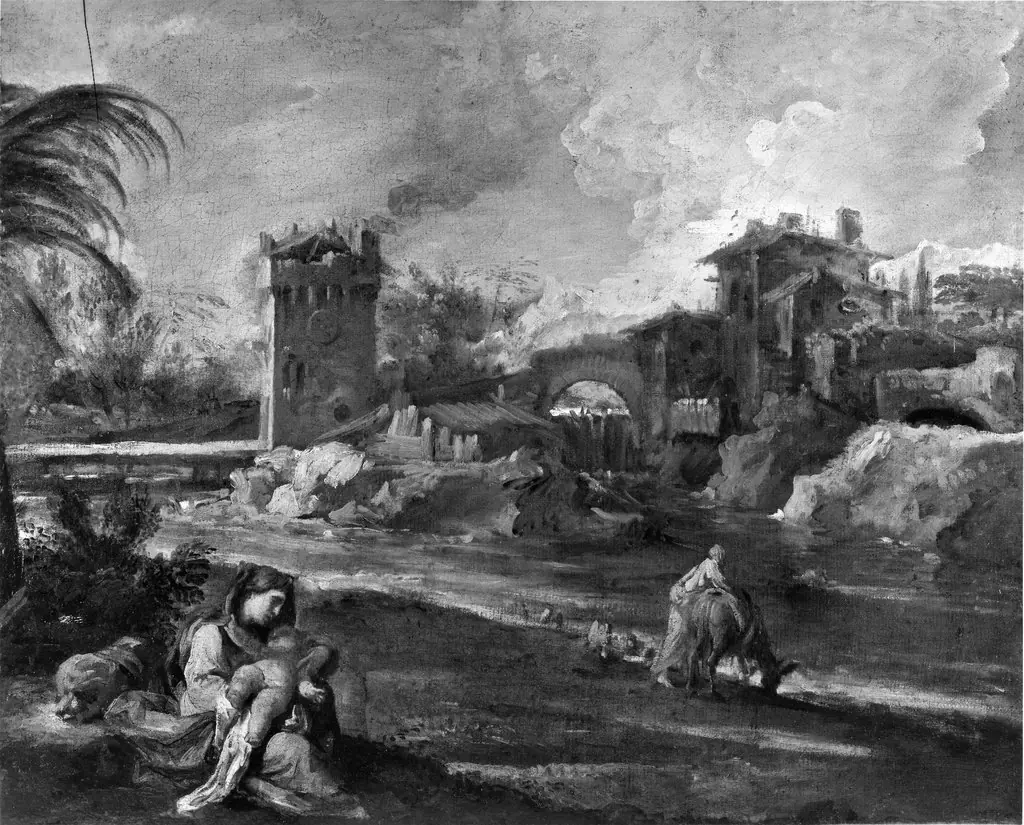
 Italian Landscape with a Mountain Stream
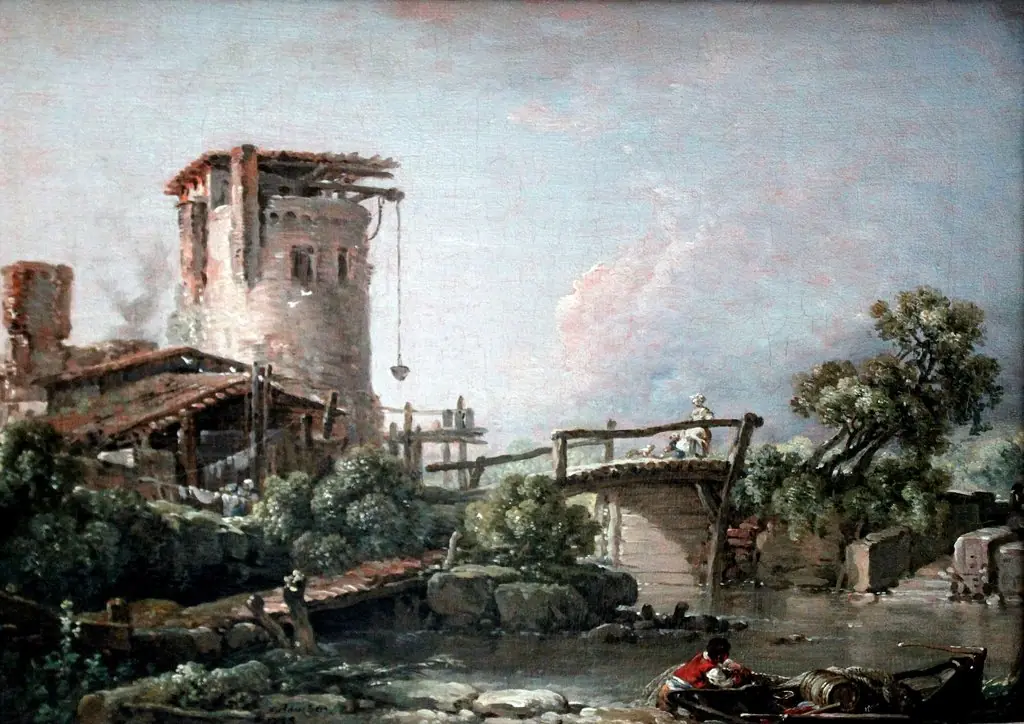 Landscape with Tower and Bridge
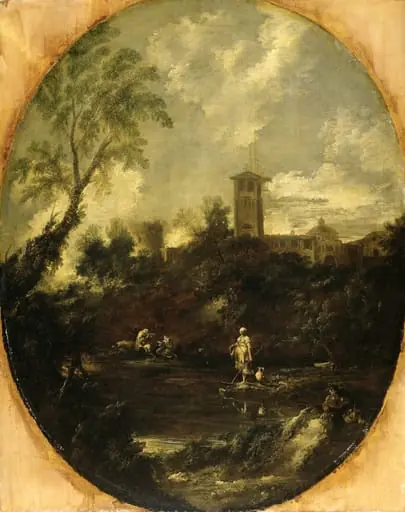 Landscape with Monks, Pilgrim and Peasant Woman
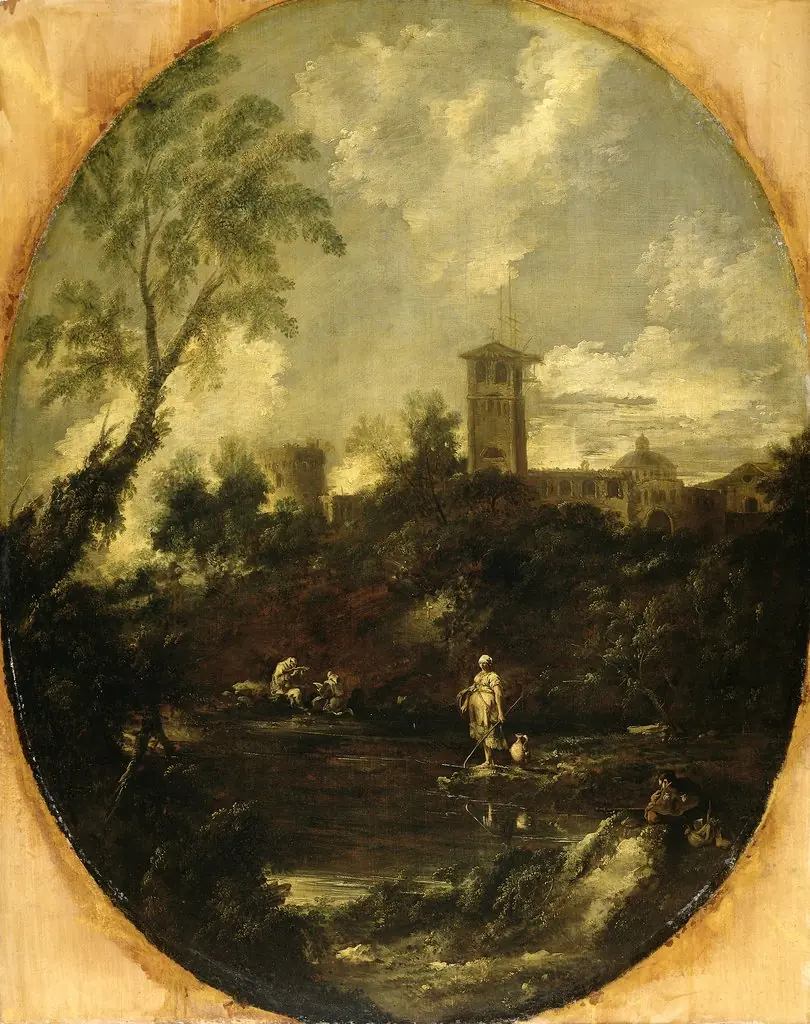 Landscape with Monks, Pilgrim and Peasant Woman
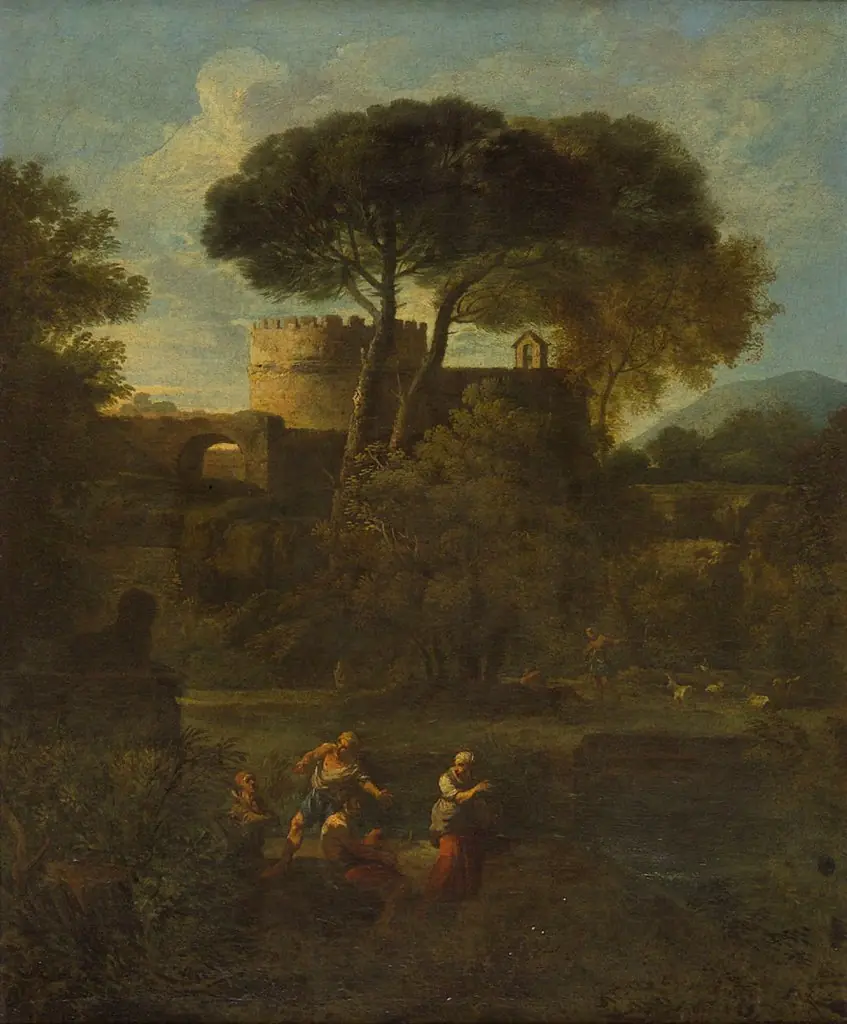 Grabmal der Cecilia Metella
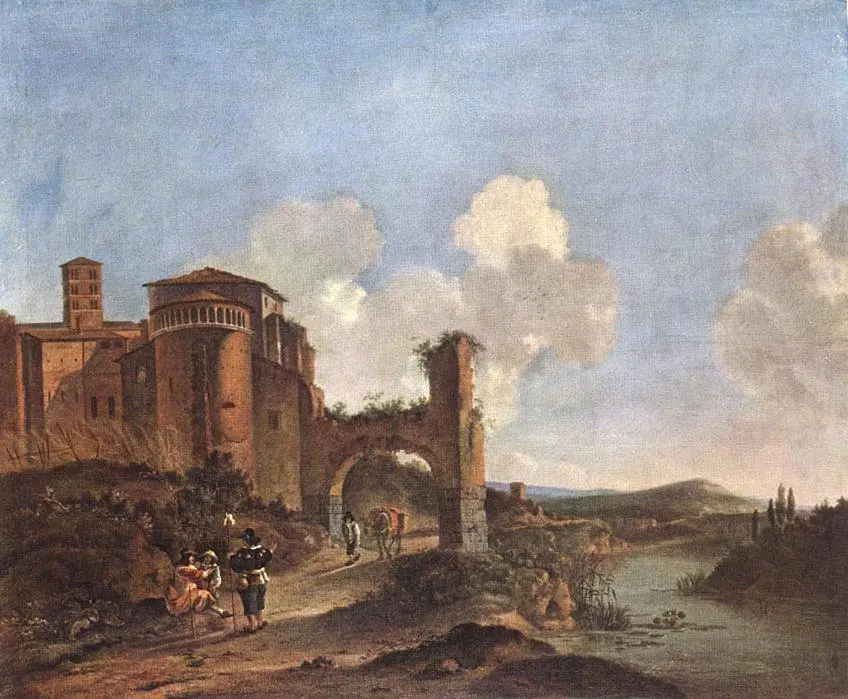 Italian Landscape with Santi Giovanni e Paolo in Rome
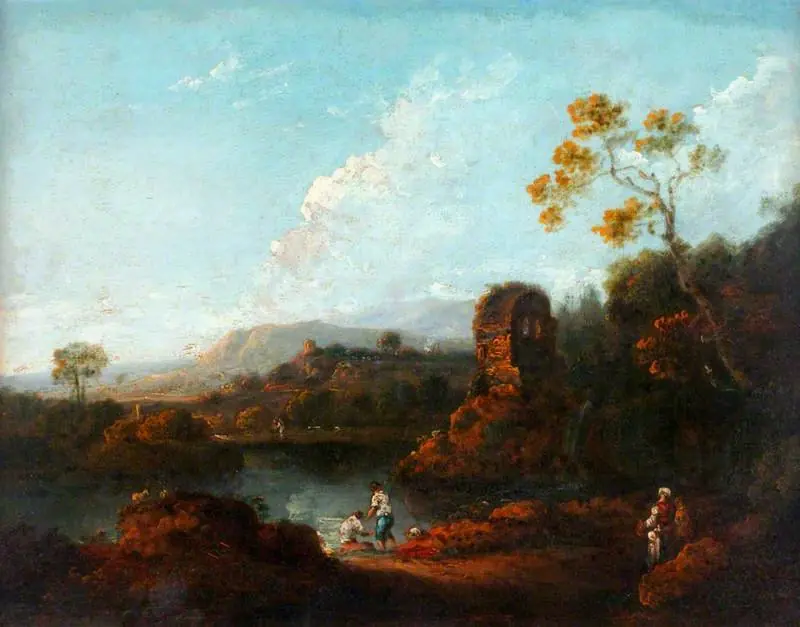 Landscape with a River and Ruins
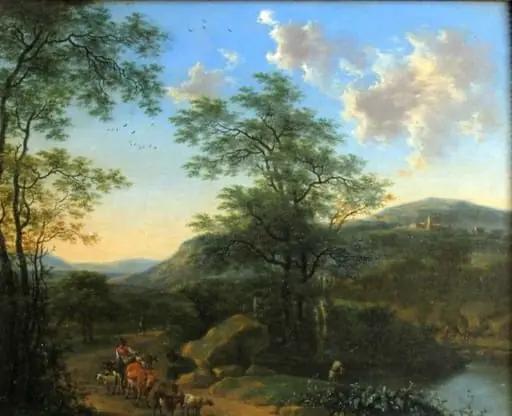 Peisaj italian cu pârâu
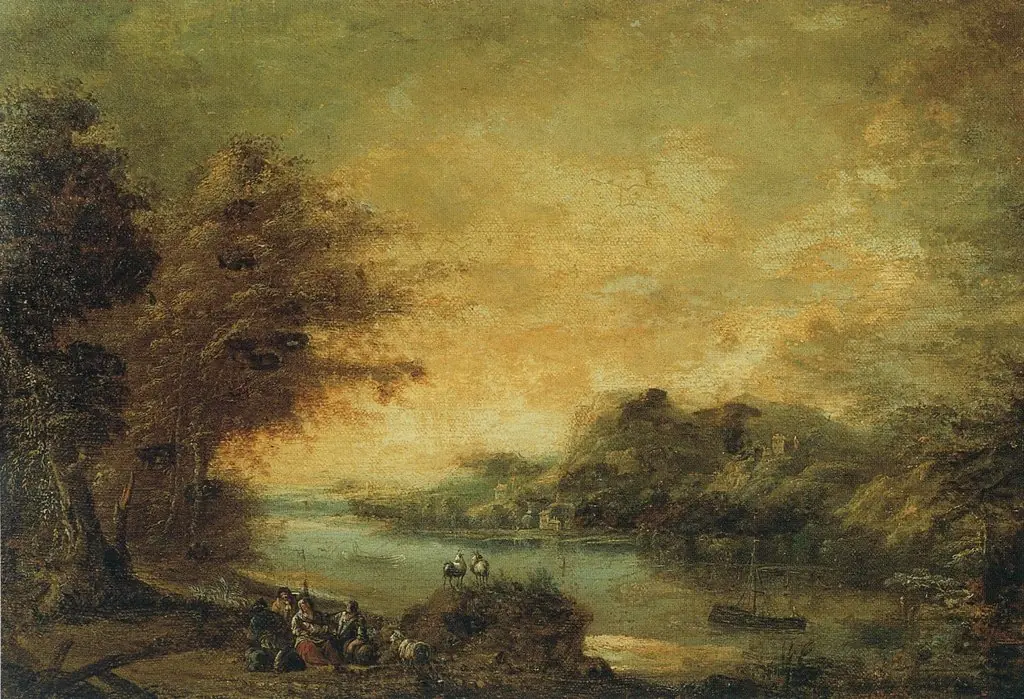 Landscape
 Peisaj
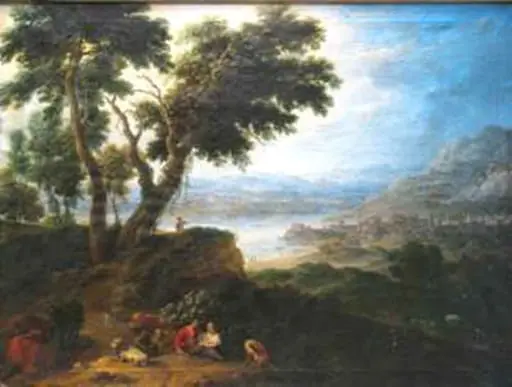 Oraș lângă fluviu