Artwork
James Ussher, Archbishop of Armagh
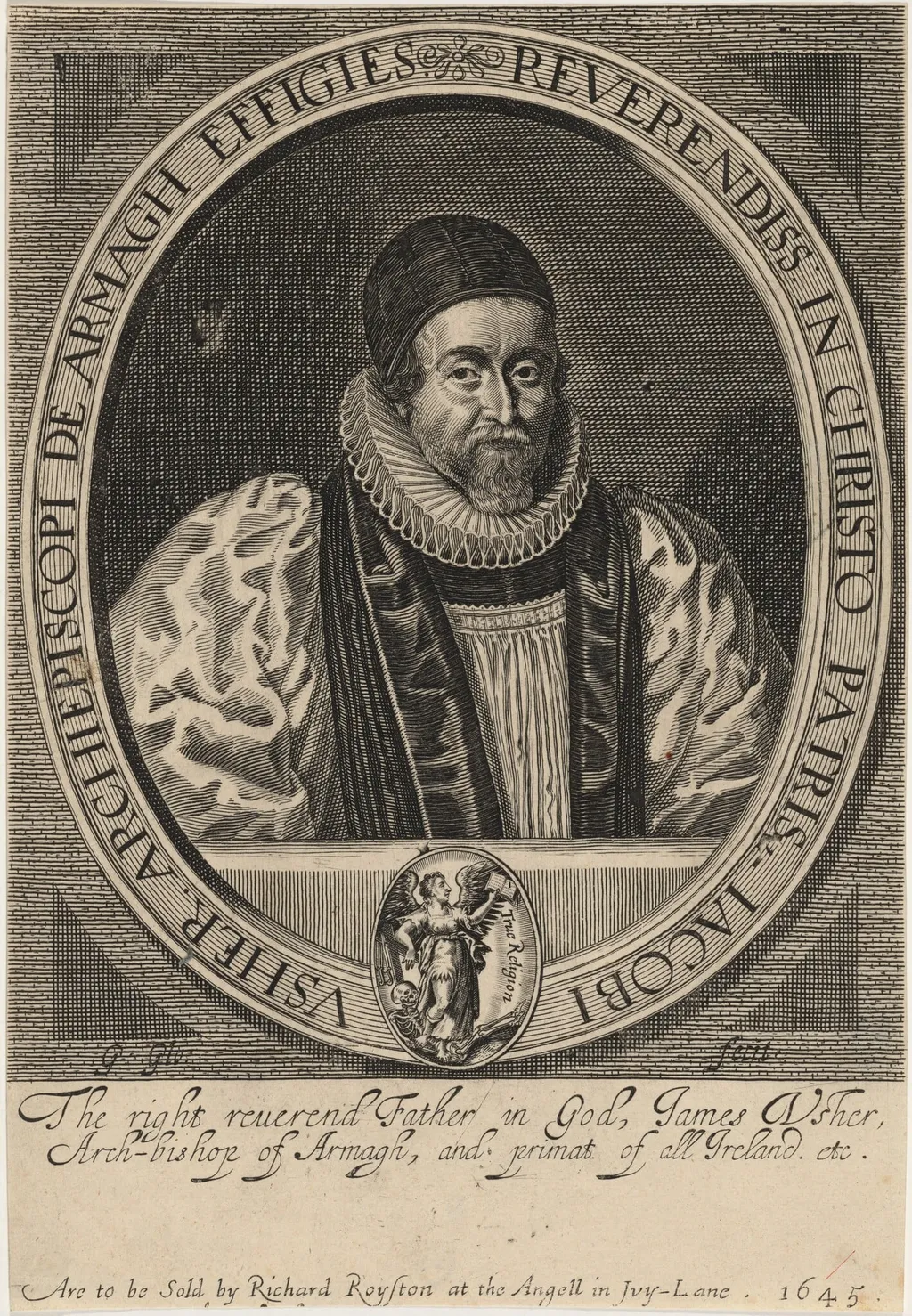
James Ussher, Archbishop of Armagh is an ink print by the Renaissance artist George Glover. It dates from 1633 and is held in the collection of the National Gallery of Art.
About this work
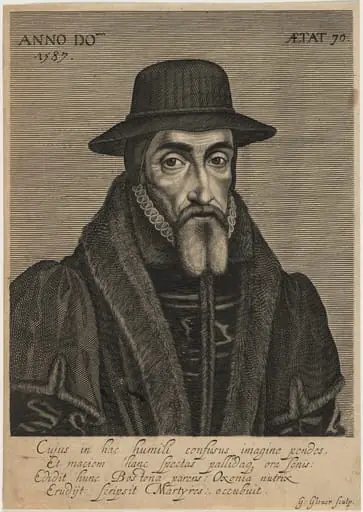
Around his head is a circle of text, and below him is a smaller image of an angel holding a shield.
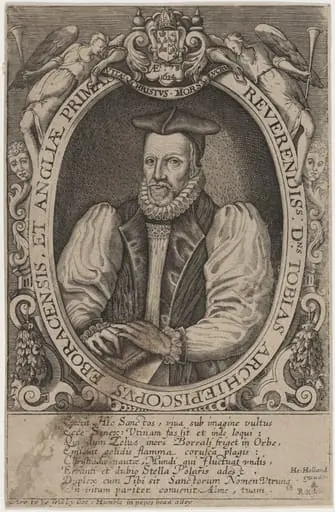
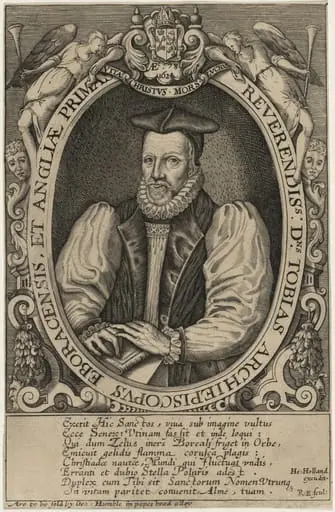
This black-and-white portrait shows a serious-looking man with a white beard and ruff collar. He’s wearing a dark robe and holds a large book in his left hand. Around his head is a circle of text, and below him is a smaller image of an angel holding a shield. The whole print has a textured, lined background.
The text at the bottom names him James Ussher, calling him "Archbishop of Armagh." The artist signed it in 1645, and it was sold by someone named Richard Reyston.
Next, look up engraving to see how artists like this made detailed prints.
Overview
George Glover’s 1633 engraving depicts James Ussher, the Archbishop of Armagh, in a formal portrait. Rendered in black and white, the image presents Ussher with a white beard, ruff collar, and dark clerical robe, holding a substantial book. A circular inscription frames his head, while an angel bearing a shield appears beneath the main figure, all set against a textured, lined background.
Subject & Meaning
The portrait emphasizes Ussher’s ecclesiastical authority and scholarly reputation. The large book he cradles alludes to his extensive theological work, and the angelic figure may symbolize divine protection or endorsement of his religious office.
Technique & Style
Glover employed the traditional engraving method, incising lines into a metal plate to achieve fine detail and tonal variation. The contrast between the deep shadows of the robe and the illuminated facial features showcases the artist’s skill in rendering texture and depth within a monochrome medium.
History & Provenance
The print bears Glover’s signature dated 1645, indicating a later re‑issue or completion of the plate. It was later listed for sale by the dealer Richard Reyston, providing a documented point of circulation in the eighteenth‑century print market.
Artist & collection