Artwork
Title Page for Devotionis Augustinianae Flamma, by William Austin
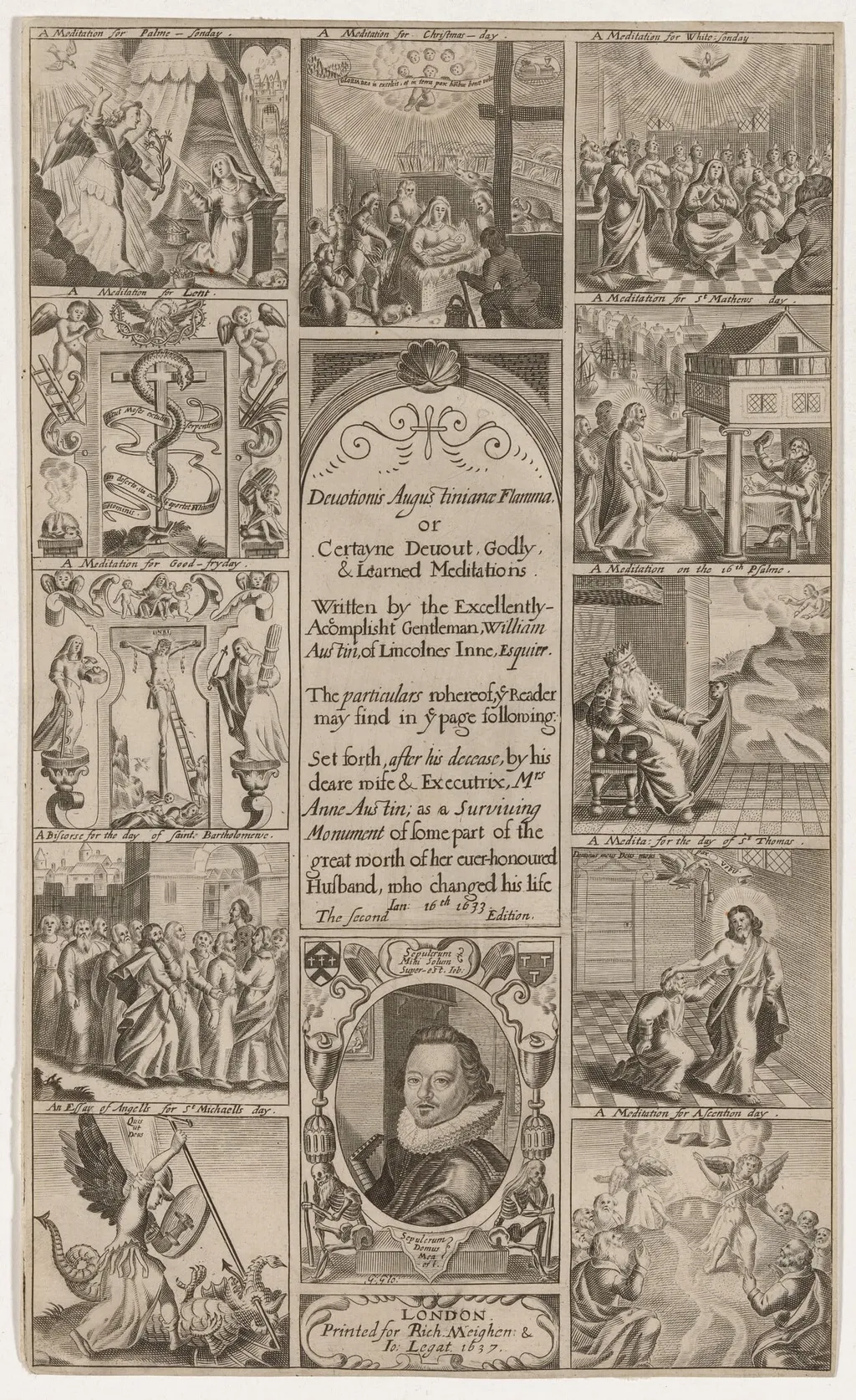
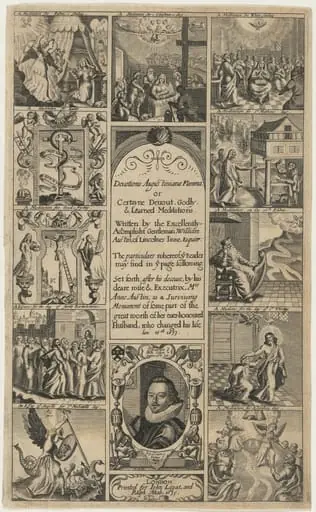
Title Page for Devotionis Augustinianae Flamma, by William Austin is an ink print by the Baroque artist George Glover. It dates from 1637 and is held in the collection of the National Gallery of Art.
About this work
Each box shows a different scene with people in dramatic poses—some kneeling, others gesturing toward the sky or holding objects like books or crosses.
This image is a sheet of small engravings arranged in three columns. Each box shows a different scene with people in dramatic poses—some kneeling, others gesturing toward the sky or holding objects like books or crosses. The lines are precise, and the shading is made by tiny parallel lines, giving a textured look. At the center is a portrait of a man in a ruff collar, surrounded by decorative borders.
The title at the top reads *Devotionis Augustinianae Flamma*, and the text mentions it was printed in London in 1637. Each small image is labeled as a "Meditation" for a specific saint’s day or biblical event, like Palm Sunday or Good Friday.
If you like this style, look up engraving to see how artists create depth with lines.
Overview
This engraving, created by George Glover in 1637, serves as the title page for 'Devotionis Augustinianae Flamma' by William Austin. It is a complex composition featuring multiple small scenes arranged in three columns.
Subject & Meaning
The engraving contains various biblical and devotional scenes, each labeled as a 'Meditation' for specific saint's days or events like Palm Sunday and Good Friday. A central portrait, likely of a significant figure, is surrounded by decorative borders.
Technique & Style
The engraving is characterized by precise lines and shading achieved through tiny parallel lines, giving it a textured appearance. The level of detail suggests a high level of craftsmanship.
History & Provenance
The title page was printed in London in 1637, as indicated by the text at the top. It was created for 'Devotionis Augustinianae Flamma', a work by William Austin.
Artist & collection

 Samuel David
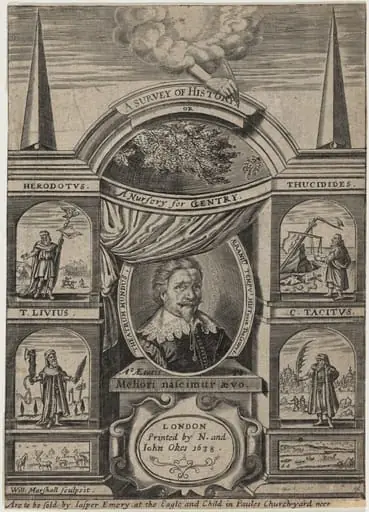 Title page to R. Brathwait, A Survey of History
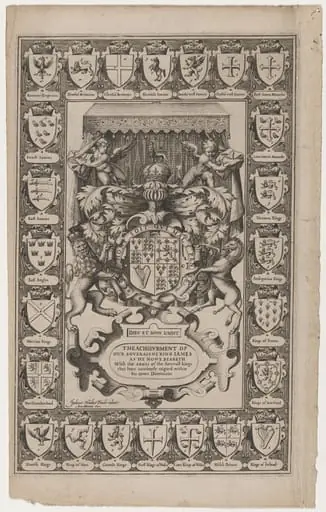 Title Page for the Achievement of our Soveraigne King James
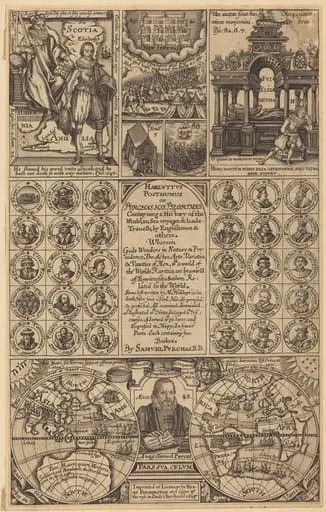 Frontispiece
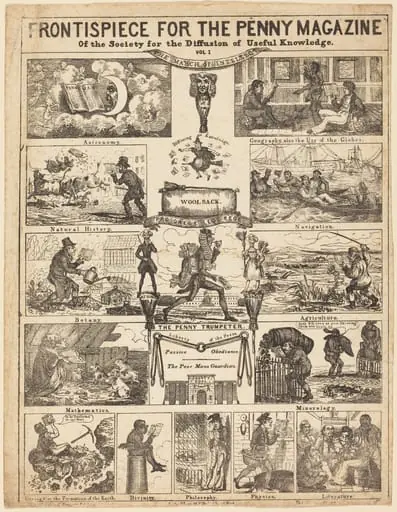 Frontispiece for the Penny Magazine of the Society for the Diffusion of Knowledge: Vo
 Title Page for the Achievement of our Soveraigne King James
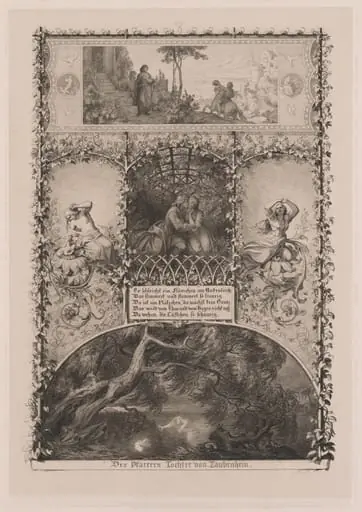 Des Pfarrers Tochter von Taubenhein (The Parson's Daughter from Taubenhain)
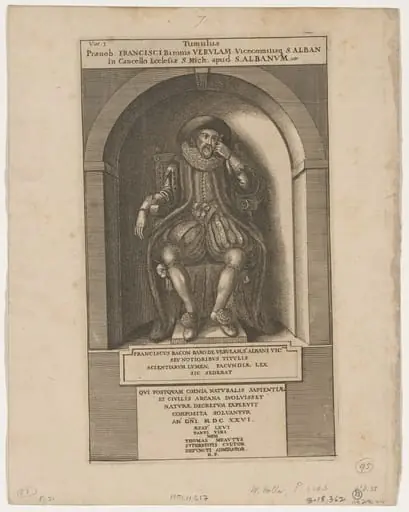 Francis Bacon in a Niche
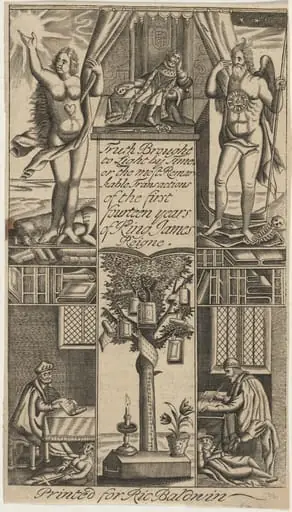 Frontispiece to Truth Brought to Light by Time
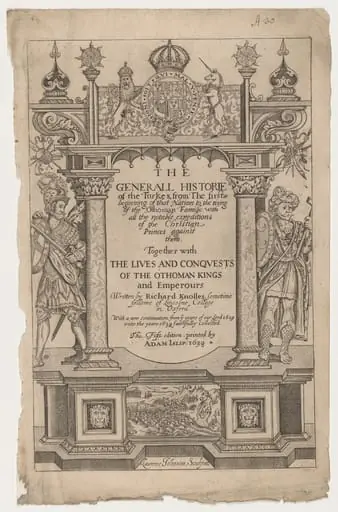 Title Page for R. Knolles Generall Historie of the Turkes
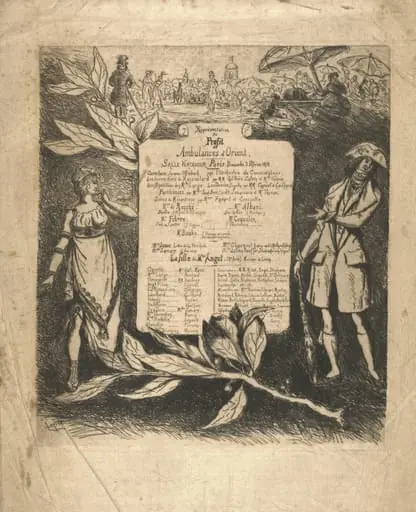 Programme de la représentation du 3 février 1878, salle Ventadour
 Title Page for Devotionis Augustinianae Flamma, by William Austin