Artwork
Plantae et Papiliones rariores: Martynia
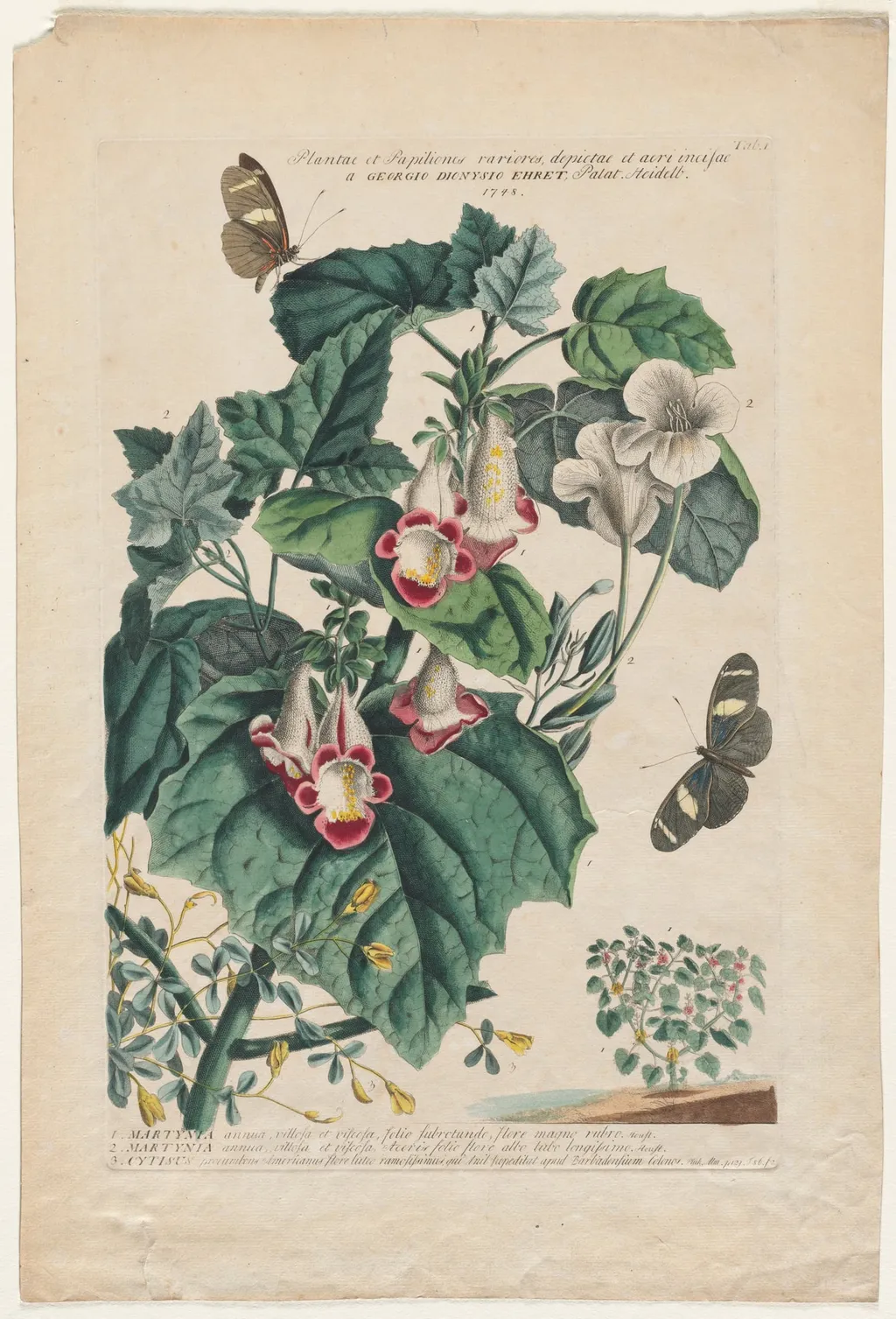
Plantae et Papiliones rariores: Martynia is a print by the Baroque artist Georg Dionysius Ehret. It dates from 1748 and is held in the collection of the Cleveland Museum of Art.
About this work
Overview
Plantae et Papiliones rariores: Martynia is a botanical print by Georg Ehret, showcasing a rare martynia plant accompanied by a brown butterfly. Characterized by meticulous detail, the work exemplifies Ehret's balance between artistic expression and scientific accuracy.
Subject & Meaning
The print depicts a martynia plant with distinctive green leaves and a pink-and-white, trumpet-shaped flower, alongside a resting brown butterfly. The inclusion of the butterfly adds a naturalistic element, highlighting the plant's habitat and Ehret's observational approach.
Technique & Style
Ehret's technique is marked by 'crisp forms,' a 'sureness of touch,' and 'vigor of handling,' as noted by art historian Wilfrid Blunt. His style avoids slavish imitation in favor of a balanced representation that prioritizes both the aesthetic appeal of the plant and its structural accuracy.
History & Provenance
Created during Ehret's prolific period in 18th-century England, where he was in high demand among the nobility for his botanical art instruction. The print is now part of the collection at The Cleveland Museum of Art.
Context
Ehret's work was influenced by his collaborations with scientists, including a notable meeting with Carolus Linnaeus in 1736. His balanced approach to botanical illustration contributed significantly to the naming and study of new plant species during the 1700s.
Artist & collection

Artist
Georg Dionysius Ehret was a German botanist and entomologist known for his botanical illustrations.

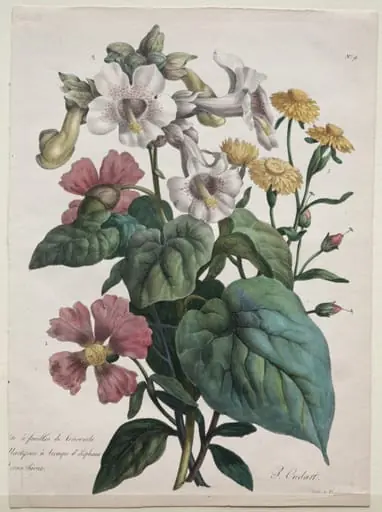 Cours d'Histoire Naturelle, contenant les principales espèces du règne animal, classées methodiquemenet: Martynia or Unicorn Plant
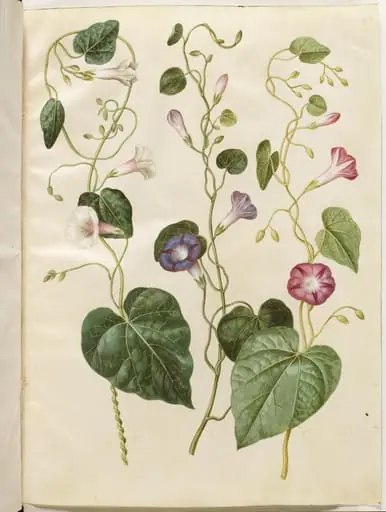 Ipomoea purpurea (purpur-pragtsnerle)
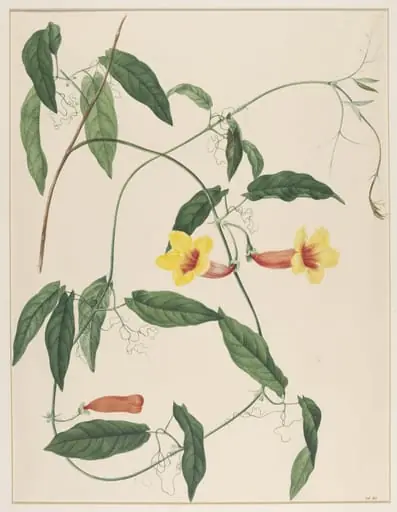 Bignonia Capreolata
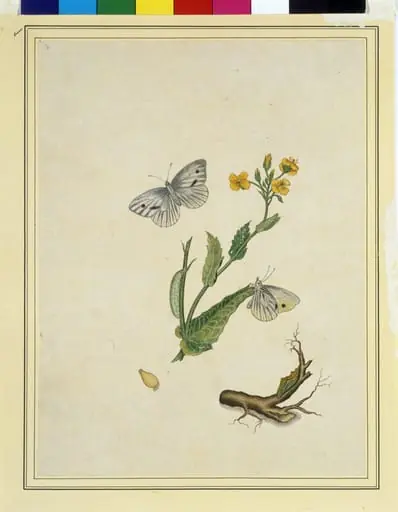 Cabbage worms
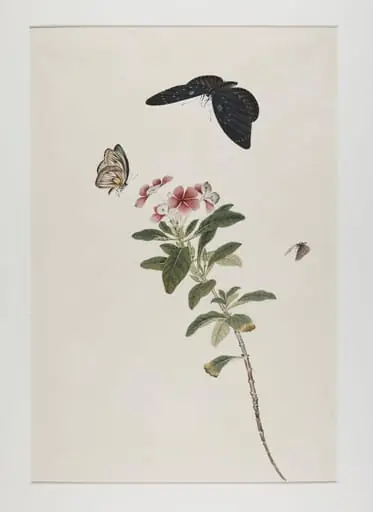 Madagascar periwinkle (catharanthus roseus) and butterflies
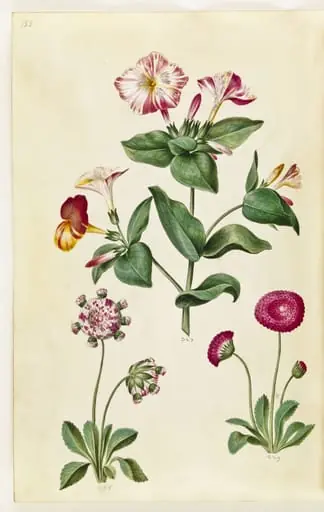 Mirabilis jalapa (vidunderblomst); Bellis perennis (almindelig tusindfryd)
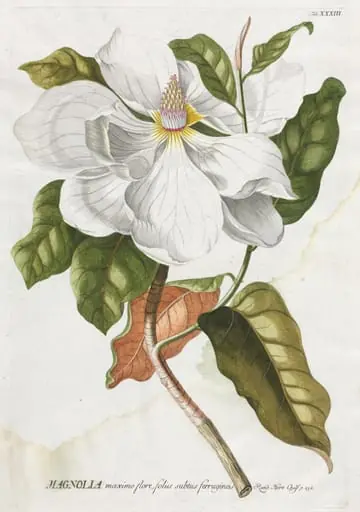 Plantae Selectae: No. 33 - Magnolia
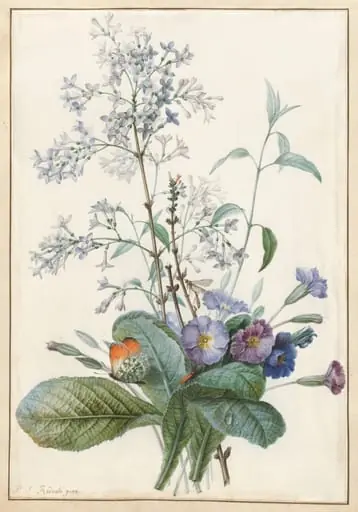 A Bouquet of Flowers with Insects
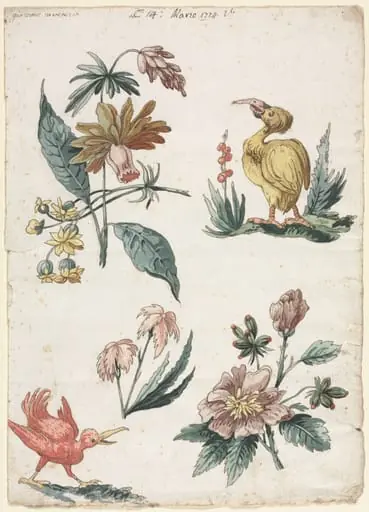 Floral Designs with Two Birds
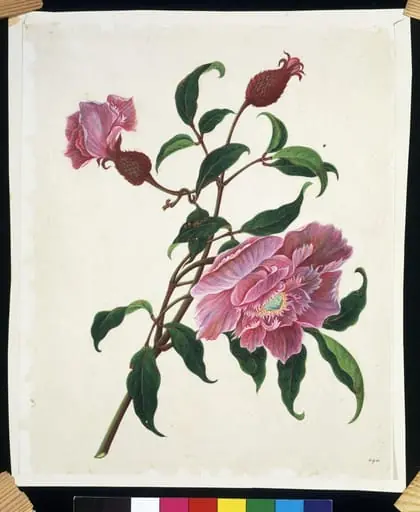 Chinese rose