Artwork
Kristuksen ylösnousemus, mahdollisesti Vihdin kirkon alttaritaulun luonnos ; Kristus uppståndelse, troligtvis skiss för altartavlan i Vihtis kyrka
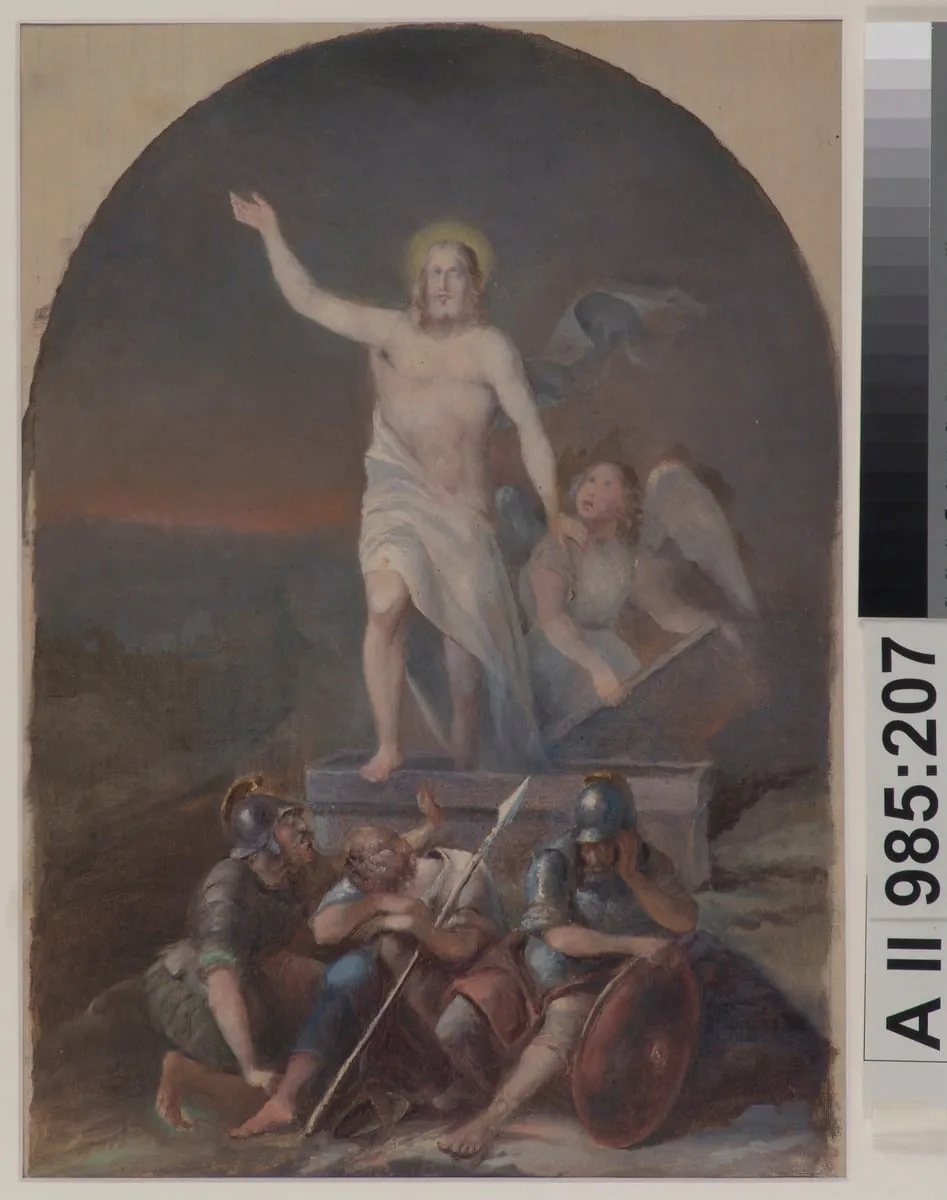
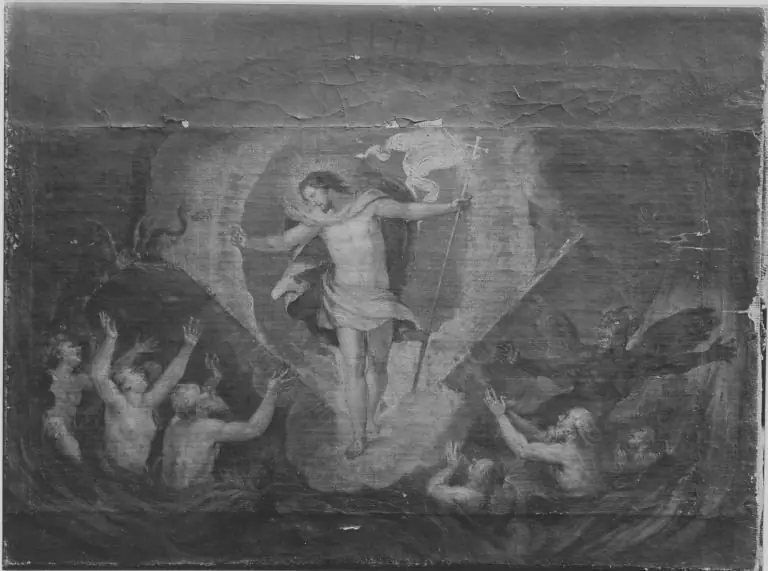
Kristuksen ylösnousemus, mahdollisesti Vihdin kirkon alttaritaulun luonnos ; Kristus uppståndelse, troligtvis skiss för altartavlan i Vihtis kyrka is an unspecified painting by Berndt Abraham Godenhjelm. It is held in the collection of the Finnish National Gallery. This work is a preparatory sketch for an altarpiece intended for Vihtis Church, depicting the Resurrection of Christ.
About this work
Overview
The composition centers on his bare torso and the stunned reaction of Roman soldiers, with a small angel observing from the side.
This work is a preparatory sketch for an altarpiece intended for Vihtis Church, depicting the Resurrection of Christ. Executed in a dramatic, high-contrast style, it captures the moment Christ emerges from his tomb, radiating quiet luminescence. The composition centers on his bare torso and the stunned reaction of Roman soldiers, with a small angel observing from the side. The piece functions as a study in light, form, and emotional tension.
Subject & Meaning
The scene illustrates Christ’s triumph over death, a core tenet of Christian belief. His rising form, unadorned and luminous, conveys divine power rather than earthly majesty. The soldiers, frozen in fear, embody human disbelief in the face of the miraculous. The angel, silent and hovering, serves as a witness, reinforcing the sacred nature of the event without intervention. The focus remains on the quiet inevitability of resurrection.
Technique & Style
The artist employs chiaroscuro to heighten the drama: deep shadows swallow the background while sharp highlights define Christ’s body and the soldiers’ armor. This contrast isolates the figures and directs attention to the central moment. Brushwork is controlled yet expressive, with minimal detail on the soldiers’ faces to emphasize their collective shock. The angel’s wings are rendered with delicate strokes, adding a fragile counterpoint to the solidity of the figures.
History & Provenance
The sketch is believed to have been created as a model for the altarpiece in Vihtis Church, likely in the early 18th century. It remained in regional ecclesiastical collections, possibly used by the artist or his workshop to finalize the composition before the full-scale painting was executed. Its survival as a standalone work suggests it was valued for its compositional clarity and emotional intensity.
Context
Produced during a period when Lutheran churches in Finland emphasized clear, emotionally resonant religious imagery, this sketch reflects broader trends in Nordic devotional art. While avoiding ornate Baroque excess, it aligns with the era’s preference for direct, narrative-driven scenes that could inspire contemplation. The use of dramatic lighting echoes Northern European traditions influenced by Caravaggisti, adapted to local liturgical needs.
Legacy
As a surviving study, the sketch offers insight into the artist’s process and the visual language of Finnish ecclesiastical art in the early 1700s. It stands as a testament to the quiet power of understated religious imagery in a region where grand altarpieces were rare. Its preservation allows scholars to trace how theological themes were translated into visual form within a modest, provincial context.
Artist & collection
Artist
This artist painted portraits and religious scenes in 19th-century Finland. Try his *Self-Portrait* to see his direct gaze, or peek at his sketches for Vihdin church’s *Resurrection of Christ*. His work sits between…

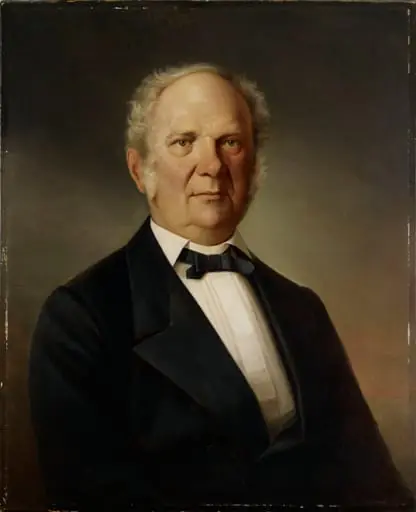 Omakuva
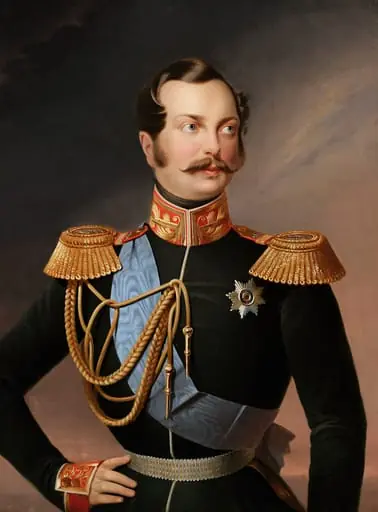 Aleksanteri II:n muotokuva
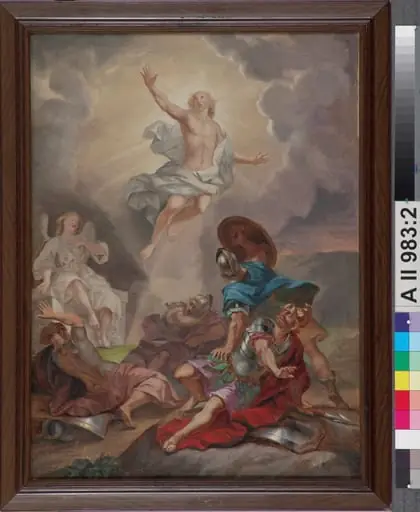 Kristuksen ylösnousemus, alttaritaulun luonnos
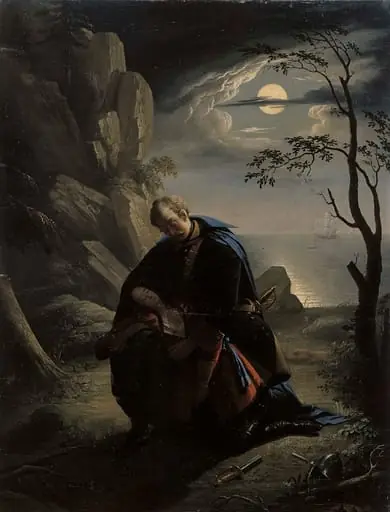 Ruotsalainen sotilas ja puolalainen tyttö
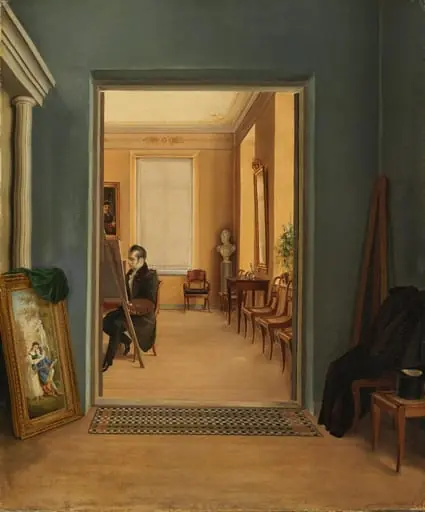 Omakuva pietarilaisessa työhuoneessa
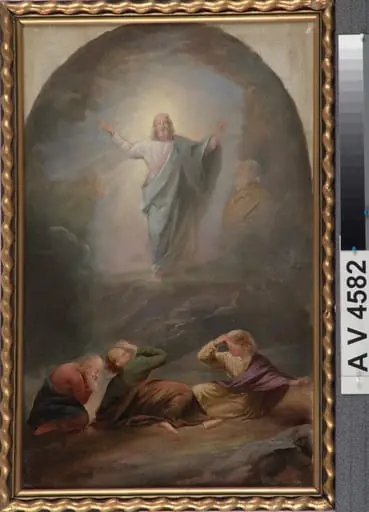 Kristuksen kirkastus, Ikaalisten kirkon alttaritaulun luonnos
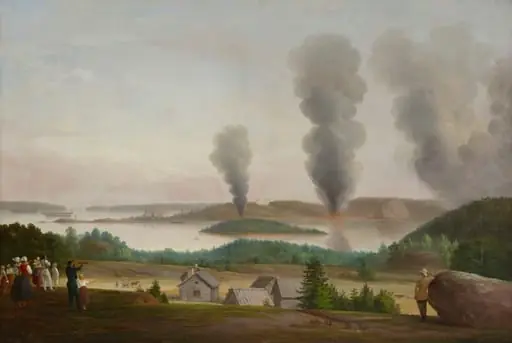 Ruotsinsalmi poltetaan, kohtaus "Oolannin sodasta" 1855
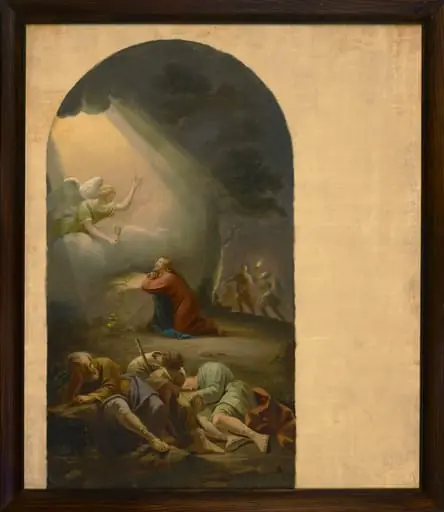 Getsemanen rukous, Kymin kirkon alttaritaulun luonnos