Artwork
Ressurreição de Cristo
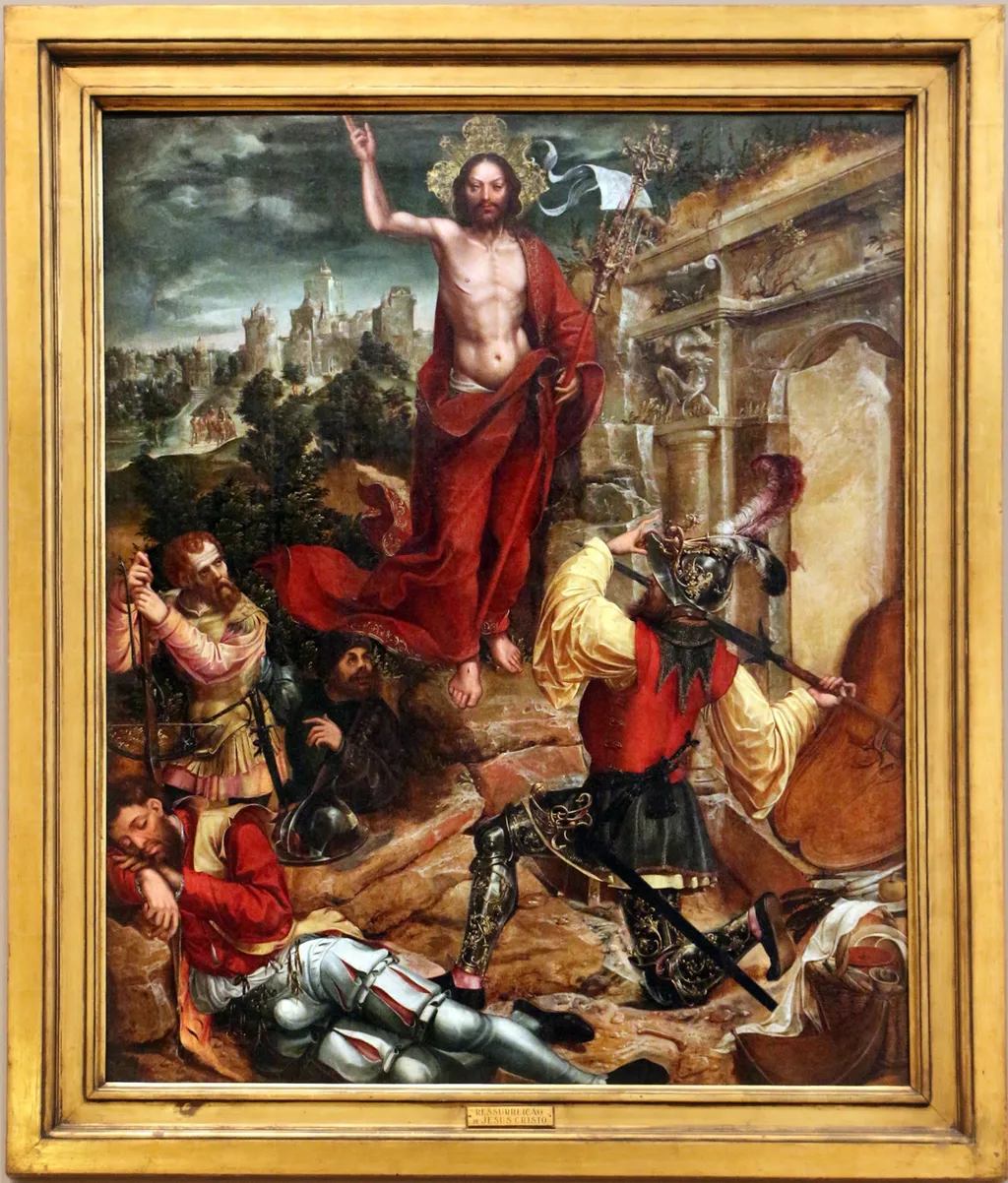
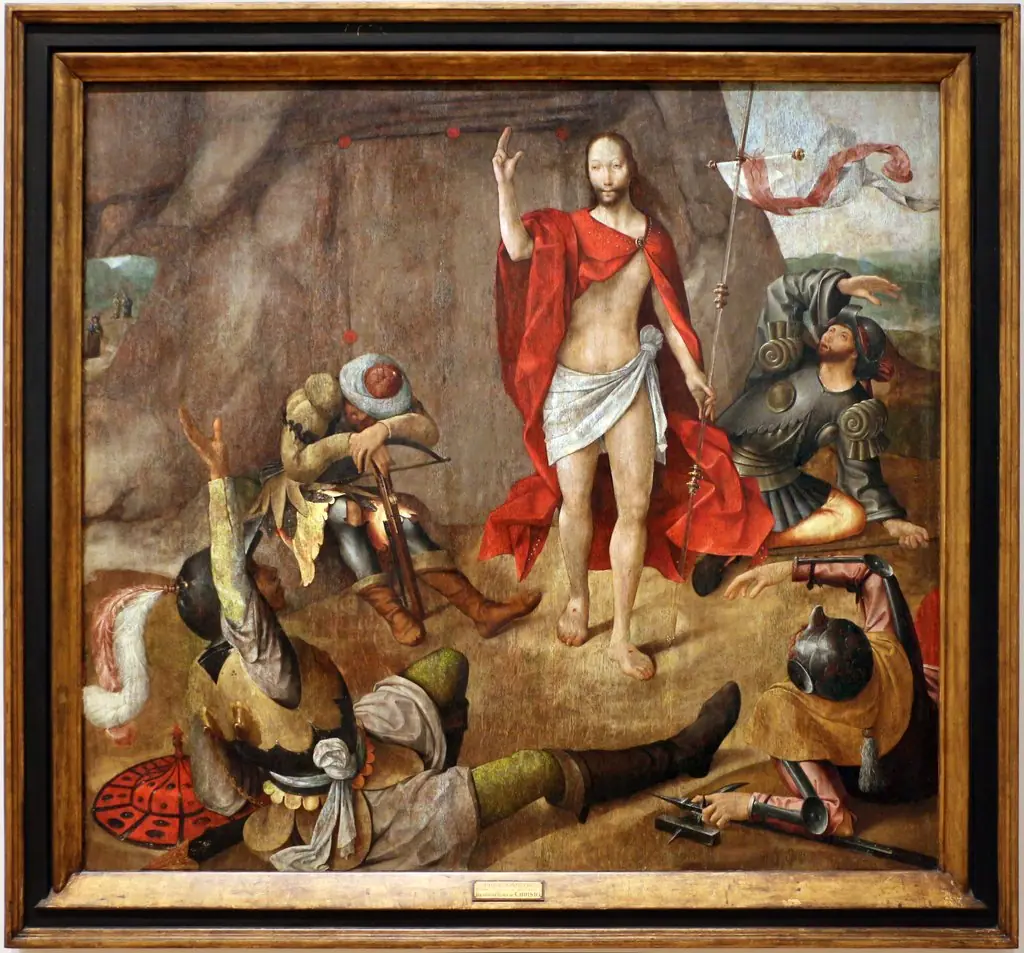
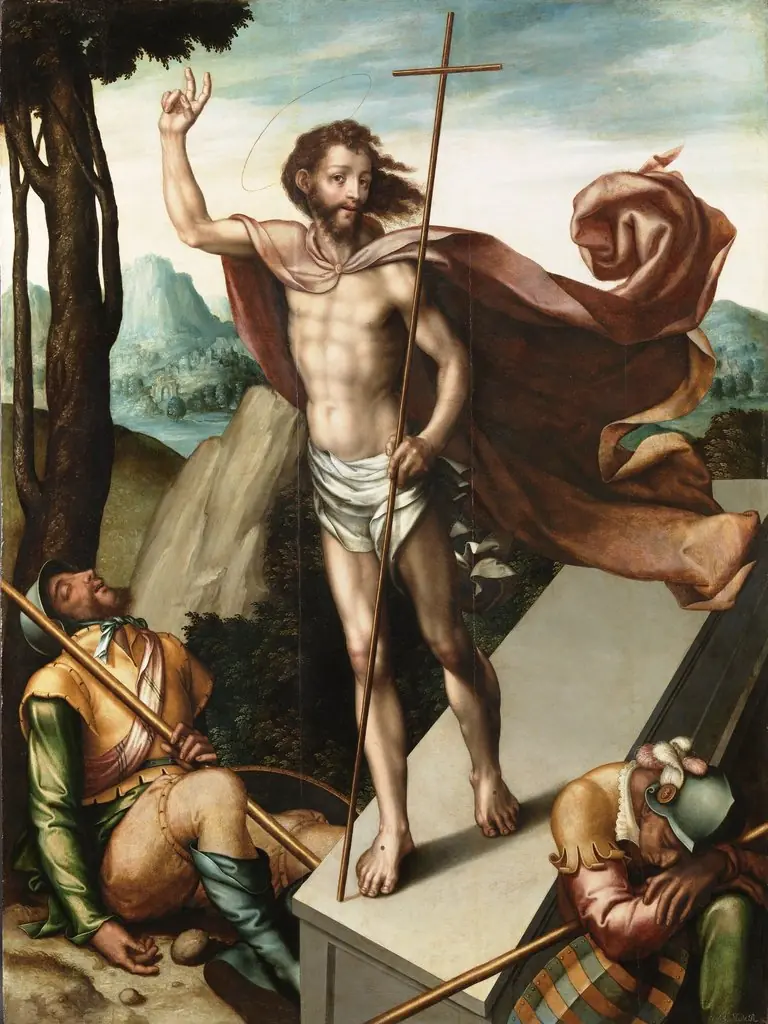
Ressurreição de Cristo is an unspecified painting by the Mannerist artist Gregório Lopes. It dates from 1539 and is held in the collection of the National Museum of Ancient Art.
About this work
Overview
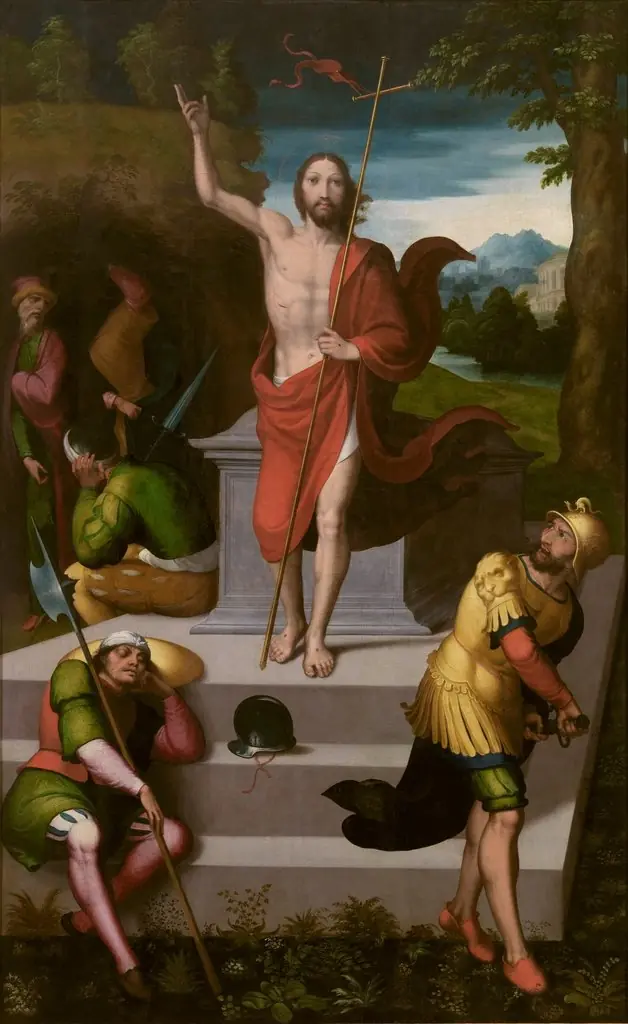
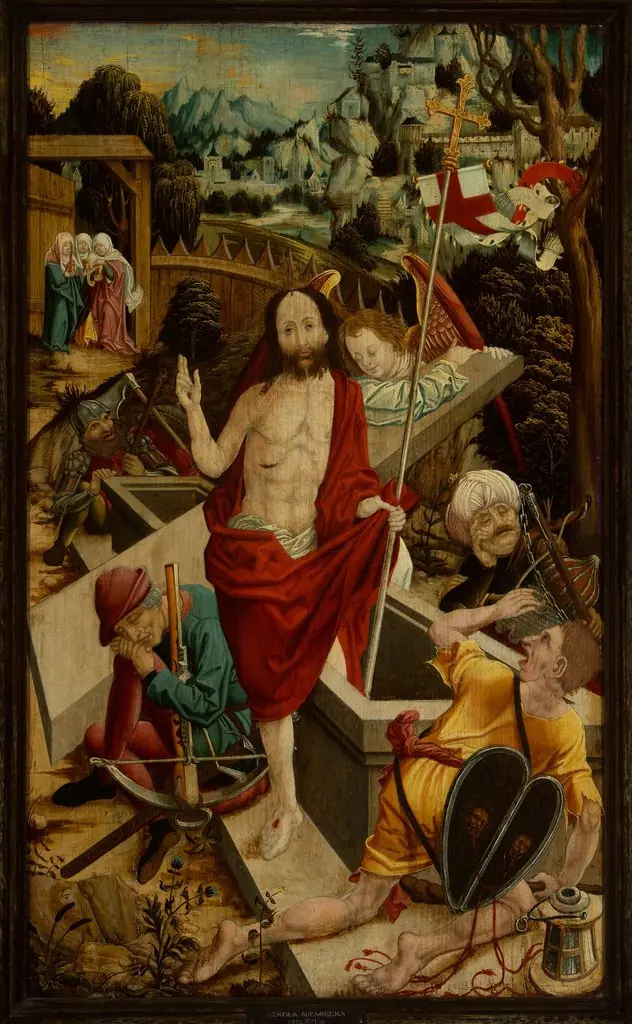
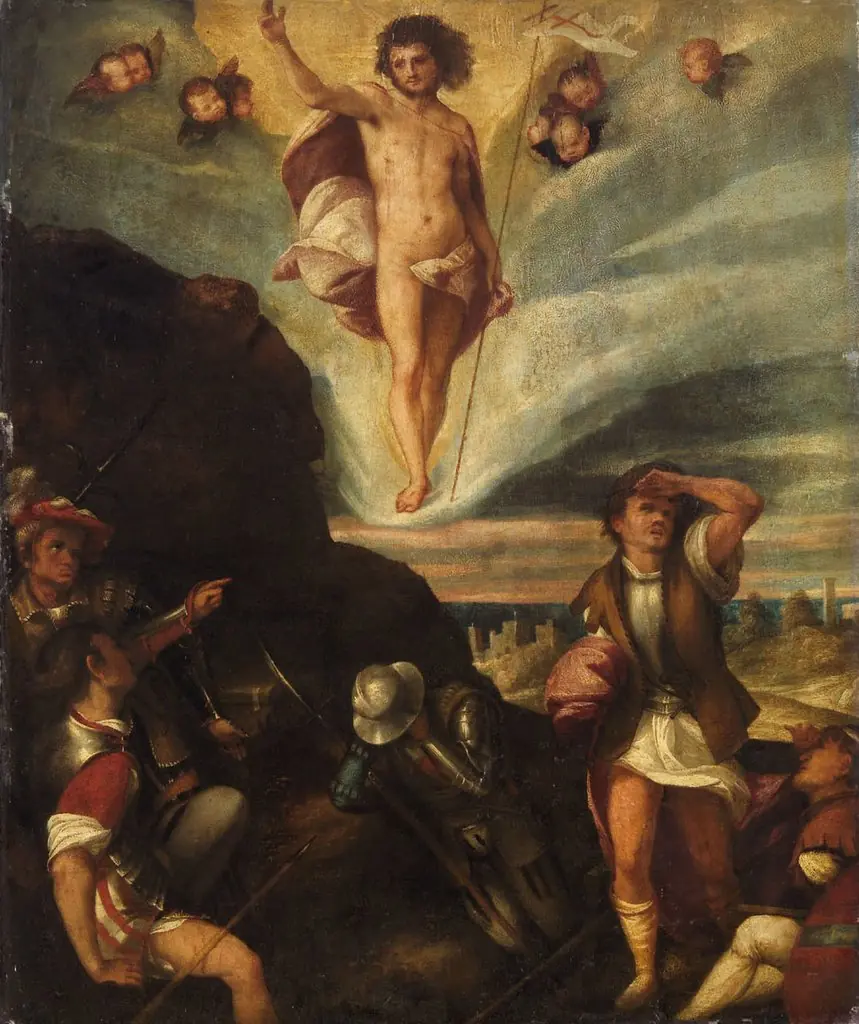
Painted in 1539 by Gregório Lopes, this work illustrates the Resurrection of Christ, a central theme in Christian iconography. Executed in oil on panel, it is part of the collection at the National Museum of Ancient Art in Lisbon. The composition centers on Christ’s triumphant emergence from the tomb, rendered with deliberate visual hierarchy to guide the viewer’s focus toward the risen figure.
Subject & Meaning
The scene captures the moment of divine revelation, emphasizing Christ’s authority and the collapse of earthly power before spiritual truth.
Christ stands upright, clad in a vivid red robe and holding a white banner symbolizing victory over death. Around him, armored soldiers lie stunned or prostrate, their postures conveying shock and submission. The scene captures the moment of divine revelation, emphasizing Christ’s authority and the collapse of earthly power before spiritual truth. The absence of the tomb reinforces the focus on resurrection as an active, present event.
Technique & Style
Lopes employs a restrained palette dominated by earth tones for the soldiers and landscape, allowing Christ’s crimson garment to dominate visually. Subtle gradations in light and shadow enhance the three-dimensionality of the figures, though the approach is less dramatic than full chiaroscuro. The figures are rendered with a certain stiffness typical of late Gothic traditions, yet the spatial arrangement suggests early Renaissance influences in its layered depth.
History & Provenance
Commissioned for a religious institution in Portugal, the painting remained in ecclesiastical hands until the 19th century. It entered the National Museum of Ancient Art’s collection following the dissolution of religious orders in Portugal. Its preservation is notable, with minimal restoration, allowing the original pigments and brushwork to remain largely intact.
Context
Created during the height of Portugal’s Age of Discovery, the painting reflects a devotional culture deeply invested in visual theology. While Italian Renaissance innovations were known in Portugal, Lopes’ style retains northern European influences, blending local traditions with broader European religious imagery. This work exemplifies how Portuguese artists adapted continental motifs to suit domestic spiritual needs.
Legacy
Though not widely known outside Portugal, the painting stands as a significant example of early 16th-century Portuguese religious art. It illustrates the transition from medieval iconography toward more narrative and emotionally charged compositions. Its preservation offers insight into the visual language of faith in a nation navigating both spiritual devotion and global expansion.
Artist & collection