Artwork
The Letter (Reflexion, ou la lettre)
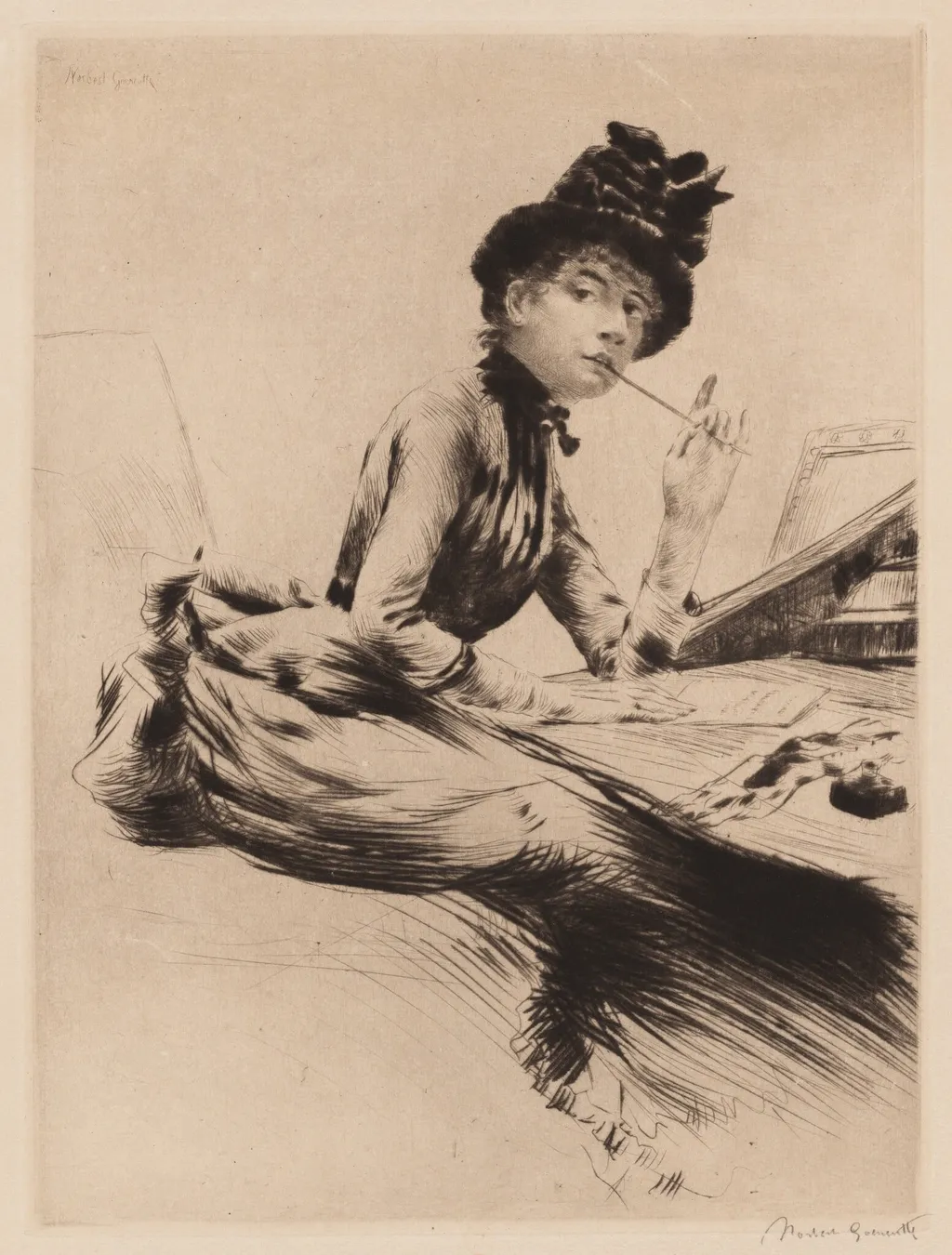
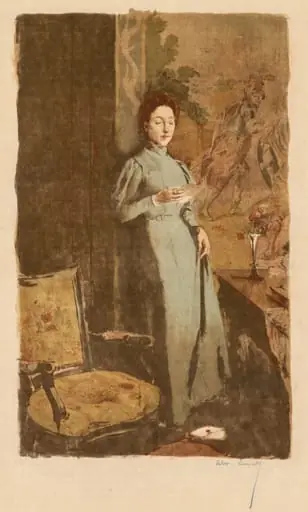
The Letter (Reflexion, ou la lettre) is an ink print by the Impressionist artist Norbert Goeneutte. It dates from 1887 and is held in the collection of the National Gallery of Art.
About this work
Overview
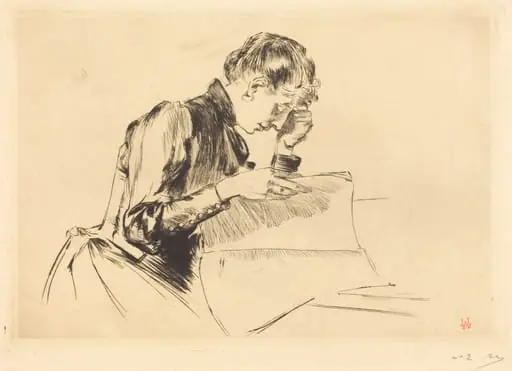
Created circa 1887, *The Letter (Reflexion, ou la lettre)* is a drypoint print on laid paper by French artist Norbert Goënettte. The work presents a solitary figure, a woman in a loosely draped dress, engaged with correspondence. The composition captures a quiet, introspective moment, emphasizing the act of reading or writing through a restrained, linear approach.
Subject & Meaning
The central figure sits sideways, one leg tucked beneath her, a letter opener poised above a small pile of papers. Her hair is gathered in an informal bun, and she gazes off‑center with a faint smile, suggesting a blend of concentration and private amusement. The scene reflects everyday domestic life, echoing realist interests in ordinary moments and personal communication.
Technique & Style
Executed in drypoint, the image relies on the artist’s direct incisions into the paper’s surface, producing fine, velvety lines and a characteristic burr that yields soft, rich shadows. Goënettte combines brisk, sketch‑like strokes for the dress and hair with more deliberate, defined rendering of the face, creating a dynamic contrast between movement and stillness typical of late‑19th‑century French printmaking.
History & Provenance
Norbert Goënettte, known for his illustrations of Émile Zola’s *La Terre* and his involvement in realist and naturalist circles, produced this print during a period of heightened interest in everyday subjects. While specific ownership records are limited, the work is documented as part of Goënettte’s oeuvre from the 1880s, reflecting his broader engagement with print media as a means of disseminating contemporary visual culture.
Artist & collection
Artist
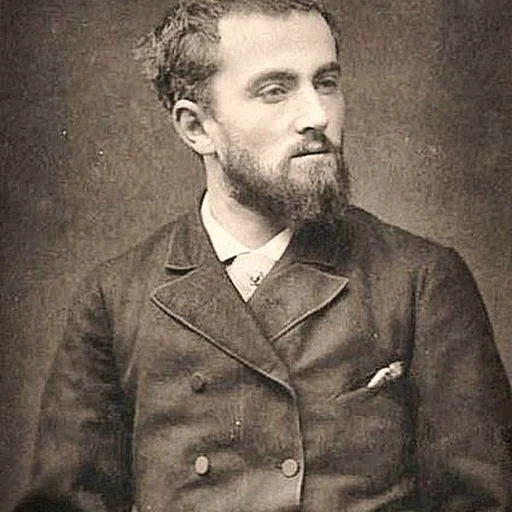
Norbert Goeneutte (23 July 1854 – 9 October 1894) was a French painter, etcher and illustrator; notably for the novel La Terre by Émile Zola.

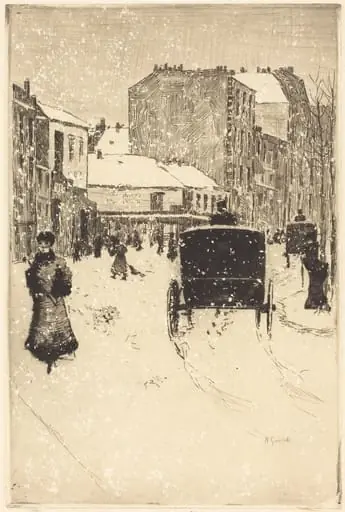 Boulevard Clichy in the Snow (Le boulevard Clichy par un temps de neige)
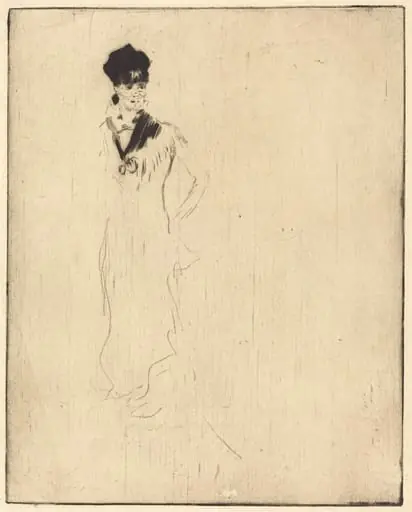 Sketch of a Young Lady in Violet (Esquisse de jeune femme a la violette)
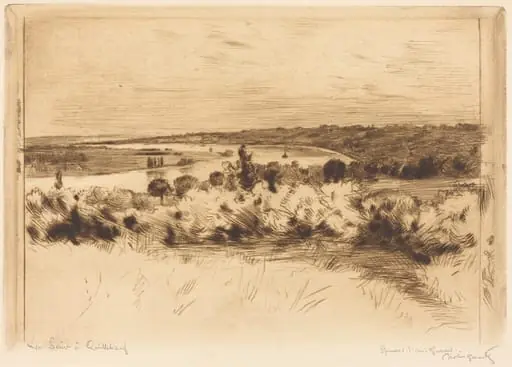 The Seine at Quilleboeuf (La Seine a Quilleboeuf)
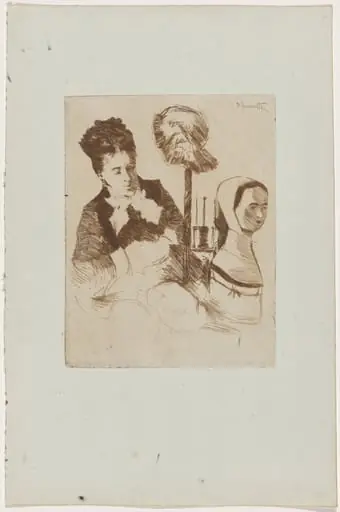 La modiste
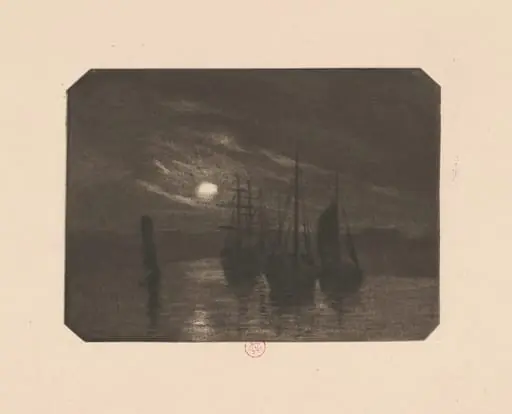 A Moonlit Harbor
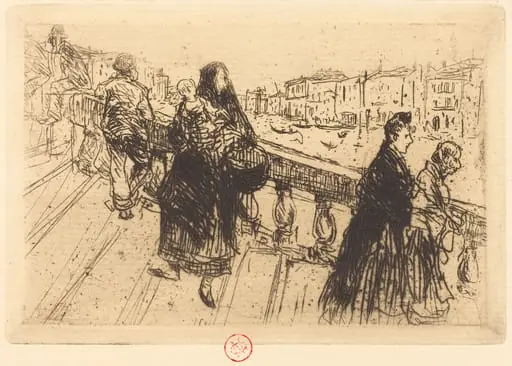 Rialto
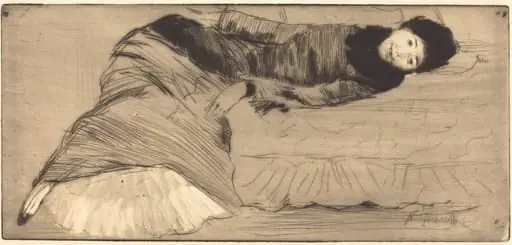 Smiling Woman Reclining on a Sofa (Femme souriant etendue sur un canape)
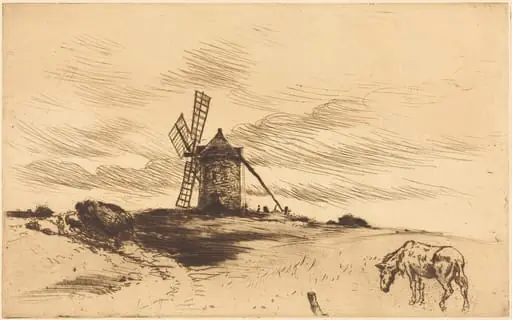 The Mill at Saint Jacut (Le moulin de Saint Jacut)