Artwork
Ecce Homo
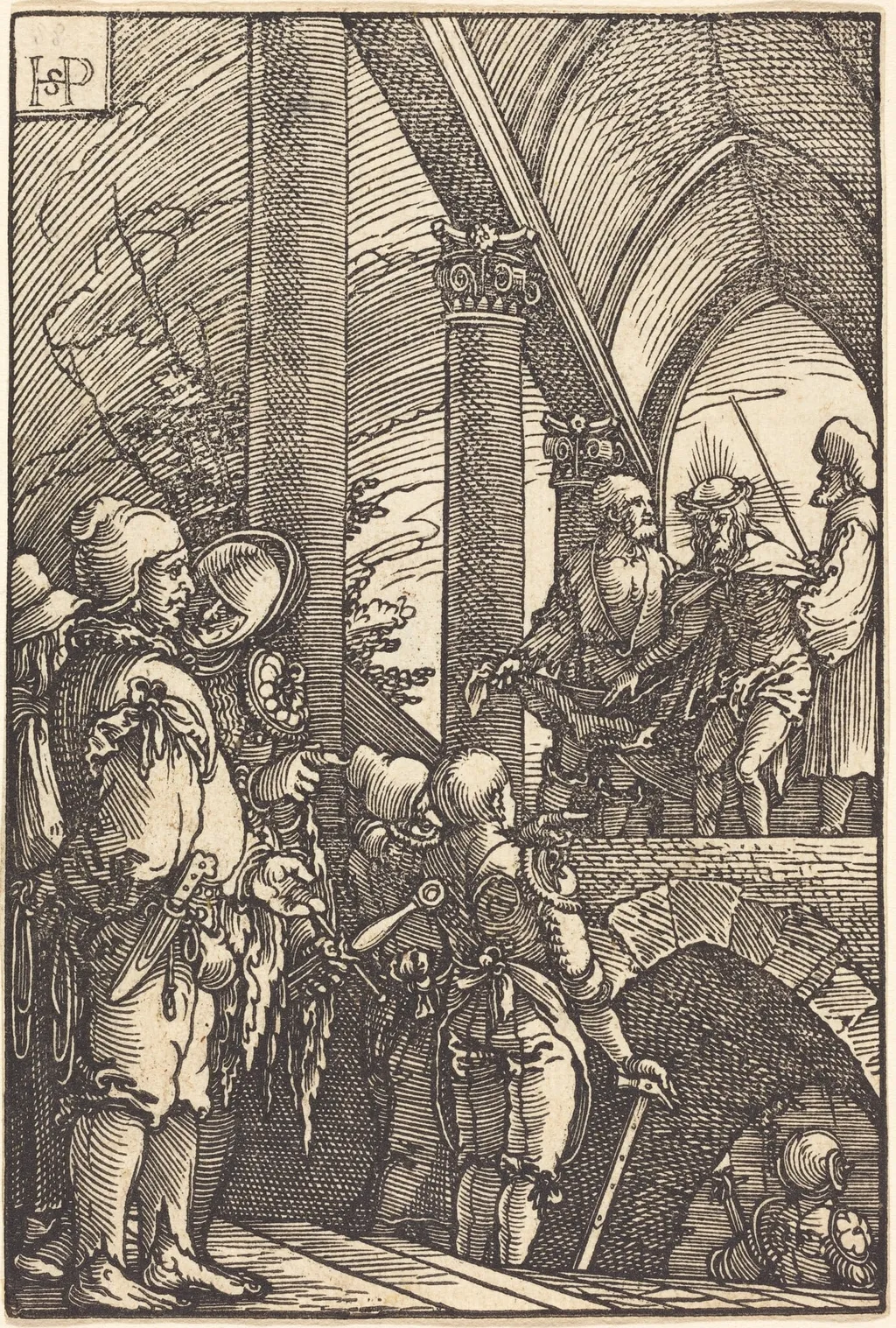
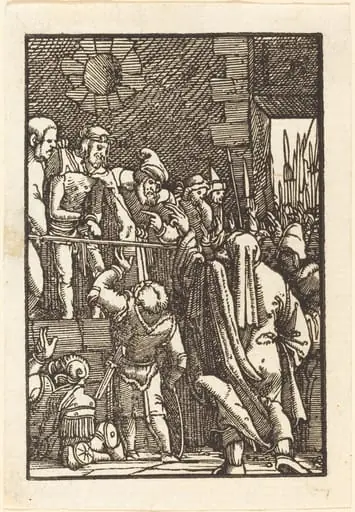
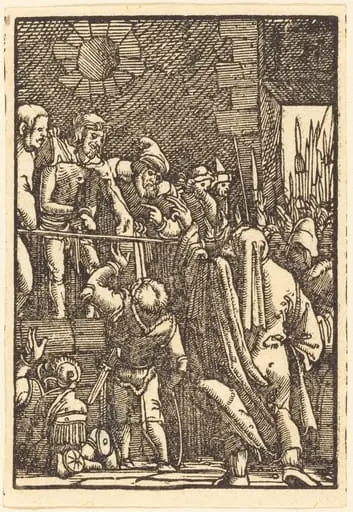
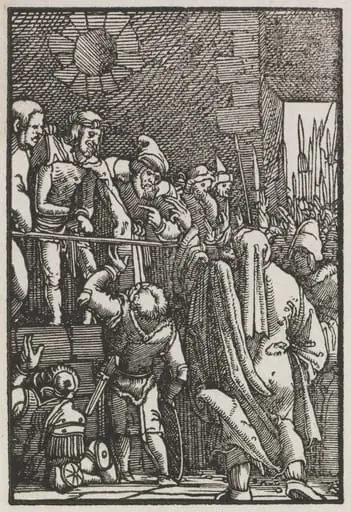
Ecce Homo is an ink print by the Renaissance artist Sebald Beham. It dates from 1522 and is held in the collection of the National Gallery of Art.
About this work
Overview
This work exemplifies his ability to convey complex narratives within limited space, using the technical constraints of woodcut to heighten emotional impact.
Created in 1522 by Sebald Beham, *Ecce Homo* is a woodcut printed on laid paper, reflecting the artist’s mastery of small-scale printmaking. A member of the Nuremberg-based 'Little Masters,' Beham produced nearly 1,500 prints, many of which combined fine detail with compact compositions. This work exemplifies his ability to convey complex narratives within limited space, using the technical constraints of woodcut to heighten emotional impact.
Subject & Meaning
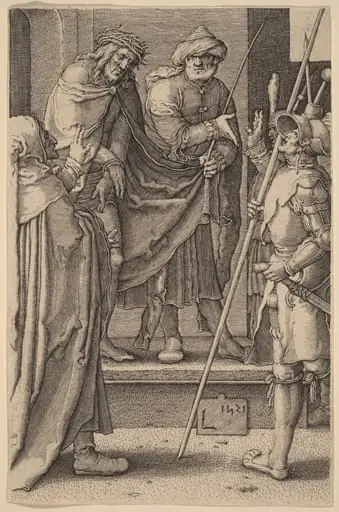
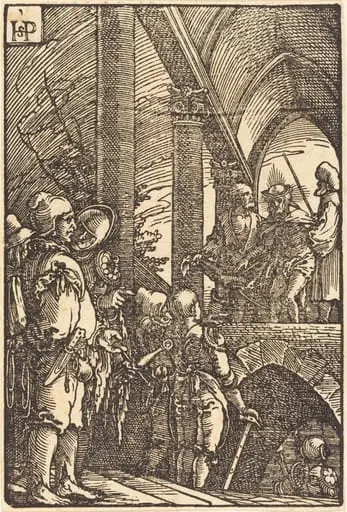
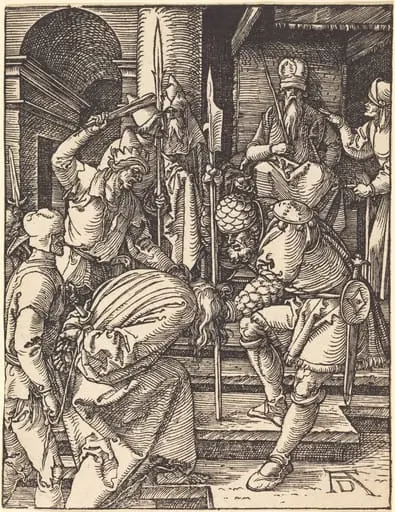
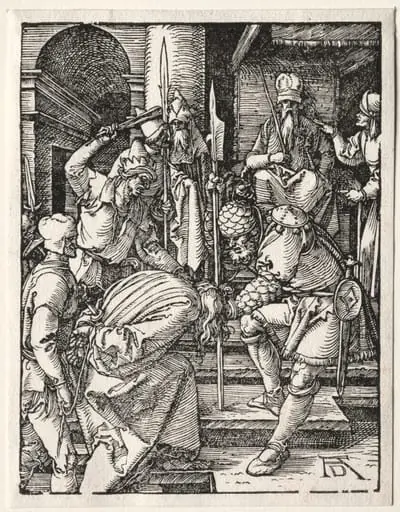
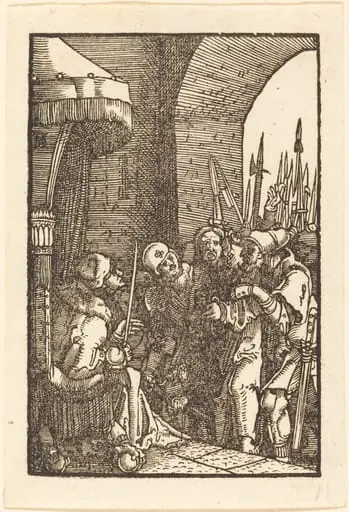
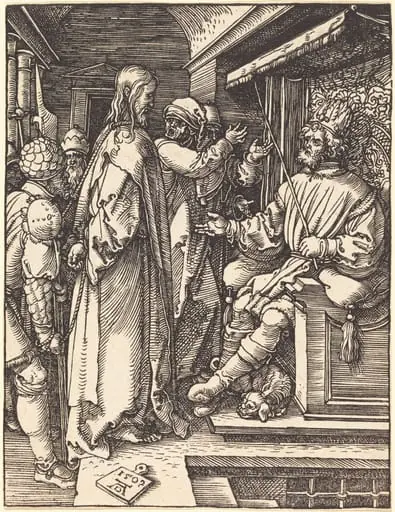
The scene depicts the moment Christ, crowned with thorns and holding a staff, is presented to the crowd by Pontius Pilate. To the left, a solitary figure gestures toward heaven, suggesting divine judgment; to the right, a violent mob lashes the prisoner. The duality captures the tension between sacred suffering and human cruelty, a common theme in Protestant devotional imagery of the early Reformation era, inviting contemplation on innocence and condemnation.
Technique & Style
Beham employed sharp, incised lines typical of woodcut to create stark contrasts between light and shadow. The figure of Christ is illuminated by a vertical band of light, while the surrounding figures and architecture recede into dense black areas. Fine hatching and cross-contour lines render textures in fabric, skin, and stone with precision, demonstrating how the medium’s limitations were turned into expressive tools for dramatic emphasis.
History & Provenance
Produced during Beham’s active years in Nuremberg and later Frankfurt, this print belongs to a prolific phase of his career when religious subjects dominated his output. Though specific early ownership records are sparse, the work aligns with the broader circulation of devotional prints among educated urban audiences in early 16th-century Germany, where such images served both spiritual and educational purposes.
Context
In the early 1520s, as Protestant reformers challenged Catholic imagery, artists like Beham adapted traditional religious scenes for private devotion. Woodcuts, being affordable and reproducible, became vital tools for disseminating biblical narratives. *Ecce Homo* reflects this shift—its intimate scale and emotional intensity catered to individual meditation rather than public liturgy, mirroring changing religious practices.
Legacy
Beham’s *Ecce Homo* stands as an example of how Northern Renaissance printmakers elevated the woodcut beyond mere illustration into a vehicle for psychological depth. His influence extended to contemporaries and later engravers who adopted his compact, high-contrast style. Though less celebrated than Dürer, Beham’s disciplined technique helped sustain the tradition of narrative printmaking through the Reformation’s turbulent decades.
Artist & collection
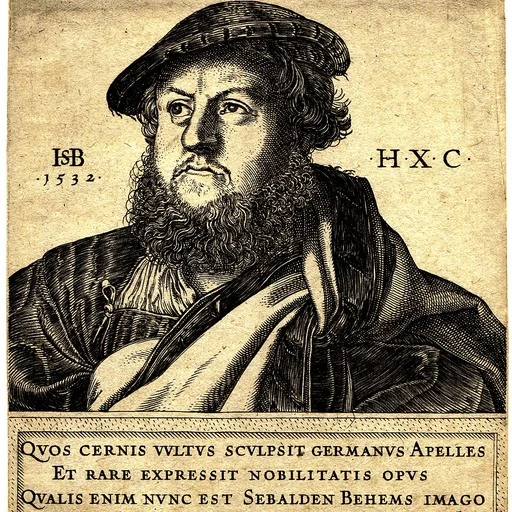
Artist
Sebald Beham (1500–1550) was a German painter and printmaker, mainly known for his very small engravings.