Artwork
Jupiter
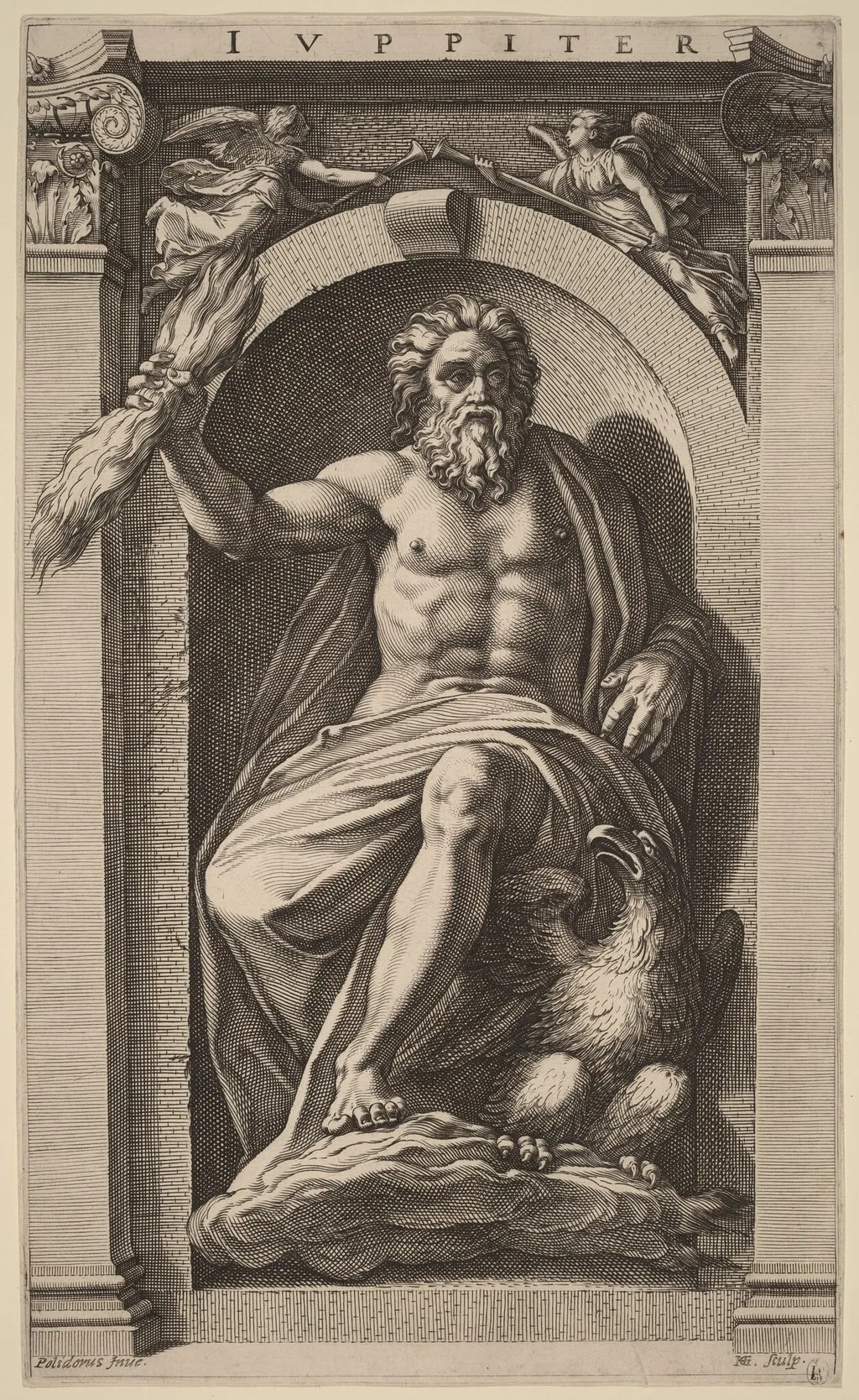
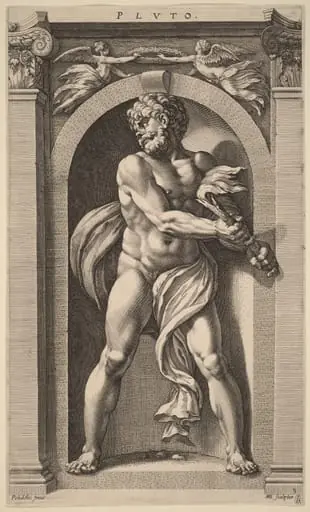
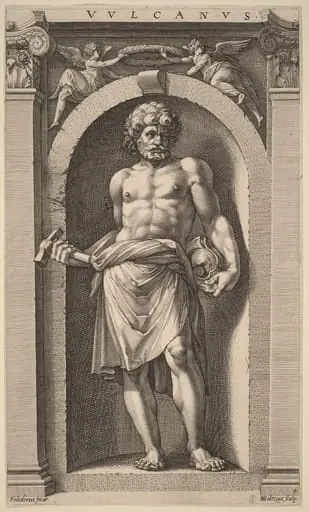
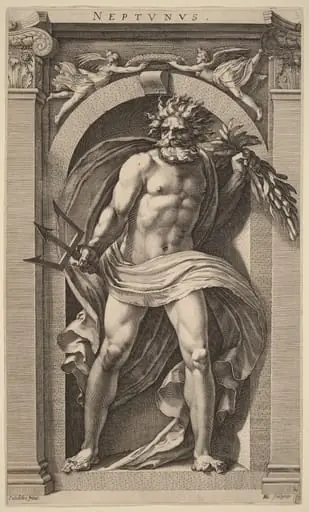
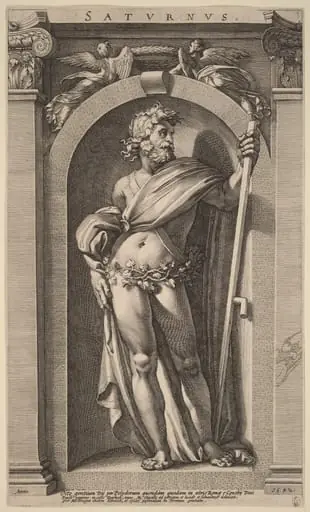
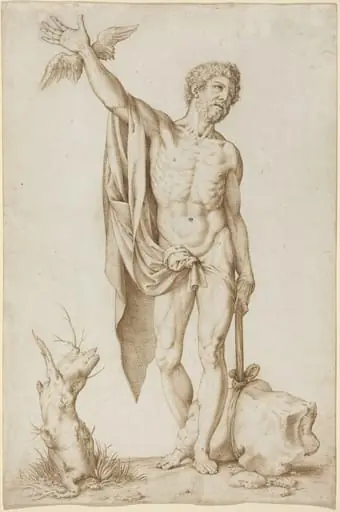
Jupiter is an ink print by the Renaissance artist Hendrik Goltzius. It dates from 1592 and is held in the collection of the National Gallery of Art.
About this work
Overview
Hendrick Goltzius, a Dutch artist of German origin, produced the engraving *Jupiter* circa 1592 during a phase when printmaking defined his artistic output.
Hendrick Goltzius, a Dutch artist of German origin, produced the engraving *Jupiter* circa 1592 during a phase when printmaking defined his artistic output. Recognized as a leading figure in Northern Mannerism, he elevated engraving through technical precision and complex compositions. This work reflects his reputation for creating original designs that were widely copied by contemporaries, establishing his influence across European print culture before he turned to painting later in his career.
Subject & Meaning
The figure depicts Jupiter, the Roman king of the gods, portrayed as a powerful, bearded man reclining on a stone. He holds a staff, symbolizing authority, and a small bundle, possibly representing sovereignty or divine gifts. Two winged attendants hover above, one gesturing toward him, suggesting divine recognition or proclamation. The Latin inscription *IVPPITER* confirms his identity, while the reclining pose and ornate backdrop evoke classical ideals of divine majesty and cosmic order.
Technique & Style
Goltzius employed fine, controlled lines and dense cross-hatching to model form and create depth in this black-and-white engraving. The muscular anatomy of Jupiter is rendered with meticulous detail, while the texture of skin, fabric, and stone is suggested through varying line weights. The background features intricate carvings that frame the scene without overwhelming it. His technique demonstrates mastery over the burin, allowing subtle gradations of tone and a sense of three-dimensionality rare in prints of the period.
History & Provenance
Created around 1592, *Jupiter* emerged during Goltzius’s peak years as a printmaker, before his later shift toward painting. The work was likely produced for collectors and artists who valued his technical innovation. Though specific early ownership records are sparse, the print circulated widely in Europe, influencing other engravers and contributing to the dissemination of Mannerist aesthetics. Its survival in multiple impressions attests to its popularity and enduring technical appeal.
Context
In late 16th-century Northern Europe, engraving was a respected medium for disseminating classical themes and artistic ideas. Goltzius operated within a network of humanist scholars and collectors who prized mythological subjects rendered with intellectual rigor. His work responded to Italian Renaissance ideals while maintaining a distinct Northern emphasis on detail and craftsmanship. *Jupiter* reflects this synthesis, aligning with broader trends in the revival of antiquity through print.
Legacy
Goltzius’s *Jupiter* became a benchmark for technical excellence in engraving, studied by later artists for its precision and expressive line work. His ability to convey volume and movement through pure line influenced generations of printmakers across Europe. Though painting eventually became his primary focus, this engraving remains a defining example of his early mastery and the high artistic potential of the medium during the Northern Mannerist era.
Artist & collection
Artist
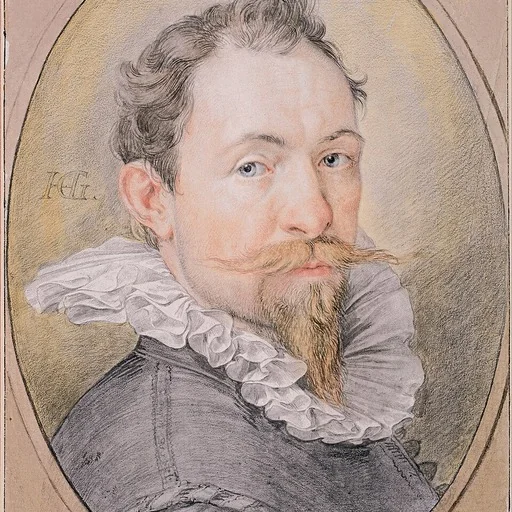
Hendrick Goltzius (German: , Dutch: ; né Goltz; January or February 1558 – 1 January 1617) was a German-born Dutch printmaker, draftsman, and painter.