Artwork
Part of the Fine Arts Court
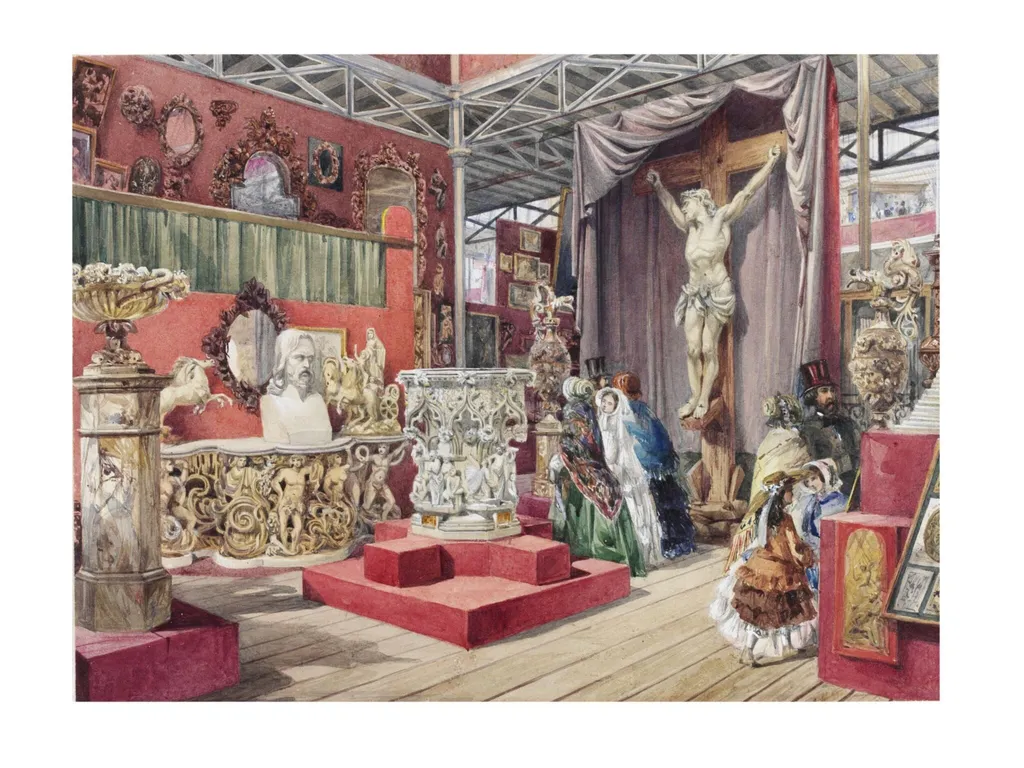
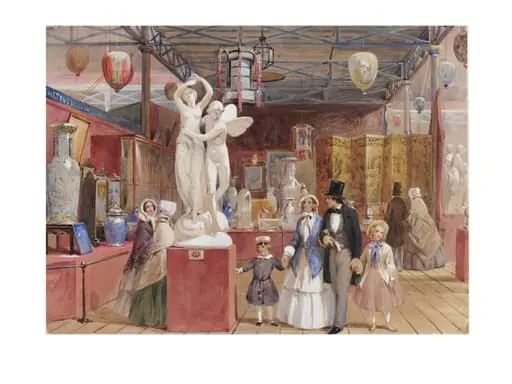
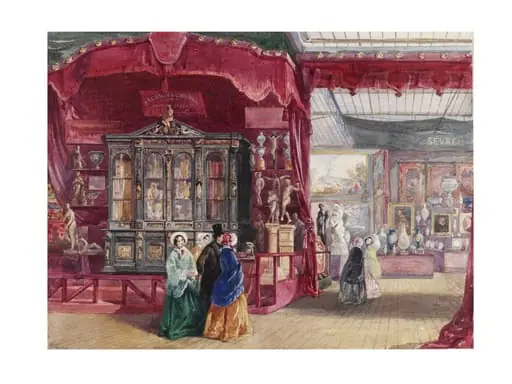
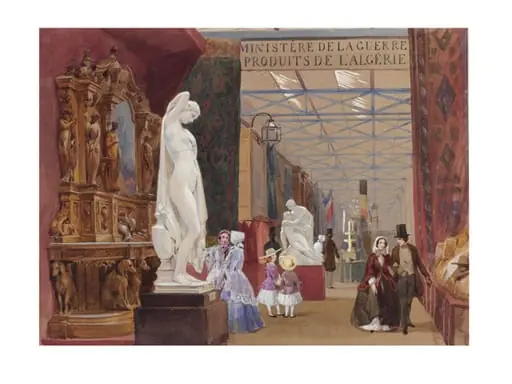
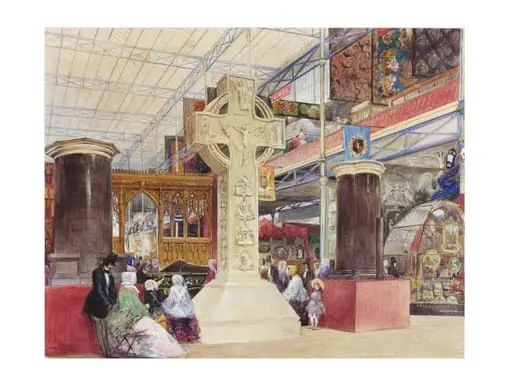
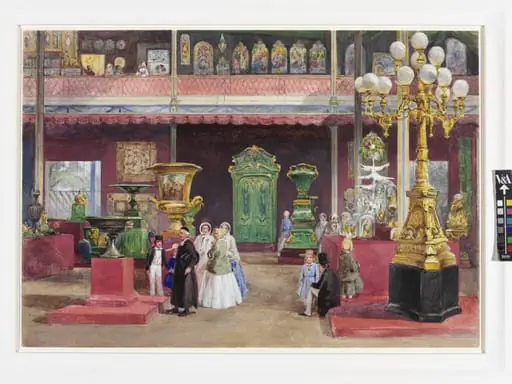
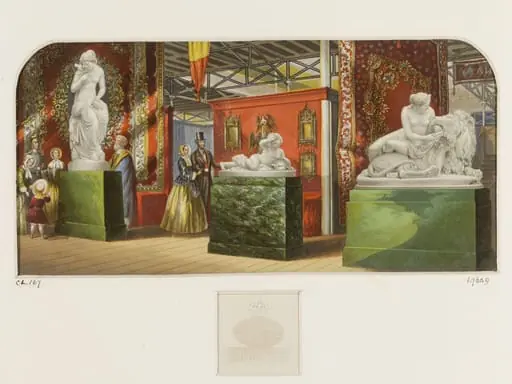
Part of the Fine Arts Court is a watercolor work on paper by the Impressionist artist J Michael. It dates from 1851 and is held in the collection of the Victoria and Albert Museum. This watercolour, created in 1851 by artist Michael J.
About this work
This watercolour is titled Part of the Fine Arts Court. It was created by artist Michael, J in 1851.
The painting is related to the Great Exhibition of 1851, a significant event that showcased manufactured products from around the world. This event was a major milestone, attracting millions of visitors.
To learn more about the style and context of this work, look up the movement: Realism.
Overview
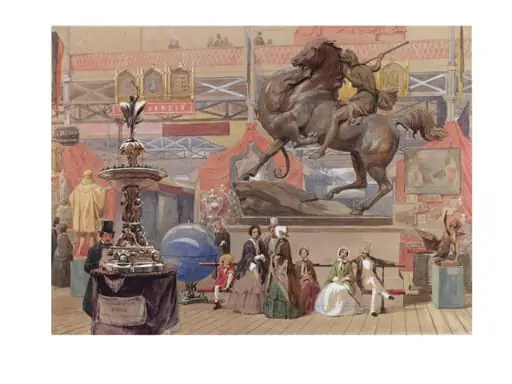
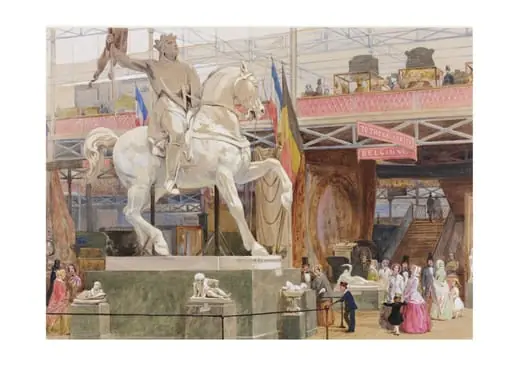
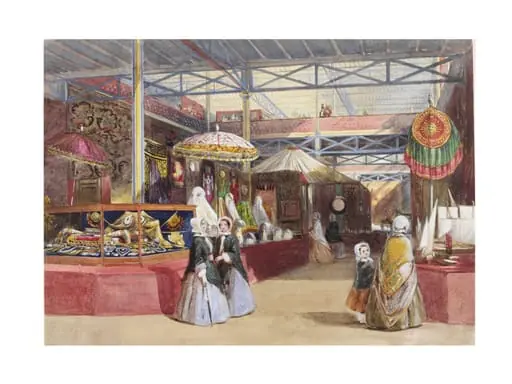
It belongs to a series of images later reproduced as colour lithographs in a souvenir publication documenting the event.
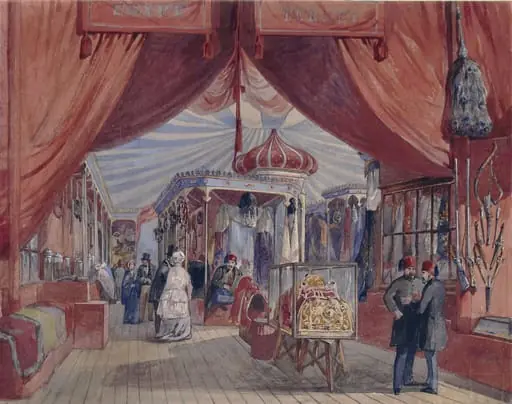
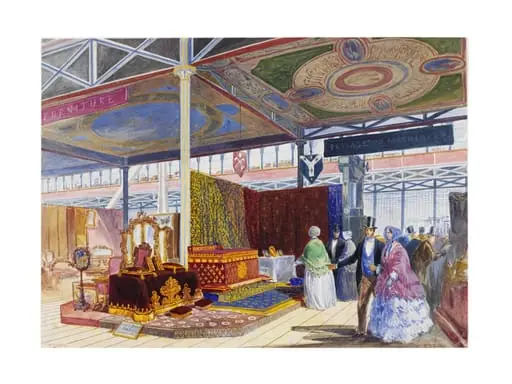
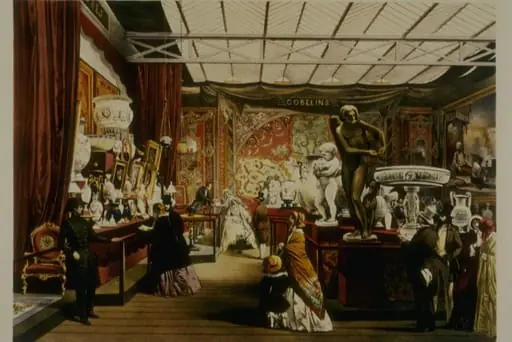
This watercolour, created in 1851 by artist Michael J., depicts a section of the Fine Arts Court at the Great Exhibition held in London’s Crystal Palace. It belongs to a series of images later reproduced as colour lithographs in a souvenir publication documenting the event. The work captures the visual richness of the exhibition’s art displays, serving as both a record and a tribute to the scale and ambition of the international showcase.
Subject & Meaning
The scene centers on a neo-Gothic ornamental font, likely crafted by J. Castle of Oxford, flanked by two jug-shaped vases attributed to London maker Egisippo Norchi. Surrounding these are examples of secular and religious carving, reflecting the exhibition’s aim to elevate public taste by displaying craftsmanship across cultural and devotional contexts. The arrangement suggests a deliberate juxtaposition of sacred and secular art, reinforcing the event’s educational mission.
Technique & Style
Executed in watercolour, the piece employs delicate washes and precise linear detail to render architectural elements and carved surfaces. The style leans toward topographical accuracy rather than expressive interpretation, aligning with the documentary intent of the souvenir series. Light is rendered subtly to emphasize texture and form, avoiding dramatic contrasts in favor of clarity and fidelity to the exhibited objects.
History & Provenance
The watercolour was produced during the Great Exhibition of 1851 and later included in Recollections of the Great Exhibition, a commercially published collection of lithographs. Its creation was part of a broader effort to preserve and disseminate images of the event for public audiences. The profits from the exhibition directly supported cultural institutions in South Kensington, including the early development of what became the Victoria and Albert Museum.
Context
The Great Exhibition was a landmark moment in Victorian Britain, showcasing industrial and artistic achievements from over sixty nations. The Fine Arts Court was designed to demonstrate how art and manufacturing could coexist, challenging traditional hierarchies between fine and applied arts. This watercolour reflects the era’s belief in art’s role in moral and social improvement, framed within a global exchange of ideas and craftsmanship.
Legacy
As a visual record of the exhibition’s interior, the watercolour contributes to the historical understanding of how art was curated and perceived in the mid-nineteenth century. Its inclusion in a widely distributed souvenir series helped shape public memory of the event. The institutions funded by the exhibition’s profits, including the V&A, continue to reflect its enduring influence on the relationship between art, education, and public access.
Artist & collection
Artist
J Michael kept a studio above a hat shop on London’s Strand, where the smell of felt and turpentine mixed with the river’s salt.