Artwork
Rufous-breasted Bamboo Partridge (Bambusicola Hyperythra)
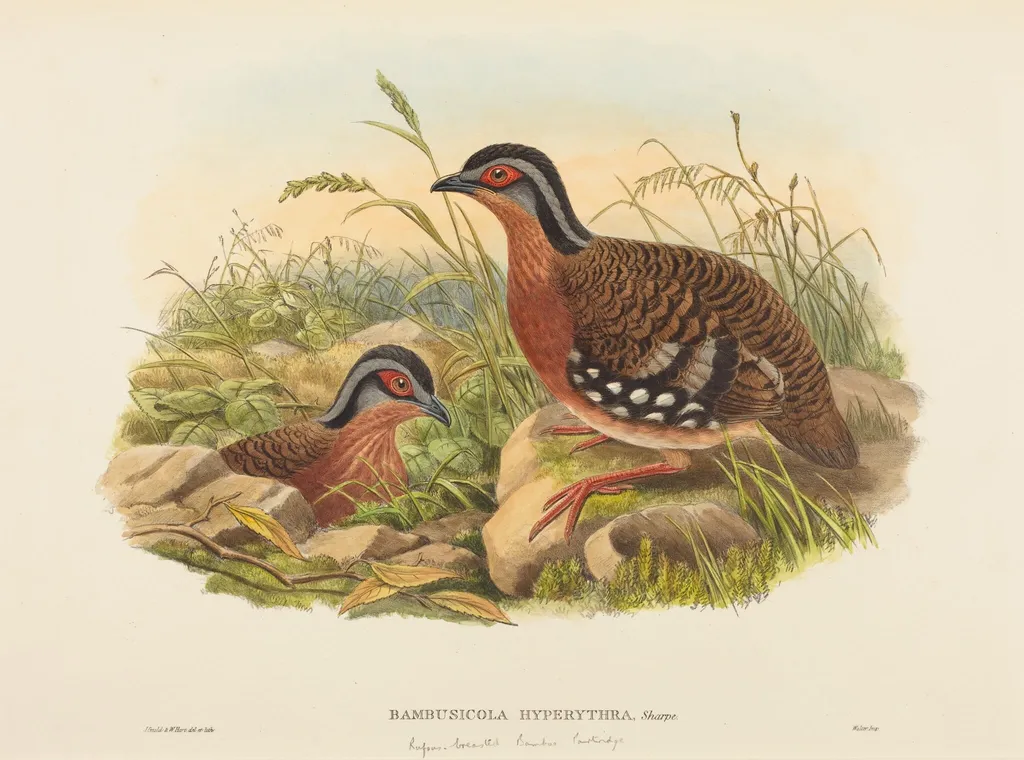
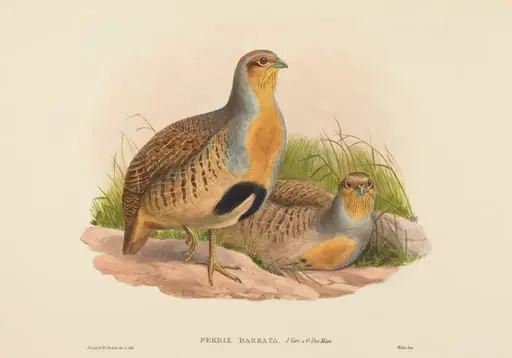
Rufous-breasted Bamboo Partridge (Bambusicola Hyperythra) is an ink print by the Romanticist artist John Gould. It dates from 1842 and is held in the collection of the National Gallery of Art. This hand-colored lithograph, created in 1842, depicts a pair of Rufous-breasted Bamboo Partridges on wove paper.
About this work
Overview
It was produced as part of John Gould’s broader ornithological documentation, a project that combined scientific observation with detailed visual recording.
This hand-colored lithograph, created in 1842, depicts a pair of Rufous-breasted Bamboo Partridges on wove paper. It was produced as part of John Gould’s broader ornithological documentation, a project that combined scientific observation with detailed visual recording. The print belongs to a series aimed at cataloging avian species, many of which were newly encountered by Western science during colonial-era expeditions.
Subject & Meaning
The two birds, differentiated by size and plumage, are shown in a naturalistic setting among grasses and rocks. The male, with its rust-colored breast and boldly spotted wings, stands beside a smaller, more subdued female. Their alert postures suggest vigilance, reflecting the species’ behavior in dense bamboo thickets. The image serves as both a taxonomic record and a visual testament to the biodiversity of Southeast Asia, where the species is native.
Technique & Style
The image was produced using lithography, a method allowing fine detail and tonal gradation. Hand-coloring was applied with precision to match the birds’ natural hues, enhancing accuracy without embellishment. The composition emphasizes anatomical clarity over dramatic effect, with careful attention to feather texture, beak structure, and eye detail. This approach aligns with the scientific priorities of 19th-century natural history illustration.
History & Provenance
Created during John Gould’s work on *The Birds of Australia*, this print was likely produced for a later volume or as a supplementary study, as the species is not native to Australia. Elizabeth Gould, John’s wife and a skilled illustrator, may have contributed to the drawing, though attribution is uncertain. The print circulated among scientific institutions and private collectors, contributing to the dissemination of ornithological knowledge in Europe.
Context
In the 1840s, European naturalists were rapidly documenting species from Asia and the Pacific, often relying on specimens collected by explorers and traders. Gould’s publications were among the most comprehensive of the era, combining field notes with artistic renderings. This print reflects the era’s imperial scientific networks, where biological discovery was intertwined with colonial expansion and the classification of the natural world.
Legacy
Though the Rufous-breasted Bamboo Partridge is no longer considered rare, Gould’s illustrations remain valuable references for ornithologists and historians. The precision of the lithograph set a standard for scientific illustration, influencing later works in natural history. Today, such prints are preserved in museum collections as artifacts of both biological inquiry and the visual culture of 19th-century science.
Artist & collection
Artist
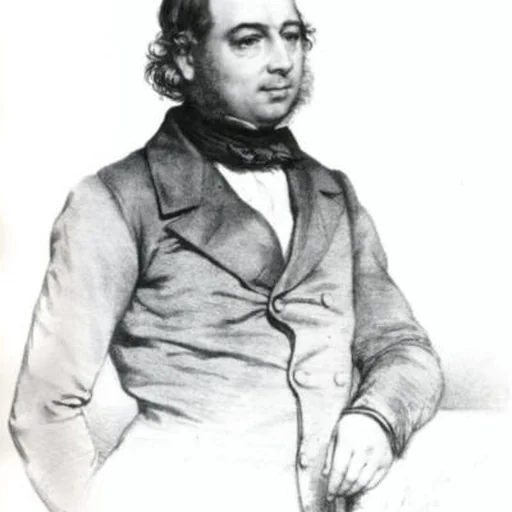
John Gould (; 14 September 1804 – 3 February 1881) was an English ornithologist who published monographs on birds, illustrated by plates produced by his wife, Elizabeth Gould, and several other artists, including Edward…

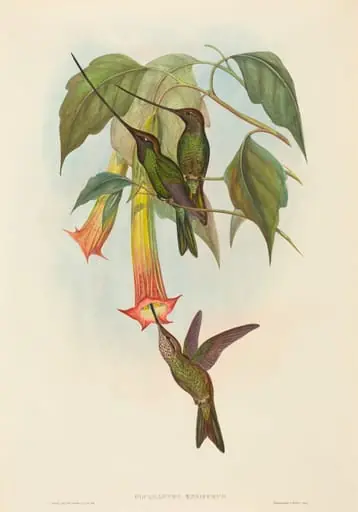 Docimastes ensiferus (Sword-billed Hummingbird)
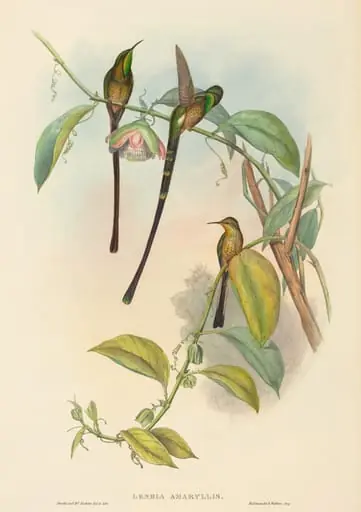 Lesbia Amaryllis
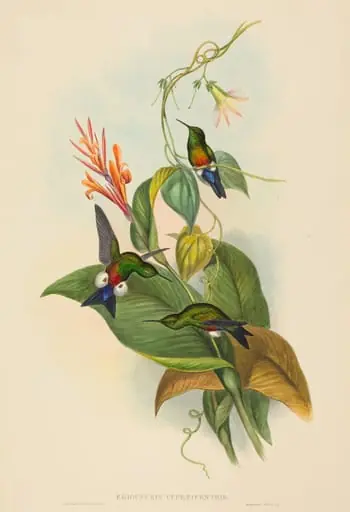 Eriocnemis cupreiventris (Coppery-vented Puff-Leg)
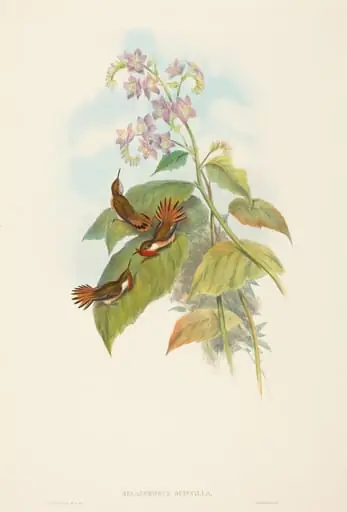 Selashorus scintilla (Scintillant Hummingbird)
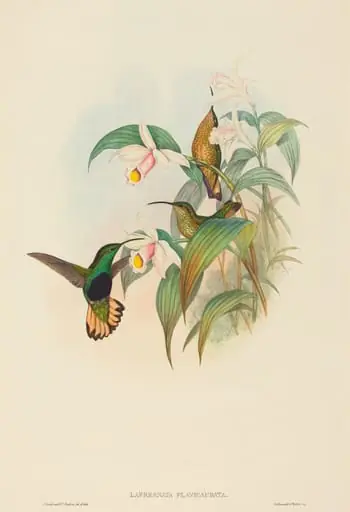 Lafresnaya flavicaudata (Buff-tailed Velvet-breast)
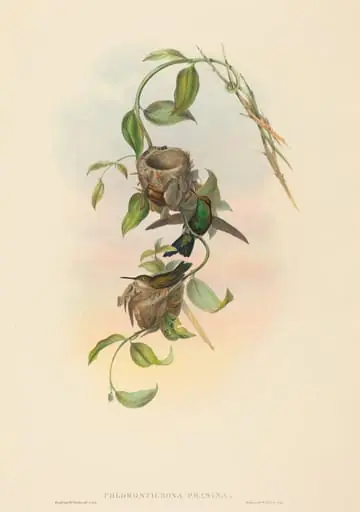 Chlorostilbona prasina (Puncheran's Emerald)
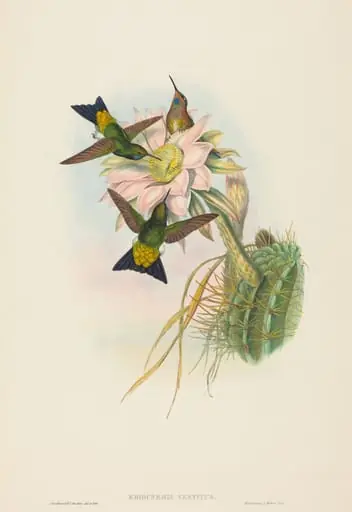 Eriocnemis vestitus (Glowing Puff-Leg)
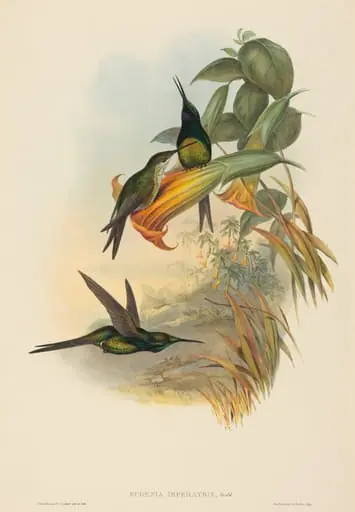 Eugenia imperatrix (Empress Hummingbird)