Artwork
Californian Partridge
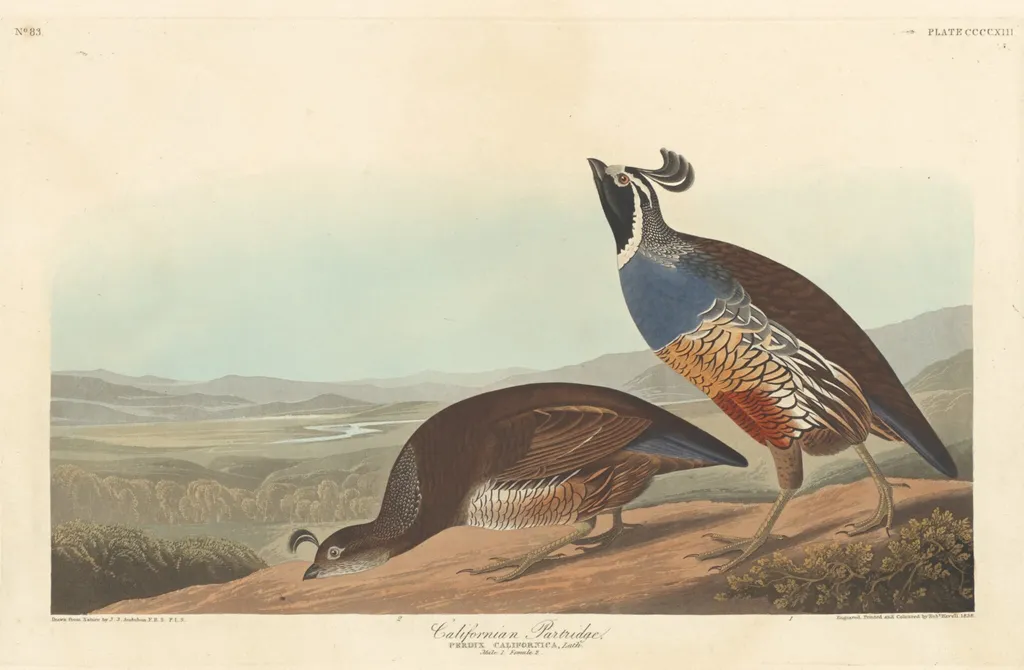
Californian Partridge is an ink print by the Romanticist artist Robert Havell Jr.. It dates from 1838 and is held in the collection of the National Gallery of Art.
About this work
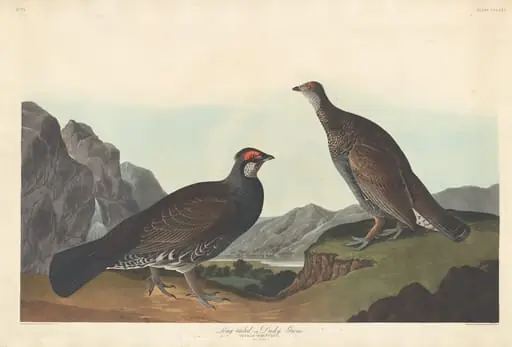
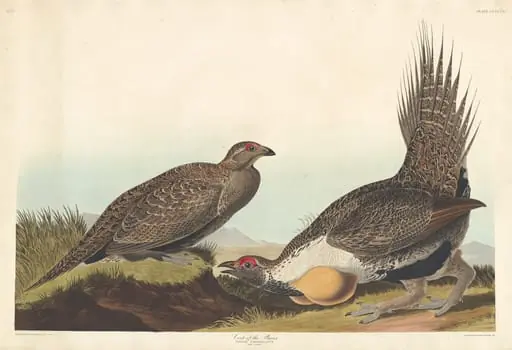
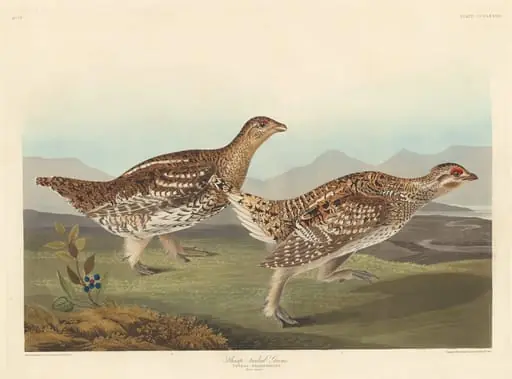
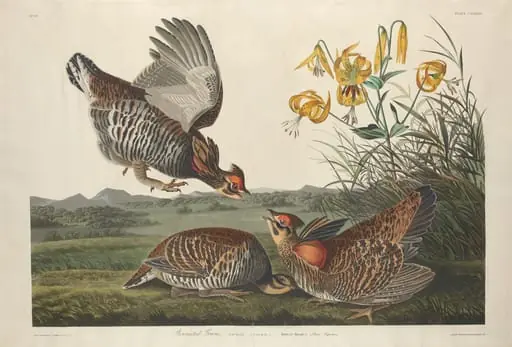
This engraving shows a California partridge standing on rocky ground.
This engraving shows a California partridge standing on rocky ground. Its brown and gray feathers stand out against the light background. The bird tilts its head, looking alert.
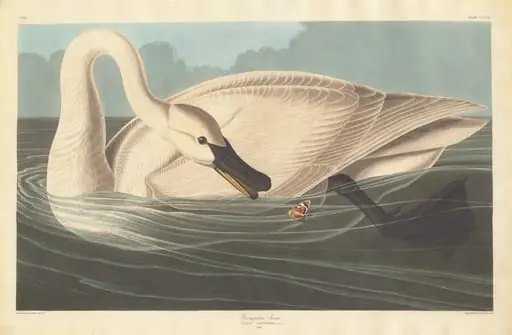
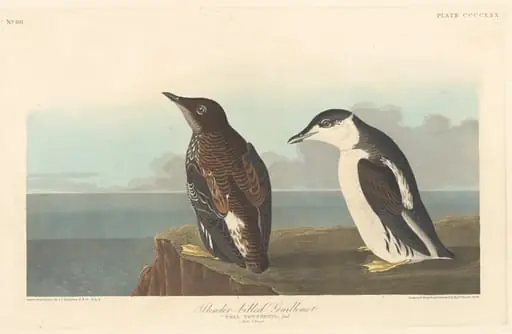
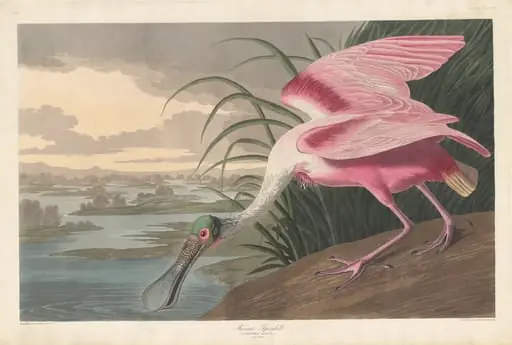
Robert Havell Jr. made this in 1838. He was known for bird prints and worked with John James Audubon. This sheet comes from Audubon’s big bird book project.
His careful cross-hatching gives the feathers texture. It’s a small print but full of detail.
Look up Havell, Jr., Robert next.
Overview
Created in 1838 by Robert Havell Jr., this hand-colored engraving and aquatint on Whatman wove paper depicts a California partridge. It was produced as part of John James Audubon’s larger ornithological publication, reflecting Havell’s role as a key printmaker in the project. The work exemplifies the technical precision and tonal nuance for which the Havell family was known in 19th-century printmaking.
Subject & Meaning
The California partridge, shown in alert stillness on rocky terrain, is rendered with attention to its natural posture and plumage. The image serves a scientific purpose, documenting a North American bird species with accuracy. Its quiet vigilance and detailed feathering suggest an observational approach, aligning with the broader goals of Audubon’s project to catalog American wildlife through visual record.
Technique & Style
Havell employed aquatint to achieve subtle gradations of tone, particularly in the bird’s mottled brown and gray feathers. Cross-hatching adds texture and depth, while hand-coloring enhances naturalistic detail. The use of Whatman wove paper, prized for its smooth surface, allowed for fine ink control. These methods reflect the Havell family’s mastery of reproductive printmaking techniques refined over generations.
History & Provenance
Robert Havell Jr. was part of a multi-generational family of engravers who worked extensively on Audubon’s *Birds of America*. This print originated from that monumental undertaking, produced between 1827 and 1838. Havell’s role was critical in translating Audubon’s watercolors into printed plates, ensuring fidelity to the original studies while adapting them for mass reproduction.
Context
In the 1830s, scientific illustration was closely tied to natural history exploration. Audubon’s project sought to document American fauna with unprecedented detail, and Havell’s prints were instrumental in making these images accessible. The work reflects a period when art and science converged, with printmakers acting as intermediaries between field observations and public knowledge.
Legacy
Havell’s prints from Audubon’s series remain among the most technically accomplished ornithological illustrations of the 19th century. While his name is often overshadowed by Audubon’s, his craftsmanship ensured the longevity and clarity of the project’s visual record. His contributions helped establish standards for natural history printmaking in America.
Artist & collection

Artist
The Havell family of Reading, Berkshire, England, included a number of notable engravers, etchers and painters, as well as writers, publishers, educators, and musicians.