Artwork
The Infant in the Gallery
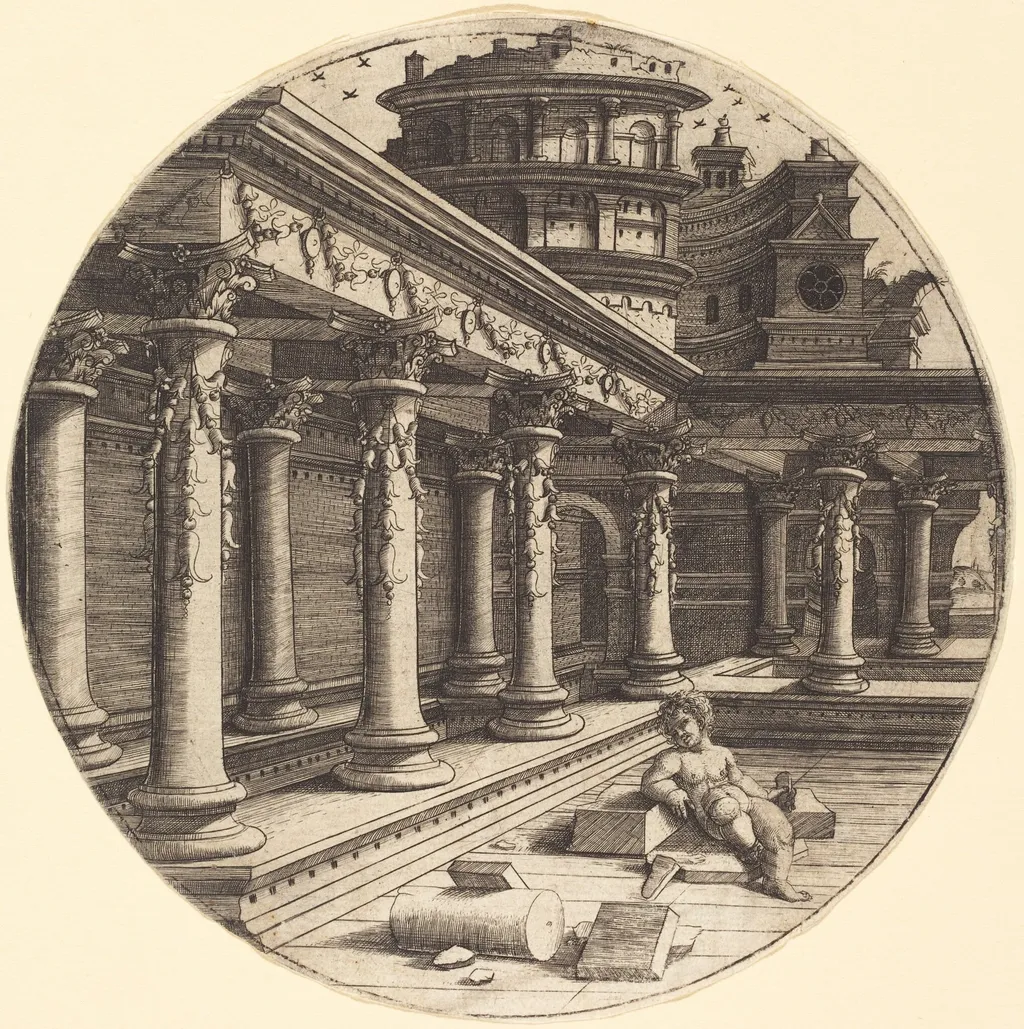
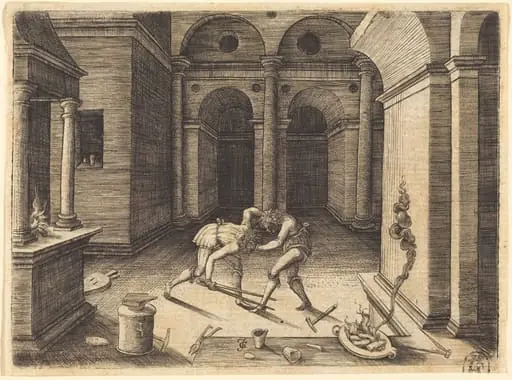
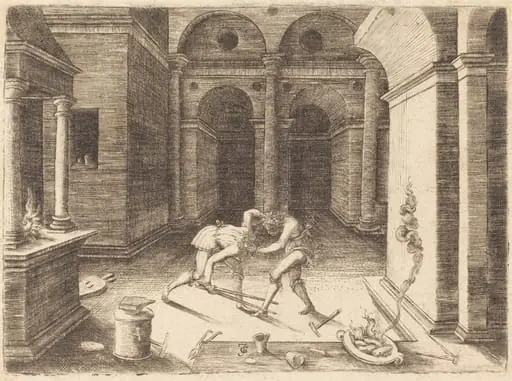
The Infant in the Gallery is an ink print by the Renaissance artist Jean de Gourmont I. It dates from 1518 and is held in the collection of the National Gallery of Art.
About this work
Overview
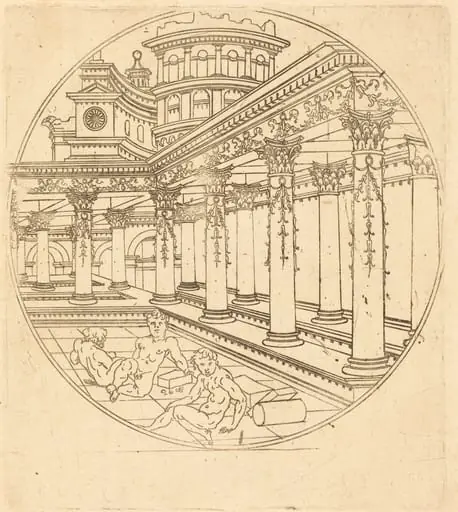
Jean de Gourmont I’s engraving titled *The Infant in the Gallery* was produced in 1518. Executed as a print, the work measures the infant’s movement across a space defined by towering columns and a complex architectural backdrop. The composition balances the small, curious figure against the grandeur of the surrounding built environment, inviting viewers to consider scale and exploration.
Subject & Meaning
At the centre of the scene a young child crawls toward a row of imposing columns, suggesting a moment of discovery within an architectural setting that resembles a workshop or ruin. The juxtaposition of the vulnerable infant with the monumental structures may allude to themes of growth, curiosity, and the passage from innocence to the learned world of craft or antiquity.
Technique & Style
The engraving relies on dense cross‑hatching, a network of intersecting lines that creates subtle tonal variations and depth. This method renders the shadows on the columns, the texture of scattered tools, and the intricate details of the multi‑leveled building behind. The fine linear work demonstrates the artist’s command of line to suggest volume and atmosphere without the use of color.
History & Provenance
Created in the early sixteenth century, the print reflects the Northern European tradition of detailed engraving that flourished during the Renaissance. While specific ownership records are scarce, the work is attributed to Jean de Gourmont I, a known practitioner of the medium, and it has been catalogued in several collections of early printmaking.
Context
The early 1500s saw a surge in interest in architectural studies and the depiction of everyday scenes within grand settings. Gourmont’s choice to place a child in such a space aligns with contemporary explorations of perspective and the human figure’s relationship to constructed environments, echoing the period’s fascination with both classical motifs and emerging urban landscapes.
Artist & collection


 Architectural Fantasy with Portals and Monuments
 A Street with Various Buildings, Colonnades and an Arch
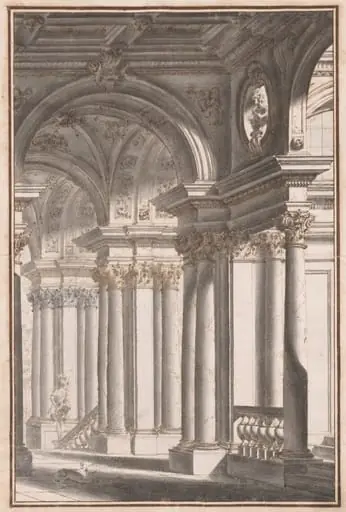 Architectural Capriccio with a Soldier and Dog
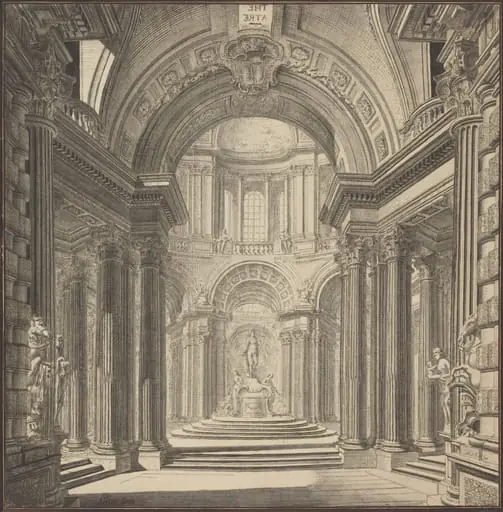 Interior of a Temple
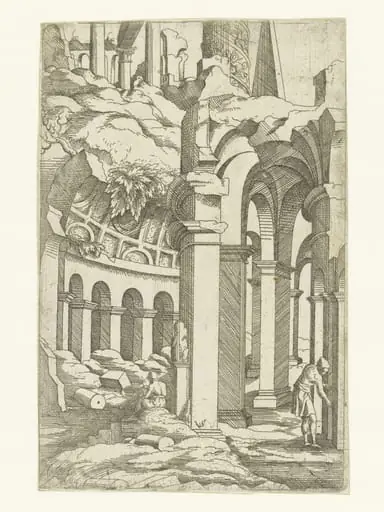 Ruins with a seated draftsman
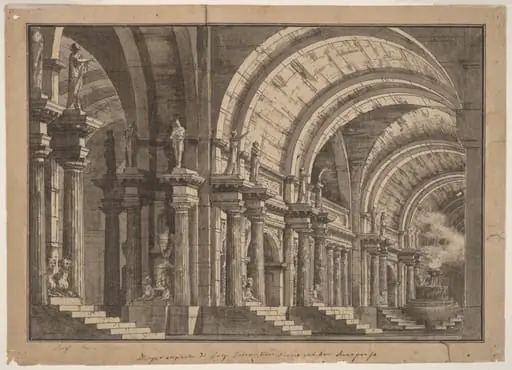 A Monumental Vaulted Hall with a Smoking Altar
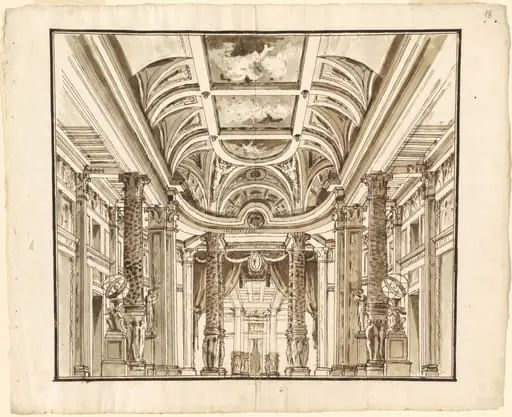 Fantasy of a Great Hall with Basketweave Columns
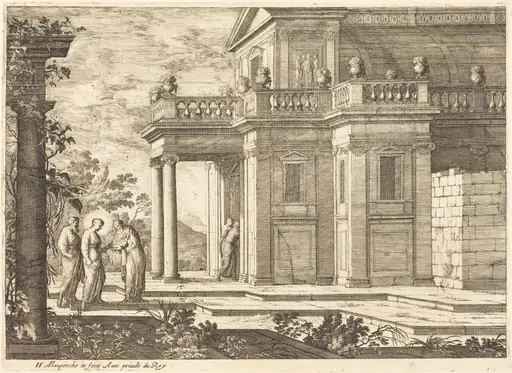 Presentation in the Temple
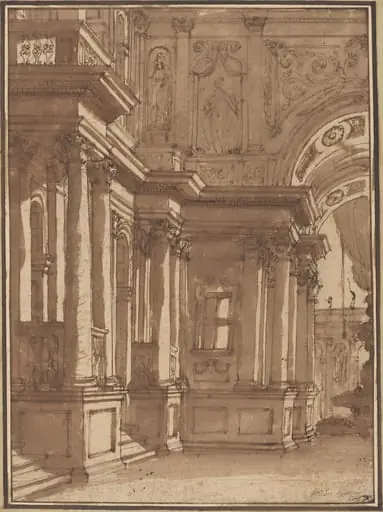 Interior of a Palace
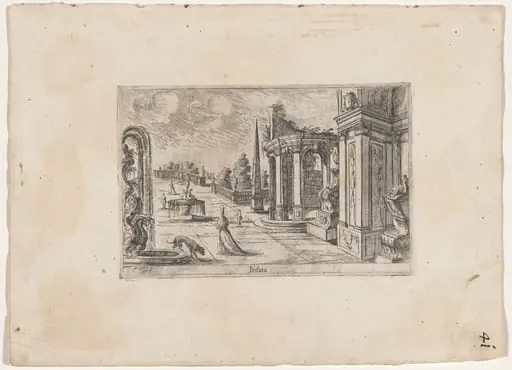 Design for a Garden Court
 Meeting of Mary and Elizabeth
 Three Figures in a Gallery