Artwork
Ruins with a seated draftsman
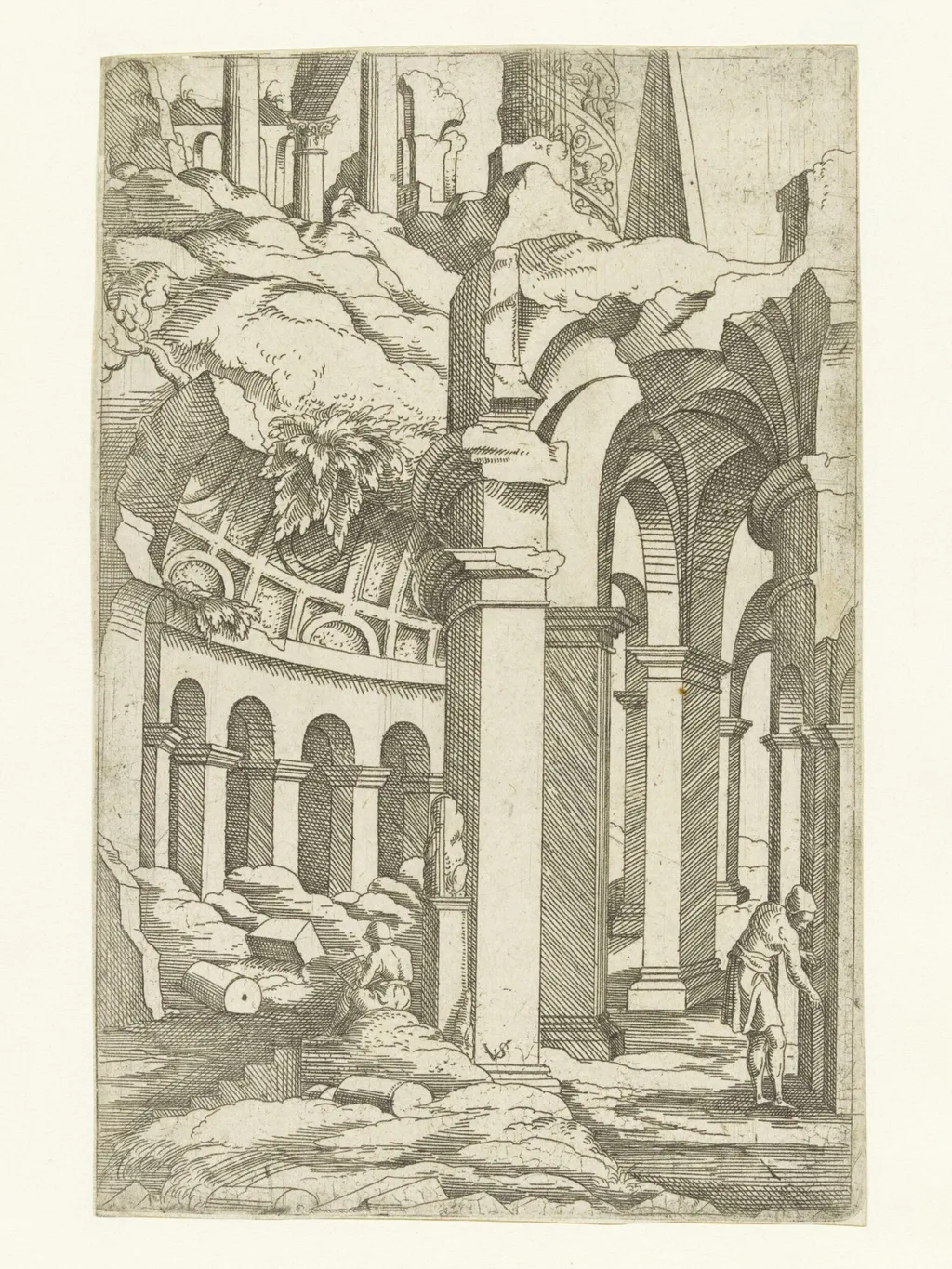
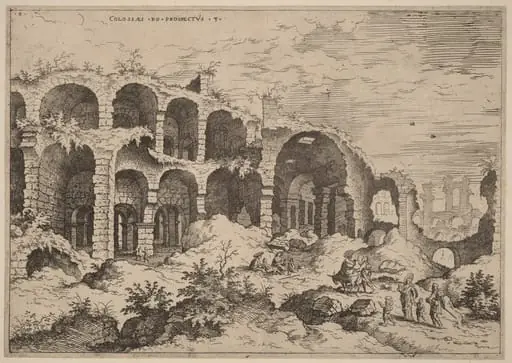
Ruins with a seated draftsman is a print by the Renaissance artist Virgil Solis. It dates from 1560 and is held in the collection of the Victoria and Albert Museum.
About this work
Overview
This print depicts a seated draftsman sketching among classical ruins, rendered in fine line work typical of 16th-century Northern European printmaking.
This print depicts a seated draftsman sketching among classical ruins, rendered in fine line work typical of 16th-century Northern European printmaking. It is a reverse engraving by Virgil Solis, adapted from designs originally published by Jacques Androuet Du Cerceau around 1550. The image reflects a broader trend of reusing and reinterpreting existing compositions, particularly those evoking antiquity, which were in demand among artisans and collectors.
Subject & Meaning
The figure of the draftsman, absorbed in recording ancient architecture, suggests a meditation on the preservation of classical heritage. Rather than depicting myth or narrative, the scene emphasizes observation and study, aligning with Renaissance humanist values. The ruins serve not as symbols of decay but as sources of knowledge, inviting the viewer to consider the continuity between past and present artistic practice.
Technique & Style
Solis employed precise engraving to render architectural detail and subtle tonal gradations, likely using hatching and cross-hatching to suggest depth and shadow. While not explicitly using chiaroscuro in the Italian sense, the print achieves atmospheric contrast through controlled line density. The composition is orderly and meticulous, reflecting the workshop’s focus on ornament and design utility rather than expressive drama.
History & Provenance
Virgil Solis, active in Nuremberg, ran a prolific workshop producing prints for decorative arts, including furniture and metalwork. This print derives from Du Cerceau’s French publications, which Solis adapted through reversal and re-engraving—a common practice among Northern printmakers seeking accessible models. The work circulated widely, likely used as a pattern source by craftsmen seeking classical motifs for applied arts.
Context
In mid-16th-century Europe, interest in antiquity surged as architects and artisans sought models for ornamentation. Prints like Solis’s served as portable references, bridging Italian and French design traditions with Northern European craftsmanship. The depiction of an artist at work among ruins mirrored contemporary scholarly pursuits, reinforcing the idea that antiquity was a living resource for contemporary creation.
Legacy
Solis’s adaptation of Du Cerceau’s imagery contributed to the dissemination of classical motifs across Northern Europe. Though not original in composition, the print exemplifies the collaborative, derivative nature of Renaissance print culture. Its survival in multiple collections underscores its role as a practical tool for designers and a document of how antiquity was visually transmitted before photography.
Artist & collection

Artist
Virgil Solis or Virgilius Solis (1514 – 1 August 1562), a member of a prolific family of artists, was a German draughtsman and printmaker in engraving, etching and woodcut who worked in his native city of Nuremberg.

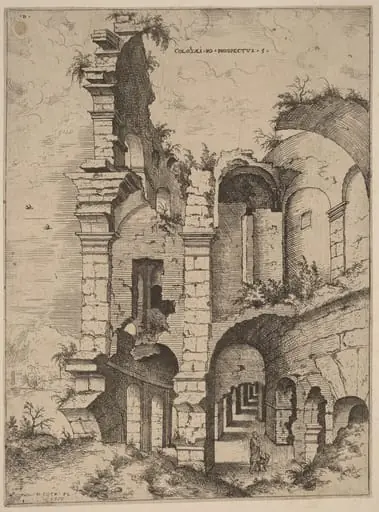 Fifth View of the Colosseum
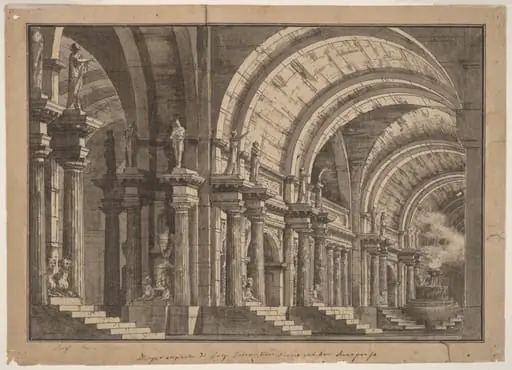 A Monumental Vaulted Hall with a Smoking Altar
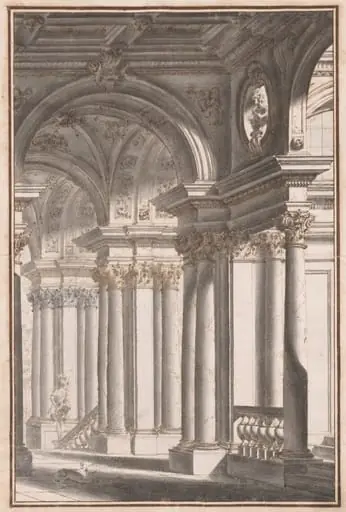 Architectural Capriccio with a Soldier and Dog
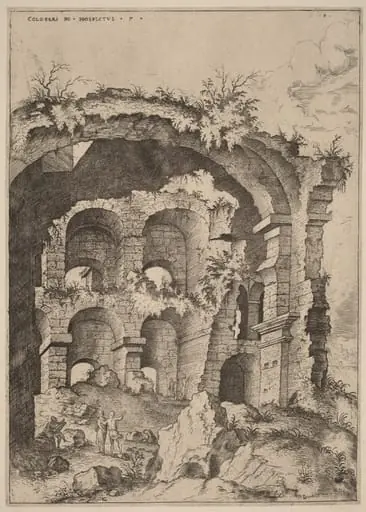 Seventh View of the Colosseum
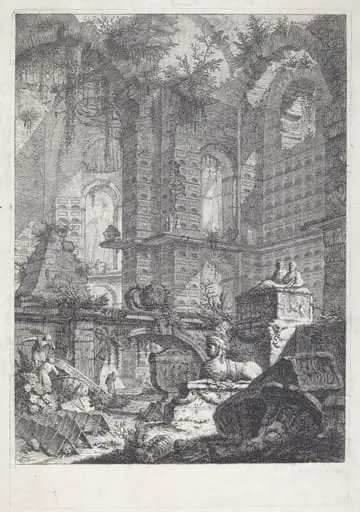 Camera sepolcrale
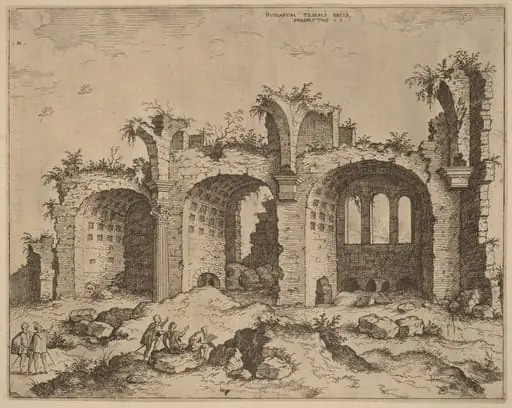 The Basilica of Constantine
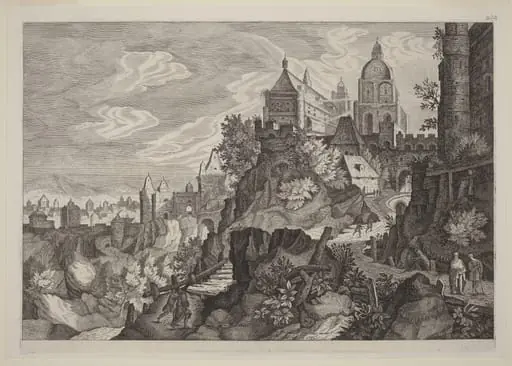 Rocky Landscape in Bohemia
 Fantasy of an Antique Temple
 Architectural Fantasy with a Fountain, Classical Ruins, and a Bridge
 The Infant in the Gallery
 Narcissus at the Fountain
 Third View of the Colosseum