Artwork
Baco (Bacchus)
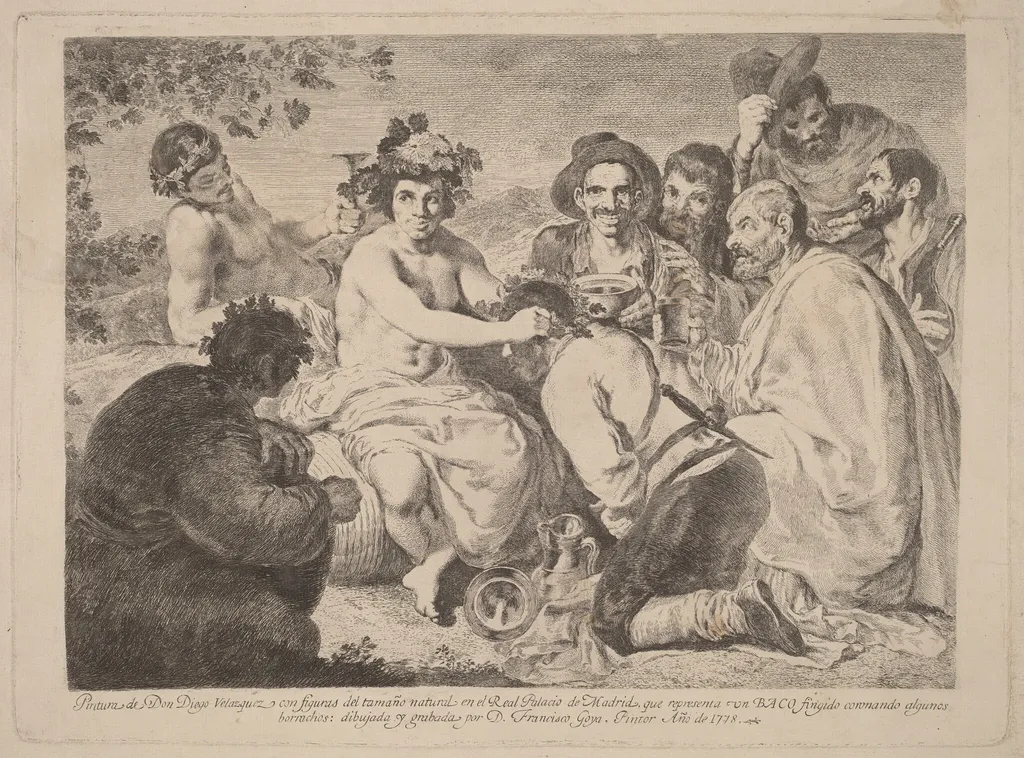
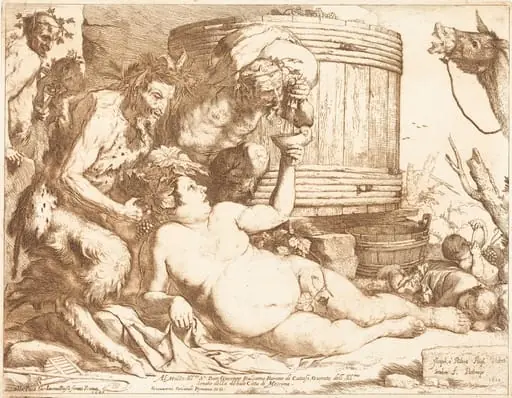
Baco (Bacchus) is an ink print by the Romanticist artist Francisco Goya. It dates from 1778 and is held in the collection of the National Gallery of Art.
About this work
Overview
Francisco Goya’s early print *Baco (Bacchus)* is an etching on heavy laid paper, first issued from the royal Calcografía press in 1778‑79. The image presents a bustling, disorderly revelry centered on a crowned woman reclining on a goat, surrounded by drinking men, musicians, a dog, and other animals. The composition captures a moment of unrestrained festivity drawn from classical mythology.
Subject & Meaning
The scene interprets the Roman god Bacchus, patron of wine and ecstasy, through a chaotic tableau that mixes human merriment with animal presence. The central female figure, crowned with flowers and holding a wine jug, serves as a focal point for the surrounding revelers, whose varied expressions—laughter, fatigue, intoxication—suggest both the pleasures and the excesses of indulgence.
Technique & Style
Goya employed traditional copper‑plate etching, allowing him to render the composition with vigorous, irregular lines and dense cross‑hatching. The rough shading and spontaneous marks give the print a lively, almost sketch‑like quality, contrasting with the smoother finishes typical of academic prints of the period and anticipating the more expressive approaches he would later adopt.
History & Provenance
Printed as a first‑edition impression at the Calcografía, the work reflects Goya’s early engagement with printmaking before his darker series such as *Los Caprichos*. Though the image references a lost painting by Diego Velázquez, Goya’s version diverges markedly, emphasizing disorder over Velázquez’s more composed style. The print remains in several European museum collections.
Context
Created during the late eighteenth‑century Spanish Romantic movement, the etching aligns with contemporary interests in classical mythology and the exploration of human emotion. Goya’s treatment of the Bacchic theme mirrors a broader cultural fascination with the tension between reason and revelry that characterized the Enlightenment’s waning years.
Artist & collection
Artist
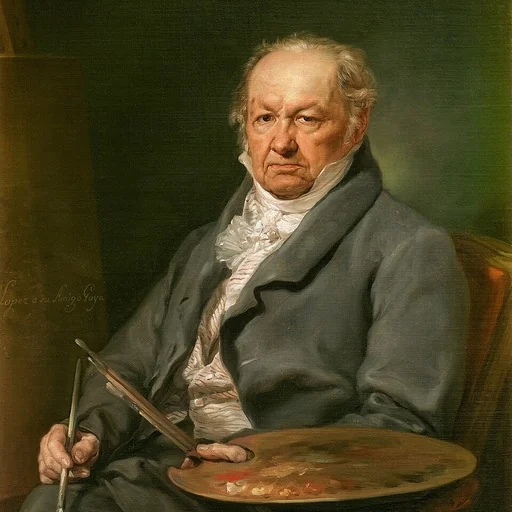
Francisco José de Goya y Lucientes (; Spanish: ; 30 March 1746 – 16 April 1828) was a Spanish romantic painter and printmaker.