Artwork
Disparate ridiculo (Ridiculous Folly)
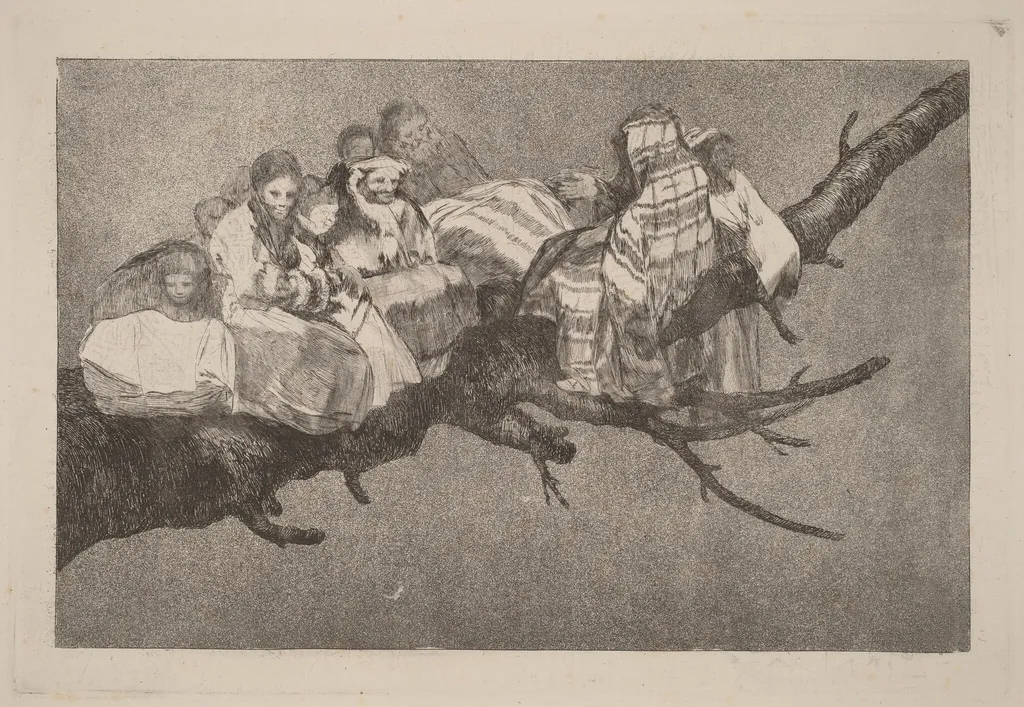
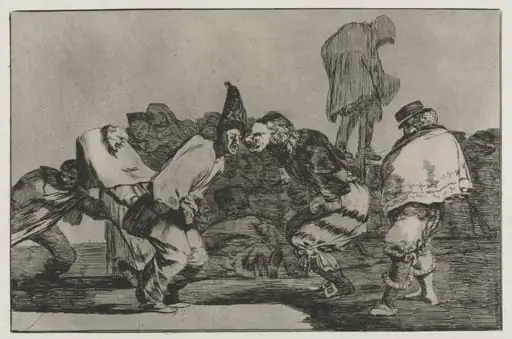
Disparate ridiculo (Ridiculous Folly) is an ink print by the Romanticist artist Francisco Goya. It dates from 1816 and is held in the collection of the National Gallery of Art.
About this work
Overview
Disparate ridiculo (Ridiculous Folly) is a print created by Francisco de Goya in 1816, utilizing etching, aquatint, and drypoint techniques. A trial proof was printed posthumously between 1854 and 1863.
Subject & Meaning
The work depicts a group of figures in white attire gathered around a dark, twisted branch, their attention fixed on an unseen object. This enigmatic scene critiques human folly and societal absurdities, characteristic of Goya's satirical commentary on his time.
Technique & Style
Goya employed a combination of etching, aquatint, and drypoint to achieve a dark, muted palette with pronounced shading and texture, reflecting his blend of traditional and emerging modern artistic approaches.
History & Provenance
Originally created in 1816, the print was part of Goya's series of satirical works. Trial proofs were printed posthumously circa 1854-1863, with the original creation dating back to Goya's lifetime.
Context
Disparate ridiculo (Ridiculous Folly) is situated within the broader context of Goya's critique of social and political turmoil in late 18th- and early 19th-century Spain, aligning with the expressive and emotionally charged tendencies of the Romantic movement.
Artist & collection
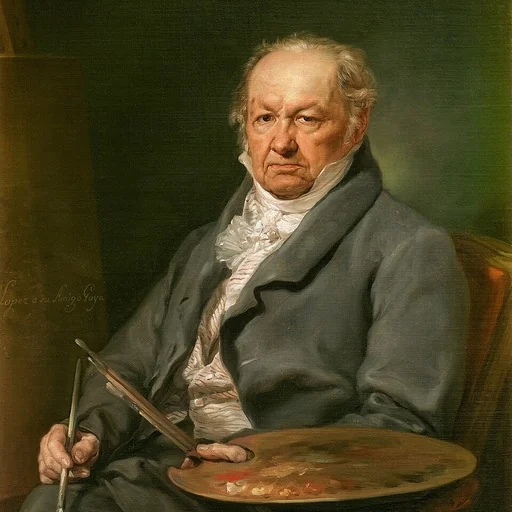
Artist
Francisco José de Goya y Lucientes (; Spanish: ; 30 March 1746 – 16 April 1828) was a Spanish romantic painter and printmaker.

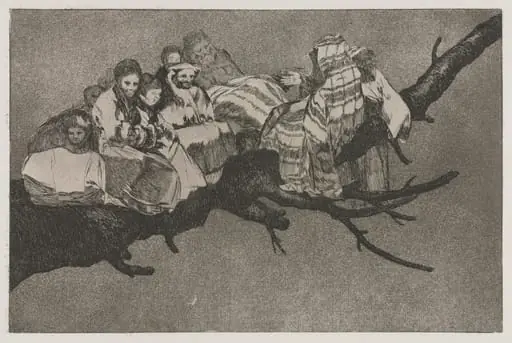 The Proverbs: Ridiculous Folly
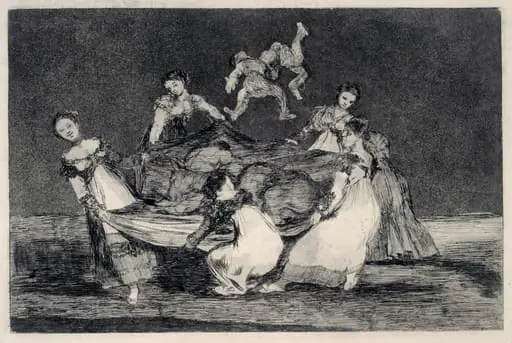 Disparate femenino (Feminine Folly)
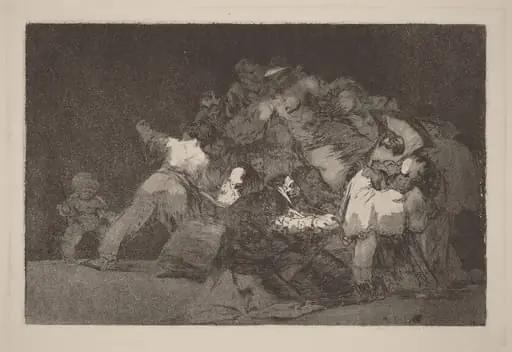 Disparate general (General Folly)
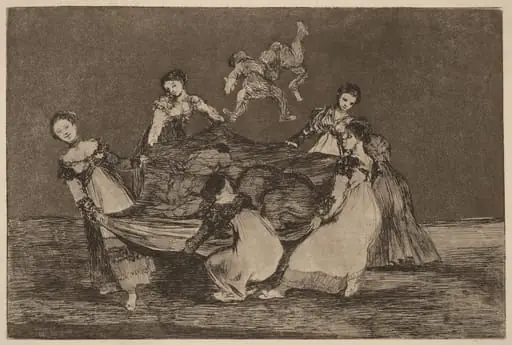 Disparate femenino (Feminine Folly)
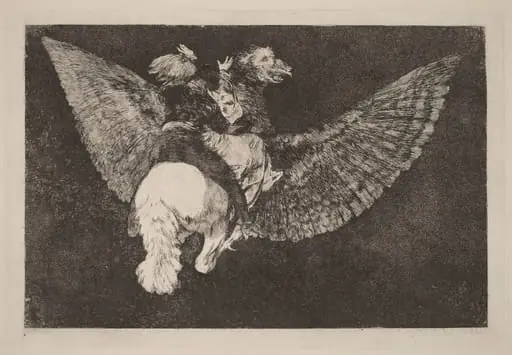 Disparate volante (Flying Folly)
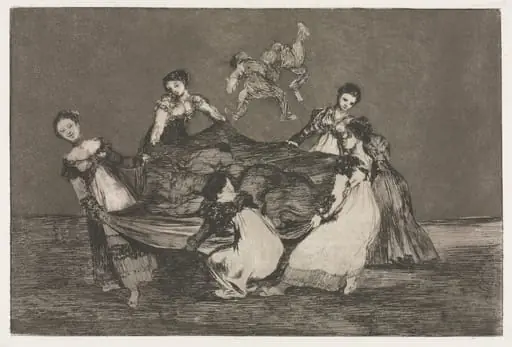 The Proverbs: Feminine Folly
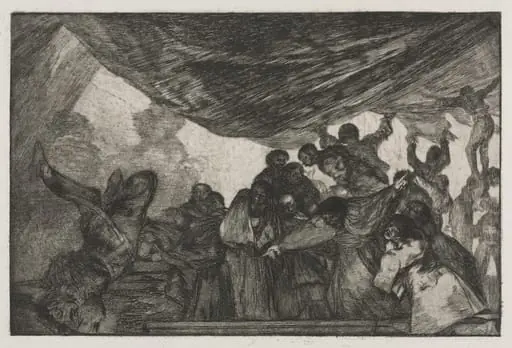 The Proverbs: Clear Folly
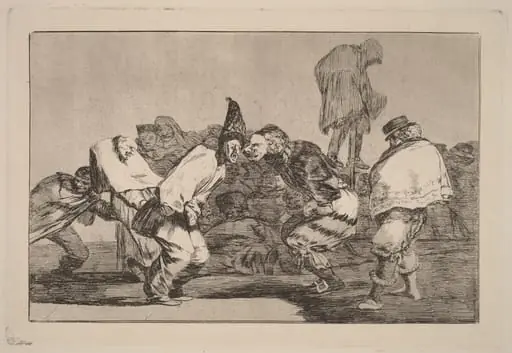 Disparate de Carnabal (Carnival Folly)
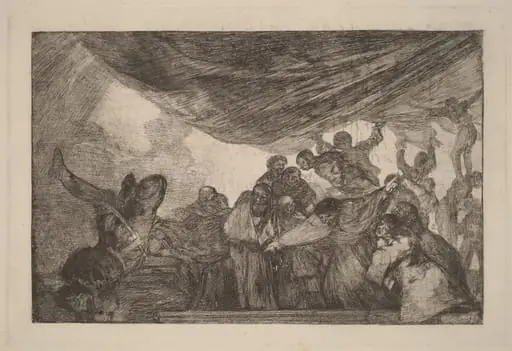 Disparate claro (Clear Folly)
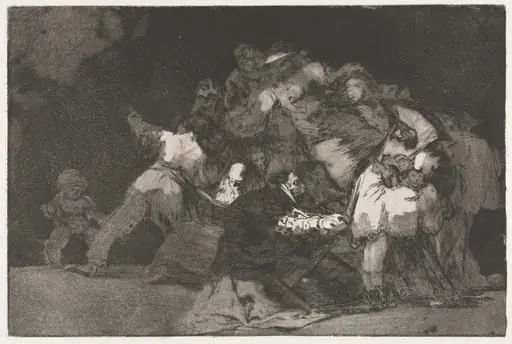 The Proverbs: General Folly
 The Proverbs: Carnival Folly