Artwork
The Virgin, the Child and Angels
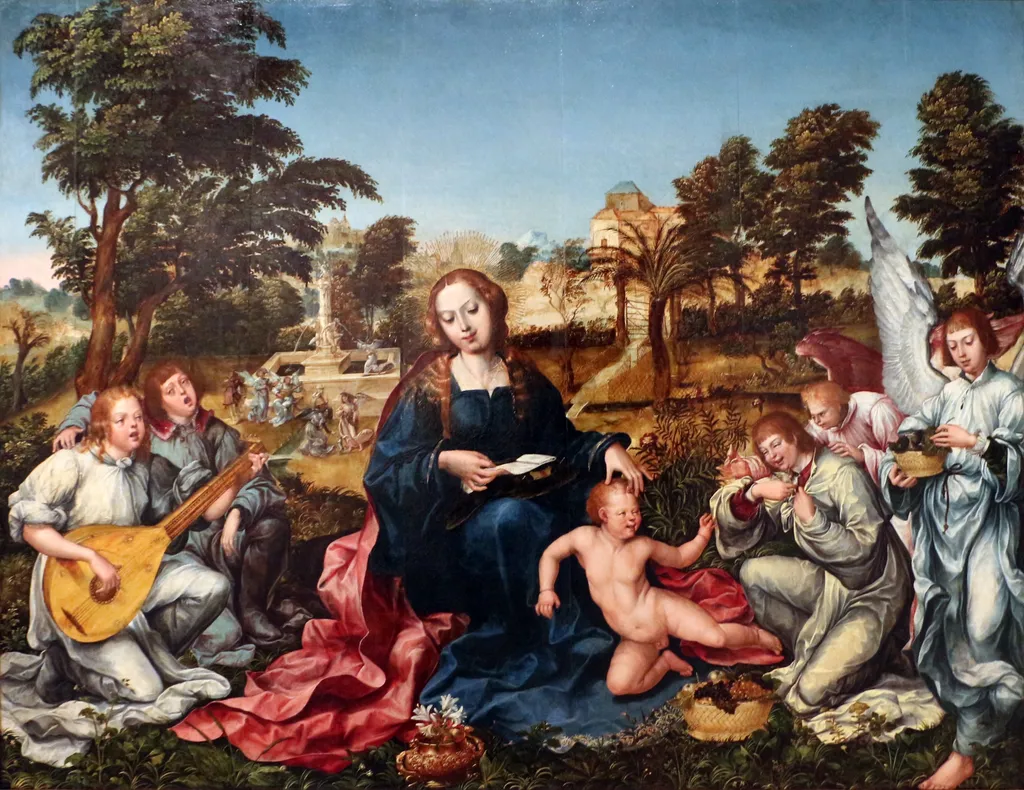
The Virgin, the Child and Angels is an unspecified painting by the Mannerist artist Gregório Lopes. It dates from 1537 and is held in the collection of the National Museum of Ancient Art.
About this work
Overview
The work presents a calm devotional scene in which the Virgin Mary sits upon a richly dyed cloth, cradling a book, while the infant Jesus rests before her.
Gregório Lopes’ 1537 panel, titled *The Virgin, the Child and Angels*, is part of the collection of Portugal’s National Museum of Ancient Art. The work presents a calm devotional scene in which the Virgin Mary sits upon a richly dyed cloth, cradling a book, while the infant Jesus rests before her. A group of angels surrounds the pair, some with instruments, others bearing flowers or small baskets, all set against a gentle, open landscape.
Subject & Meaning
The composition emphasizes the intimate bond between Mary and the Christ child, a theme common in late‑Renaissance Iberian art. The inclusion of angels playing music and offering blossoms underscores the celebration of the divine incarnation and the heavenly choir’s role in honoring the holy family. The book in Mary’s lap suggests her wisdom and the prophetic nature of the scene.
Technique & Style
Lopes employs a balanced arrangement of figures, using soft modelling and a muted palette that highlights the red of the cloth against the pastel sky. The delicate rendering of fabrics and the subtle chiaroscuro on the faces reveal his mastery of oil painting techniques inherited from Flemish influences, while the atmospheric background demonstrates a restrained yet harmonious approach to space.
History & Provenance
Created in 1537, the panel entered the National Museum of Ancient Art’s holdings during the 20th‑century consolidation of Portuguese royal and ecclesiastical collections. Its provenance traces back to a private devotional setting, likely a chapel, before being acquired by the state for public display, where it remains a representative example of mid‑Renaissance religious art in Portugal.
Context
The work belongs to a period when Portuguese painters integrated Northern European realism with local devotional traditions. Lopes, a prominent figure in the Lisbon workshop scene, often painted altarpieces and private commissions that reflected the Counter‑Reformation’s emphasis on clear, emotionally resonant imagery. This painting illustrates the synthesis of international artistic currents with the spiritual needs of Portuguese patrons.
Own this work as a print
Artist & collection

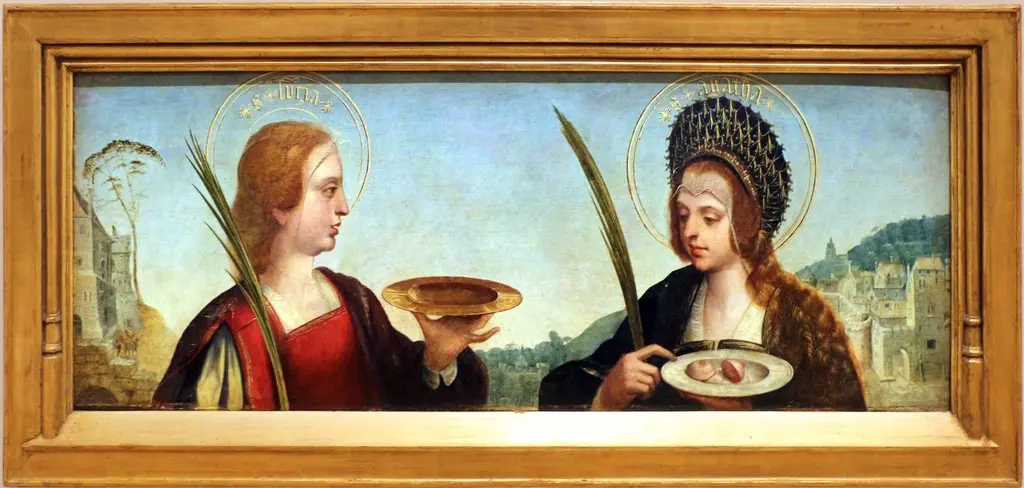
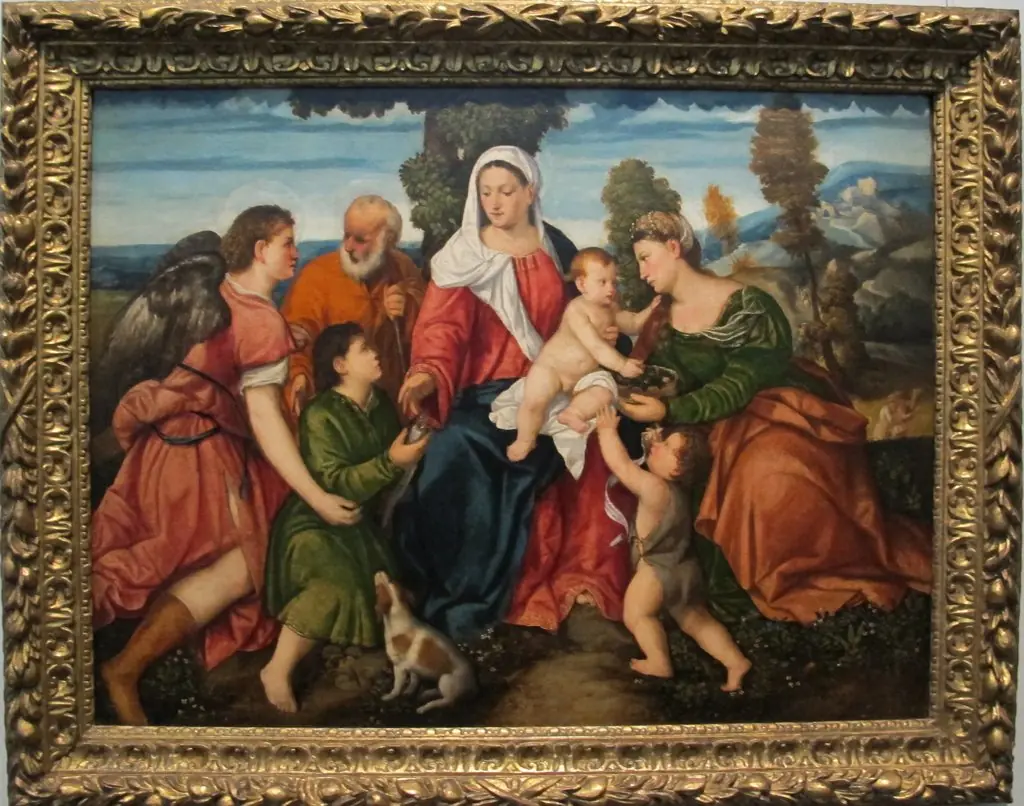 The Holy Family with Tobias and the Angel, Sts. Dorothy, and Infant John the Baptist
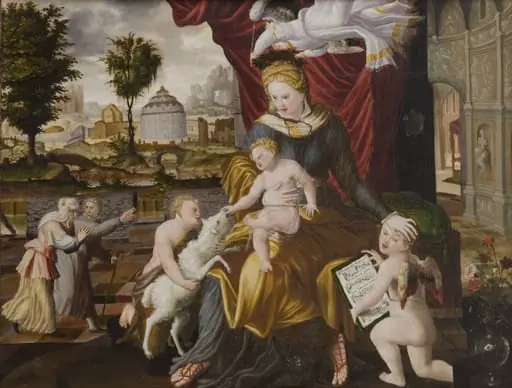 The Virgin Mary and Child, the Infant St.John and two angels
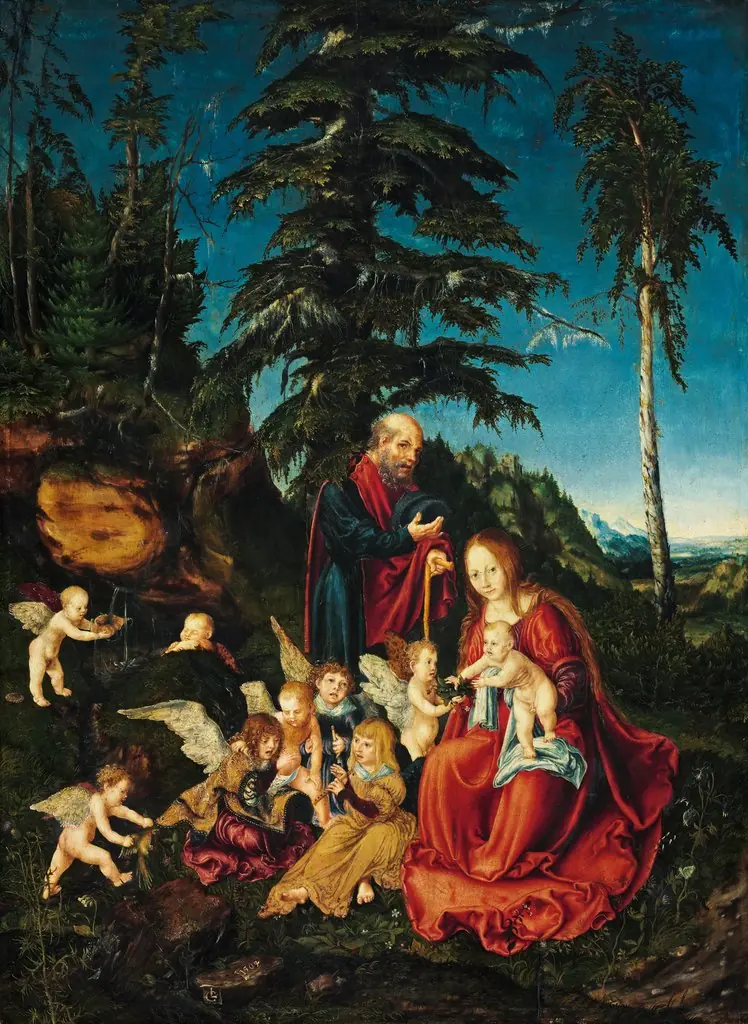 Rest on the Flight to Egypt
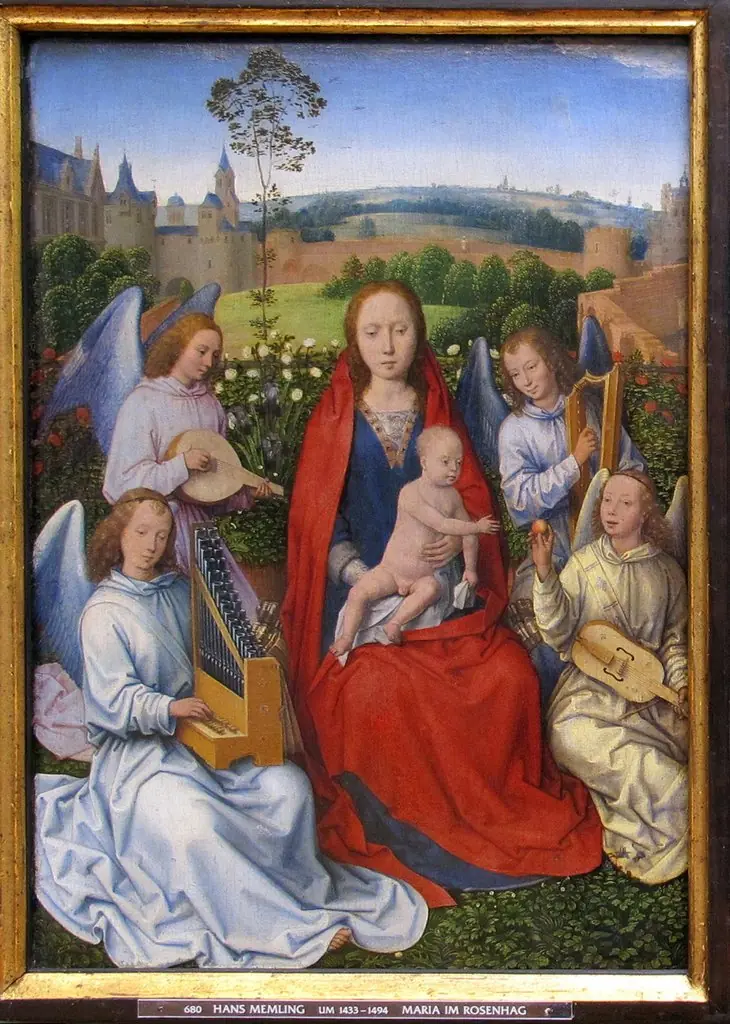 Madonna of the Rose Bower
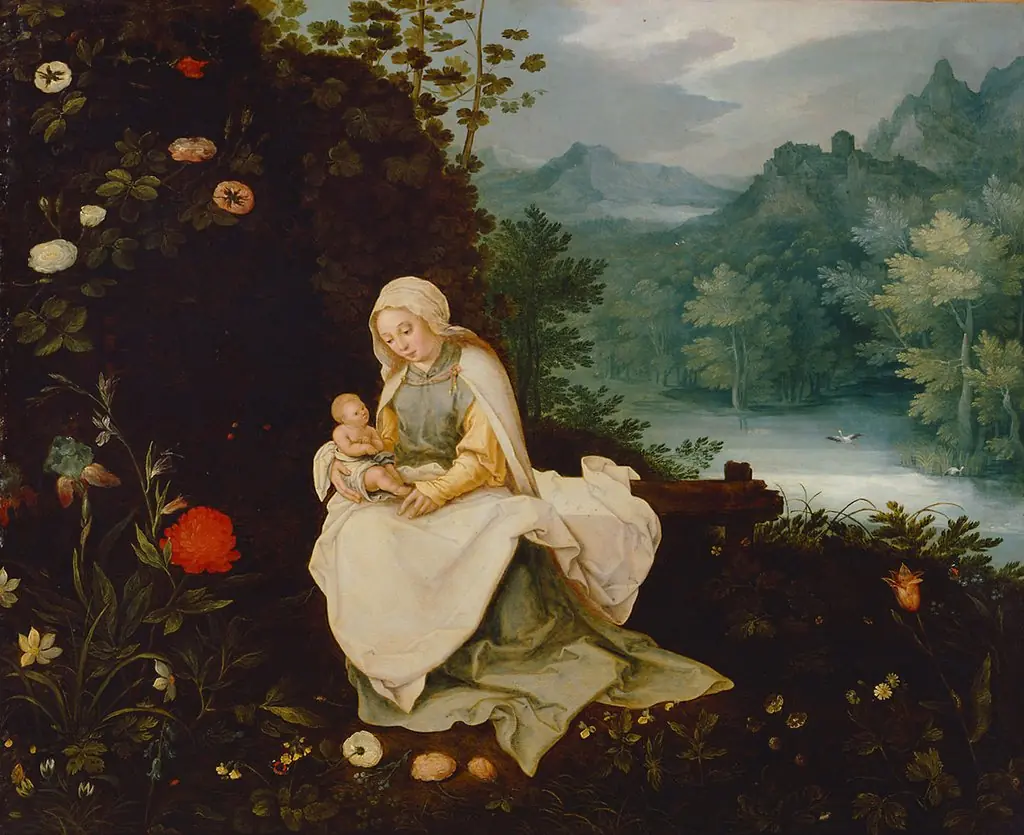 The Virgin and Child in a Landscape
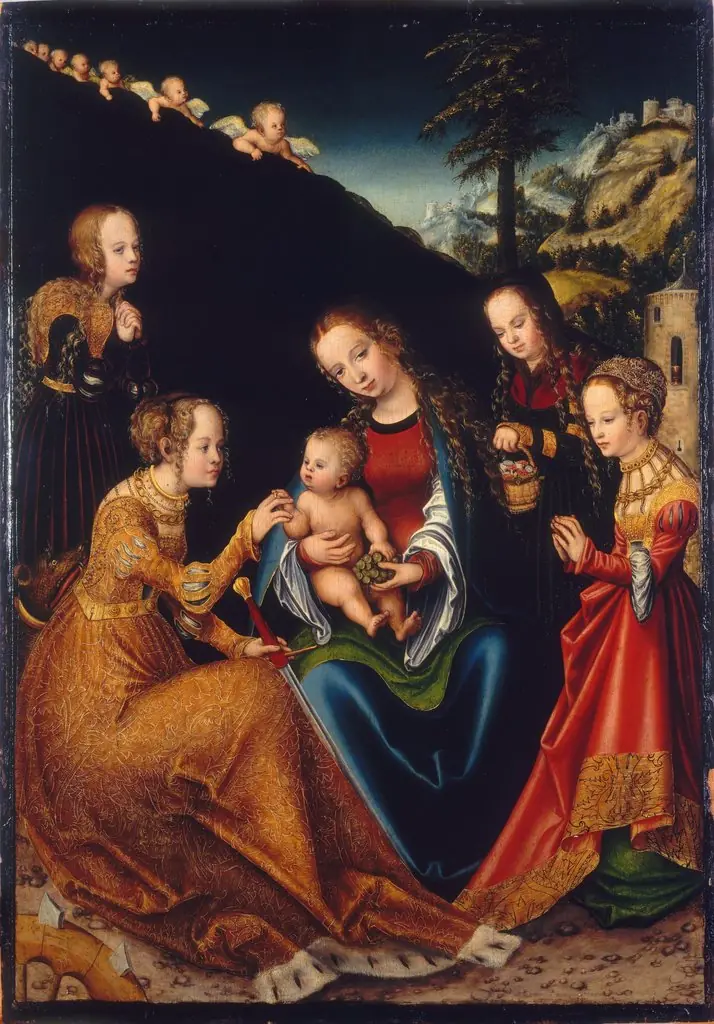 The Mystic Marriage of Saint Catherine of Alexandria with Saints Dorothy, Margaret and Barbara
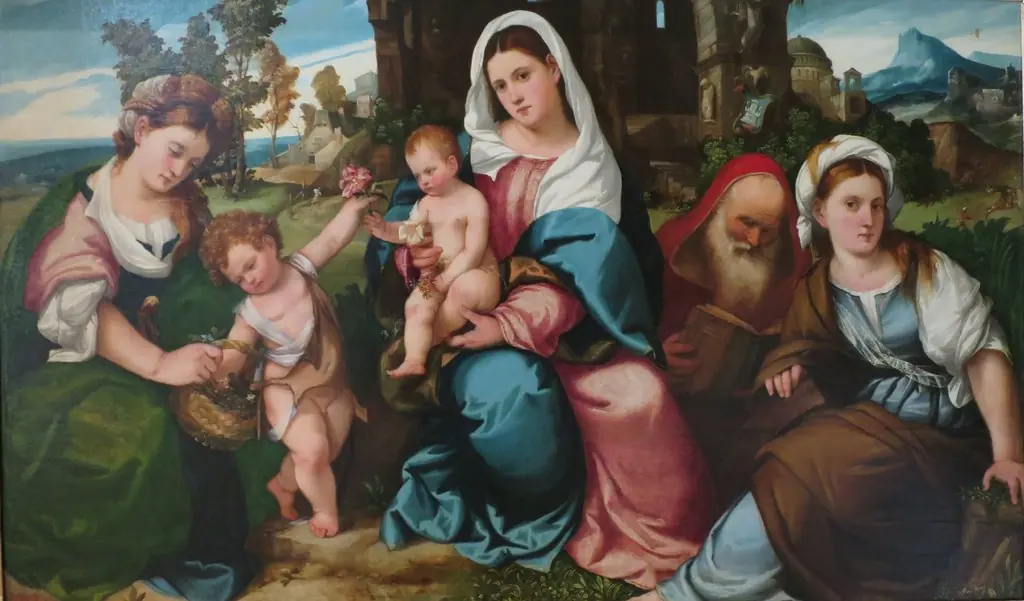 Madonna and Child with St Catherine, St John the Baptist, St Dorotea and St Anthony the Abbot