Artwork
Watercolour drawing by the Grieve family, showing a water mill
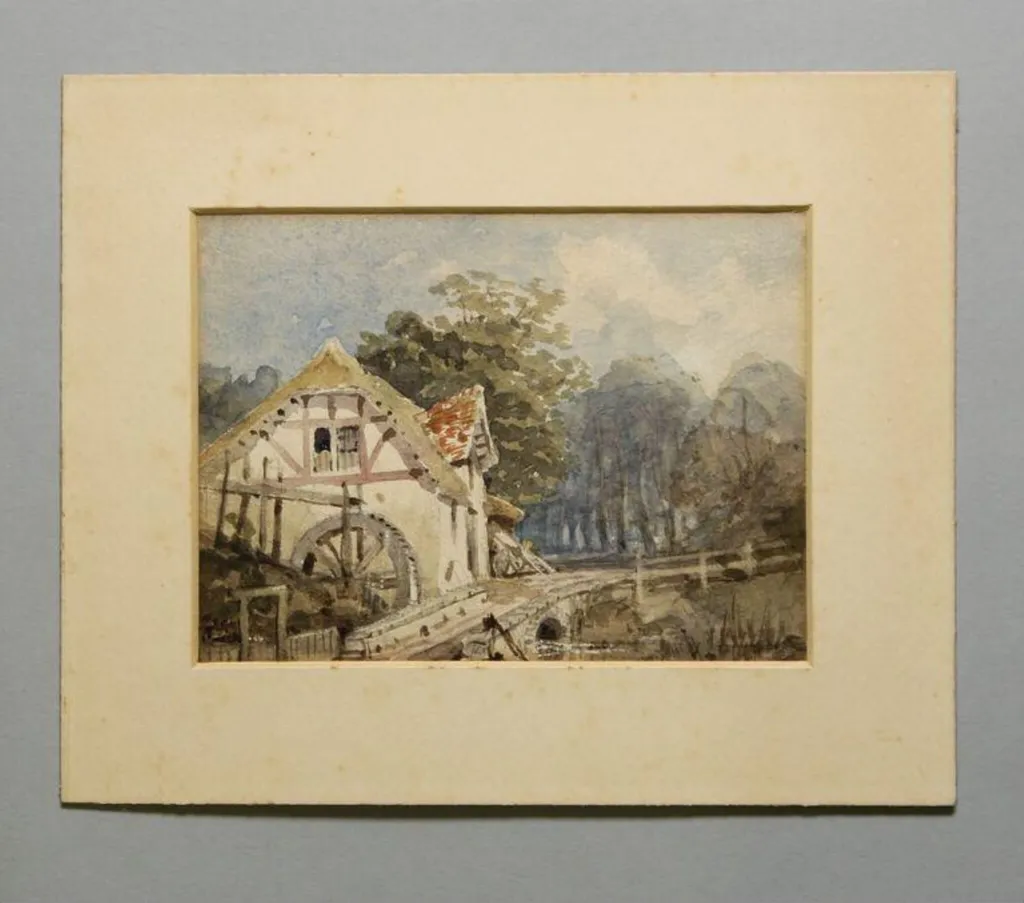
Watercolour drawing by the Grieve family, showing a water mill is a drawing by Grieve. It dates from 1850 and is held in the collection of the Victoria and Albert Museum. This watercolour drawing, created in the early 1800s, depicts a water mill in southern England.
About this work
Overview
This watercolour drawing, created in the early 1800s, depicts a water mill in southern England. It belongs to a group of landscape studies made by the Grieve family, known primarily for their theatrical scene painting. Unlike their stage designs, these works were executed as observational sketches, likely drawn directly from nature during travels in Kent and surrounding regions.
Subject & Meaning
The subject—a rural water mill—reflects a quiet interest in everyday industrial architecture. Rather than dramatizing the scene, the artists rendered it with attention to structural detail and local topography. These drawings served neither as theatrical backdrops nor as idealized landscapes, but as records of place, possibly used for reference or personal documentation.
Technique & Style
The palette is restrained, emphasizing natural tones over dramatic contrast, aligning with emerging trends in observational drawing.
Executed in watercolour, the drawing combines loose washes with precise linework, suggesting a transition from theatrical romanticism toward topographical accuracy. The handling of light and texture indicates familiarity with both stage lighting effects and direct observation. The palette is restrained, emphasizing natural tones over dramatic contrast, aligning with emerging trends in observational drawing.
History & Provenance
The drawing is part of a larger collection assembled by multiple generations of the Grieve family, who were active in London theatre from the late 18th to late 19th centuries. The group was later donated to the Victoria and Albert Museum by Thomas Walford Grieve’s son. The collection includes numerous similar sketches, all believed to have been made during field trips rather than in the studio.
Context
During the early 19th century, theatrical scene painters increasingly turned to direct observation to enhance realism on stage. The Grieves, like their contemporaries, began documenting real landscapes to inform their designs. These watercolours represent a shift in professional practice, where artistic training extended beyond the theatre into the wider environment of southern England.
Legacy
The Grieve family’s sketches, once practical tools for stage design, now serve as historical records of rural architecture and landscape. Their transition from stylized theatrical backdrops to precise observational drawings reflects broader changes in 19th-century visual culture. The V&A’s collection preserves this evolution, offering insight into the intersection of theatre and documentary art.
Artist & collection
Artist
This bundle gathers delicate early 19th-century watercolours by the Grieve family, mostly of quiet corners in Kent and along the Thames.

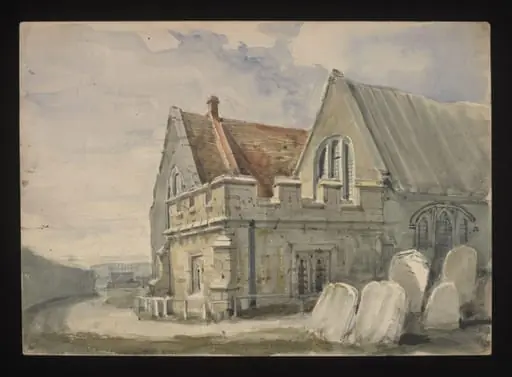 Watercolour drawing by the Grieve family, showing St Peter's Church in Kent
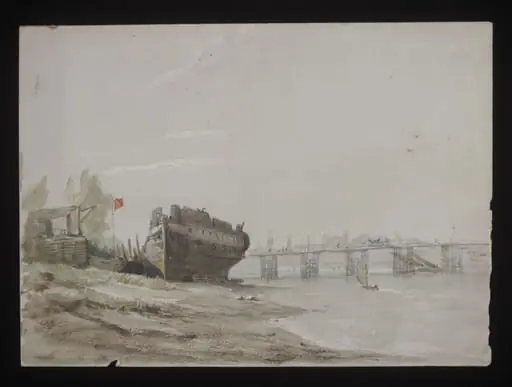 Watercolour drawing by the Grieve family, showing Battersea Bridge
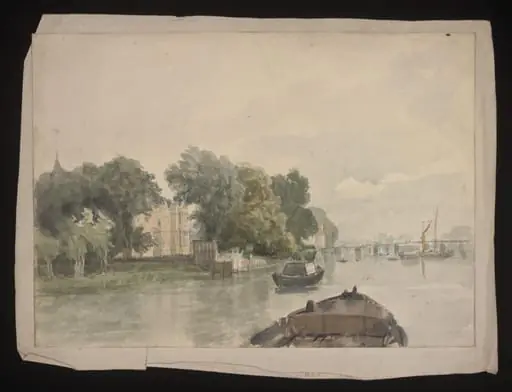 Watercolour drawing by the Grieve family, showing a scene on the River Thames
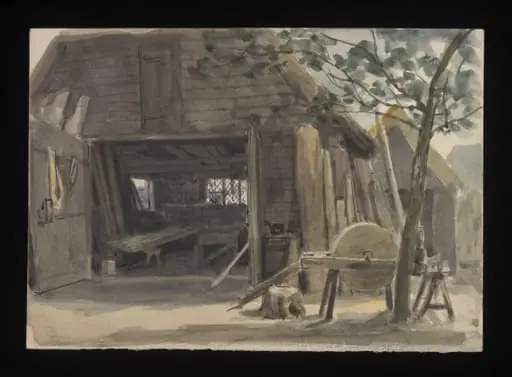 Watercolour drawing by the Grieve family, showing a workman's hut at Garlinge, Kent
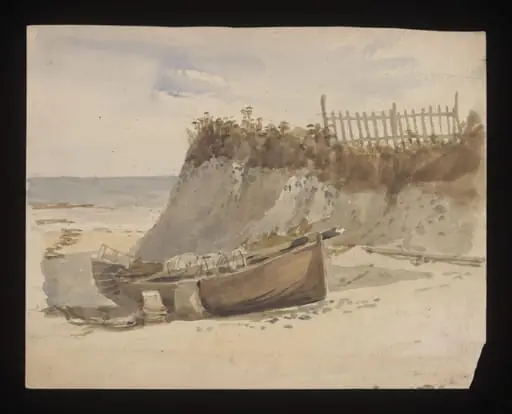 Watercolour drawing by the Grieve family, showing the beach at Kingsgate, Kent
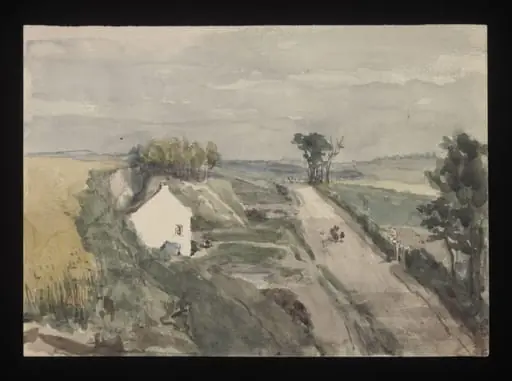 Watercolour drawing by the Grieve family, showing a country scene, near Minster, Kent
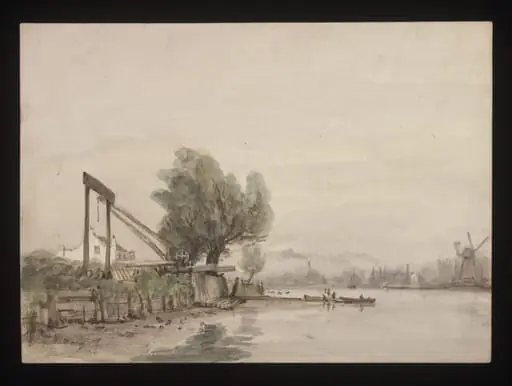 Watercolour drawing by the Grieve family, showing a river scene
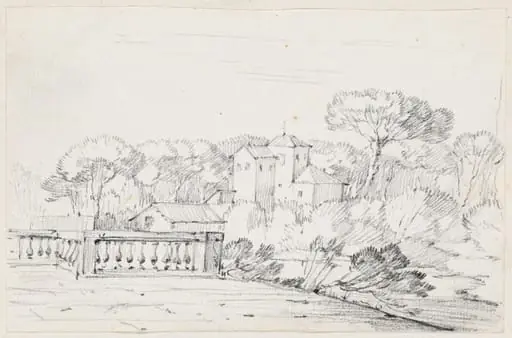 Terrace by a River with a Villa and Trees Beyond
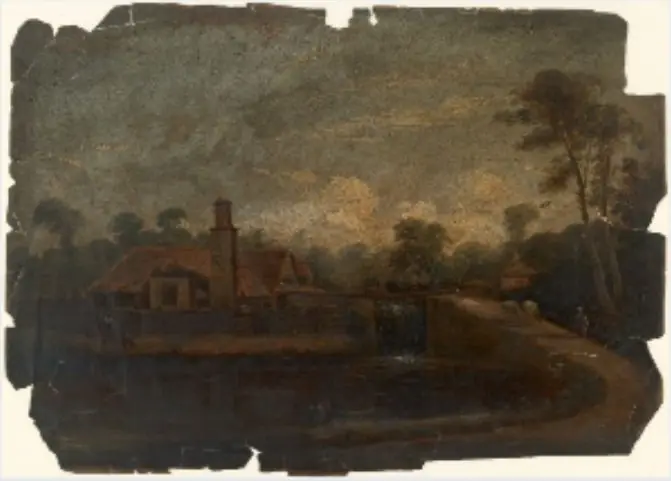 Lock Gates on a Canal
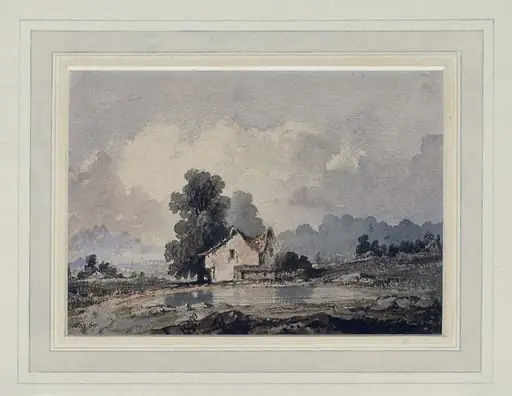 Landscape with pond and cottage
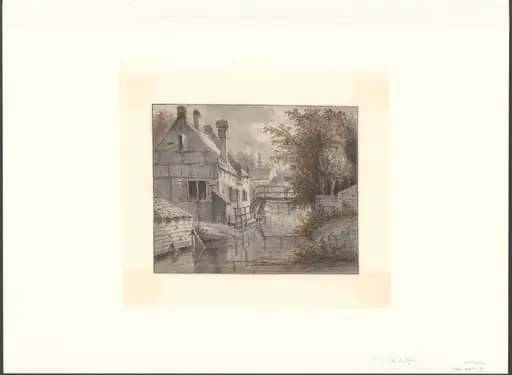 Untitled
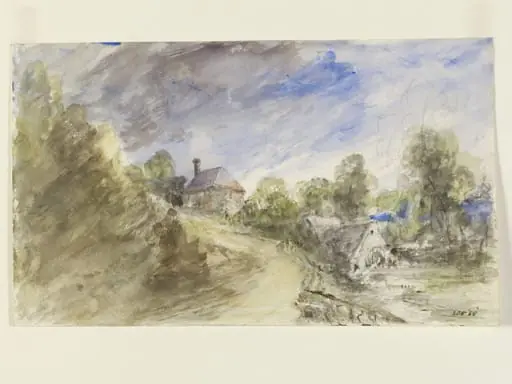 A cottage and water-mill at Bignor
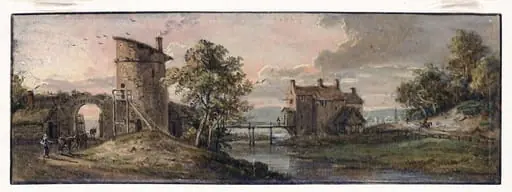 Landscape with a river
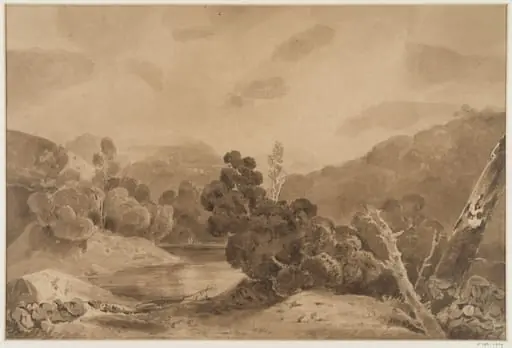 River scene with a temple or palace in the clouds
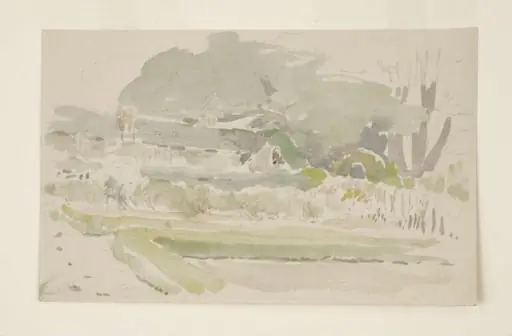 Sketch of the garden and potting shed at Gwaynynog
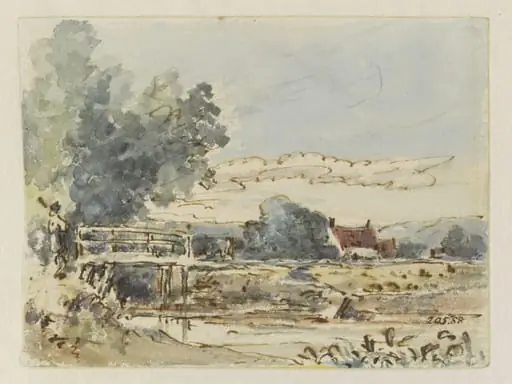 A bridge over a stream, with a cottage behind
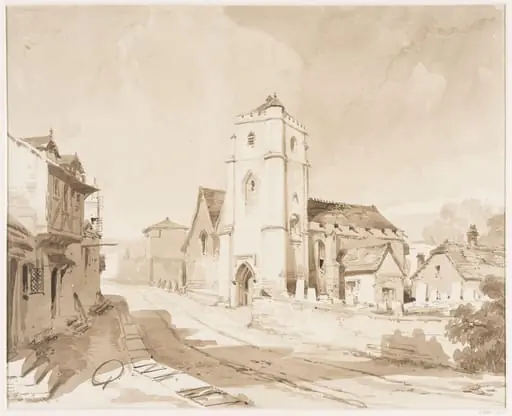 Untitled
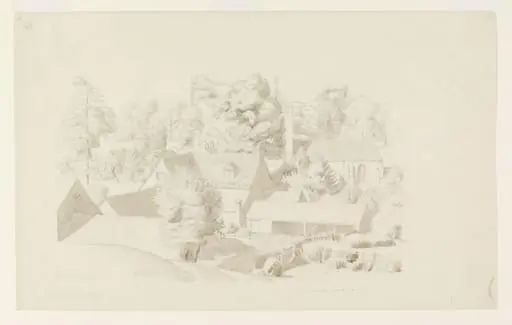 Leckhampstead
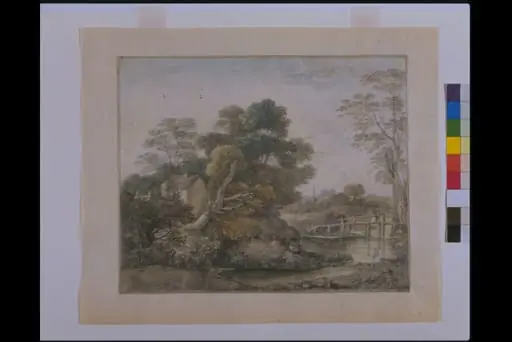 Landscape with Cottage and Stream