Artwork
Copy of painting inside the caves of Ajanta (Cave 1)
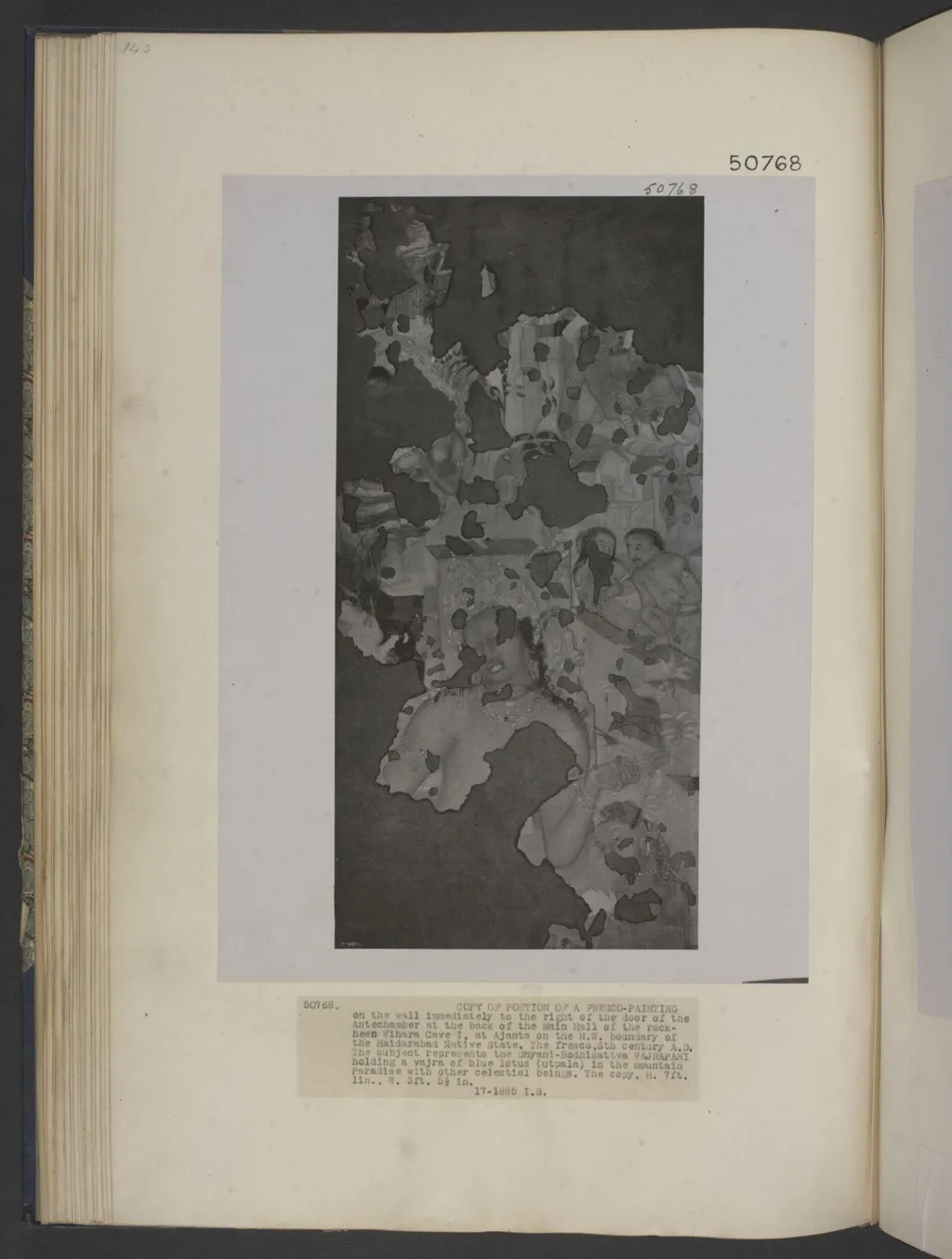
Copy of painting inside the caves of Ajanta (Cave 1) is an oil painting by the Impressionist artist John Griffiths. It dates from 1878 and is held in the collection of the Victoria and Albert Museum.
About this work
A Bodhisattva sits with a jewel-studded crown, though his face is worn away.
This painting copies a 2,000-year-old cave mural in India. A Bodhisattva sits with a jewel-studded crown, though his face is worn away. The colors are bright but flat, like a faded photo.
Griffiths painted this in 1877. He used oil paints to copy the original Buddhist artwork. The cave murals tell stories of the Buddha’s past lives.
The original murals are in Ajanta Caves, India. See how Griffiths handled the paint. Look up Griffiths, John.
Overview
This oil painting is a copy of a mural from Cave 1 at Ajanta, India, created by John Griffiths in 1877. It replicates an ancient Buddhist artwork, depicting a spiritual figure from Buddhist mythology.
Subject & Meaning
The painting shows a Bodhisattva, identified as Vajrapani by the 'vajra' (thunderbolt) he holds, accompanied by a female figure, possibly his consort. The original mural illustrates stories from the Buddha's past lives, known as the Jatakas.
Technique & Style
Griffiths used oil paints to recreate the original mural, resulting in a flat, somewhat faded color palette. The copy captures the intricate details of the original, including the Bodhisattva's jewelled crown and ornaments.
History & Provenance
The original Ajanta murals date from the 1st century BC to around AD 480. Griffiths' copy was made as part of a project to document the murals, which were discovered in 1819. He worked alongside seven Indian students from the Bombay School of Art between 1872 and 1885.
Artist & collection
Artist
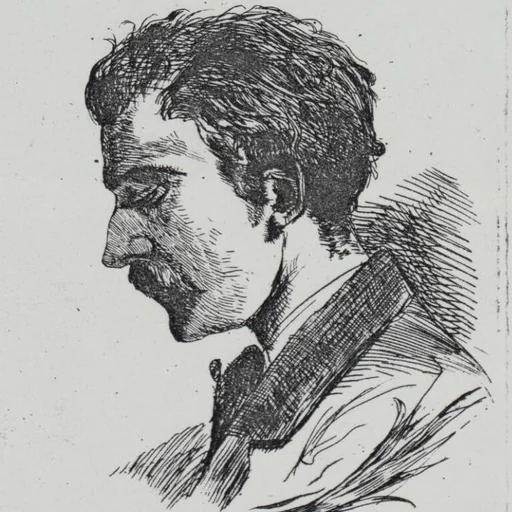
John Griffiths (29 November 1837 – 1 December 1918) was a Welsh artist who worked in India, noted for his Orientalist works.

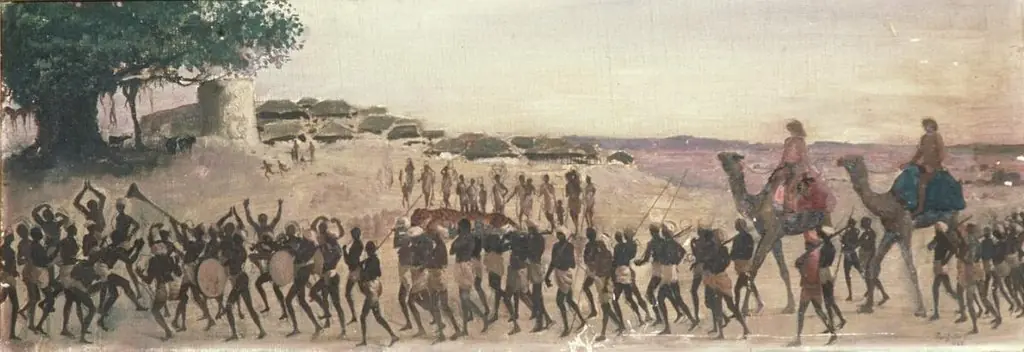 Tiger shooting in East Berar
 The Marquis of Salisbury (1791–1868)
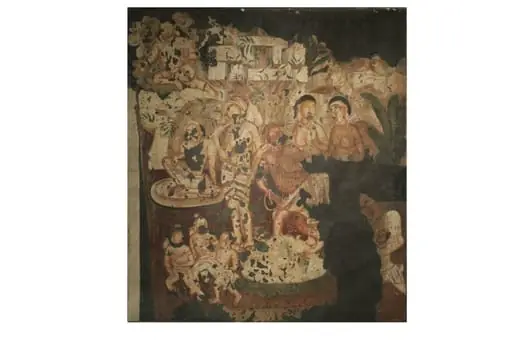 Copy of painting inside the caves of Ajanta (Cave 2)
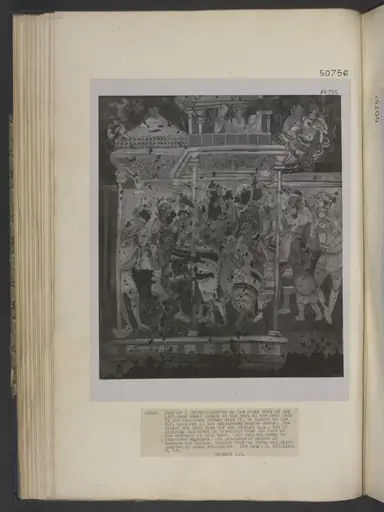 Copy of painting in the caves of Ajanta (cave 2)
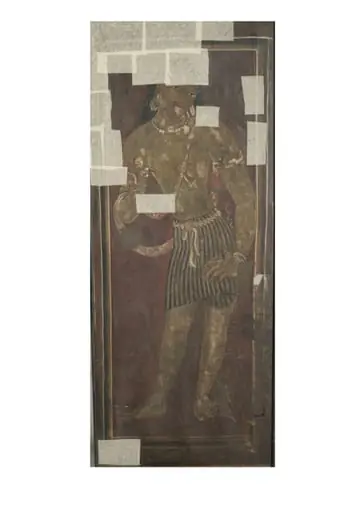 Copy of painting in the caves of Ajanta (cave 17)
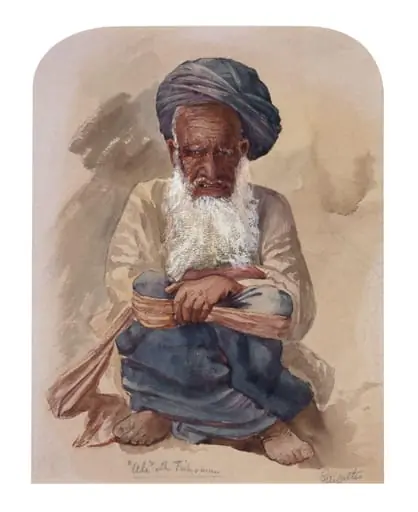 Ali the fisherman
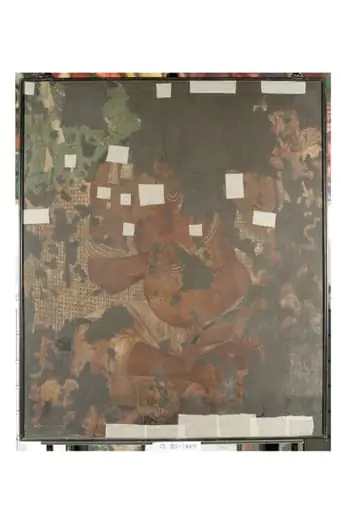 Copy of painting inside the caves of Ajanta (cave 16)
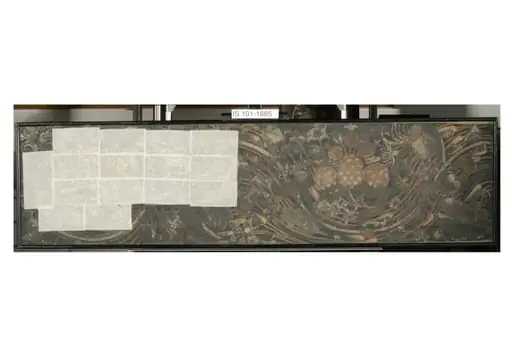 Copy of painting inside the caves of Ajanta (Cave 9)