Artwork
Grand-duc (Eagle Owl)
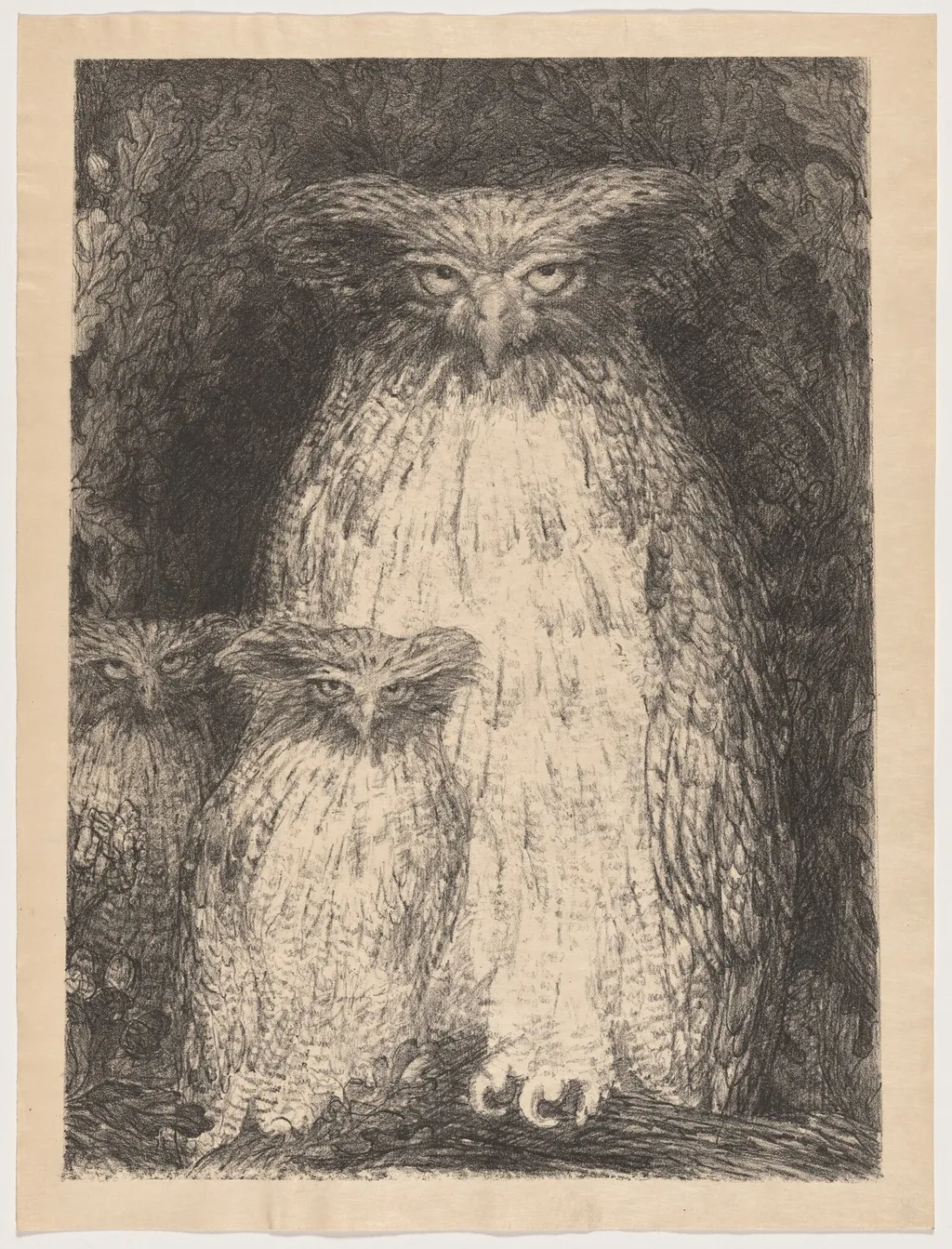
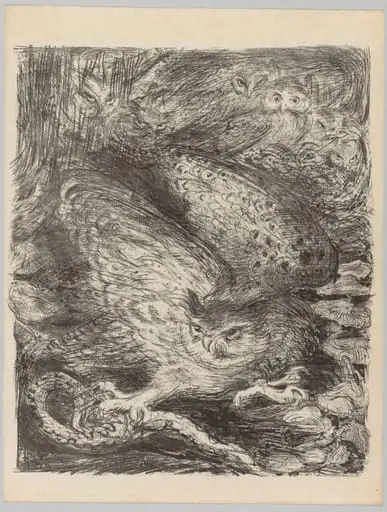
Grand-duc (Eagle Owl) is an ink print by the Impressionist artist Henri de Groux. It dates from 1895 and is held in the collection of the National Gallery of Art.
About this work
Overview
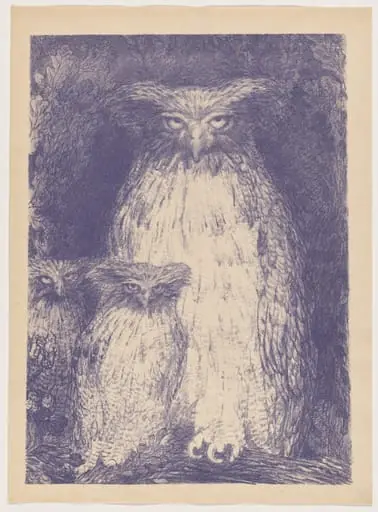
Grand-duc (Eagle Owl) is a 1895 lithograph by Belgian artist Henri de Groux, executed in black ink on heavy Japan paper, showcasing his Symbolist inclinations through a nocturnal scene.
Subject & Meaning
The print depicts three owls in a dark, wooded environment, with the central, largest owl prominent amidst two smaller ones to its left. The composition conveys an atmosphere of quiet contemplation, the owls seemingly absorbed in thought.
Technique & Style
De Groux utilizes a range of grays to render the owls' feathers, contrasting darker shadows with lighter highlights. The dark, detailed woods in the background are achieved through expressive lithographic techniques, characteristic of his innovative printmaking skills.
History & Provenance
Created in 1895, this work reflects de Groux's established presence in Symbolist circles, following his early success with *Christ attacked by a mob* (1889) in Brussels before his relocation to Paris.
Context
Grand-duc (Eagle Owl) embodies the Symbolist themes of introspection and the mystical, set against the backdrop of late 19th-century European avant-garde movements.
Legacy
This lithograph demonstrates de Groux's technical prowess in printmaking and his contribution to Symbolist art, though specific details on its direct impact or notable exhibitions are not provided.
Artist & collection
Artist
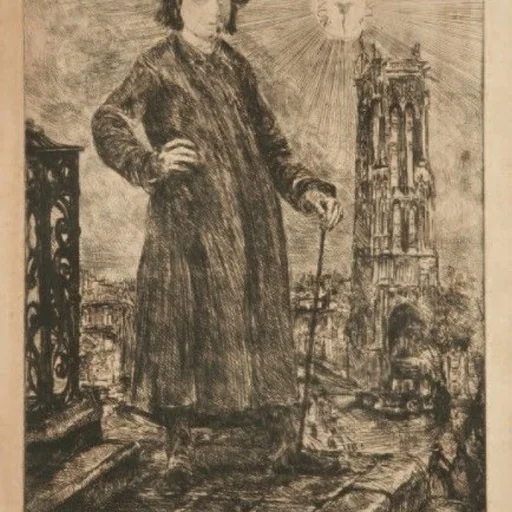
Henry de Groux (15 September 1866 – 12 January 1930) was a Belgian Symbolist painter, sculptor and lithographer.