Artwork
Gulmarg
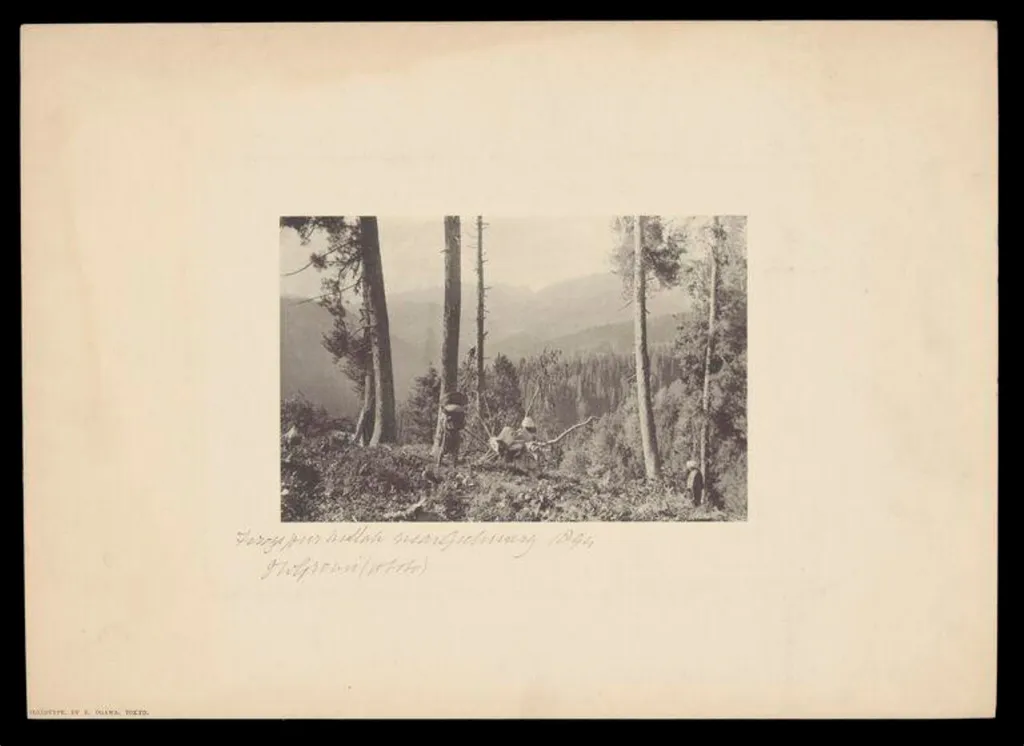
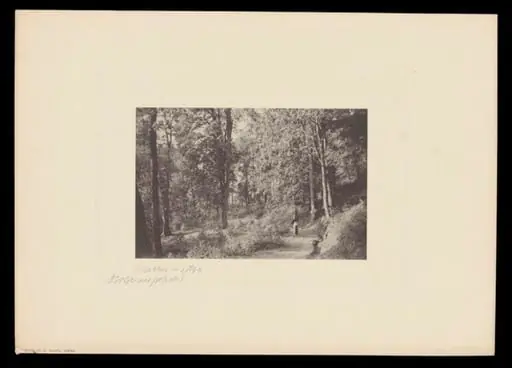
Gulmarg is a photographic photography by the Impressionist artist J.W. Groves. It dates from 1894 and is held in the collection of the Victoria and Albert Museum.
About this work
Overview
A black-and-white photograph captures a quiet forested landscape in Gulmarg, with no physical mounting or frame. The composition centers on towering trees in the foreground, some standing upright and others fallen, while distant mountain ridges recede into the haze. The image’s tonal range is soft, avoiding sharp contrasts, and the absence of human figures enhances its stillness.
Subject & Meaning
The scene presents nature in a state of quiet equilibrium—upright and fallen trees coexist without narrative tension. The mountains in the distance, blurred by atmospheric haze, suggest depth without dominance. The lack of human presence invites contemplation of the land as a self-contained environment, untouched by intervention or urgency.
Technique & Style
Rendered in monochrome, the photograph employs diffused light and low contrast to create a muted, ethereal atmosphere. The soft focus between foreground and background blurs boundaries, emphasizing mood over detail. The absence of a mount suggests an unadorned, perhaps documentary, approach to image presentation.
History & Provenance
The photograph is attributed to J.W. Groves, a 19th-century photographer active in the Indian subcontinent. It likely dates to the colonial era, when British photographers documented Kashmir’s landscapes. Its unmounted state implies it may have been part of a personal album or archival collection rather than a public display.
Context
During the mid-to-late 1800s, photographers like Groves traveled to Kashmir to record its topography for scientific, administrative, and aesthetic purposes. This image aligns with a broader trend of landscape photography that emphasized serenity and natural order, often reflecting colonial ideals of controlled, picturesque wilderness.
Legacy
The photograph contributes to a historical record of Kashmir’s natural environment before widespread tourism and development. Its subdued aesthetic distinguishes it from later, more dramatic portrayals of the region. As an early example of regional landscape photography, it remains a quiet artifact of visual exploration in colonial India.
Artist & collection
Artist
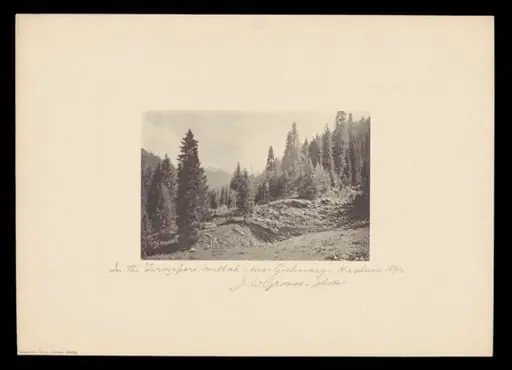
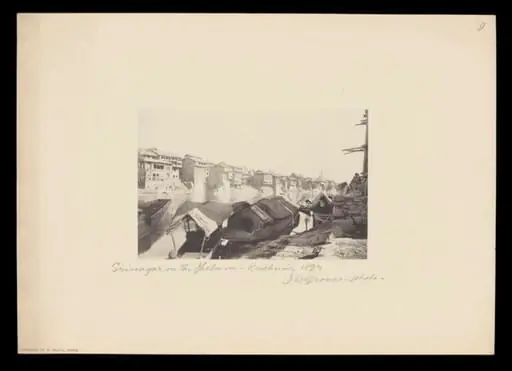
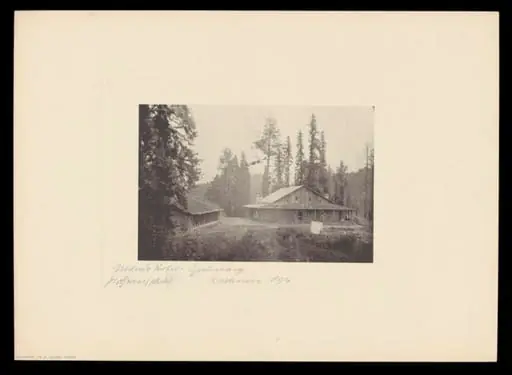
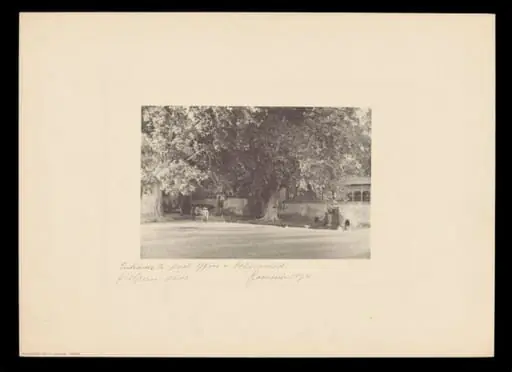
Photographer J.W. Groves captured Kashmir in the 1890s, leaving behind glass-plate prints of landmarks like Nedou’s Hotel in Gulmarg and the post office entrance in Islamabad. His lens framed scenes where locals and…

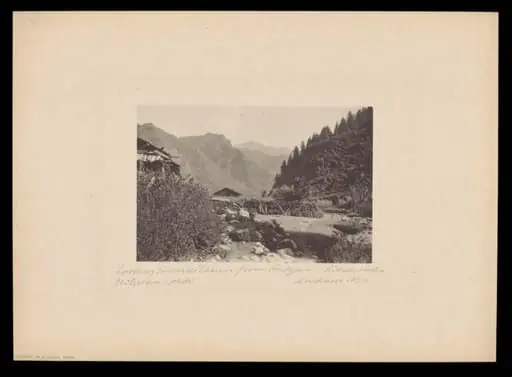 Looking towards Tauin from Pahalgam, Lidder Valley, Kashmir
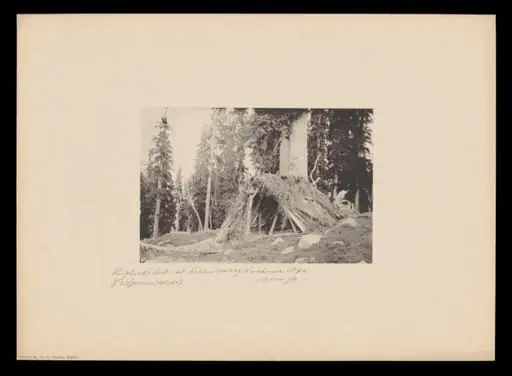 Shepherd's Hut at Khilanmarg, Kashmir, 10,000 ft
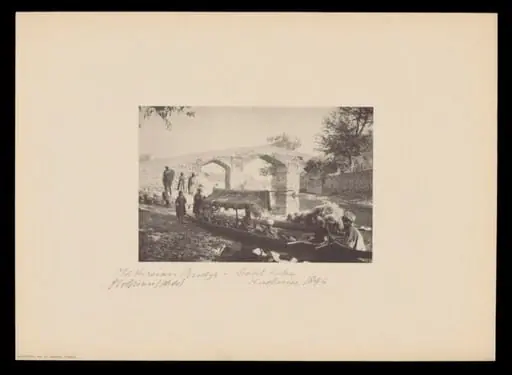 Bridge, Dahl Lake, Kashmir
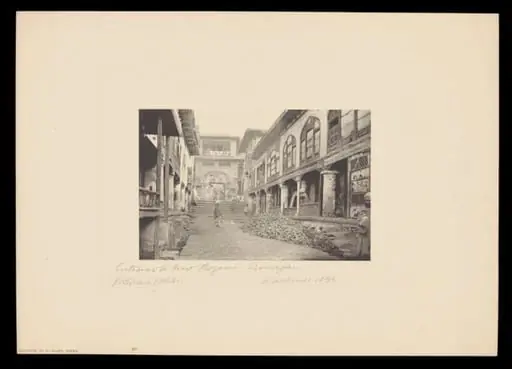
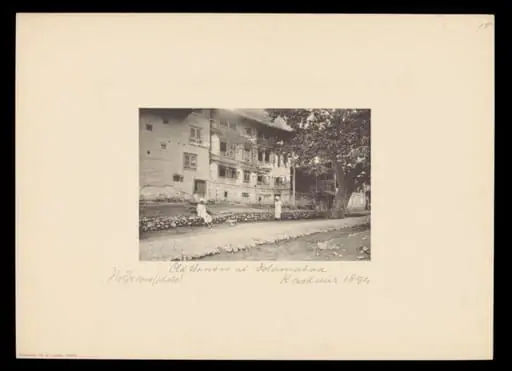 Old Houses at Islamabad, Kashmir
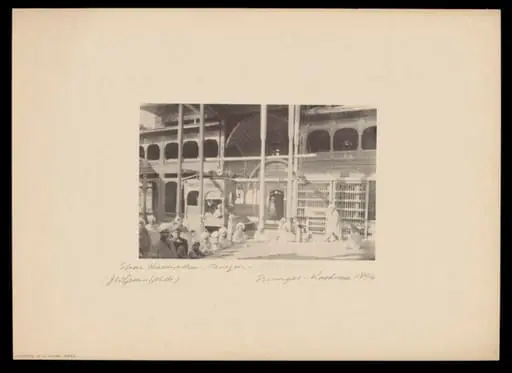 Shah Hamdan Mosque, Srinagar, Kashmir
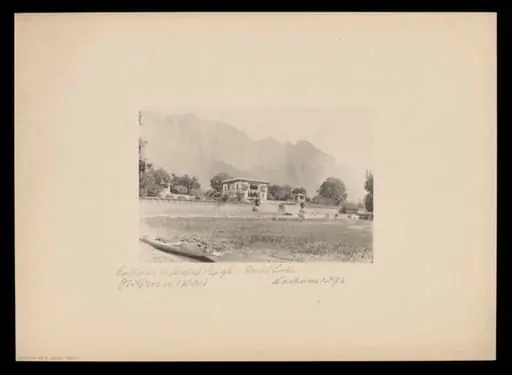 Entrance to Nishat Bagh, Dahl Lake, Kashmir
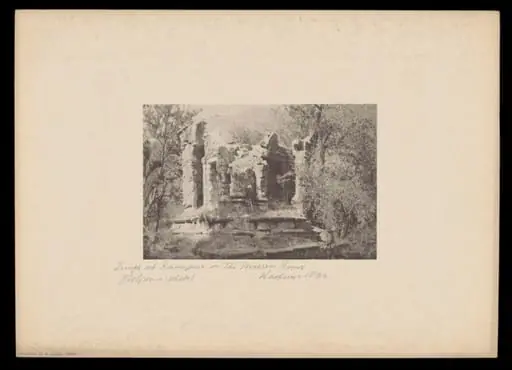 Temple at Rampur on The Murree Road, Kashmir
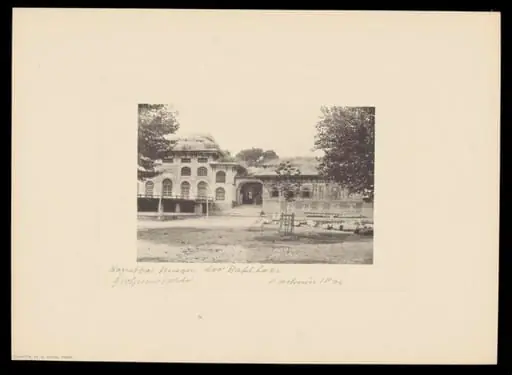 Hazratbal Mosque, Dahl Lake, Kashmir