Artwork
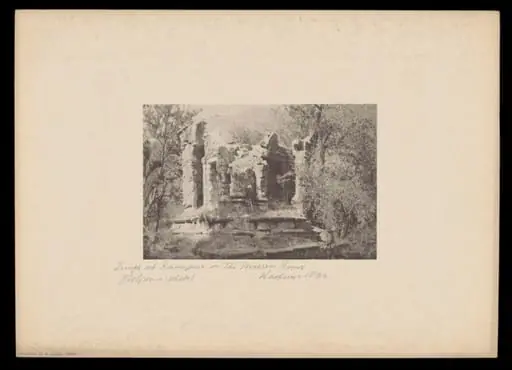
Tomb of Zainul-Abidin, Srinagar, Kashmir
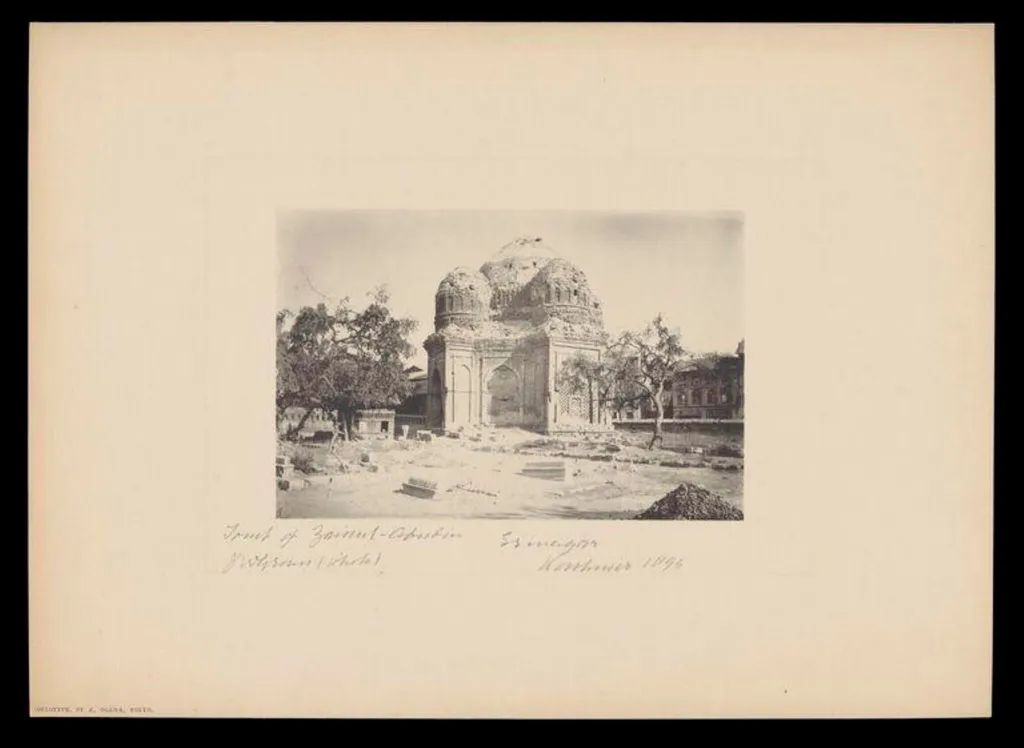
Tomb of Zainul-Abidin, Srinagar, Kashmir is a photographic photography by the Impressionist artist J.W. Groves. It dates from 1894 and is held in the collection of the Victoria and Albert Museum. A black-and-white photograph from 1894 by J.
About this work
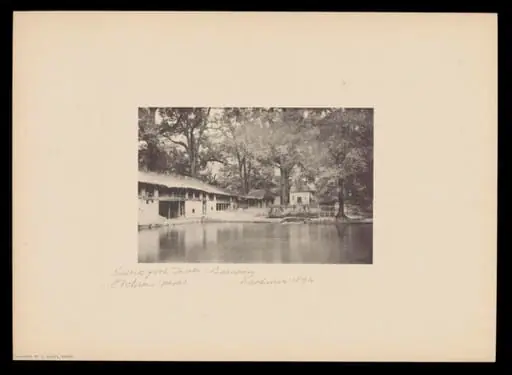
The structure sits near a small body of water, with trees and a few small buildings around it.
This black-and-white photo shows an old stone building with a dome and arched windows. The structure sits near a small body of water, with trees and a few small buildings around it. The ground looks uneven, and the whole scene feels quiet and still.
The photo was taken in 1894 by someone named Groves, who focused on capturing real places. The details are sharp, but the lighting is soft, like an early morning or late afternoon.
Check out the Victoria and Albert Museum to see more photos like this.
Overview
A black-and-white photograph from 1894 by J.W. Groves captures the tomb of Zainul-Abidin in Srinagar, Kashmir. The image presents the structure in its natural setting, with no artificial staging. The composition emphasizes architectural form against a quiet landscape, rendered in soft, diffused light that suggests early morning or late afternoon. The photograph’s clarity and restraint reflect the documentary aims of its time.
Subject & Meaning
The tomb honors Zainul-Abidin, a 15th-century ruler of Kashmir known for his patronage of arts and religious tolerance. Though the photograph does not depict inscriptions or rituals, its focus on the structure’s enduring presence suggests a quiet reverence. The surrounding trees and water imply a landscape of contemplation, aligning with the tomb’s role as a site of historical memory rather than active worship.
Technique & Style
Shot with early photographic equipment, the image relies on natural light and long exposure to render fine stone textures and tree silhouettes. The soft contrast and even tonality indicate careful exposure, avoiding harsh shadows. The lens captures architectural details—dome, arches, masonry—with precision, yet the overall mood remains subdued, consistent with 19th-century ethnographic photography’s preference for factual representation over dramatic effect.
History & Provenance
Taken in 1894 by British photographer J.W. Groves, the image was likely part of a broader survey of South Asian monuments during the colonial period. It entered the collection of the Victoria and Albert Museum, where it remains as part of a corpus documenting architectural heritage in British India. The photograph’s survival reflects its value as a record of pre-modern Kashmiri architecture before significant 20th-century changes.
Context
In the late 19th century, British administrators and photographers systematically recorded South Asian sites, often to catalog cultural heritage or assert colonial knowledge. Groves’s image fits this trend, presenting the tomb not as a living religious site but as an artifact within a landscape. The quiet, unpopulated scene reflects both technical limitations and a deliberate aesthetic choice to emphasize structure over human activity.
Legacy
The photograph endures as a primary visual record of the tomb’s appearance in the late 1800s. It provides baseline data for architectural historians studying Kashmir’s Islamic funerary traditions and the effects of time and environment on stone structures. Its preservation in institutional collections ensures continued access for scholarly and public study, anchoring the tomb’s memory beyond oral or textual accounts.
Artist & collection
Artist
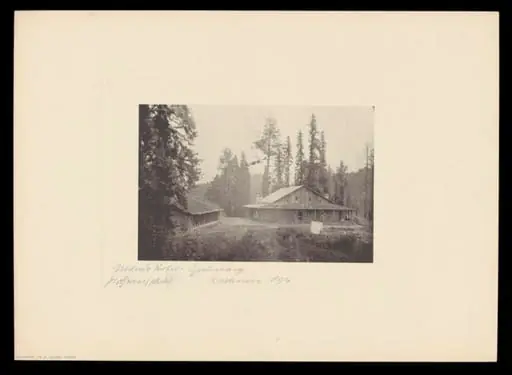
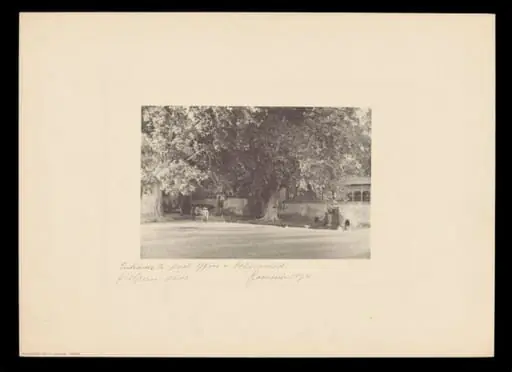
Photographer J.W. Groves captured Kashmir in the 1890s, leaving behind glass-plate prints of landmarks like Nedou’s Hotel in Gulmarg and the post office entrance in Islamabad. His lens framed scenes where locals and…