Artwork
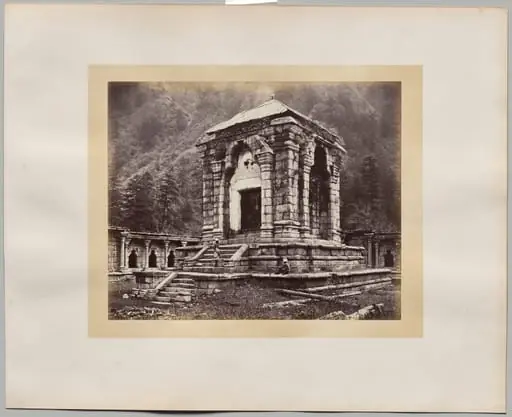
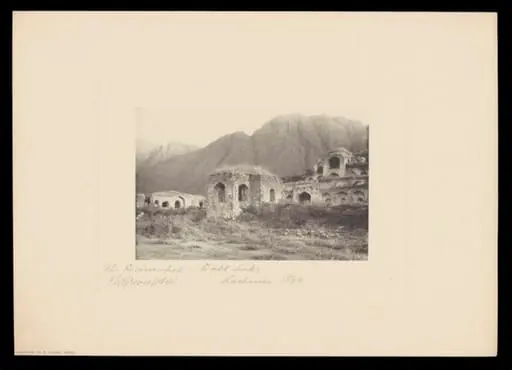
Temple at Rampur on The Murree Road, Kashmir
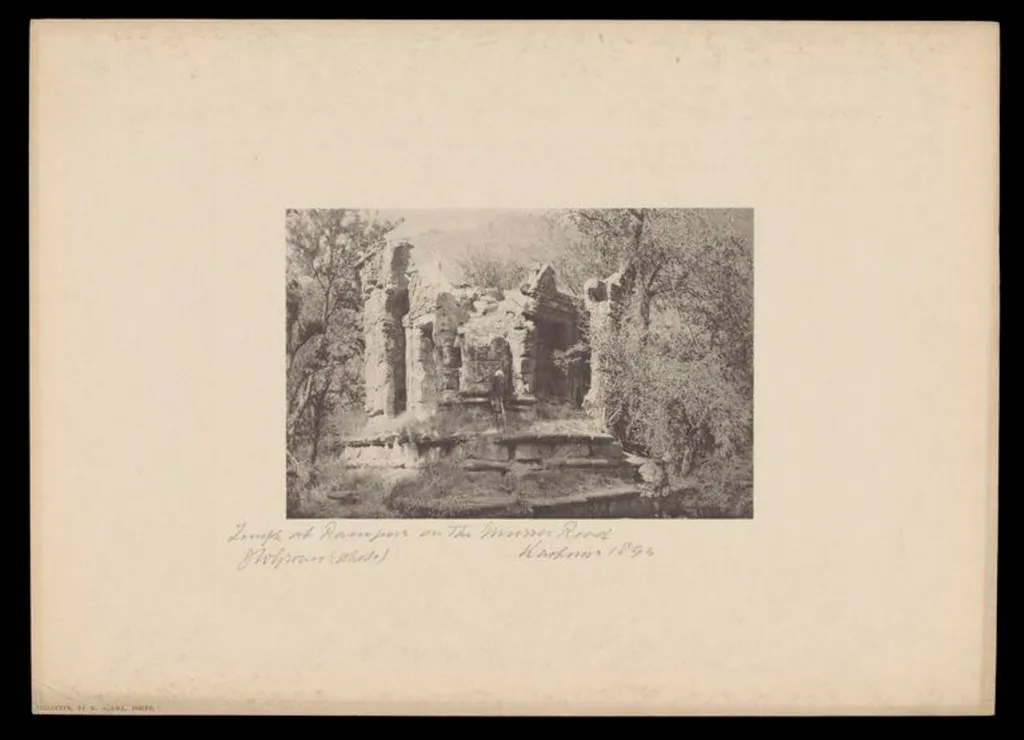
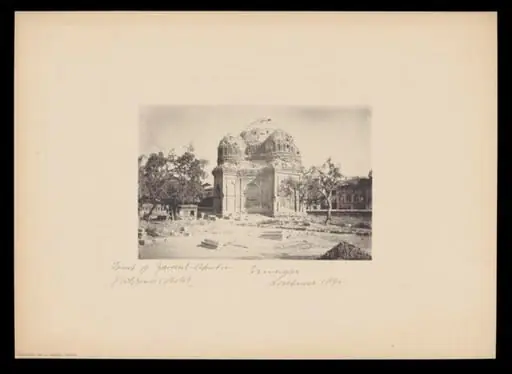
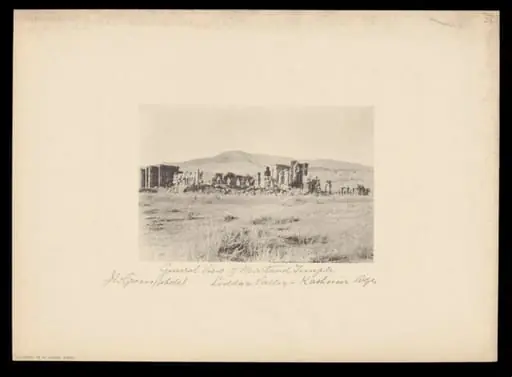
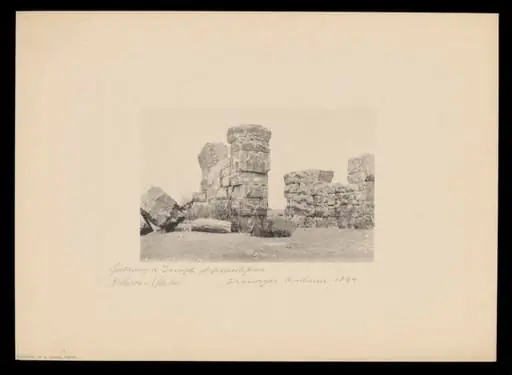
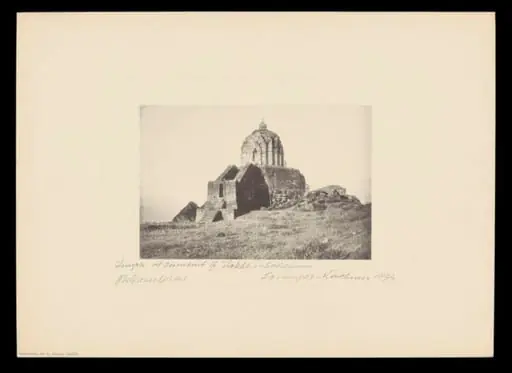
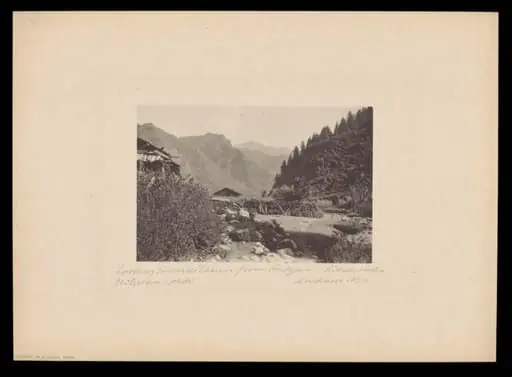
Temple at Rampur on The Murree Road, Kashmir is a photographic photography by the Impressionist artist J.W. Groves. It dates from 1894 and is held in the collection of the Victoria and Albert Museum. A black-and-white photograph from 1894 captures the ruins of a stone temple along the Murree Road in Kashmir.
About this work
Overview
A black-and-white photograph from 1894 captures the ruins of a stone temple along the Murree Road in Kashmir. The image is unmounted and presents a quiet, unadorned view of the structure, framed by native vegetation and a winding path leading to its entrance. The photograph records architectural remnants in their natural state, without embellishment or human presence.
Subject & Meaning
The temple, though in decay, retains the form of a traditional Kashmiri religious structure, marked by a raised platform and stone steps. Its isolation along a regional route suggests it was once a site of pilgrimage or local worship. The absence of figures and the focus on structure and landscape imply a documentary intent, preserving a place likely fading from active use.
Technique & Style
The photograph employs natural light and sharp tonal contrast to define the temple’s stonework and surrounding foliage. The composition is straightforward, with the path guiding the viewer’s eye toward the entrance. No artificial staging is evident; the image prioritizes clarity and spatial accuracy over aesthetic manipulation, reflecting early documentary photographic practice.
History & Provenance
Taken in 1894, the photograph likely originated from a colonial-era survey or travel record, common during British administration in India. Its survival as a single unmounted print suggests it was part of a private or institutional archive, possibly used for ethnographic or topographical study rather than public display.
Context
During the late 19th century, British officials and travelers frequently documented Kashmir’s architectural heritage, often noting the decline of Hindu and Buddhist sites under changing religious and political conditions. This image aligns with broader efforts to catalog India’s historical monuments, many of which were neglected or abandoned by the time of colonial record-keeping.
Legacy
The photograph serves as a visual record of a structure that may no longer exist in its original form. It contributes to the historical understanding of Kashmir’s religious architecture and the impact of time and neglect on non-Islamic sites. As a primary source, it remains a reference for scholars studying regional heritage and early photographic documentation in South Asia.
Artist & collection
Artist
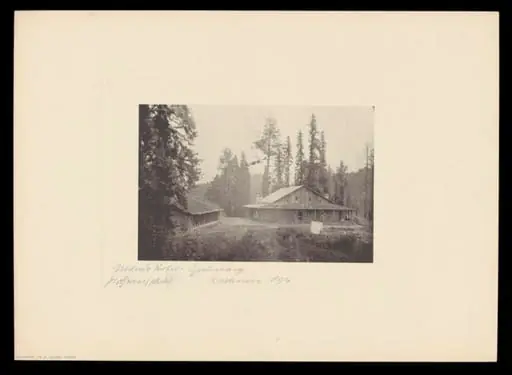
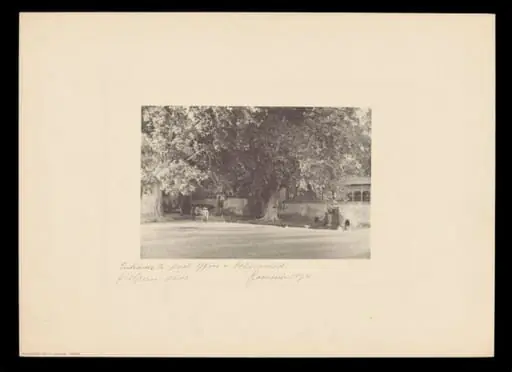
Photographer J.W. Groves captured Kashmir in the 1890s, leaving behind glass-plate prints of landmarks like Nedou’s Hotel in Gulmarg and the post office entrance in Islamabad. His lens framed scenes where locals and…