Artwork
La supplicié (The Executed)
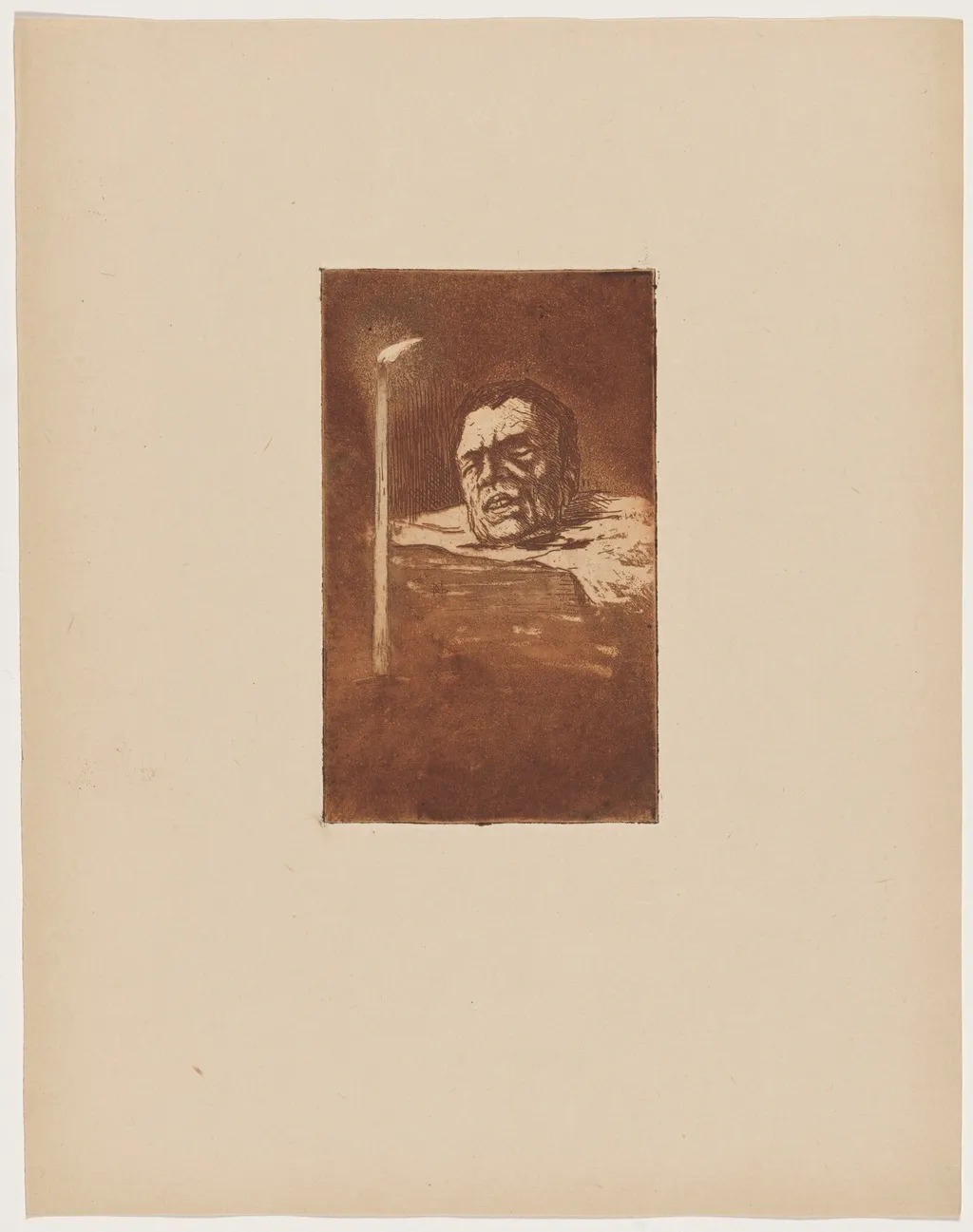
La supplicié (The Executed) is an ink print by the Impressionist artist Henri-Charles Guérard. It dates from 1895 and is held in the collection of the National Gallery of Art.
About this work
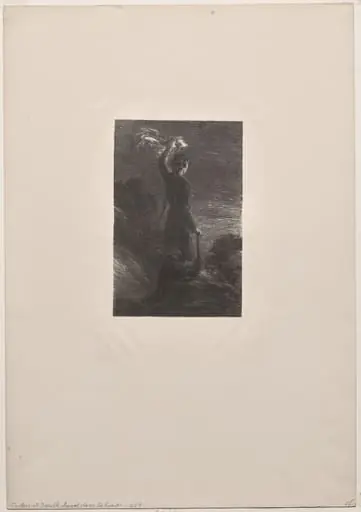
Behind it, a tall pole with a white object at the top stands out against a dark, rough background.
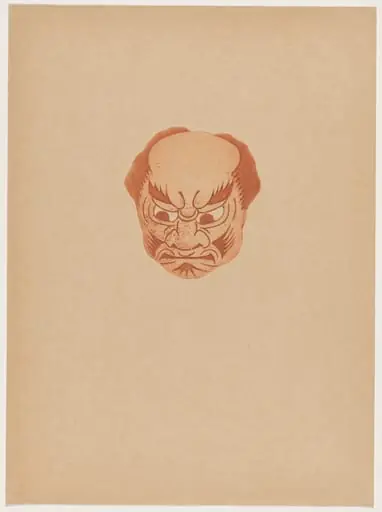
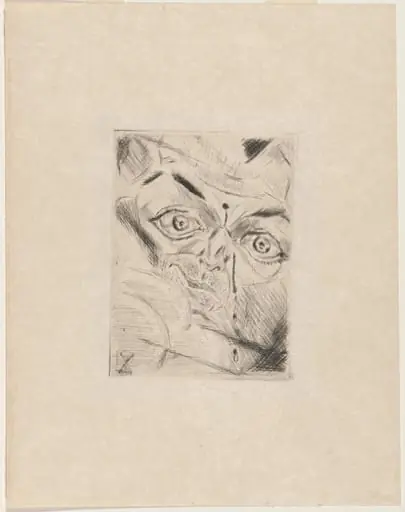
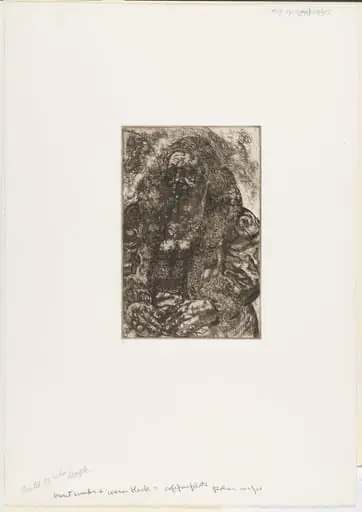
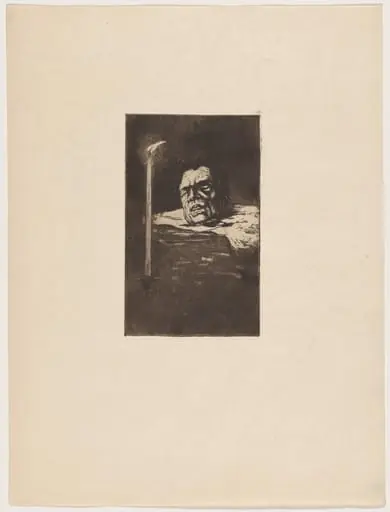
This sketch shows a close-up of a head and shoulders slumped forward. Behind it, a tall pole with a white object at the top stands out against a dark, rough background. The lines are rough and the colors are mostly brownish-red, giving it a gritty, urgent feel.
The artist used a technique that layers ink to create deep shadows and texture. This piece was made in 1895, but it doesn’t look like typical polished art—it’s raw and intense.
If you like this style, look up etching to see how artists build up images with ink.
Overview
La supplicié (The Executed) is a print created by Henri-Charles Guérard in 1895 using etching and aquatint techniques on Japanese paper.
Subject & Meaning
The print depicts a slumped figure, with a head and shoulders bent forward, set against a dark, textured background featuring a tall pole with an object at its top. The somber scene conveys a sense of intensity and urgency.
Technique & Style
Guérard employed layered ink to achieve deep shadows and texture, resulting in a gritty, raw aesthetic characteristic of the piece. The use of red-brown tones on Japanese paper adds to the overall somber tone.
History & Provenance
Created in 1895, La supplicié reflects Guérard's engagement with printmaking techniques prevalent in late 19th-century Paris.
Artist & collection
Artist
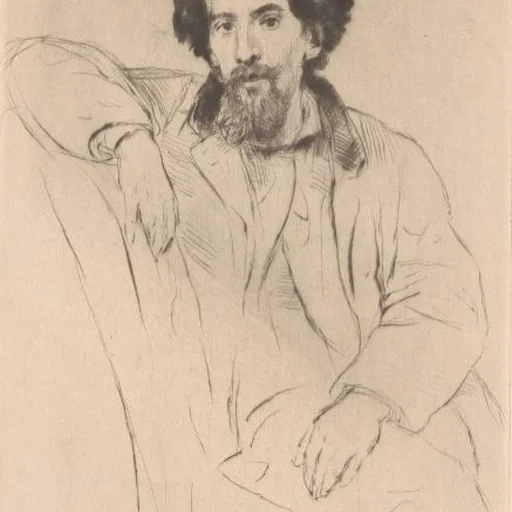
Henri Charles Guérard (26 April 1846, Paris - 24 March 1897, Paris) was a French painter and printmaker, particularly in etching and lithography.