Artwork
The Island of Madonna della Grazia
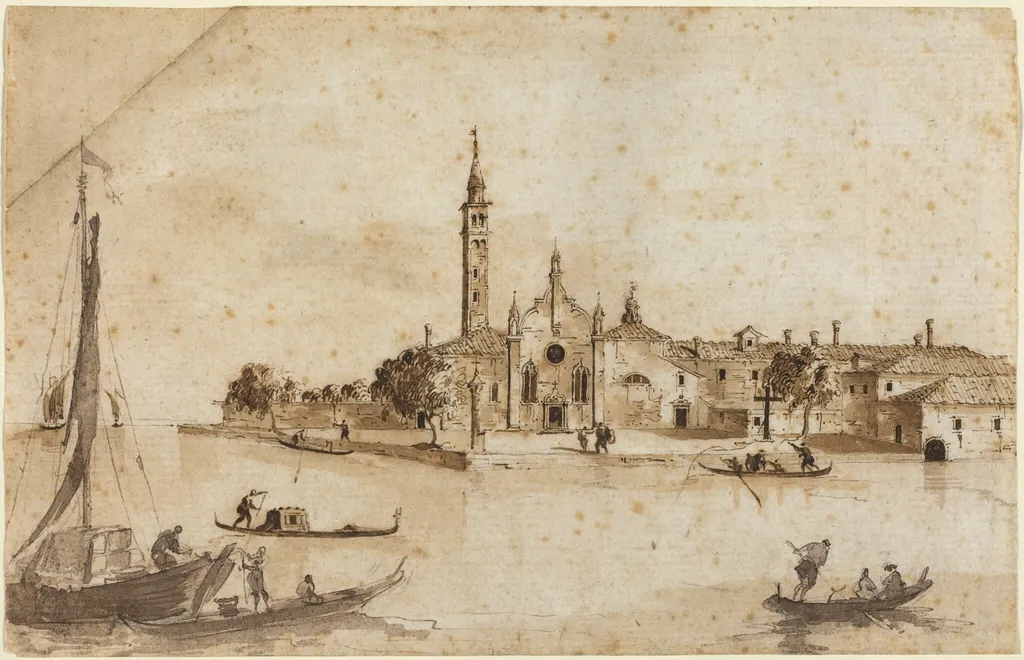
The Island of Madonna della Grazia is an ink drawing by the Baroque artist Francesco Guardi. It dates from 1752 and is held in the collection of the National Gallery of Art.
About this work
Overview
The Island of Madonna della Grazia is a drawing created by Francesco Lazzaro Guardi in 1752, executed in pen and brown ink with brown wash on two joined sheets of laid paper.
Subject & Meaning
The drawing depicts a serene religious site, the Island of Madonna della Grazia, with a central church and bell tower, surrounded by everyday activity, reflecting the Venetian art tradition of emphasizing sacred subjects.
Technique & Style
Characterized by quick, light lines and a soft, sketchy quality, the work exemplifies the common 18th-century approach to rapid location studies, prioritizing immediacy over detail.
History & Provenance
Dating to 1752, this piece precedes Guardi's full transition from religious works, created initially with his brother Gian Antonio, to his later focus on vedute (landscape views).
Context
Within the broader context of 18th-century Venetian art, this drawing bridges Guardi's early religious themes and his impending dedication to capturing the city's everyday landscapes.
Artist & collection

Artist
Francesco Lazzaro Guardi (Italian pronunciation: ; 5 October 1712 – 1 January 1793) was an Italian painter, nobleman, and a member of the Venetian School.

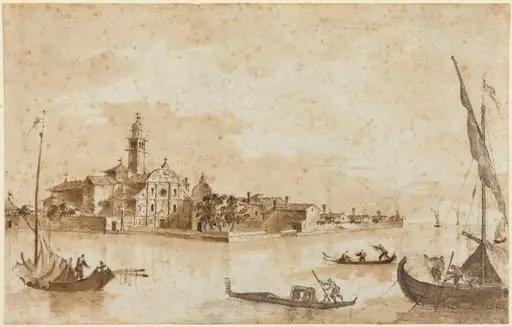 The Island of San Clemente
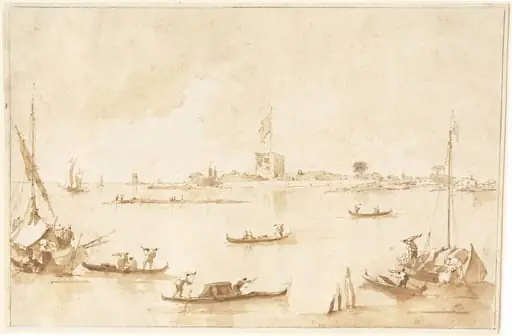 The Fortress of San Andrea from the Lagoon
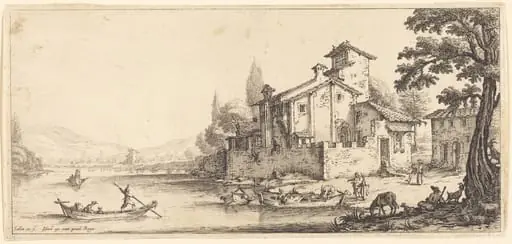 The Walk by the Water
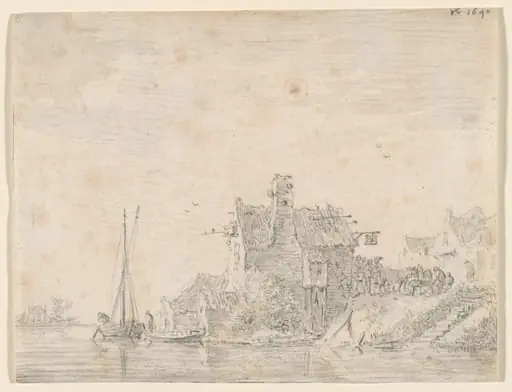 A Tavern by a River
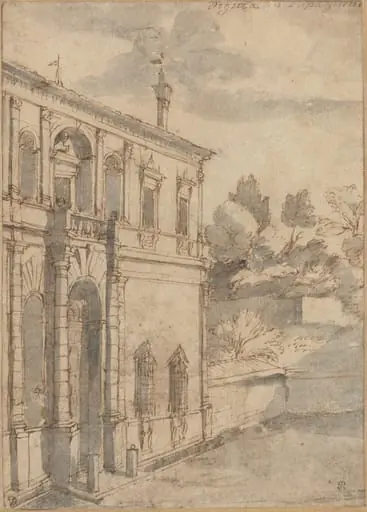 Villa di Papa Giulio
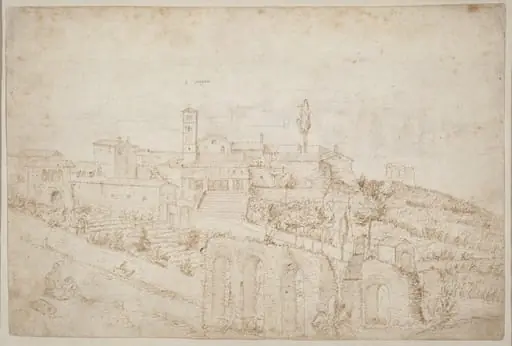 The Church of S. Gregorio Magno on the Celian Hill (verso)
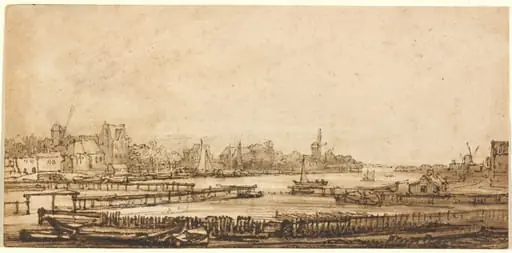 View over the Amstel from the Rampart
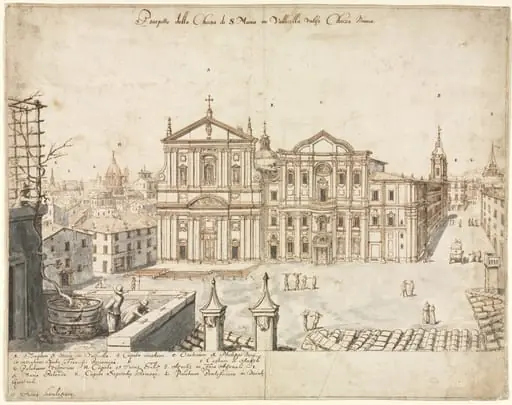 Eighteen Views of Rome: The Church of Santa Maria in Vallicella
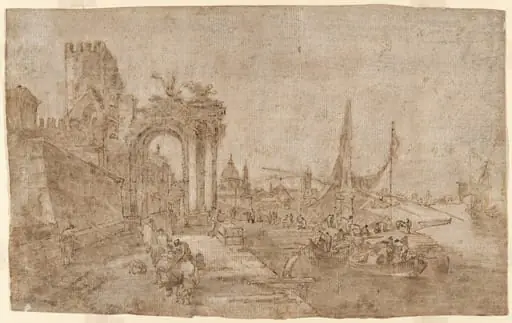 Venetian Capriccio with Boats Unloading (recto); Figures among Ruins (verso)
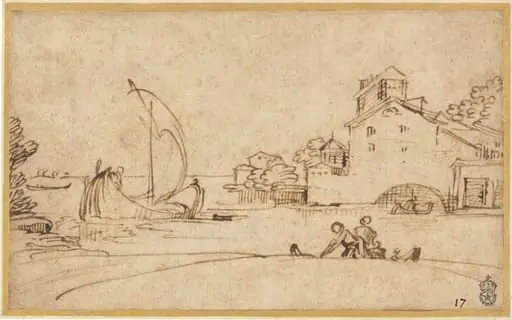 Landscape with Figures by an Estuary with Sailing Boats
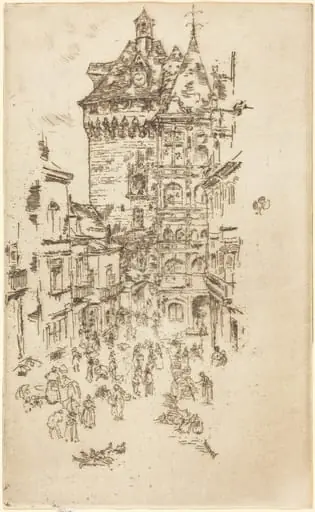 Hotel de Ville, Loches
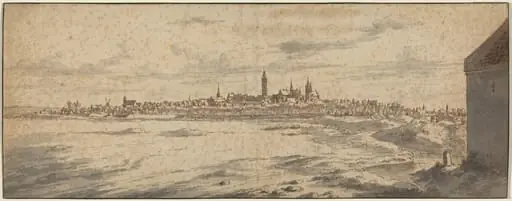 View of Mons, Belgium