Artwork
Design for the ceiling of an apse or chapel, decorated with coffers enclosing angels displaying the instruments of the Passion
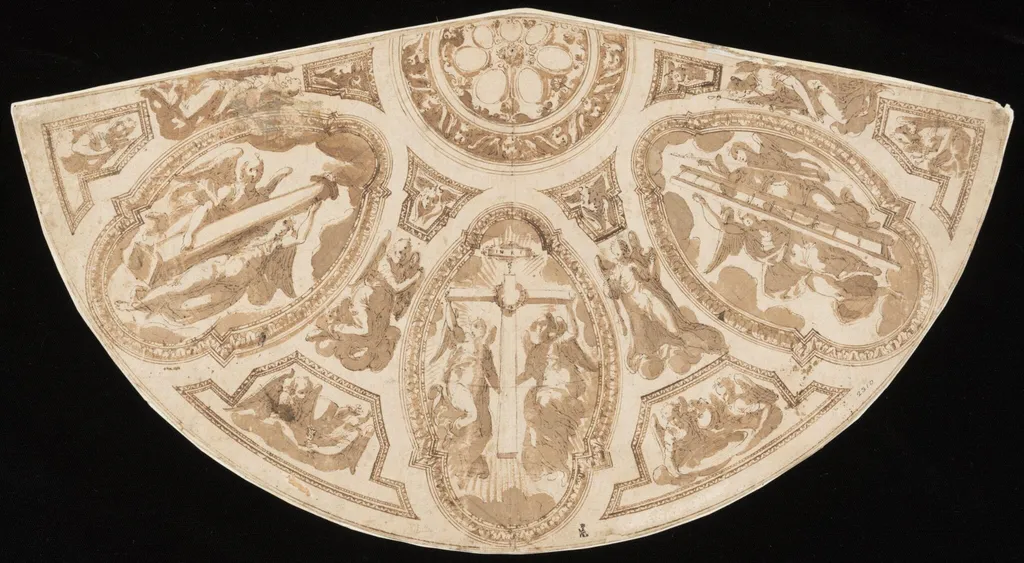
Design for the ceiling of an apse or chapel, decorated with coffers enclosing angels displaying the instruments of the Passion is a drawing by Giovanni Guerra. It dates from 1550 and is held in the collection of the Victoria and Albert Museum.
About this work
Overview
This 16th-century drawing, attributed to Giovanni Guerra and dated circa 1550, presents a detailed design for the ceiling of an apse or chapel. Executed in pen, ink, and wash on paper, the work showcases a semi-circular composition replete with intricate Christian iconography.
Subject & Meaning
The drawing's central theme revolves around the Instruments of the Passion, depicted through angels enclosed within coffers. A central cross with a figure, surrounded by additional angels, anchors the design, emphasizing key symbols of Christian sacrifice and redemption.
Technique & Style
Characterized by meticulous line work, the drawing demonstrates Guerra's attention to detail, filling the space with dense, ornate elements. Decorative borders framing the edges feature tiny figures and patterns, further highlighting the artist's skill in balanced composition.
History & Provenance
The drawing's provenance includes ownership by Sir Thomas Lawrence and later S. Woodburn, before being acquired by the current collection via a Christie’s auction in 1860.
Context
Created during the Italian Renaissance, this work reflects the era's religious themes and decorative opulence. Its design for a chapel ceiling aligns with contemporary architectural and artistic practices in Italy.
Legacy
As a detailed, religiously themed architectural drawing from the 16th century, it contributes to the understanding of Renaissance design principles and the use of Christian symbolism in art. Similar works can be found in collections like the Victoria and Albert Museum.
Artist & collection


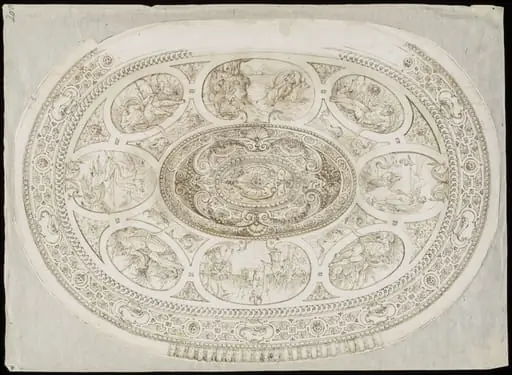 An oval with scenes of the Metamorphoses: The Rape of Europa, the peasants turned into frogs, The Fall of Icarus, Glaucus and Scylla
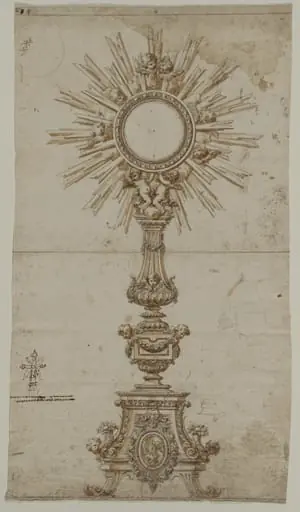 Design for a Monstrance
 Untitled
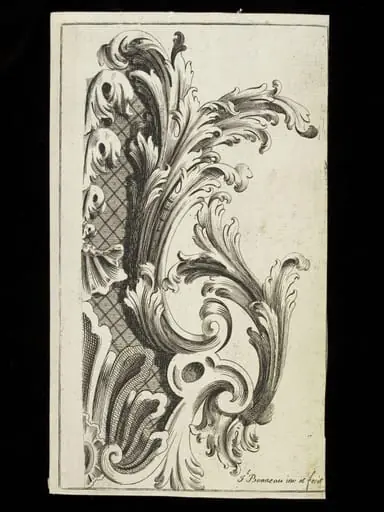 Ornament print by Jacob Bonneau
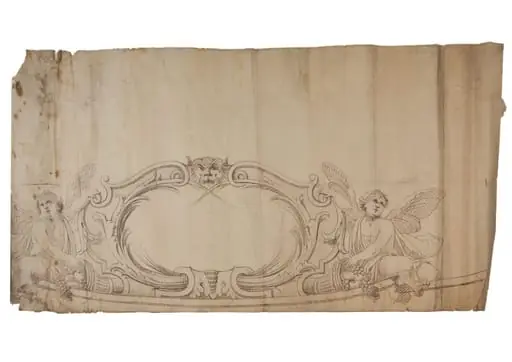 Ornament
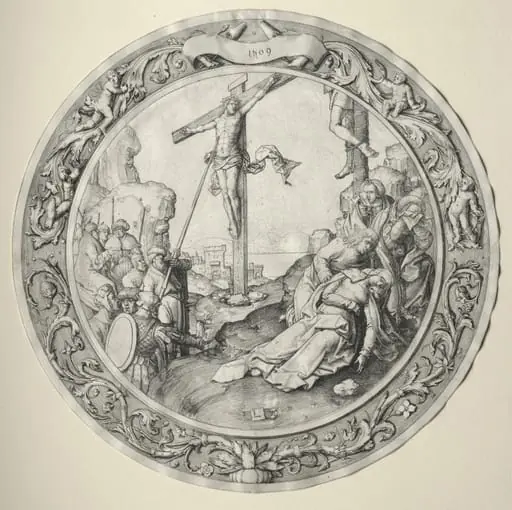 The Round Passion: The Crucifixion
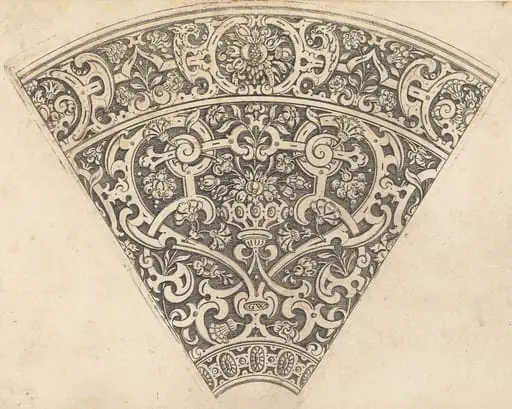 Goblet Design
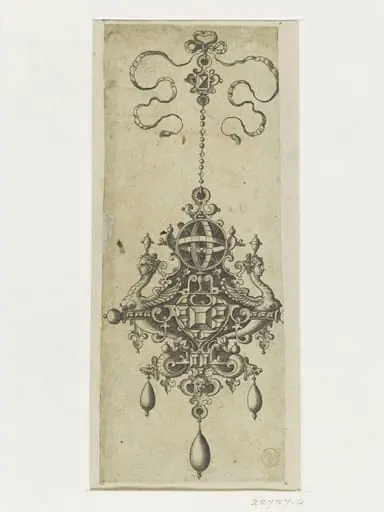 Designs for Necklaces, Pendants and Earrings of the Highest Skill
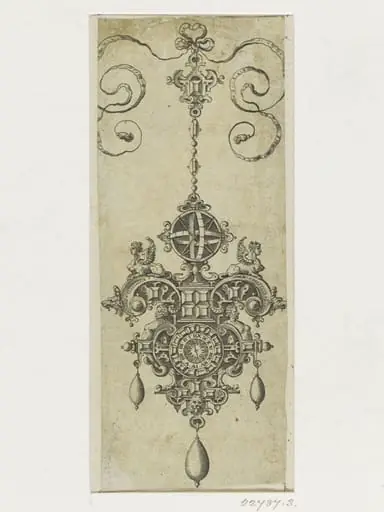 Monilivm Bvllarvm, Inavrivmqve Artificiocissimae Icones
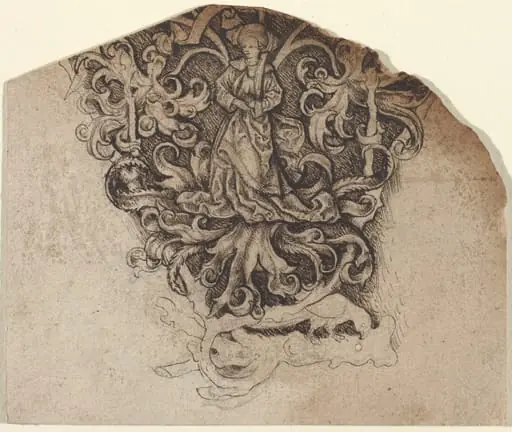 Gothic Ornament with a Lady and a Parrot
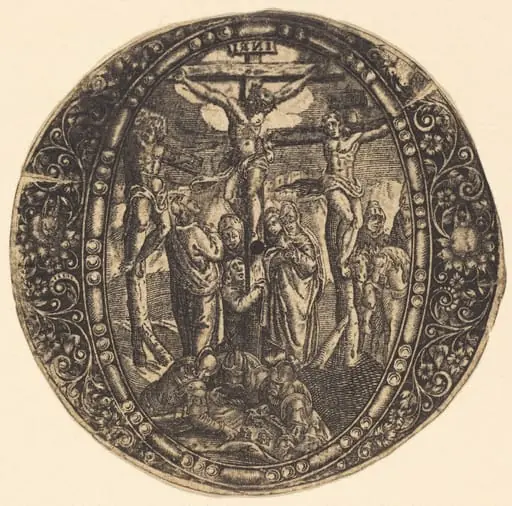 The Crucifixion
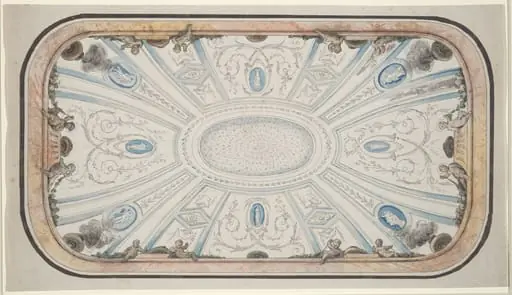 Design for a Ceiling