Artwork
The Holy Trinity adored by Angels
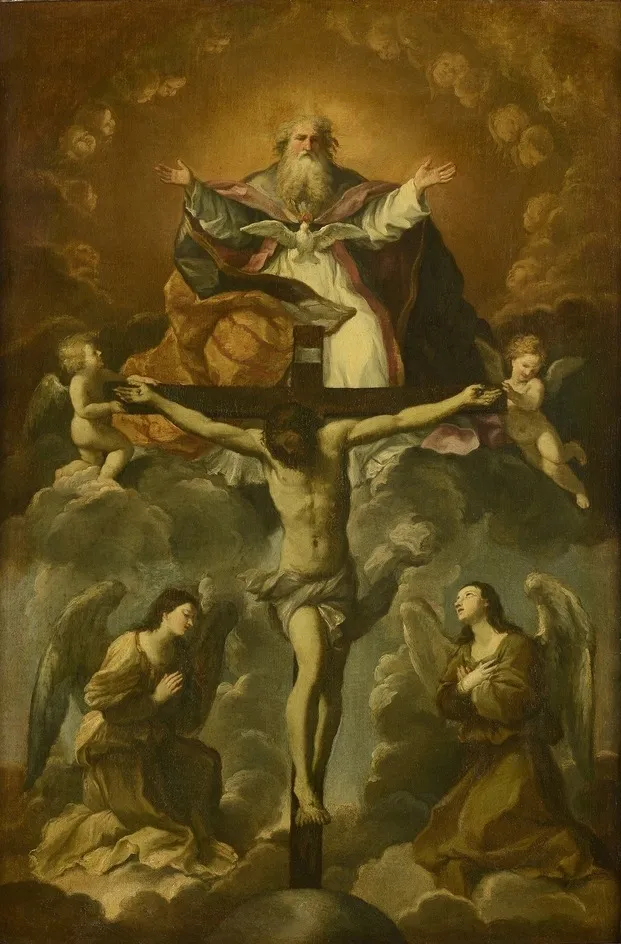
The Holy Trinity adored by Angels is an oil painting by the Early Baroque Italian artist Guido Reni. It dates from 1618 and is held in the collection of the Ashmolean Museum.
About this work
Overview
The Holy Trinity adored by Angels is a c. 1618 oil painting by Guido Reni, currently housed at the Ashmolean Museum.
Subject & Meaning
The painting depicts two interconnected scenes: above, a bearded figure (God the Father) in a red cape on a cloud with outstretched arms and a dove overhead; below, the Crucifixion with Christ on the cross flanked by kneeling angels, symbolizing the Holy Trinity's presence across divine and earthly realms.
Technique & Style
Reni employs realistic rendering of figures and clouds, coupled with a warm, golden background. The strategic use of color and light generates a profound sense of depth and atmospheric tension.
History & Provenance
Created around 1618, the work is attributed to Guido Reni based on stylistic similarities with his known oeuvre. It is now part of the Ashmolean Museum's collection.
Context
While the painting's exact commission context is unclear, its themes and style align with early 17th-century Catholic devotional art, emphasizing the unity and reverence of the Holy Trinity.
Legacy
The painting reflects Reni's influence on Baroque religious art, though its specific impact on later artists or broader cultural movements is not distinctly documented.
Artist & collection
Artist
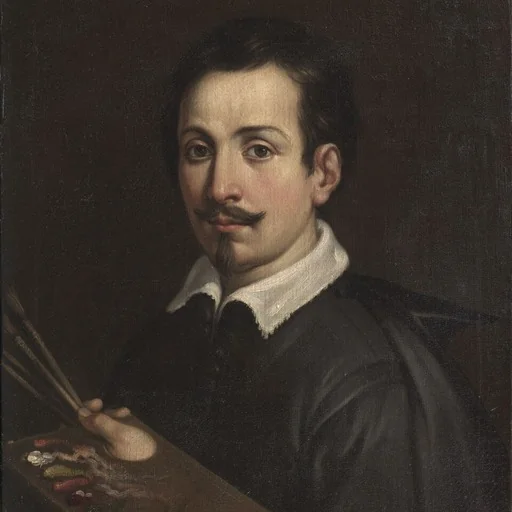
Guido Reni was an Italian Baroque painter, although his works showed a classical manner, similar to Simon Vouet, Nicolas Poussin, and Philippe de Champaigne.