Artwork
The Assumption and Coronation of the Virgin
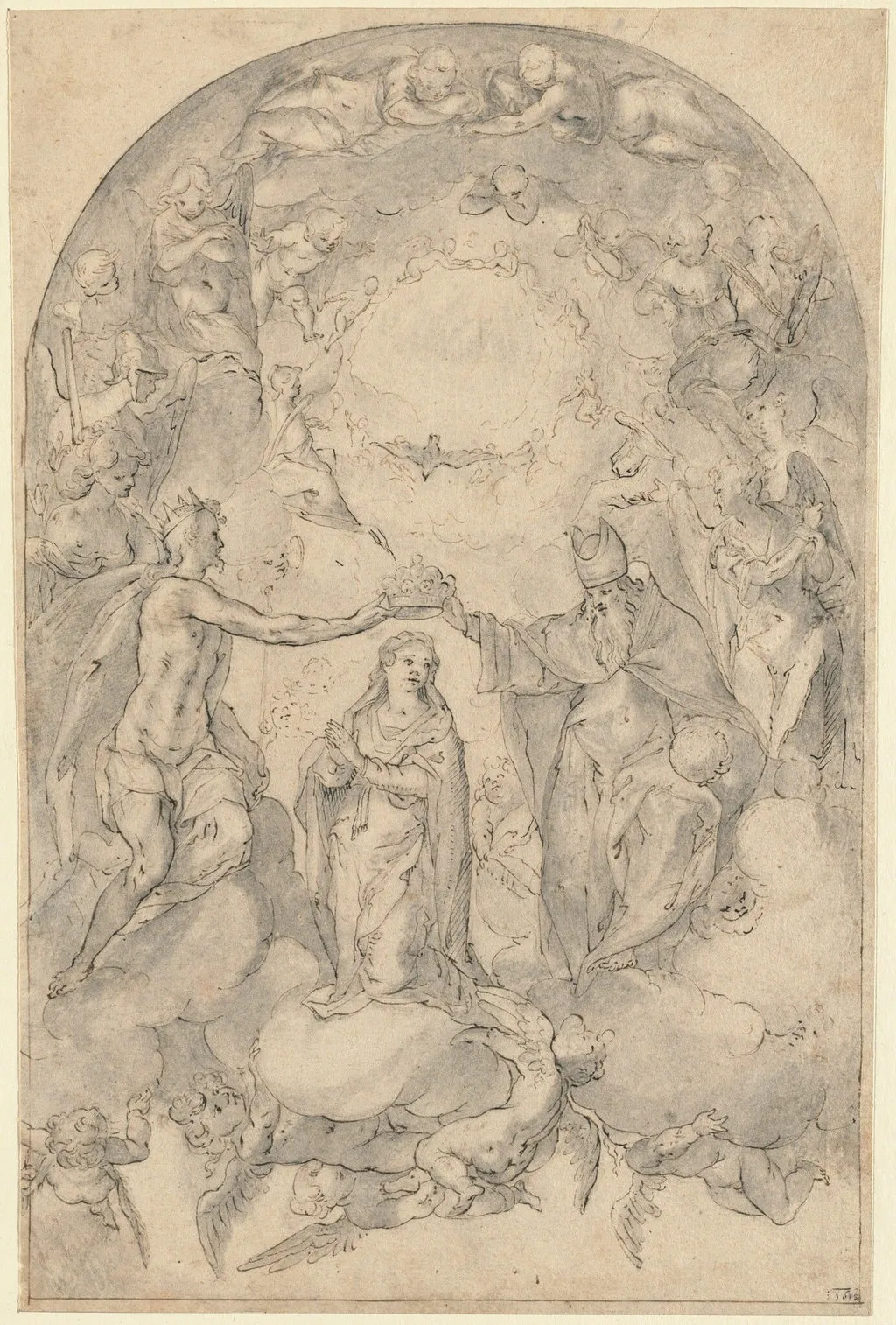
The Assumption and Coronation of the Virgin is an ink drawing by the Baroque artist Matthäus Gundelach. It dates from 1615 and is held in the collection of the National Gallery of Art.
About this work
Overview
The medium and technique reflect a preparatory or exploratory intent, typical of early 17th-century draftsmanship.
Created in 1615 by Matthäus Gundelach, this drawing depicts the Assumption and Coronation of the Virgin Mary. Executed in pen and ink with graphite, it captures a moment of celestial ascent and divine honor. The composition is rendered with loose, expressive lines and minimal detail, emphasizing motion over finish. The medium and technique reflect a preparatory or exploratory intent, typical of early 17th-century draftsmanship.
Subject & Meaning
The scene illustrates the Virgin Mary’s bodily ascent into heaven and her subsequent coronation by Christ and God the Father. Above her, two figures—likely divine beings—prepare to place a crown upon her head, while angels below respond with reverence, some holding instruments or blossoms. The imagery affirms Marian doctrine central to Catholic belief, presenting her as both human and exalted, bridging earthly devotion and heavenly glory.
Technique & Style
Gundelach employed brown and black ink over graphite underdrawing, using stumping to soften transitions and create atmospheric depth. The lines are fluid and economical, avoiding rigid contours in favor of suggestive strokes. Areas left uninked serve as highlights, enhancing the sense of luminosity and movement. The sketchy quality conveys immediacy, aligning with Baroque sensibilities that valued dynamism over polished finish.
History & Provenance
The drawing is attributed to Matthäus Gundelach, a German artist active in the early 1600s, though little is documented about his career. Its survival suggests it was valued within a private or ecclesiastical collection, possibly as a study for a larger altarpiece or print. No definitive record of its early ownership exists, but its condition indicates careful preservation over centuries.
Context
Produced during the Counter-Reformation, the image reflects Catholic efforts to reinforce Marian devotion through visual culture. The Baroque era favored emotional intensity and theatrical composition, and Gundelach’s energetic draftsmanship aligns with this trend. Though not a finished painting, the drawing participates in a broader tradition of devotional sketches used to convey sacred narratives with immediacy and spiritual urgency.
Legacy
The drawing stands as a modest yet evocative example of early Baroque draftsmanship in northern Europe. It reveals how artists translated theological concepts into visual motion through rapid, expressive means. While not widely known, it contributes to understanding the role of preparatory works in religious art, illustrating how fleeting sketches could embody enduring spiritual themes.
Artist & collection

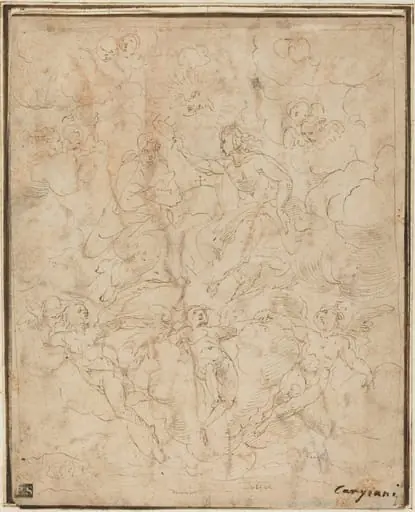 Coronation of the Virgin
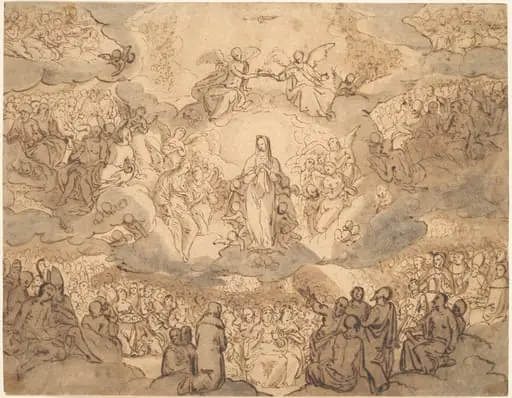 The Virgin, Queen of Heaven
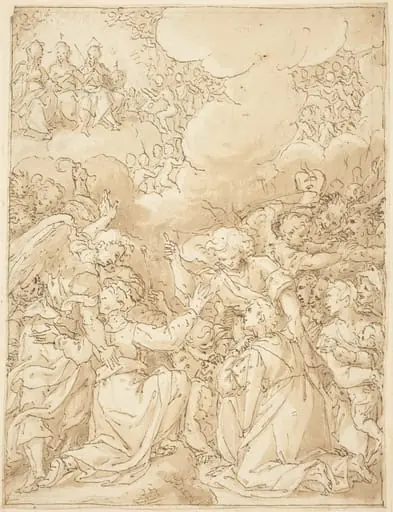 The Last Judgment
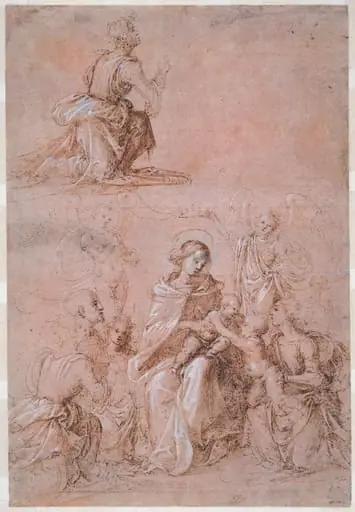 The Virgin and Child Surrounded by Saints and Angels
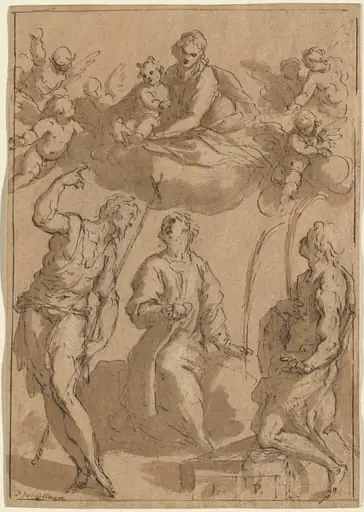 Madonna and Child in Glory with Saints John the Baptist, Stephen, and Lawrence
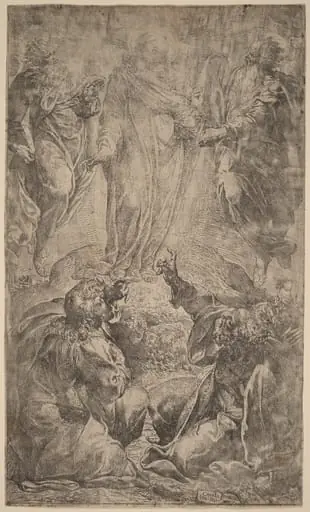 The Transfiguration
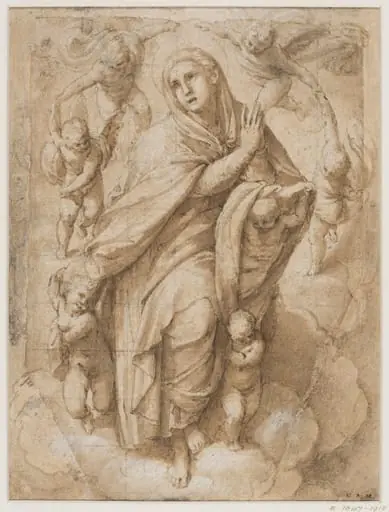 A female saint surrounded by cherubs
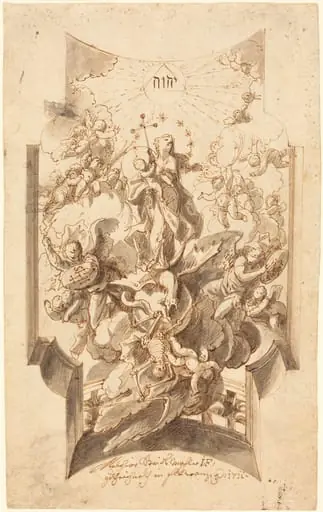 The Immaculate Conception
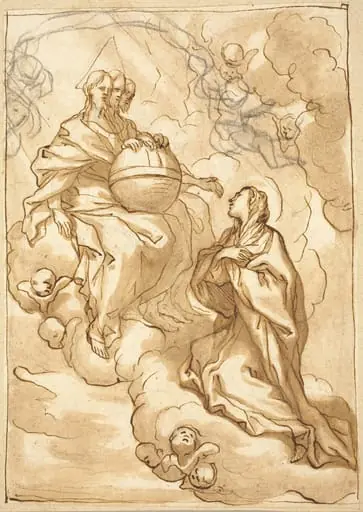 Blessed Maria Vittoria Fornari's Vision of the Trinity
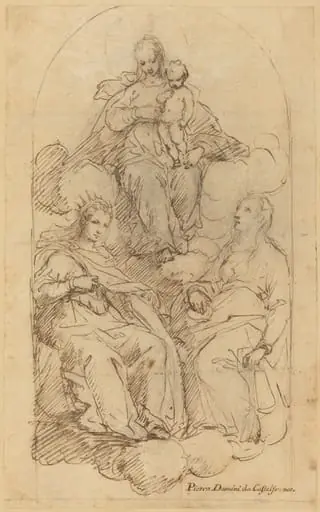 The Virgin and Child Adored by Saint Catherine and Another Female Saint