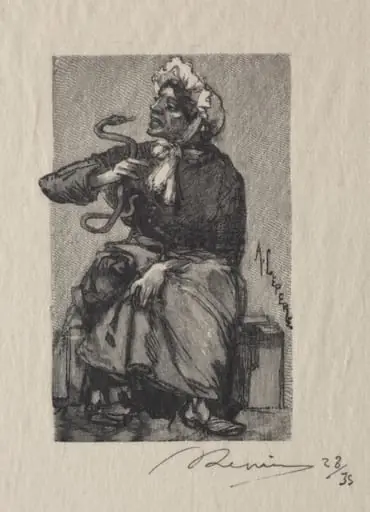
Rent Day
1887
From the collection of Cleveland Museum of Art
1887
From the collection of Cleveland Museum of Art
Dominant colour
Rent Day is a 1887 by Gustav Kruell, a Impressionism work, held at Cleveland Museum of Art.
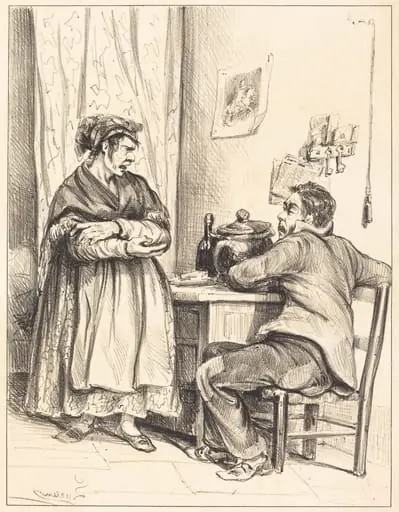
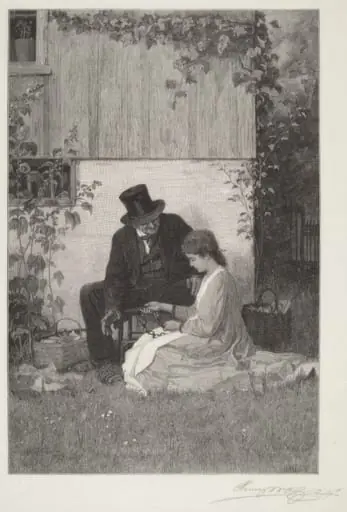
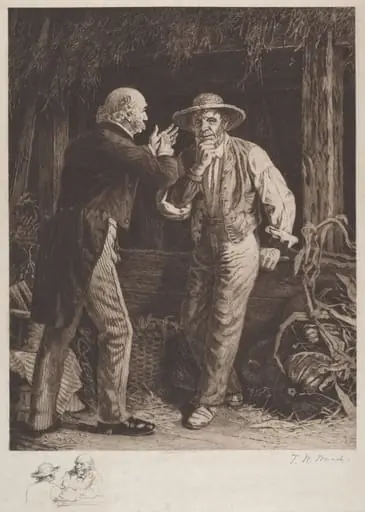
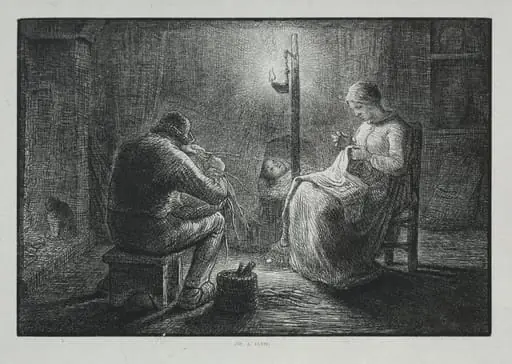
This sketch shows two people sitting close together, both focused on a small object in their hands. The man leans forward, his fingers carefully holding something flat, while the woman watches intently. Their clothes look worn, and the room around them is dim, with a window in the background showing faint shapes outside. The artist used heavy shading to show the textures of their clothes and faces, making everything look rough and real. This style was common in works that aimed to show everyday life as it truly was. Look up Realism next to see more art like this that focuses on ordinary people and moments.
Created in 1887 by Gustav Kruell, Rent Day is a charcoal or graphite drawing depicting a quiet domestic moment. The work is part of the collection at The Cleveland Museum of Art. Its modest scale and unadorned subject reflect a commitment to observing ordinary life without embellishment. The artist’s focus on a single, intimate scene aligns with broader 19th-century trends in realistic representation.
The scene captures a man and woman engaged with a small, flat object—likely rent money or a receipt—held between them. Their postures suggest tension and concentration, revealing the weight of financial obligation. The absence of dialogue or gesture emphasizes the silence of economic struggle. The intimacy of their proximity underscores shared burden rather than comfort.
Kruell employed dense, textured shading to render the worn fabrics and weathered faces of the figures. The heavy use of tone creates a sense of physical weight and materiality, while the dim interior is suggested through minimal background detail. A faint window in the rear offers a muted contrast to the focused darkness of the foreground, enhancing the scene’s somber mood.
The drawing entered The Cleveland Museum of Art’s collection through documented acquisition, though its earlier ownership remains unrecorded in public sources. It was produced during Kruell’s active period in the late 19th century, when he frequently depicted working-class subjects. The work has remained in institutional hands since its acquisition, with no known public exhibitions prior to its inclusion in the museum’s holdings.
Rent Day emerged during a time when artists across Europe and America turned to everyday life as subject matter, rejecting idealized narratives. Kruell’s approach reflects the influence of Realism, particularly its focus on labor, poverty, and quiet dignity. Unlike grand historical scenes, this work finds significance in the unremarkable, aligning with broader social and artistic shifts toward authenticity.
The drawing endures as a quiet testament to the visual documentation of economic hardship in the late 19th century. While Kruell is not widely known today, works like Rent Day contribute to a larger archive of domestic realism that shaped modern perceptions of ordinary life. Its preservation in a major museum ensures continued access to this unvarnished glimpse into historical lived experience.
Read the full account in the museum source.
Your cart is empty
Explore artworks →