Artwork
Springtime
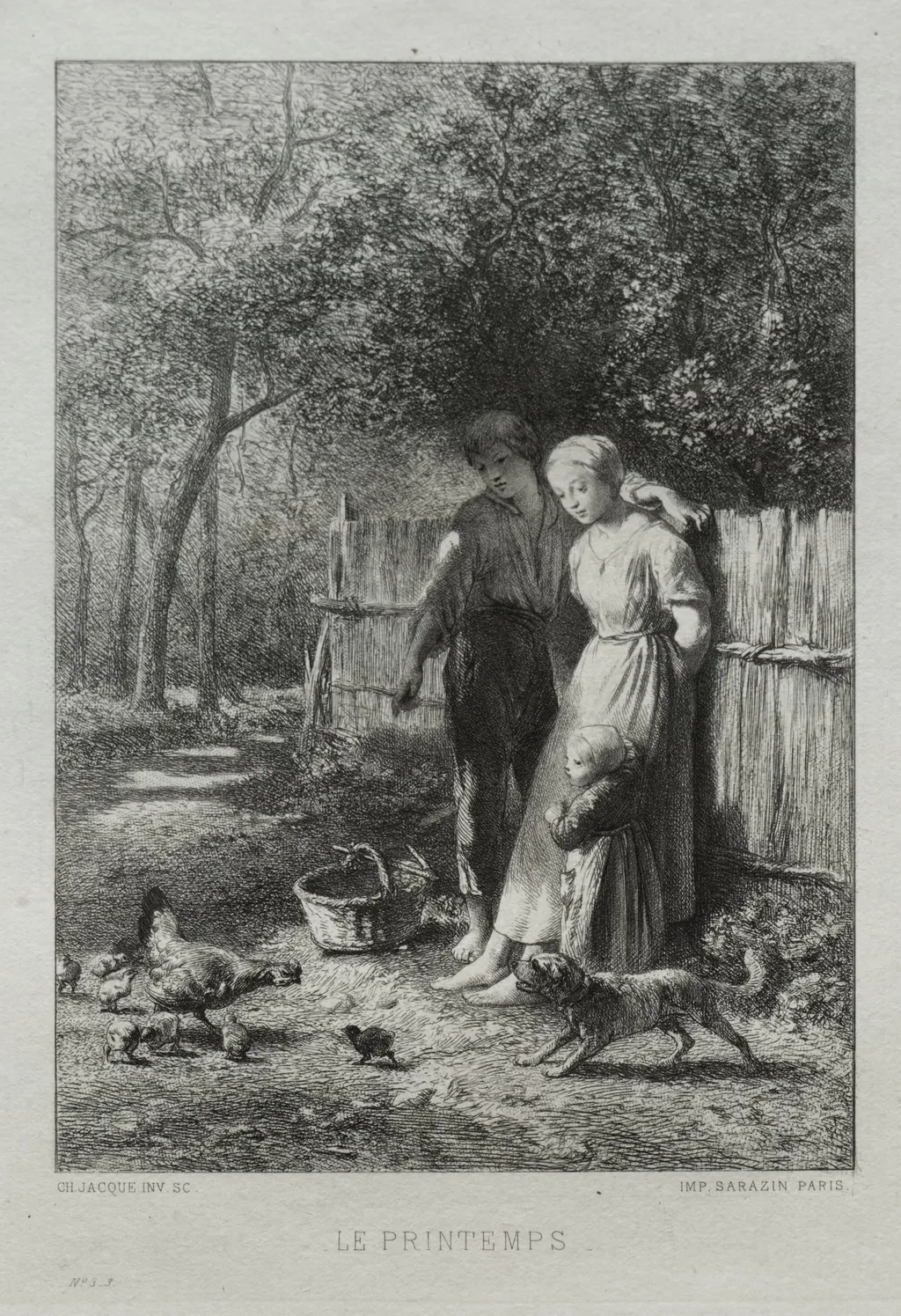
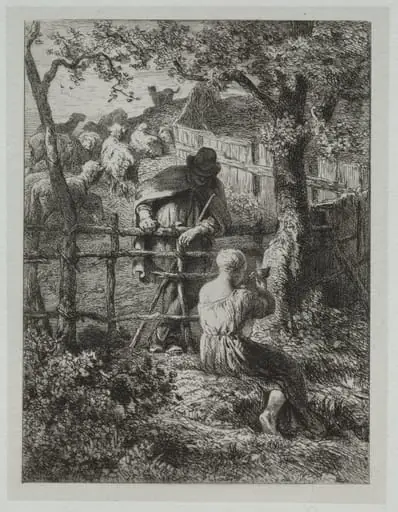
Springtime is a print by the Impressionist artist Charles Jacque. It dates from 1864 and is held in the collection of the Cleveland Museum of Art. Charles-Émile Jacque produced this print in 1864 as part of his sustained engagement with rural French life.
About this work
Overview
A member of the Barbizon School, he favored intimate depictions of the countryside over grand historical narratives.
Charles-Émile Jacque produced this print in 1864 as part of his sustained engagement with rural French life. A member of the Barbizon School, he favored intimate depictions of the countryside over grand historical narratives. The work, now in the Cleveland Museum of Art, exemplifies his quiet observational style, rendered in etching and drypoint with a restrained tonal range that emphasizes stillness over drama.
Subject & Meaning
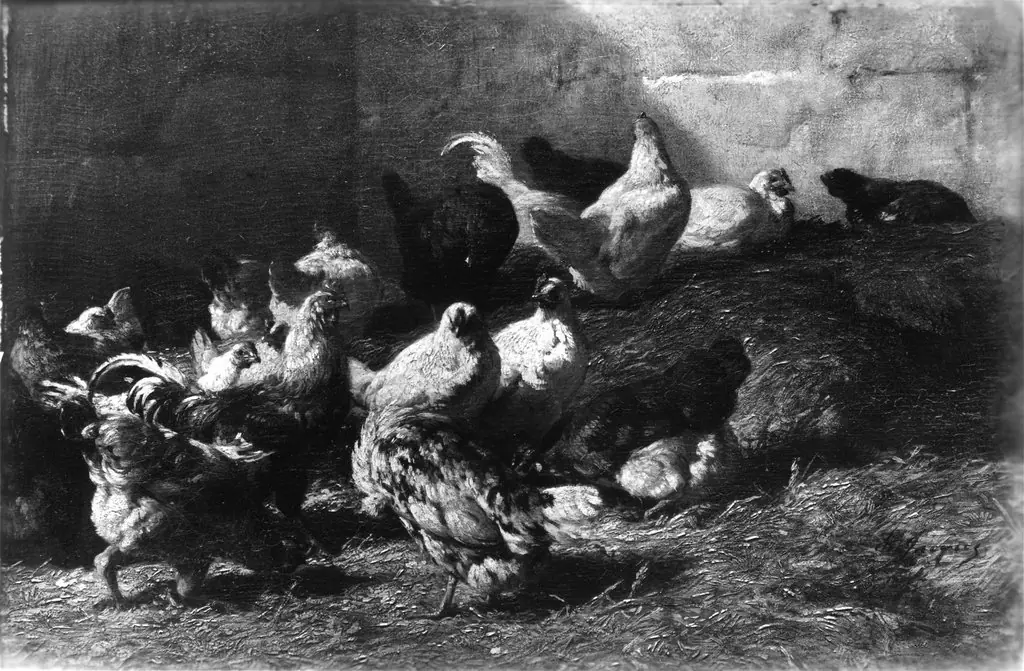
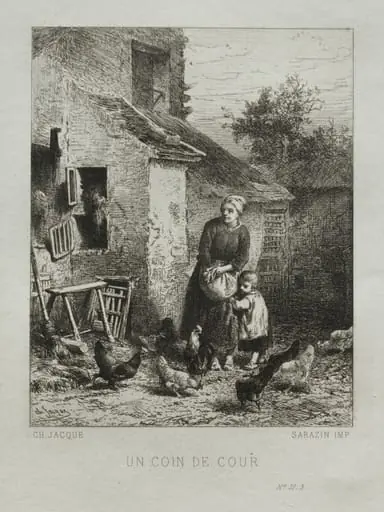
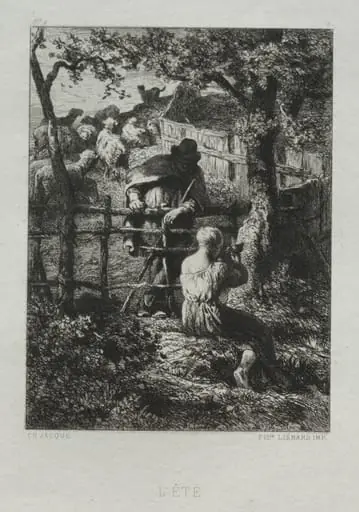
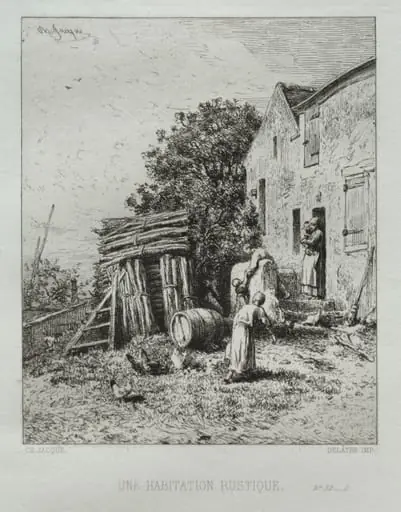
The scene portrays a woman holding an infant, standing beside a man near a wooden fence, with chickens foraging nearby. A basket and a barrel rest at their feet, suggesting domestic routine. The title, *Springtime*, evokes renewal, yet the image avoids sentimentality, instead presenting ordinary labor and quiet companionship. The absence of overt narrative invites contemplation of daily rhythms in rural existence.
Technique & Style
Jacque employed etching and drypoint to achieve subtle gradations of light and texture. Soft, delicate lines define the figures and foliage, while sparse hatching models form without heavy contrast. The composition is deliberately uncluttered, with a shallow depth that draws attention to the figures and their immediate surroundings. The technique mirrors the calmness of the subject, avoiding theatricality in favor of quiet realism.
History & Provenance
Created in 1864, the print entered the Cleveland Museum of Art’s collection through established acquisition channels in the 20th century. Jacque’s prints were widely circulated among collectors and institutions during his lifetime, valued for their technical precision and thematic consistency. Its preservation reflects broader interest in 19th-century French graphic art tied to the Barbizon movement’s legacy.
Context
Jacque worked closely with Jean-François Millet and other artists who rejected academic idealism in favor of direct observation of peasant life. *Springtime* aligns with this ethos, emerging during a period when rural scenes gained cultural weight amid industrialization. The print contributes to a broader visual discourse on the dignity and simplicity of agricultural existence in mid-century France.
Legacy
Though less celebrated than his contemporaries, Jacque’s prints helped sustain the Barbizon School’s influence on later realist and impressionist artists. His focus on unadorned rural moments influenced the development of modern printmaking, particularly in how everyday subjects could be rendered with emotional restraint and technical nuance. This work remains a quiet testament to that tradition.
Artist & collection
Artist
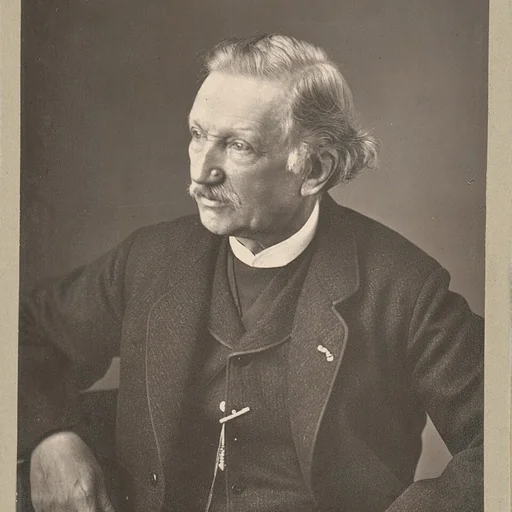
Charles-Émile Jacque (23 May 1813 – 7 May 1894) was a French painter of Pastoralism and engraver who was, with Jean-François Millet, part of the Barbizon School. He first learned to engrave maps when he spent seven years in the French Army.